Astronaut Stories for Kids

A little astronaut floats among the stars and learns that courage means trying something new even when you feel scared.

✨ Make Your Child the Hero

There is special wonder in looking up at the night sky. Astronauts float where the stars are, wear big white suits, and do things no one has ever done before. Kids are drawn to them because astronauts turn the biggest unknown into an adventure. The stories below follow astronauts who lose a star, launch a rocket for the first time, work as a team on the moon, befriend a lonely comet, and take a careful first moonwalk. Each tale is calm enough for bedtime and brave enough to inspire. With CreateStory.ai, your child does not just read about space. They suit up and float into their own story.

Why do astronauts get a little taller in space?

In space there is no pull of gravity holding the body down. Without that pull, the bones in an astronaut's back spread out just a little. This makes the whole body a tiny bit longer while floating among the stars.

Scientific American reports that an astronaut can grow about two inches in space. The body shrinks back down after coming home to Earth. It is one more wonder that makes astronaut stories so exciting for kids.

How many people have flown into space so far?

Going to space is still very rare and very hard. It takes years of training, a lot of courage, and a team of people helping from the ground. That is why each new astronaut is such a big deal.

By 2023, about 676 people had traveled to space. Every single one of them started as a child who looked up at the stars and dreamed of flying there one day.

Sample Stories

Read these stories, then create a personalized version where your child is the hero

The Astronaut Who Lost His Star
Ages 3-84 mincuriosity
The Astronaut Who Lost His Star story for kids illustration

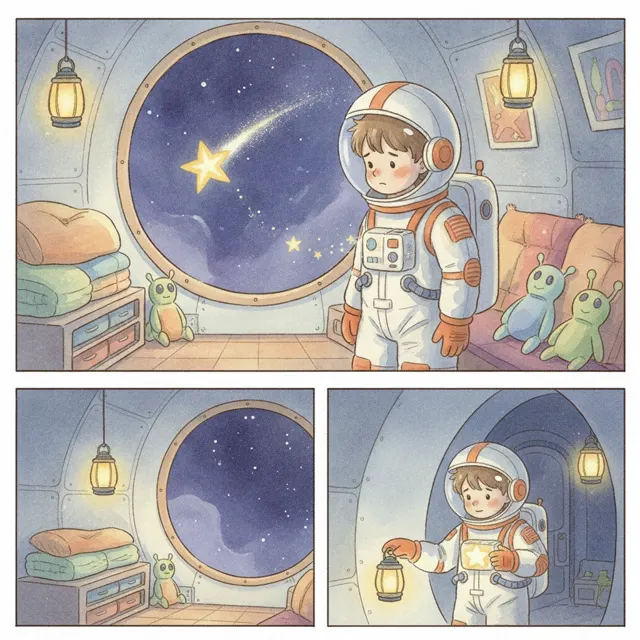
Young astronaut Leo loses his favorite glowing star from the ship's window, and a careful search through the quiet dark teaches him that some lights never really go out of your heart.

Moral: Even in the darkest places, there is always a light to follow.

Astronaut Leo had a small glowing star that he kept on the window of his little spaceship. It glowed soft and green every night, like a tiny friend watching over him while he slept. But one morning, Leo woke up and the star was gone. The window was empty. He looked under his seat, inside his helmet, and behind his boots. No star. "I have lost my star," Leo said sadly. "How will I sleep without its light?" Leo put on his space suit and floated outside to search. The space around him was dark and still. At first he saw nothing but blackness. Then, slowly, his eyes began to adjust. There. And there. And there. Thousands of tiny lights, twinkling in the darkness like a city of stars. "Hello?" Leo called softly into the quiet. "Did any of you see my little green star?" A warm voice seemed to answer, not in words, but in a gentle glow. It was the big, bright North Star, shining steady in the distance. "Follow me," the glow seemed to say. Leo followed the light and found his little green star floating near a soft cloud of dust. He tucked it safely back into his pocket. "I found you," he whispered. That night, back in his ship, Leo looked at his little star and smiled. He had learned that even in the darkest places, there is always a light to follow.
Brave Little Nova's First Launch

Ages 3-83 mincourage
Brave Little Nova's First Launch story for kids illustration

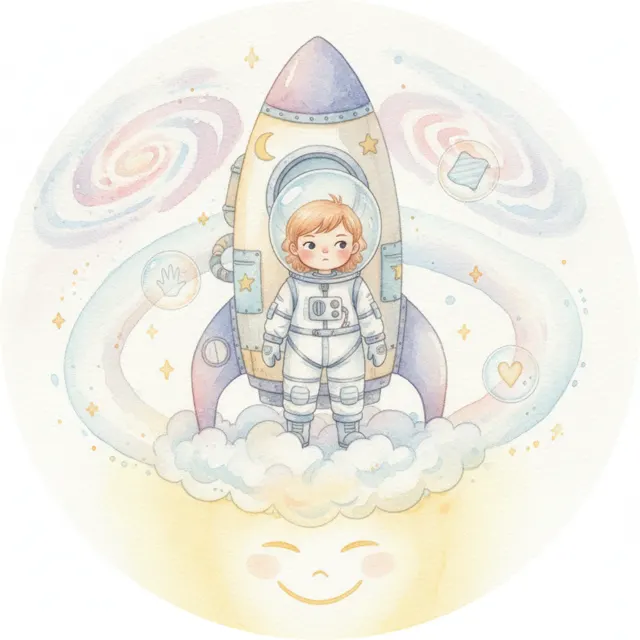
Nova is about to ride her rocket into space for the very first time, and she learns from a kind voice that being brave does not mean you are not scared.

Moral: Being brave means doing the thing even when you feel scared.

Nova had dreamed of being an astronaut for as long as she could remember. She had a poster of the moon on her wall and a little model rocket on her shelf. And now, finally, the big day had come. Today she would ride a real rocket into space. But as she climbed into her seat and buckled the straps, her heart began to thump. Thump thump. Thump thump. "I am scared," Nova whispered to Mission Control. "What if something goes wrong?" A kind voice came through her helmet. "Being scared is part of it, Nova. Even the bravest astronauts feel their hearts beat fast before a launch." "Really?" said Nova. "Really," said the voice. "Brave is not the same as not scared. Brave means you do the thing anyway." Nova took a deep breath. The countdown began. Ten. Nine. Eight. With every number, her heart beat a little faster. Three. Two. One. The rocket roared, and Nova felt herself rise, higher and higher, through the clouds and into the deep blue sky that slowly turned to black velvet full of stars. When the shaking stopped and she floated free, Nova looked out the window at the Earth below, round and blue and beautiful. "I did it," she whispered. "I was scared, but I did it anyway." And in that moment, floating among the stars, Nova understood exactly what brave meant.

The Team on the Moon Base

Ages 3-85 minteamwork
The Team on the Moon Base story for kids illustration

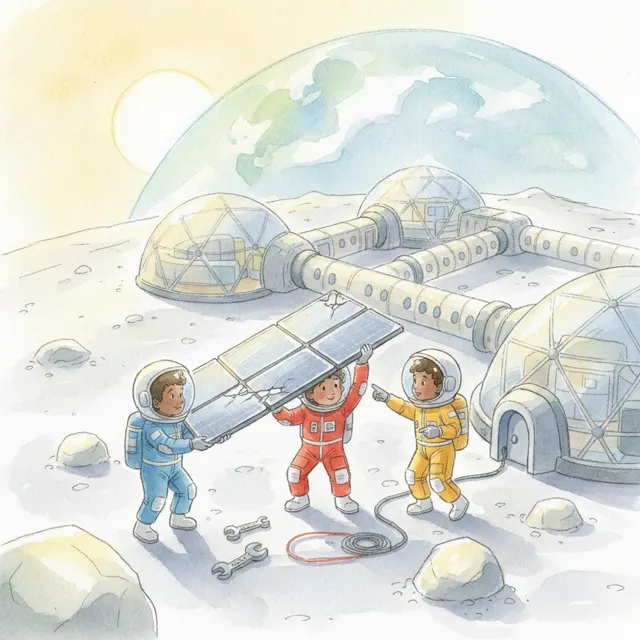
When a broken sun panel on the moon base is too big for any one astronaut to fix alone, a team of three learns that working together gets the hard jobs done.

Moral: The hardest jobs get done when everyone works together.

Far away on the moon, three astronauts lived in a little white base with round windows and a silver roof. Their names were Mia, Sam, and Jo. Each one was clever and brave, but each one liked to do things their own way. One morning, a warning light blinked red. The base's big sun panel had come loose, and if they did not fix it, the whole base would go cold and dark. "I will fix it alone," said Mia, and she marched outside. But the panel was too heavy for one pair of hands. "I will fix it alone," said Sam, and he marched outside. But the panel was too high for one astronaut to reach. "I will fix it alone," said Jo, and she marched outside. But the panel was too tricky for one person to hold steady. The three astronauts sat on the moon dust, tired and cross. Then Mia had an idea. "What if we fix it together?" she said. So Sam held the ladder steady, Jo climbed up high, and Mia passed the tools. One lifted, one turned, one tightened. Before long, the sun panel was fixed, and the light blinked green again. Back inside, warm and bright, the three astronauts high fived with their big space gloves. "The hardest jobs," said Mia, "are the ones we do together." From that day on, whenever the base needed fixing, the three of them suited up side by side.

The Astronaut Who Talked to the Comet

Ages 3-84 minkindness
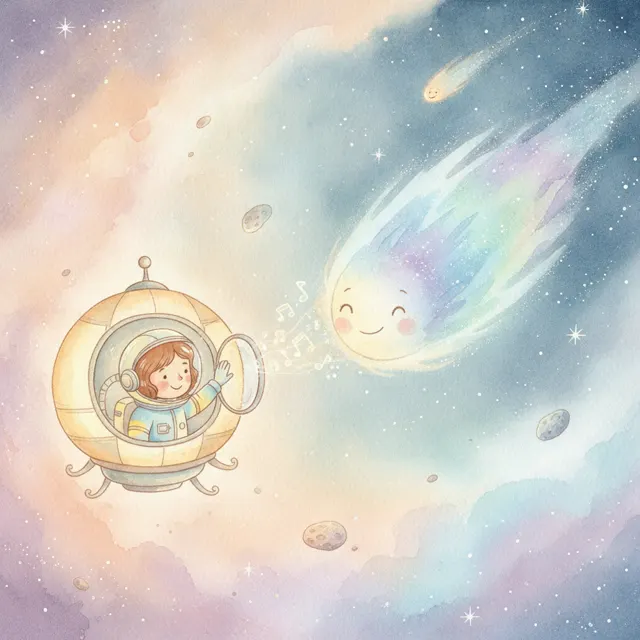
The Astronaut Who Talked to the Comet story for kids illustration

While drifting in her quiet ship, astronaut Bea hears a lonely comet humming past and stops to keep it company, discovering that even a comet far out there needs a friend sometimes.

Moral: Sometimes the best gift you can give someone is a little of your time.

Astronaut Bea loved the quiet of space. While her ship drifted slowly between the stars, she would sit by the big window and watch the sky, which went on forever in every direction. One night, she heard a soft sound. A low, lonely hum, like someone singing a very sad song. "Who is there?" Bea asked, pressing her face to the window. A comet slid past, trailing a long tail of silver dust. "It is only me," said the comet. "I have been flying alone for a very long time." "Do you get lonely?" asked Bea. "Sometimes," said the comet. "Most comets fly alone. No one ever stops to talk to a comet." Bea thought about this. "I have time," she said. "Would you like some company?" The comet's tail seemed to brighten. "I would like that very much." So Bea put on her space suit and floated out to sit beside the comet. They did not do anything special. They just floated together and talked. The comet told Bea about all the planets it had passed, and Bea told the comet about the Earth and the moon and her little dog waiting at home. After a while, the comet had to go. But before it left, it hummed one happy note, bright and clear. "Thank you for stopping," said the comet. "I will not feel so lonely now." Bea waved until the comet was a tiny speck of light. She had learned that the best thing you can give someone, even a comet, is a little of your time.

Milo's Moonwalk

Ages 3-83 minconfidence
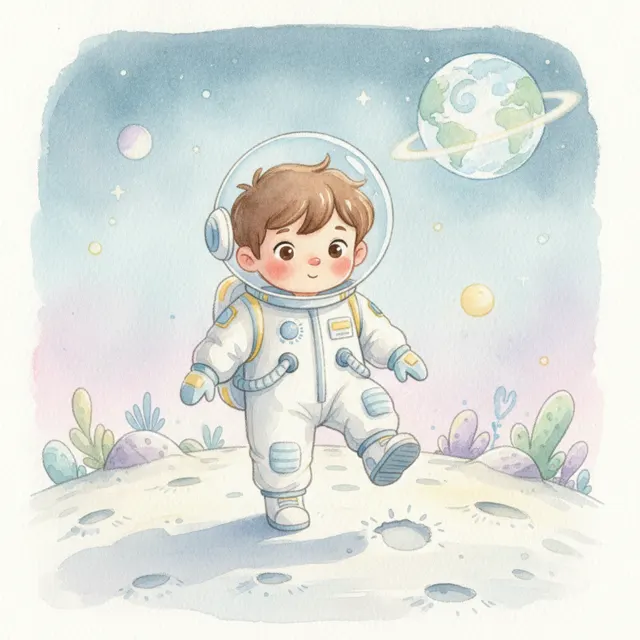
Milo's Moonwalk story for kids illustration

Milo has practiced for his first moonwalk a hundred times, but when the big moment finally comes he realizes that one small careful step is enough to start something great.

Moral: The bravest thing you can do is take the first small step.

Milo had practiced for his first moonwalk a hundred times. He had bounced on his bed, hopped across the living room, and floated in the training pool. He knew the moon's surface would be soft and dusty, and that he should take it slow. But now, standing at the open door of the lander, looking down at the silver dust below, Milo's legs felt like jelly. "What if I fall?" he whispered. "You might," said his captain gently. "The moon dust is soft, and your suit will keep you safe. But you will never know until you take the first step." Milo looked down at the long ladder. It seemed very far to the ground. His heart hammered in his chest. "Start small," said the captain. "Just one step. You do not have to do it all at once." Milo took a breath. Then, slowly, he lowered one boot onto the first rung of the ladder. It held. He lowered the other. Rung by rung, one careful step at a time, he climbed down. When his boots touched the moon dust, it puffed up softly around them. Milo stood still for a moment, then looked up at the Earth, bright and blue in the black sky. "I made it," he whispered. "I took the first step." He did not jump or hop or do anything fancy. He just stood there, on the moon, smiling behind his helmet. Because sometimes the bravest thing in the whole universe is simply taking the first small step.

Zoe's First Space Walk

Ages 3-83 min readcourage
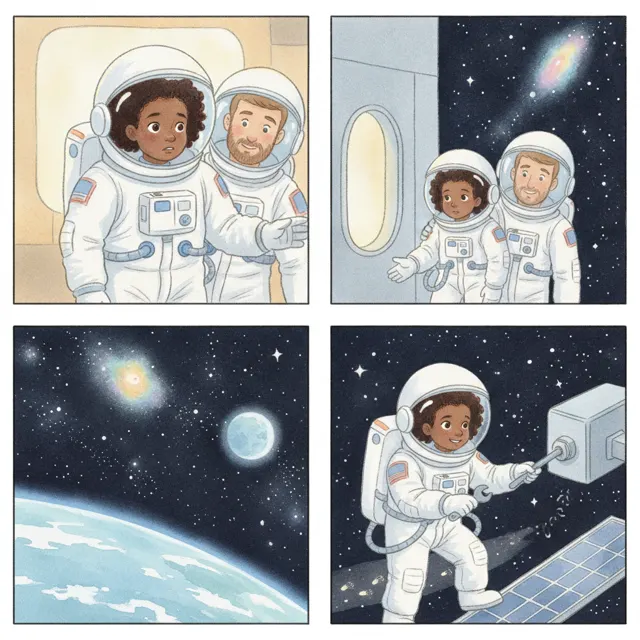
Zoe's First Space Walk story for kids illustration

Zoe the astronaut floats inside the space station, nervous about her first space walk. With Captain Ben right behind her, she steps out into the stars, fixes a loose bolt, and learns being brave means one careful step at a time.

Moral: Being brave means feeling scared and doing it anyway.

Zoe the astronaut floated inside the space station. Outside the window, the stars twinkled in the black sky. Today was her very first space walk. "Are you ready?" asked Captain Ben. Zoe's tummy flipped. "What if I float away?" she asked. "You will be tied to the ship," said Captain Ben. "And I will be right behind you the whole time." Zoe took a deep breath. She pulled on her big white suit and her shiny helmet. The door slid open with a soft hiss, and the wide, dark space waited just outside. Space was huge and dark and full of stars, more stars than Zoe could ever count in a whole year. "One step at a time," said Captain Ben. Zoe put one foot out. Then the other. She floated gently next to the ship, holding the handle tight with both hands. Her heart beat fast, but her hands stayed steady. "I am doing it!" Zoe said. "I am walking in space!" She reached out and fixed a small bolt on the side of the ship. Her hands were slow and careful. She turned the bolt once, then again, until it was snug and tight. The ship was safe again. "Good work, Zoe," said Captain Ben. When they came back inside, Zoe pulled off her helmet and grinned. "I was scared, but I did it anyway," she said. "That is what brave means," said Captain Ben. "Feeling scared and doing it anyway." Zoe looked out the window at the stars. She could not wait for her next walk out into the wide, dark sky.

The Floating Toolbox

Ages 3-83 min readteamwork
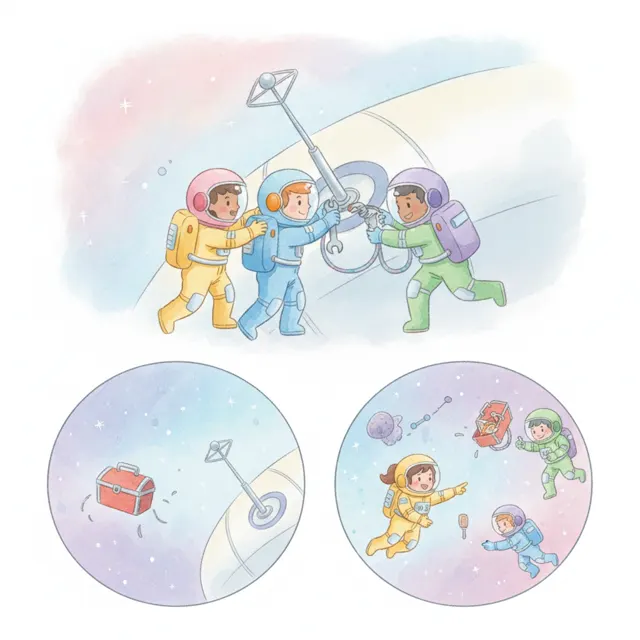
The Floating Toolbox story for kids illustration

When the space station's antenna comes loose, the astronauts find their toolbox has floated away. They split up and search together until Mei finds it, and the whole team works side by side to fix the antenna.

Moral: Working together gets a big job done.

One morning, the astronauts on the space station heard a beep. A small light blinked red. "The antenna is loose," said Commander Ada. "We need the toolbox to fix it." But when they opened the cupboard, the toolbox was gone! "It must have floated away," said Leo. "Things drift in space when you are not looking." Everyone began to search. They looked in the sleeping pods. They looked near the windows. They looked under every seat and inside every cupboard. No toolbox anywhere. In space, a lost thing can float up to the ceiling or hide in a dark corner. "Let us work as a team," said Commander Ada. "You check high, and I will check low." They split up and went in three directions. Leo floated up to the ceiling. Ada looked under the tables. Mei checked all the little corners and every dark nook. "I found it!" called Mei. The toolbox was stuck behind the food locker. "Great job, Mei," said Ada. "Now let us fix the antenna together." Leo held the toolbox steady so it would not drift. Ada turned the bolts with careful hands. Mei handed over the tools one by one, right when they were needed. Snap, snap, snap. The antenna was fixed and the red light went out. "Three hands are better than one," said Leo. "Teamwork," said Ada, smiling. "Together we can fix anything." They all floated to the window and looked out at the big blue Earth below, happy and proud of what they had done together.

Luna and the Quiet Stars

Ages 3-83 min readpatience
Luna and the Quiet Stars story for kids illustration

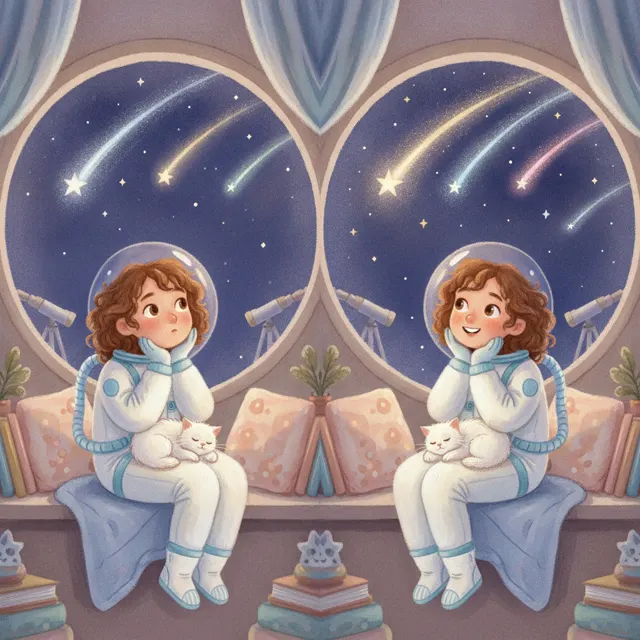
Luna the astronaut waits by the window every night to see a shooting star, but the sky stays still. She keeps watching, and one night the sky lights up, teaching her that good things come to those who wait.

Moral: Good things come to those who wait and watch.

Luna the astronaut wanted to see a shooting star. Every night she floated by the window and looked out into the dark sky. But the sky stayed still. "I have been waiting so long," Luna said. "Where are the shooting stars?" "Keep watching," said her friend Kai. "The best things come when you wait and watch." Luna sighed. She watched the stars blink like tiny night lights. She watched the big blue Earth turn slowly below. She watched a little satellite drift by, its light blinking on and off. She counted the stars one by one to pass the time. "Still nothing," said Luna with a little yawn. "Maybe tonight there are no shooting stars." "Just a little longer," said Kai. "Patience, Luna." Then, whoosh! A bright light streaked across the sky, fast as a silver thread. Then another. And another. The whole sky lit up like a fireworks show. "Shooting stars!" Luna shouted. "They are so bright and fast!" "You waited," said Kai. "And now you get to see them all at once." Luna pressed her nose to the cold window. She watched the stars fall for a long, happy time, too amazed to blink. Each one was brighter than the last, painting the sky with light. "If I had given up, I would have missed it," Luna said. "Patience always pays off," said Kai. "You just have to keep watching." Luna smiled and gave Kai a happy wave. The quiet wait, she learned, was worth every single second.

The Rocket That Wobbled

Ages 3-83 min readpersistence
The Rocket That Wobbled story for kids illustration

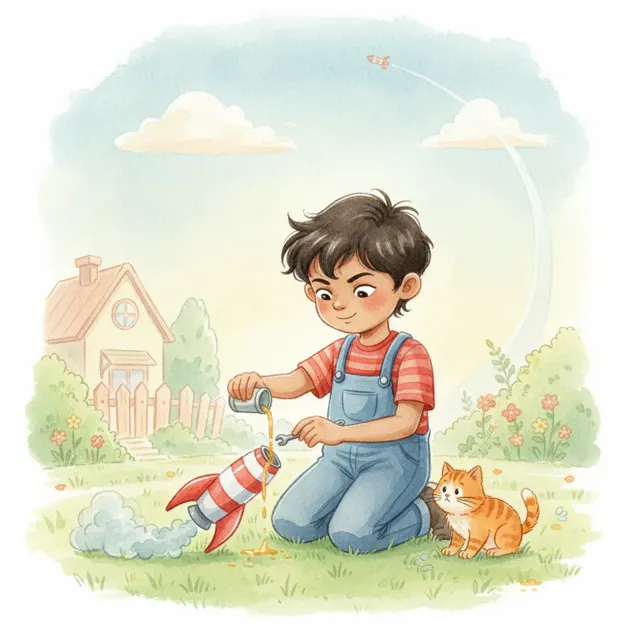
Ravi's little rocket wobbles and tips over every time it tries to launch. Ravi fixes the bent fin and tops up the fuel, and the rocket that never gave up finally flies straight and true into the blue sky.

Moral: If you do not give up, you will reach your goal.

Ravi's little rocket wobbled every time it tried to launch. It would rise a tiny bit, then tip over and land back on the grass with a thud. "I will never fly straight," the rocket said sadly. "I always wobble and tip and fall back down." "Try one more time," said Ravi. "We will fix it together." They checked the fins one by one. One fin was bent to the side. Ravi straightened it with gentle hands until it stood up tall. They checked the fuel. It was a little low. Ravi filled it up to the very top. "Ready now?" asked Ravi. "Take a deep breath and give it one more try." The rocket took a deep breath and tried again. It rose up slowly at first. It wobbled once, then found its balance, then went straight and true. Up, up, up it flew into the bright blue sky, higher than the tallest tree. "I am flying!" the rocket cheered. "I did not give up, and now I am flying!" "You kept trying," said Ravi. "You did not give up, and that is how rockets reach the stars." The rocket flew higher than it ever had before. It waved its fins at the clouds and smiled all the way up. The next launch was even better, and the next one better still. It looped once around the whole yard, proud and strong and sure. The little rocket that once wobbled was now the best flyer in the whole yard.

Leo's Lost Button

Ages 3-83 min readproblem solving
Leo's Lost Button story for kids illustration

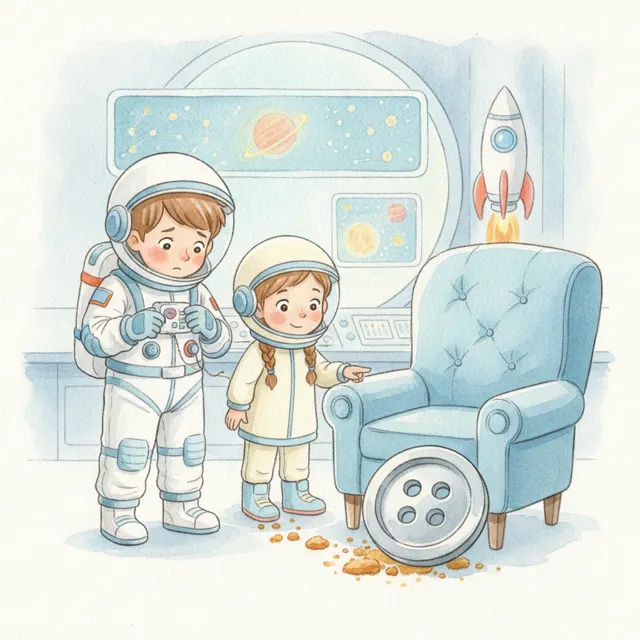
Leo the astronaut cannot find the button to his space suit before a big mission. Instead of panicking, his friend Mira helps him think step by step, and they find the button right where the crumbs led.

Moral: A calm mind can solve any little problem.

Leo the astronaut could not find the button to his space suit. He needed it for the big mission that morning, and now it was missing. "I looked everywhere!" Leo said, patting all his pockets. "The button is gone!" "Let us think," said his friend Mira. "Do not worry. We will find it. When did you last see it?" "After breakfast," said Leo. "I was eating a muffin, and crumbs went everywhere." "Then look where the crumbs went," said Mira. "A clue can hide in plain sight." Leo looked near his seat. There were crumbs on the floor and on the table. He lifted the napkin and looked underneath. And there, tucked under a napkin, was a small silver button, shining up at him. "You found it!" said Mira. "Thinking calmly helped us find it." "I was too upset to think straight," said Leo. "Next time I will stay calm and look step by step, just like we did today." "That is how astronauts solve problems," said Mira. "One small step at a time, never all at once. Panic makes things hide, but calm thinking finds them." Leo smiled and fixed the button to his suit, snap, snap. He clipped his helmet and stood tall, ready to go. "Mission ready," said Leo, standing tall. "Thanks for helping me think it through, step by step." "Anytime," said Mira. "A calm mind can solve any little problem, big or small." Leo floated to the door and gave Mira a thumbs-up, ready for the stars.

Bedtime on the Space Station

Ages 3-83 min readroutine
Bedtime on the Space Station story for kids illustration

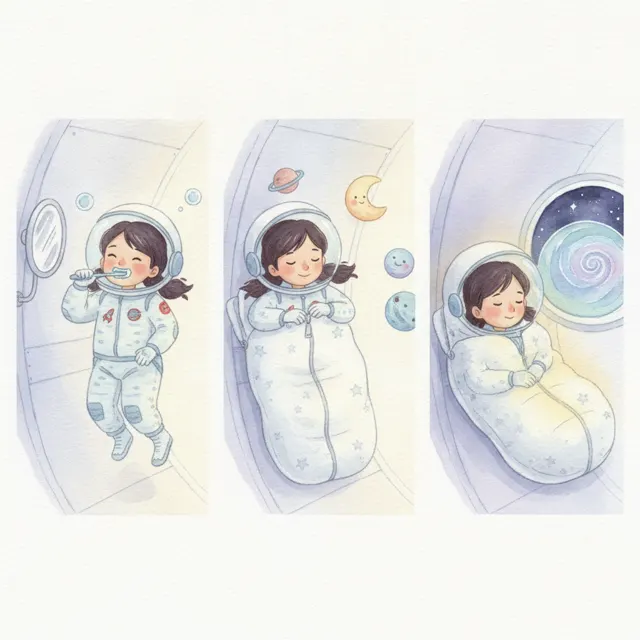
Little astronaut Ana has the same bedtime routine every night on the space station, from brushing her teeth to zipping into her sleeping bag. Her routine helps her rest and wake up full of energy.

Moral: A bedtime routine helps your body rest and grow.

Every night on the space station, the little astronaut Ana had the same bedtime routine. First she brushed her teeth with water that floated in the air. Then she put on her warm sleeping bag. "Time for bed," said Ana's papa through the radio. "But I want to watch Earth one more time," said Ana. "One more look," said Papa. "Then it is lights out." Ana floated to the window. Earth glowed blue and green below her, so round and bright. She could see the oceans and the clouds and the dark shapes of the lands. She sighed, happy and sleepy. "It looks like a big blue marble," said Ana. "It does," said Papa. "Now, into your sleeping bag, little star." Ana climbed into her sleeping bag and zipped it to the wall so she would not float away in the night. She held her little bear close to her chest and tucked her arms in warm. "Goodnight, Earth," Ana said. "Goodnight, stars." Papa turned down the lights, low and gentle. The station hummed a soft, low song, like a lullaby from far away. Ana's eyes grew heavy, and she drifted off to sleep. In the morning, Ana woke up bright and full of energy. "I slept so well," she said. "My routine helped me rest." "Routines help us all," said Papa. "Even astronauts need good sleep to grow and do their best." Ana nodded, grabbed a pouch of morning juice, and floated off to start her day among the stars.

The Moon Garden

Ages 3-83 min readhope
The Moon Garden story for kids illustration

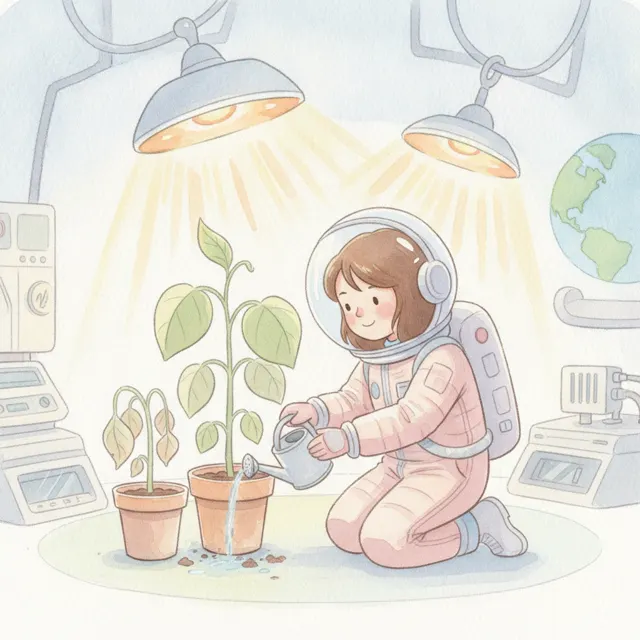
On the moon base, astronaut Tara finds a drooping little plant under the special lights. She waters it and moves it closer to the light, and with care and patience the plant stands tall and grows a new leaf.

Moral: Caring for a small thing can help it grow.

On the moon base, there was a tiny garden. The astronauts grew green plants under special bright lights, far from the cold gray ground outside. One little plant looked droopy. Its leaves hung low and sad, and its stem bent toward the floor. "What is wrong with this one?" asked astronaut Tara. "It needs more light and a little more water," said the garden keeper. "Plants need care, just like us, a little every day." Tara gave the plant a little water. She moved it closer to the warm light. Each day she came back to check on it. At first nothing changed. The plant still drooped its leaves, and Tara worried it might not make it. "Give it time," said the keeper. "Care takes patience." Tara waited and cared for the plant every single day. She talked to it softly and kept its soil damp with a little dropper. She checked the light and turned the pot toward it. Then one morning, the leaves stood up straight and tall. A tiny new leaf opened, bright and green. "It is growing!" Tara cheered. "Look at the new leaf! It is the greenest thing I have ever seen up here!" "You helped it," said the keeper. "Care and patience help things grow, on the moon or on Earth." Tara smiled from ear to ear. In the middle of the cold, gray moon, a little green garden was growing, and she had helped it grow strong and brave, one drop of water at a time.

Frequently Asked Questions

Turn Your Child Into the Hero of Their Own Story

Upload their photo and watch as AI creates a beautiful, personalized storybook with illustrations that look just like them. From $5.99/month.

✨ Make Your Child the Hero

Plans from $5.99/month