Egyptian Stories for Kids

Pyramids glow gold at sunset, the Nile drifts by, and a friendly temple cat waits for your child to arrive.

✨ Make Your Child the Hero

Ancient Egypt is full of quiet wonder for small children. Tall pyramids stand in the golden sand. The wide Nile river carries little boats along, slow and calm. Temple cats nap in the shade. Scribes scratch careful signs on soft clay. Now imagine your child standing right in the middle of it all. They can sail on the river, meet a kind pharaoh, or help a lost cat find its way home. Each CreateStory.ai story is built around your child. Upload a photo and your little one becomes the hero of their own Egyptian tale, page by page.

Why do kids love Egyptian stories so much?

Egyptian stories bring a faraway land right to a child's lap. Kids meet kind friends by a big river, watch a scribe write letters, and say hello to a temple cat. Each little tale turns a long ago place into a warm, close one.

That long ago place is real. The Great Pyramid at Giza was built about 4,500 years ago and still stands today (National Geographic). A child can touch that wonder through a story, even from far away.

What can kids learn from stories about old Egypt?

Stories about old Egypt teach big things in small ways. A child learns to share water, wait for the flood, and tell the truth about a lost sandal. The lessons are simple and close to a child's own day.

There is so much to see in that old land. Egypt is home to more than 118 pyramids, and diggers are still finding more (Egyptian archaeological records). One small story can be the start of a big love for history.

Sample Stories

Read these stories, then create a personalized version where your child is the hero

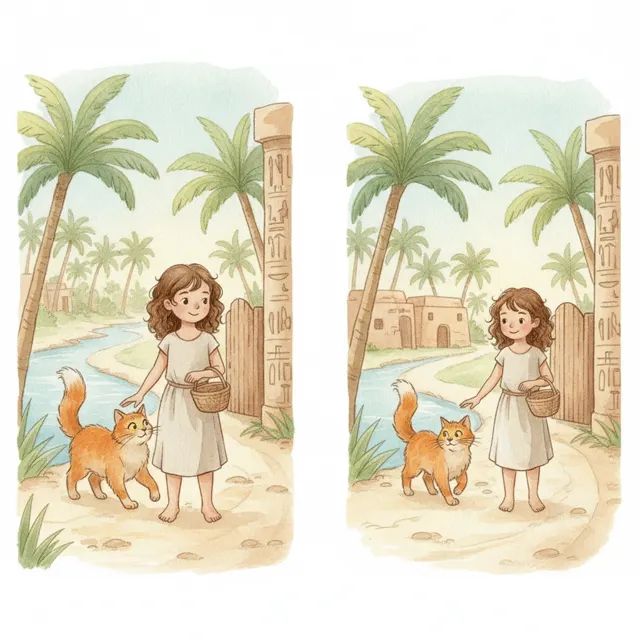
The Temple Cat Shows the Way
Ages 3-83 minkindness
The Temple Cat Shows the Way story for kids illustration

A little girl wanders too far from home along the Nile and meets a friendly temple cat with golden eyes. The cat gently leads her past palm trees and back to her own front gate, showing that a small kindness can find the way home.

Moral: Being kind to a small friend can help you find your own way home.

Kia lived in a small house beside the wide Nile river. One hot afternoon she chased her ball too far from home. She looked up and did not know where she was. "I am lost," Kia said softly. Her voice felt small. A brown cat with golden eyes padded out from behind a big stone. He rubbed his head against Kia's leg and meowed. "Hello, little cat," Kia said. She knelt down. "Are you lost too?" The cat meowed again and walked a few steps. Then he stopped and looked back at Kia, waiting. "You want me to follow?" Kia asked. She stood up and walked after him. The cat led her past a tall palm tree and along the edge of the river. The water made a soft hushing sound. Kia felt a little braver with the cat beside her. Soon she saw a red cloth flapping in the breeze. It was her own front gate. Her mother was standing there, calling her name. "Kia! There you are," her mother said, and hugged her tight. Kia turned to thank the cat, but he was already trotting away. Before he went, he paused and gave one last meow, then vanished behind the stones. "He showed me the way home," Kia said. Her mother smiled. "It seems you made a good friend." That night Kia left a small bowl of milk by the gate. In the morning the bowl was empty, and two tiny paw prints sat in the sand beside it. The next time Kia went out to play, she stayed where she could see her gate. And whenever she saw a brown cat with golden eyes, she gave a little wave and said thank you.
Amina Writes Her Name

Ages 3-84 minpatience
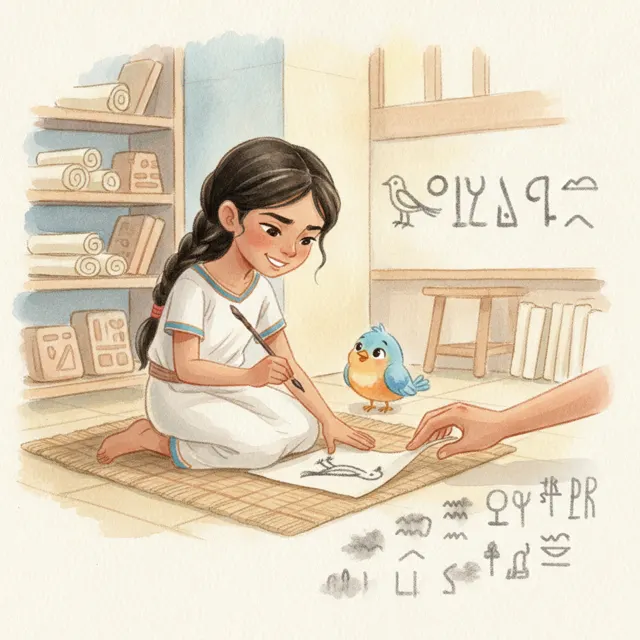
Amina Writes Her Name story for kids illustration

Amina loves scribe school but cannot write her name in hieroglyphs. The little bird sign keeps wobbling. With patience and one more try after another, she learns that steady hands can draw anything, even a name.

Moral: Keep trying, even when it is hard, and your hands will learn.

Amina sat on the cool floor of the scribe school. All the other children could write their names in little pictures called hieroglyphs. Amina could not yet. She watched them carefully and wished her own hand would behave. She dipped her reed brush in the black ink and tried to draw the little bird that starts her name. The bird came out with a wobbly wing. "I will never get it," Amina said, and put her brush down. Her teacher, old Master Hemi, sat beside her. "My first bird looked like a duck with three legs," he said with a grin. "Try one more time. Slowly." Amina took a deep breath. She drew the bird again, very slowly. This time the wing looked better. "Now the water sign," she told herself. She practiced the water sign again and again. Her fingers got sticky with ink. The sun moved across the sky. Amina did not stop. At last she looked down at the clay and smiled. There it was. Her name, in neat little pictures, all in a row. "I did it," she whispered. Then she said it louder. "I did it!" Master Hemi nodded. "A good scribe keeps her brush moving, even when the bird wobbles." That evening Amina showed her name to her mother, who hung it by the door for everyone to see. Every day after that, when a sign felt too hard, Amina remembered the wobbly bird. She would slow down, breathe, and try one more time. And little by little, her hands learned.

Bread by the River

Ages 3-83 minsharing
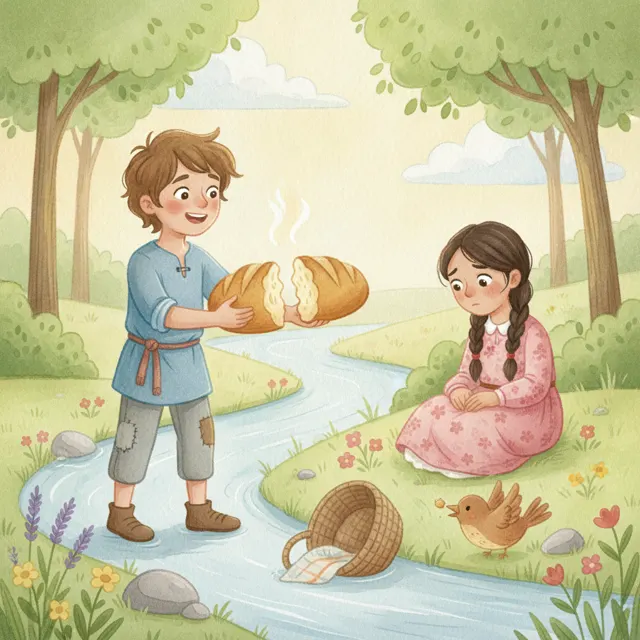
Bread by the River story for kids illustration

Omar carries a warm loaf of bread to the river and finds his friend Dara hungry after a bird stole her lunch. He breaks his bread in two and shares the bigger piece, turning a sad day into a happy afternoon.

Moral: Sharing a little of what you have can turn a sad day around.

Omar walked down to the river with a warm round loaf of bread in his hands. His mother had baked it that morning, and it was soft and still smelled of the oven. He was going to eat it under his favorite palm tree, where the shade was cool and the water made a gentle sound. At the river he saw his friend Dara sitting alone. Dara's shoulders were slumped, and she was drawing slow circles in the sand with a stick. "What is wrong?" Omar asked. "I lost my lunch in the reeds," Dara said. "A big bird flew off with it. My tummy is rumbling." Omar looked at his bread. It was a good, big loaf. Then he looked at his friend's sad face. He sat down next to Dara and broke the bread into two pieces. He held out the bigger piece. "Here," he said. "Half for you, half for me." Dara's eyes went wide. "Are you sure?" "Very sure," Omar said. "Bread tastes better when two people eat it." So they ate together by the river. Dara told a funny story about a goat who chased a basket, and Omar laughed so hard he nearly dropped his bread in the water. When they were done, Dara smiled. "You shared with me. Now I will share my dates with you tomorrow." The next day Dara came to the river with a little basket of sweet brown dates. The two friends sat under the palm tree and shared them all afternoon. And the river went on flowing, slow and calm, as if it were happy too.

Lila Speaks to the Pharaoh

Ages 3-85 mincourage
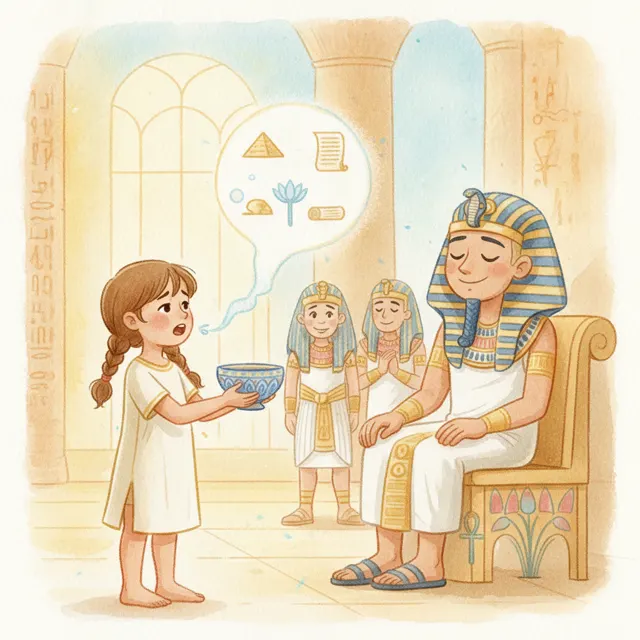
Lila Speaks to the Pharaoh story for kids illustration

Lila is chosen to present a small blue bowl to the pharaoh, but her voice wobbles with nerves. Standing before a kind pharaoh, she finds the courage to speak, and learns that a small voice can still say something big.

Moral: A small voice can still say something big when you believe in it.

Lila's teacher chose her to carry a small gift to the pharaoh. It was a tiny clay bowl painted blue like the river. But Lila had to say the words that went with it, in front of everyone. All morning Lila's heart went thump, thump, thump. "What if I forget the words?" she asked her mother. "Then you will look at the bowl and remember," her mother said, and held her hand. In the great hall, the pharaoh sat on a high golden chair. He did not look scary. He looked kind, with soft eyes and a warm smile. Lila walked up with the bowl. Her legs felt like wet reeds. She took one deep breath. "Great pharaoh," she began, and her voice wobbled. She stopped. The room was very quiet. Then she looked at the bowl and remembered why she had come. She was not there to be perfect. She was there to give a gift with a good heart. "This bowl is for you," Lila said, louder this time. "It is the color of our river, so you will never forget the water that feeds our village." The pharaoh leaned forward. "That is the finest gift I have received all week," he said. "You spoke with a strong and true voice." Lila walked back to her mother, and her heart was not thumping anymore. It was singing. From that day on, whenever Lila felt afraid to speak, she remembered the bowl and the kind pharaoh. She would take a deep breath, and her voice would find its way out.

Two Hands Carry the Water

Ages 3-84 minteamwork
Two Hands Carry the Water story for kids illustration

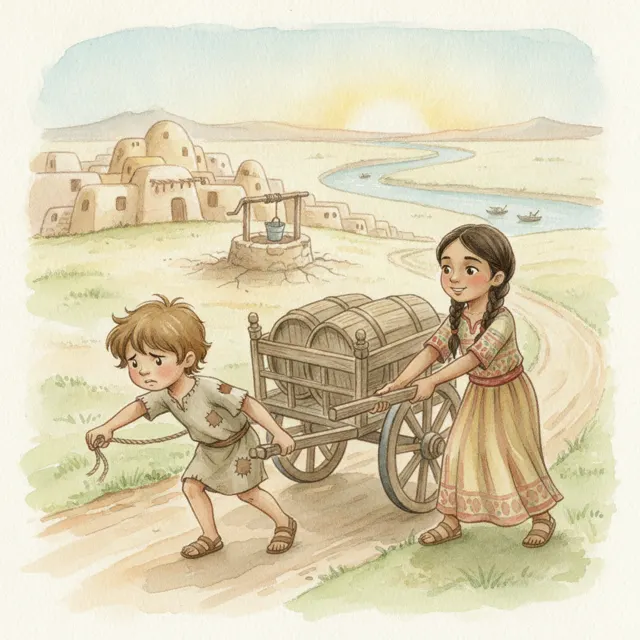
The village well has run dry, and the heavy water cart must be pulled from the far river every day. Sami tries to do it alone until Nefer shows him that two hands working together make a hard job feel light.

Moral: Working together makes a hard job feel lighter.

Two children, Sami and Nefer, lived in a small village on the edge of the desert. The village well had gone dry in the long hot summer. Every day the big water cart had to be filled from the far river and pulled back over the sandy hill. It was heavy work, and one person could never do it alone. One morning Sami tried to pull the full cart by himself. He leaned and pulled and his sandals slid in the sand, but the cart did not move. Nefer came over. "Let me help," she said. Sami shook his head. "It is my job today. I should do it myself." "But two hands are stronger than one," Nefer said. "You push, I pull. We will both be home before the sun gets hot." Sami thought about it. Then he nodded. "Okay. Together." Nefer pushed from the back while Sami pulled from the front. The cart rolled forward, slow and steady, over the hill and down into the village. The other children saw them and clapped. The mothers filled their jars with cool water and smiled. "That was easy," Sami said, wiping his face. "That was teamwork," Nefer said, and she laughed. Every day after that, Sami and Nefer moved the water together. They sang a little song to keep their steps even, and the work felt like a game. The village never went thirsty again. And Sami learned that asking for help is not a weakness. It is how big jobs get done.

The Boy Who Fed the Nile Bird

Ages 3-83 minuteskindness
The Boy Who Fed the Nile Bird story for kids illustration

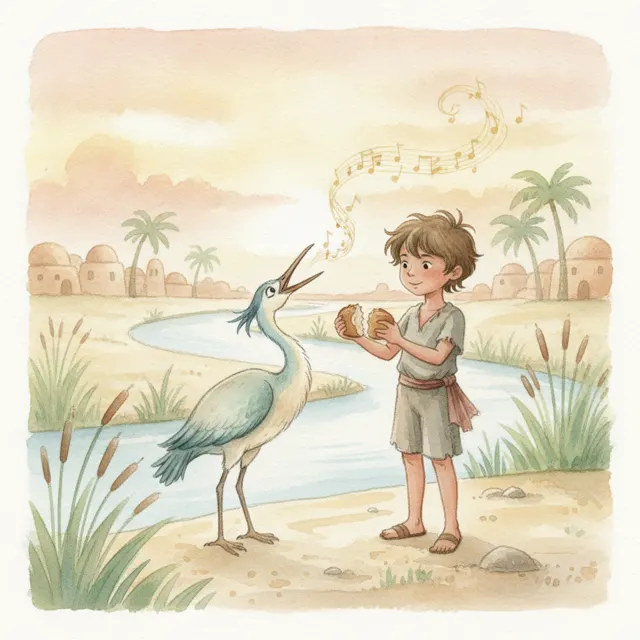
Tarek has one small loaf of bread. A hungry bird waits by the river. Tarek gives the bird half of his bread. The bird sings a happy song. Sharing what little you have can feed a friend.

Moral: Sharing what little you have can feed a friend.

Tarek lived by the big river Nile. Every morning he got one small loaf of bread. It was all he had to eat. One morning a small bird landed near him. It was thin and hungry. It looked at the bread with big, sad eyes. "Are you hungry?" asked Tarek. The bird nodded its little head. Tarek looked at his bread. It was small. But the bird was smaller. He broke the loaf in half. "Here," said Tarek. "We can share." The bird hopped closer. It pecked at the bread. Then it ate it all up. "Thank you," said the bird. "I was so hungry. You are very kind." "I only had a little," said Tarek. "But a little shared is better than a lot kept for one." The bird flew up to a branch. It sang a happy song. The song was so pretty that Tarek smiled. "I wish I could give you more," said Tarek. "You gave me half of all you had," said the bird. "That is the biggest gift of all." The next morning, the bird came back. It had a tiny, sweet date in its beak. It dropped it into Tarek's hand. "For you," said the bird. "A friend who shares is a friend to keep." Tarek smiled. He ate the date. It was the sweetest thing he had ever tasted. Sharing had made two friends that day. "I will come back every morning," said the bird. "And I will bring you a song and a date." Tarek laughed. "Then I will always share my bread."

Nefer and the Lost Sandal

Ages 3-83 minuteshonesty
Nefer and the Lost Sandal story for kids illustration

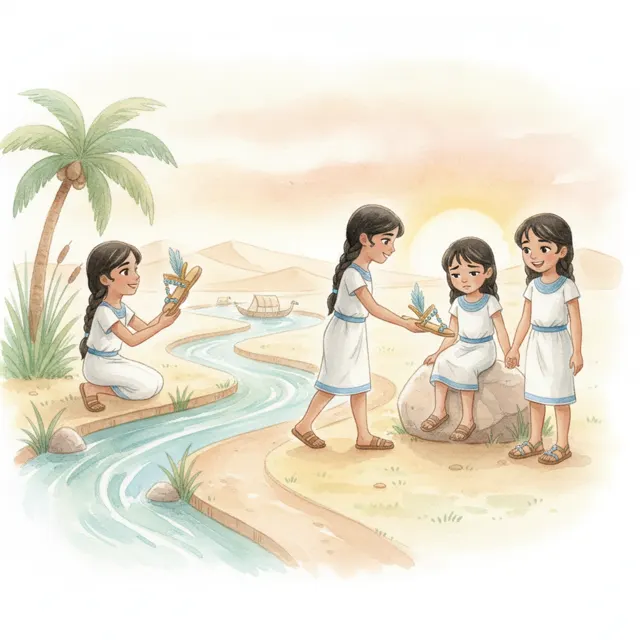
Nefer finds a pretty sandal by the river. She wants to keep it. Then she sees a girl with one bare foot. Nefer gives the sandal back. Giving back what you find is the honest thing to do.

Moral: Giving back what you find is the honest thing to do.

Nefer was walking by the river Nile. She saw something in the sand. It was a sandal. It was made of soft, pretty cloth. It looked brand new. "What a nice sandal," said Nefer. She picked it up. "I could keep this. Finders keepers." She held the sandal. It was lovely. But then she saw a girl walking slowly. The girl had one bare foot. She was looking all around. "What are you looking for?" asked Nefer. "I lost my sandal," said the girl. "It fell off by the river. It was a gift from my mother. I cannot find it anywhere." Nefer looked at the sandal in her hands. Her heart felt heavy. She knew it was the girl's. "What color is your sandal?" asked Nefer. "It is red and soft," said the girl. "It is my favorite thing in the whole world." Nefer took a deep breath. She held out the sandal. "Is this your sandal?" asked Nefer. "I found it in the sand." "Yes!" said the girl. "You found it! Thank you so much!" "I thought about keeping it," said Nefer. "But that would not be right. It belongs to you." The girl put on her sandal. "You are so honest," she said. "Most people would have kept it." "Giving back what you find is the honest thing to do," said Nefer. "And being honest feels better than a pretty sandal." The girl smiled. "My name is Layla. Do you want to play by the river with me?" Nefer smiled back. "I would love that."

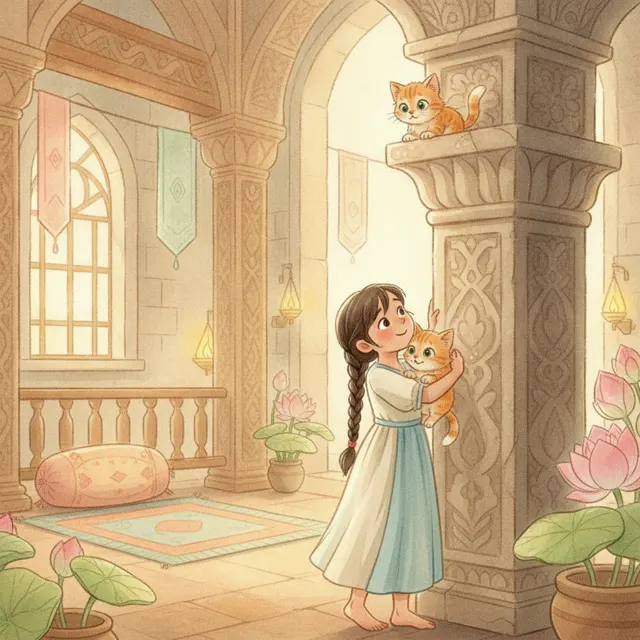
The Kitten in the Temple

Ages 3-83 minuteshelping
The Kitten in the Temple story for kids illustration

Ani hears a small meow inside the big temple. A kitten is stuck on a high ledge. Ani climbs up slow and careful. She brings the kitten down safe. A small act of help can save a small life.

Moral: A small act of help can save a small life.

Ani lived near a big temple. One day she heard a small sound from inside. "Meow. Meow." Ani stepped inside the cool, stone temple. She looked up. A tiny kitten was stuck on a high ledge. It was too scared to jump down. "Oh no," said Ani. "How did you get up there?" "Meow," said the kitten. It looked very scared. "Do not worry," said Ani. "I will get you down." The wall was high. But Ani saw some big stones that stuck out. She could climb them like steps. "I am coming up," said Ani. "Stay still." She climbed slow and careful. One stone at a time. Up, up she went. Her hands held tight. She did not look down. "I am almost there," she said. At last she reached the ledge. The kitten was shaking. Ani picked it up very gently. It snuggled into her arms. "I have you," said Ani. "You are safe now." She climbed back down slow and careful. When her feet touched the floor, she let out a big breath. "You did it," said an old temple keeper who had come in. "You saved the little one." "Someone had to help," said Ani. "It was so small and so scared." The kitten purred in her arms. "A small act of help can save a small life," said the keeper. "You are a kind child." Ani smiled. She carried the kitten home. It was her best friend from that day on. And Ani loved it with all her heart.

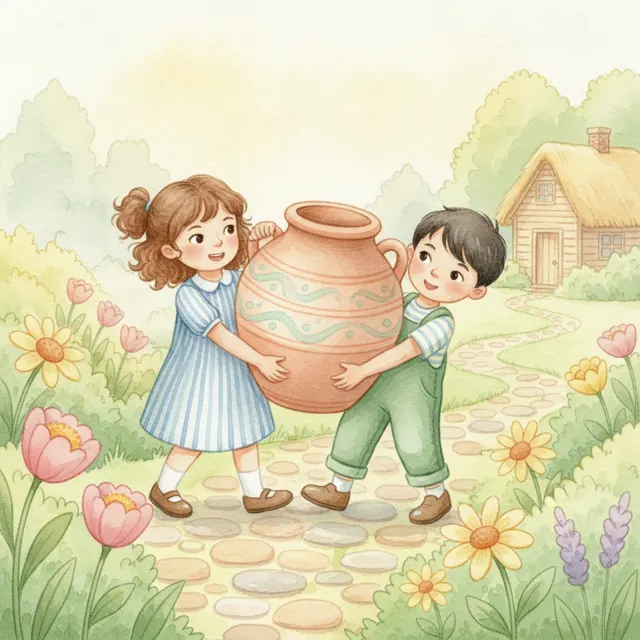
Two Friends and One Water Jar

Ages 3-83 minutesteamwork
Two Friends and One Water Jar story for kids illustration

The big water jar is too heavy for one child. Mira cannot lift it alone. She asks her friend Omar to help. They carry it together to the garden. Two friends can carry what one cannot lift alone.

Moral: Two friends can carry what one cannot lift alone.

Mira lived in a small village by the Nile. Every day the children carried water from the river to the garden. The water jar was big and heavy. Today it was Mira's turn. She tried to lift the jar. It did not move. "This jar is too heavy," said Mira. "I cannot carry it alone." She tried again. She pulled and pulled. Her arms hurt. The jar did not move. Just then her friend Omar walked by. "Do you need help, Mira?" he asked. "I can do it myself," said Mira. She tried once more. Nothing. Omar stood beside her. "Even strong arms get tired," he said. "Let me help. Two friends can carry what one cannot lift alone." Mira thought about it. "Okay," she said. "Let us carry it together." They each took one handle. They counted to three. "One, two, three, lift!" The jar came up. It was not so heavy when they shared the work. "See?" said Omar. "We did it together." They walked to the garden, one on each side. They watered the green plants. The plants looked happy. "I was too proud to ask for help," said Mira. "But asking a friend is smart, not weak." "Friends help friends," said Omar. "That is what friends are for." They carried the jar back to the river. From that day on, they always carried it together. And the work felt light, because a friend was by their side. "Next time, just ask," said Omar. "I will," said Mira. "I promise."

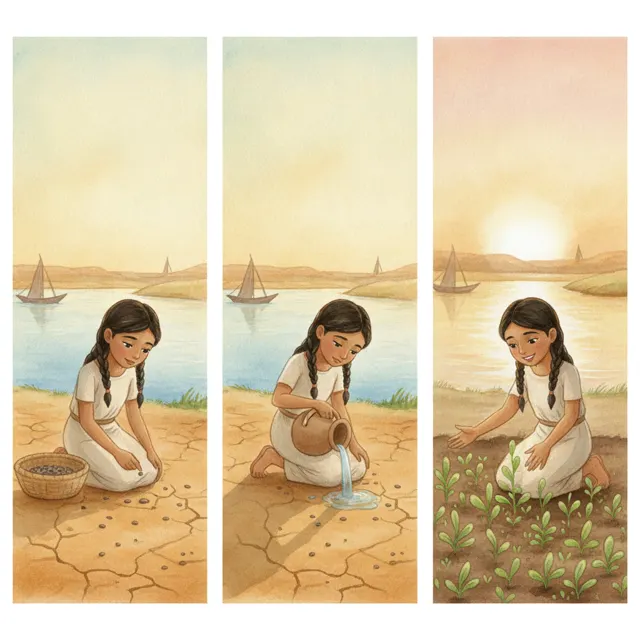
The Girl Who Waited for the Flood

Ages 3-83 minutespatience
The Girl Who Waited for the Flood story for kids illustration

The Nile rises every year and makes the dry land rich. Sena plants seeds and waits. Nothing grows at first. She waters and waits. At last the green shoots come. Good things grow when you wait.

Moral: Good things come to those who wait.

Sena lived by the great river Nile. Every year the river rose and made the dry land rich and dark. Then the farmers planted their seeds. This year Sena planted a little patch of her own. She pushed the seeds into the soil. She watered them. "Grow, little seeds," she said. "Grow." The next day she ran to her patch. Nothing. Just dark soil. "Nothing is growing," said Sena. "I want to see my plants now." "Be patient," said her father. "Good things take time. The seeds are working under the soil." Sena waited. She watered every day. She pulled out the little weeds. Still nothing grew. "This is taking so long," she said with a sigh. "Keep watering," said her father. "Keep waiting. The Nile did not rise in one day, and your seeds will not sprout in one day." Sena did not give up. She watered and waited. She waited and watered. Then one morning she saw it. A small green shoot. It was pushing up through the dark soil. "Look, father!" said Sena. "A little plant! It is growing!" "So it is," said her father. "Your waiting paid off." The next weeks, more shoots came. They grew tall and green. Soon her patch was full of little plants. "They were worth the wait," said Sena. "Yes," said her father. "Good things come to those who wait and keep caring." Sena watered them every day. "You were worth the wait," she told them. The little plants seemed to nod in the warm sun.

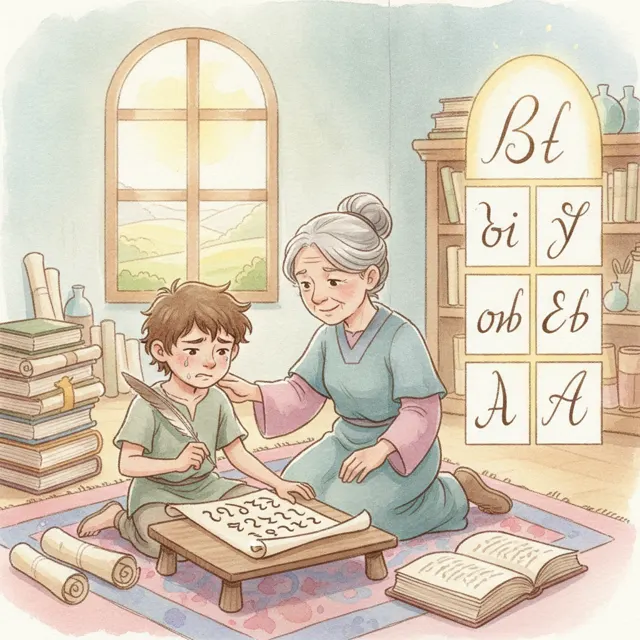
The Scribe Who Tried Again

Ages 3-83 minutespractice
The Scribe Who Tried Again story for kids illustration

Bek is learning to write the hard letters. He keeps making them wrong. He wants to quit. His teacher tells him to try again. Little by little the letters get right. Practice makes hard things easy.

Moral: Keep trying and the hard words get easy.

Bek was learning to be a scribe. He wrote on soft clay with a little stick. Some letters were easy. But a few were very hard. Bek wrote the hard letter again and again. It came out wrong every time. The lines were all crooked. "I cannot do it," said Bek. "My hand is too shaky. I want to stop." His teacher looked at his clay. "Your first lines were crooked too," he said. "But look at them now. They are getting better." "They are still wrong," said Bek. "Learning to write is like learning to walk," said the teacher. "You fall many times. Then one day you do not fall." Bek looked at his clay. "So I should try again?" he asked. "Yes," said the teacher. "Again and again. Practice makes hard things easy." Bek picked up his stick. He drew the letter once. It was crooked. He drew it again. It was a little better. He drew it ten more times. "Look," said Bek. "The last ones are almost straight." "You see?" said the teacher. "You did not give up. And now the hard letter is getting easy." Bek practiced every day after that. Soon the hard letters were his best letters. "I wanted to quit," said Bek. "I am so glad I did not." "The best scribes are the ones who kept trying," said the teacher. "And you, Bek, are one of them." Bek smiled all the way home. He could not wait to write again the next day.

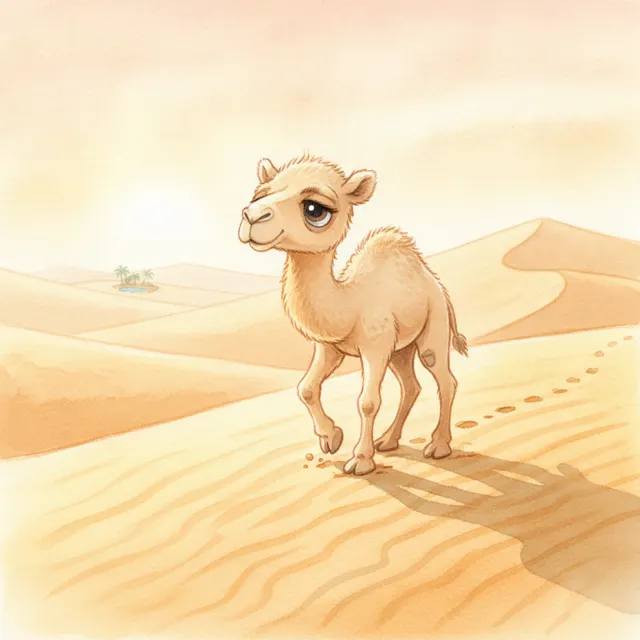
The Little Camel Who Would Not Stop

Ages 3-83 minutesperseverance
The Little Camel Who Would Not Stop story for kids illustration

A young camel must cross a long stretch of sand. It is tired and wants to lie down. It takes one small step, then another. Little steps every day can reach a far place.

Moral: Little steps every day can reach a far place.

Jabal was a young camel. He was crossing the long, hot sand with the caravan. The walk to the market was very far. "I am so tired," said Jabal. "My legs hurt. I want to lie down in the sand." The old camel next to him smiled. "Do not look at the far end," she said. "Look only at the next step." Jabal looked ahead. The sand went on and on. It looked too far. "I cannot make it," said Jabal. "You can," said the old camel. "Just take one small step. Then another." Jabal took one small step. Then another. It was not so hard. "I am still walking," said Jabal. "Good," said the old camel. "Little steps every day can reach a far place." The sun was hot. Jabal wanted to stop. But he kept taking one small step, then another. He did not look at the far end. He looked at his own feet. "Almost there," said the old camel after a long while. "Look up now." Jabal looked up. There was the market. It was right in front of him. "I made it!" said Jabal. "I did not think I could." "You did not stop," said the old camel. "That is the whole secret. One step at a time." Jabal stood tall. He felt strong and proud. The long, hard walk was over. And he had walked it all by taking little steps. "Thank you for showing me the way," said Jabal. "You walked it yourself," said the old camel. "I just helped you see it."

Frequently Asked Questions

Turn Your Child Into the Hero of Their Own Story

Upload their photo and watch as AI creates a beautiful, personalized storybook with illustrations that look just like them. From $5.99/month.

✨ Make Your Child the Hero

Plans from $5.99/month