Musician Stories for Kids

From a shy first note to a song the whole town hums, these tales follow children who find their music.

✨ Make Your Child the Hero

Every child is born with a little music in them. Some bang on pots, some hum before they can talk, and some just dance when no one is watching. Musician stories give that music a home. They show a child that a wrong note is not the end of a song, that practice is just playing until it feels easy, and that the shyest voice can grow brave with a little help. These gentle tales are full of pianos, drums, and songs sung softly at bedtime. With CreateStory.ai, you can put your child on center stage. Upload a photo, and your child becomes the hero who finds their song.

How Does Learning Music Help Your Brain Grow?

Learning music helps young brains grow stronger. A study found that children who learn music get faster growth in the brain parts that handle sound, language, and reading (USC). Playing music is like a workout that helps your brain get better at many things.

How Old Is the Oldest Musical Instrument Ever Found?

People have made music for a very long time. The oldest instrument ever found is a flute carved from a bird's bone, and it is about 40,000 years old (National Geographic). That means people were playing music long before there were written words.

Sample Stories

Read these stories, then create a personalized version where your child is the hero

The First Note

Ages 3-83 mincourage
The First Note story for kids illustration

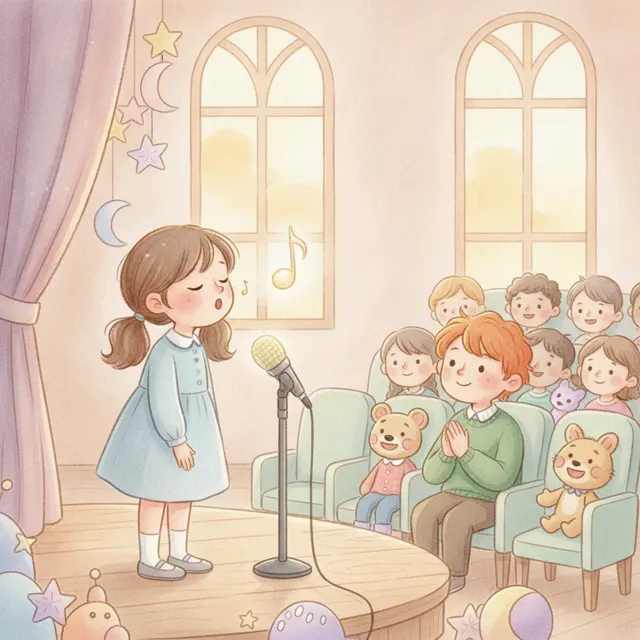
Maya loves to sing but is too shy to do it in front of anyone. When her friend Kai asks her to sing at the school show, one brave note is all it takes to start.

Moral: One brave note can start a whole song.

Every year, the school held a music show, and every year, Maya watched from the back row, too shy to sing. She loved to sing at home, in the shower, and to her cat, but the thought of singing in front of everyone made her knees shake. This year, her best friend Kai signed up to play the piano. "You should sing with me," Kai said. "We could do a song together." "I cannot," Maya said. "What if I sing a wrong note?" "Then we will sing the next note," Kai said. "Please, Maya. A song with two voices is better than a song with one." Maya thought about it all week. On the night of the show, her heart pounded as Kai began to play. The music started, and it was Maya's turn. She looked at Kai, and Kai gave her a small nod, as if to say, you can do this. She opened her mouth, and one small, soft note came out. It wobbled a little, but it was there. Then she sang another note, and another. Kai played along, and soon their voices filled the room. When the song ended, the room clapped. Maya looked out at all the smiling faces and felt something warm in her chest. "I did it," she whispered to Kai. "I knew you would," Kai said. "You just needed to find your first note." And from that night on, Maya sang at every show, because she knew that one brave note was all it took to start.
Max and the Broken Drum

Ages 3-84 minproblem-solving
Max and the Broken Drum story for kids illustration

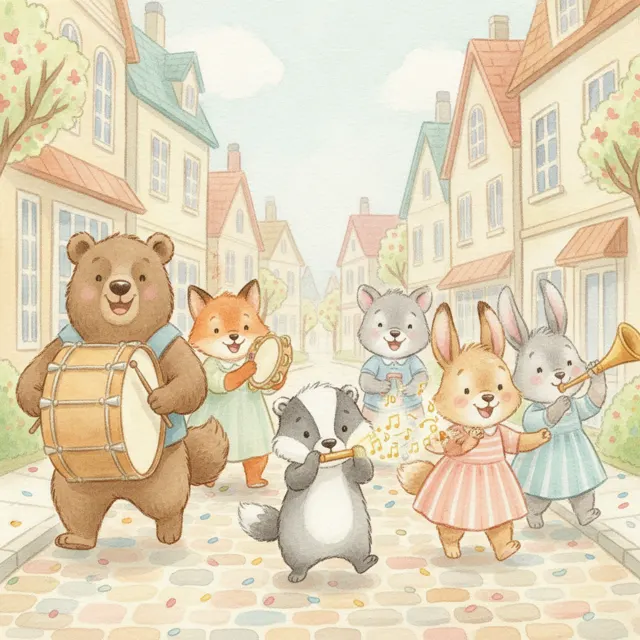
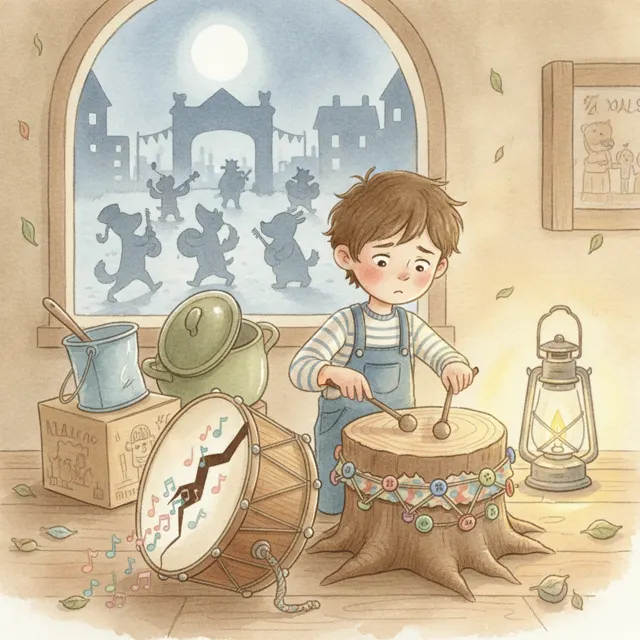
Max's drum splits the night before the big parade, and the band needs his beat. He tries a bucket, a pot, and a box until he builds a drum that works.

Moral: When one plan breaks, a clever player makes a new one.

The day before the big parade, Max practiced his drum all afternoon. Boom, boom, boom. The parade needed his beat to keep everyone in step. But that evening, when he picked up his drum to practice one last time, the skin on top split with a sad little rip. "My drum is broken!" Max cried. "The parade is tomorrow!" He sat on his bed, feeling the day slip away. Then he looked around his room. There was a plastic bucket in the corner. He turned it over and tapped it. Thump, thump. It made a sound, but it was not quite right. He found a metal pot in the kitchen. Clang, clang. Too sharp. Then he tried a cardboard box. Thud, thud. Too soft. "Hmm," Max said. He thought hard. Then he had an idea. He put the bucket upside down and stretched a piece of cloth tight over the top, tying it with string. He tapped it. Boom, boom, boom. It sounded almost like his real drum. The next day, Max marched in the parade with his bucket drum, beating a strong, steady rhythm. The whole band stayed in step, and everyone cheered. Max smiled all the way down the street, proud of the drum he had made himself. It was not fancy, but it was his, and it kept the whole band marching together. After the parade, the drum teacher patted his shoulder. "When your drum broke, you did not give up. You made a new one." Max grinned. "A clever player," he said, "always finds a way to keep the beat."

The Song That Helped a Sad Friend

Ages 3-84 minkindness
The Song That Helped a Sad Friend story for kids illustration

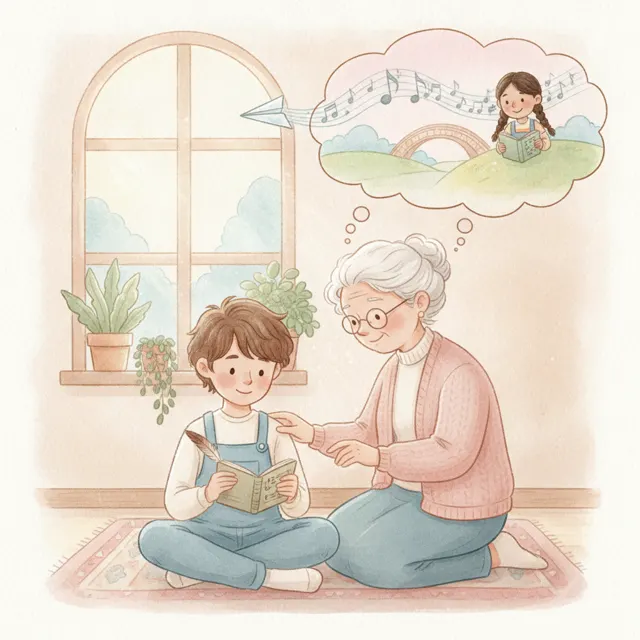
Leo misses his best friend Amara, who moved away. With his grandmother's help, he writes a song and sends it to her, and the distance between them does not feel so big.

Moral: A song shared can lift a heavy heart.

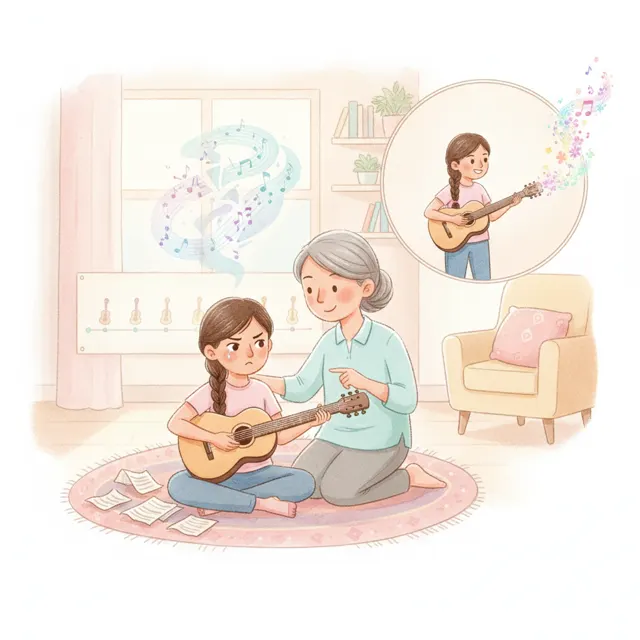
Leo's best friend Amara moved to a new town, far away. For the first week, Leo felt quiet inside. He did not feel like playing games or telling jokes. He just missed his friend. One afternoon, Leo's grandmother sat beside him with her old guitar. "When I miss someone," she said, "I play them a song. It helps the heart feel closer." "But Amara is not here to hear it," Leo said. "Then we will send it to her," his grandmother said. So Leo and his grandmother wrote a little song together. It had a soft, simple tune, and the words went like this: "Though you are far, you are not gone. The sun still rises, the song goes on." They recorded the song and sent it to Amara. First they sang it together three times, until it sounded just right. A few days later, a message came back. It was a video of Amara, smiling and singing the same song in her new room. "I learned it," Amara said in the video. "Now I sing it too, and I do not feel so far away." Leo watched the video twice and felt the quiet inside him lift a little. "The song worked," he told his grandmother. "Of course it did," she said. "A song shared is a way of saying, I am still here with you." And from then on, Leo and Amara sent each other songs, and the distance between them did not feel so big anymore. Some nights, Leo sang the song alone before bed, and it felt like a warm hello across the miles.

Priya's Practice Surprise

Ages 3-85 minpersistence
Priya's Practice Surprise story for kids illustration

Priya practices a song for weeks and still stumbles, so she wants to quit. Her teacher reminds her how far she has come, and one day the song comes out whole.

Moral: Little bits of practice add up to something big.

Priya was learning to play the piano. Every day after school, she sat at the keys and practiced a song called "Morning Bells." But her fingers stumbled, and the notes came out slow and messy. "I have practiced for weeks," Priya said, "and I am still not good at it." Her teacher, Mr. Lee, smiled. "Do you remember the first day you tried?" he asked. "You could not find middle C. Now you play the whole first half." Priya had not noticed. "I guess I am a little better," she said. "Little bits of practice add up," Mr. Lee said. "You cannot see the steps you climb when you are looking at the top of the stairs." So Priya kept practicing, a little every day. She played the hard parts slowly, then a little faster. She did not think about the whole song, only the next few notes. Then, one evening, as her fingers moved across the keys, something wonderful happened. Her hands seemed to know the notes all by themselves. The song came out smooth and bright, from the first note to the last, without a single stumble. Priya's mother came into the room, clapping. "That was beautiful!" she said. Priya looked at her hands in surprise. She had played the whole song, the one she thought she would never learn. "It was the little bits," Priya said, smiling. "They added up when I was not looking." Mr. Lee was right. Practice is just many small steps, and one day you look up and you are at the top.

The Band That Could Not Agree

Ages 3-83 minteamwork
The Band That Could Not Agree story for kids illustration

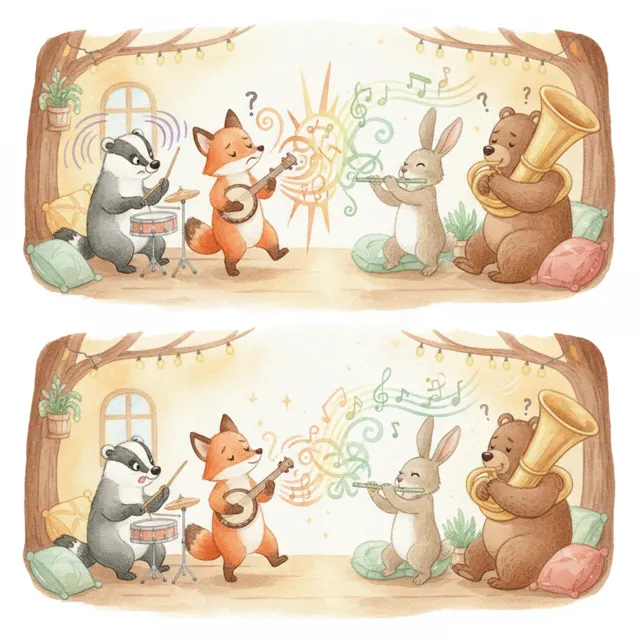
Four friends start a band but all play a different song at once, and the noise is awful. When they learn to listen to each other, the sound becomes music.

Moral: Music sounds best when everyone listens to each other.

Four friends decided to start a band. Zoe played the drums, Tariq played the guitar, Bea played the flute, and Sam played the tambourine. They were all very excited. But at their first practice, everyone played a different song. "Let us play the fast one!" said Zoe, and she drummed loudly. "No, the soft one!" said Bea, and she played her flute. "My song is the best!" said Tariq, strumming hard. Sam just shook the tambourine and laughed, because nobody was listening to anybody. The noise was so loud and messy that the neighbors covered their ears. "Stop!" Zoe called out at last. "We sound terrible." They all stopped. The room went quiet. "We are all playing different songs," Bea said. "Maybe we should pick one song and play it together." "And listen to each other," Tariq said. So they chose one simple song and started again, slowly. Zoe drummed a soft, steady beat. Tariq matched it on the guitar. Bea and Sam came in gently. This time, it was not noise. It was music. The sounds fit together like pieces of a puzzle. When they finished, they all grinned. "That is how a band works," Sam said. "Everyone listens, and everyone plays their part." And from that day on, the four friends made the sweetest music in the whole neighborhood, because they had learned the most important note of all: to listen. And whenever someone started to play too fast or too loud, they would remember that first messy practice and play a little softer, for the good of the song.

The Quiet Song for a Scared Puppy

Ages 3-84 min readkindness
The Quiet Song for a Scared Puppy story for kids illustration

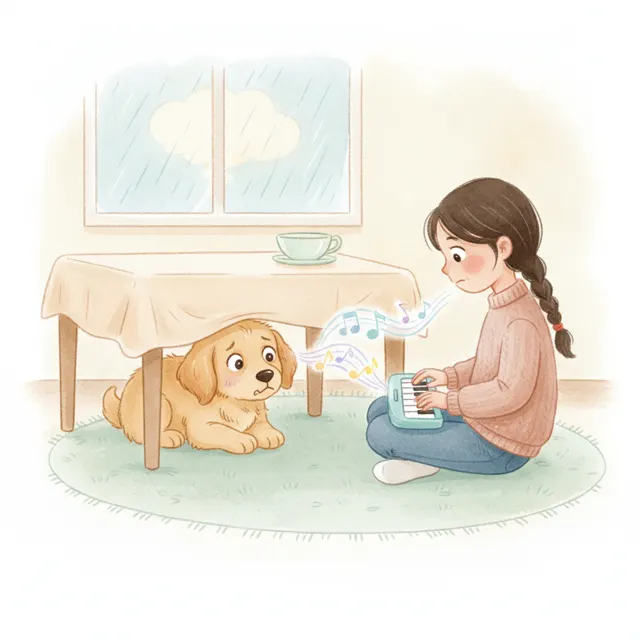
A new puppy hides under the table during a thunderstorm and shakes with fear. Rina plays a soft, slow song on her little keyboard, and the puppy crawls out to listen and calm down.

Moral: A gentle song can help a scared friend feel safe.

It was raining hard, and thunder shook the sky. A new puppy named Biscuit hid under the table and would not come out. "He is so scared," said Rina. "Listen to him shake." Biscuit shivered and whimpered every time the thunder boomed. "Maybe a song will help," said Rina. She sat near the table with her little keyboard. She did not play a loud, fast song. She played a soft, slow one, very quiet. "Come on, Biscuit," she sang. "You are safe with me." The first notes were so soft they were almost like a whisper. Biscuit stopped whimpering to listen. Rina kept playing, slow and gentle, like a lullaby. Little by little, Biscuit crawled out from under the table. He sat close to Rina and rested his head on her shoe. "You like the quiet song," said Rina. She played one more soft note. Biscuit closed his eyes and let out a big sigh. When the thunder came again, Biscuit did not run. He stayed right by Rina and the music. When the rain stopped, the sun came out. Biscuit wagged his tail and ran to the window. "You are brave now," said Rina. She played one happy tune, and Biscuit barked along, as if he were singing too. "Now we have a song for sunny days and a song for stormy days," Rina said. She played them both, one quiet and one bright. Biscuit danced in a little circle, and his tail never stopped wagging. "See?" said Rina. "A gentle song can make a scary storm feel far away."

Tessa's Slow and Steady Tune

Ages 3-84 min readperseverance
Tessa's Slow and Steady Tune story for kids illustration

Tessa wants to play a fast song on her recorder, but her fingers keep getting mixed up. She slows the song down and practices a little each day until her fingers know exactly where to go.

Moral: Practice a little every day and the hard part gets easier.

Tessa wanted to play a fast, happy song on her recorder. But every time she tried, her fingers got all mixed up. "The notes come too fast," she said. "My fingers cannot keep up." She tried again, but the song came out jumbled. She put the recorder down. "Maybe I am just not good at this," she said. "Play it slow first," said her teacher. "Fast is just slow played over and over." Tessa picked up the recorder. She played the song very slowly, one note at a time. "Do, re, mi," she sang softly. Her fingers found each hole one by one. She played it slow again. Then again. Every day she played the slow song a few times before dinner. After a week, her fingers knew where to go without thinking. "Try it a little faster now," said her teacher. Tessa played it faster. Her fingers flew, but they landed right every time. "I can do it!" she said. "It was the slow practice that made me fast." Tessa's mom clapped when she heard the song. "You were ready to quit," she said. "Now listen to you go!" Tessa smiled. "Slow first, then fast," she said. "That is the secret." She played the song one more time for her little brother, who danced all the way across the room. Her little brother clapped his hands. "Again, again!" he shouted. So Tessa played it one more time, faster still. Her fingers knew the whole song by heart. Tessa played the whole fast, happy song without one wrong note.

The Drum Circle That Found a Beat

Ages 3-84 min readteamwork
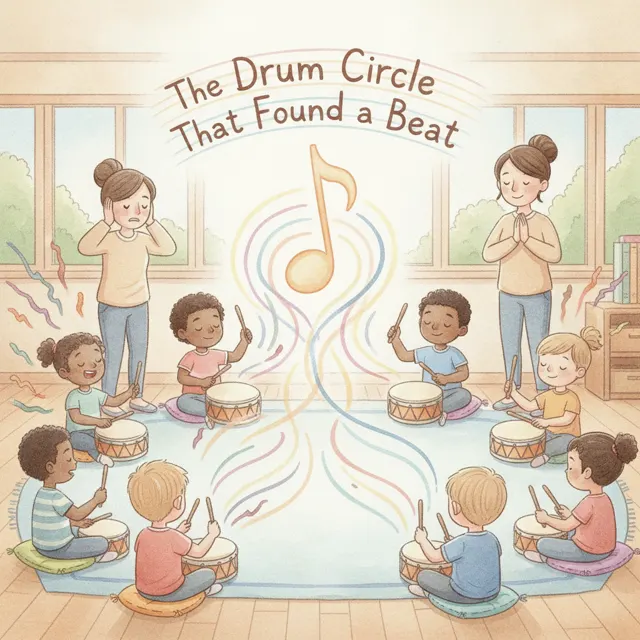
The Drum Circle That Found a Beat story for kids illustration

The class wants to play drums, but everyone bangs a different beat and it sounds like a mess. They listen to each other, pick one steady beat, and play it together until it sounds like music.

Moral: When everyone plays together, one beat can bring the whole group together.

The class sat in a circle, and everyone had a drum. "Let us play together," said the teacher. "One, two, three, go!" Bam! Bang! Boom! Everyone hit their drum at the same time, but nobody hit the same beat. It sounded like a big, loud mess. "Stop, stop!" said the teacher. "That was not music. That was just noise." "We all wanted to play our own beat," said Mia. "Music means listening," said the teacher. "Let us pick one beat and all play it together." She tapped a slow, steady beat on her drum. Boom. Boom. Boom. Boom. "Now you copy me," she said. Everyone listened. Then they all tapped the same beat at the same time. Boom. Boom. Boom. Boom. It sounded clean and strong. Then Mia added a soft little tap in between. Tap-tap. It fit right in. "Keep that!" said the teacher. "Now the beat has a friend." More kids added soft taps here and there, but they all stayed on the same steady beat. "Listen to that," said the teacher. "That is music." The next day, the class played their beat again. It was even stronger than before. "We are a real band now," said Mia. "All it took was listening," said the teacher. "When every drum waits for the others, the music comes alive." Then someone added a little shake from a tambourine, and it sounded like a party. Everyone smiled, and the teacher clapped along. Mia smiled. "When we listen and play together," she said, "our drums make one big, happy sound."

A Lullaby for Baby Bird

Ages 3-84 min readcaring
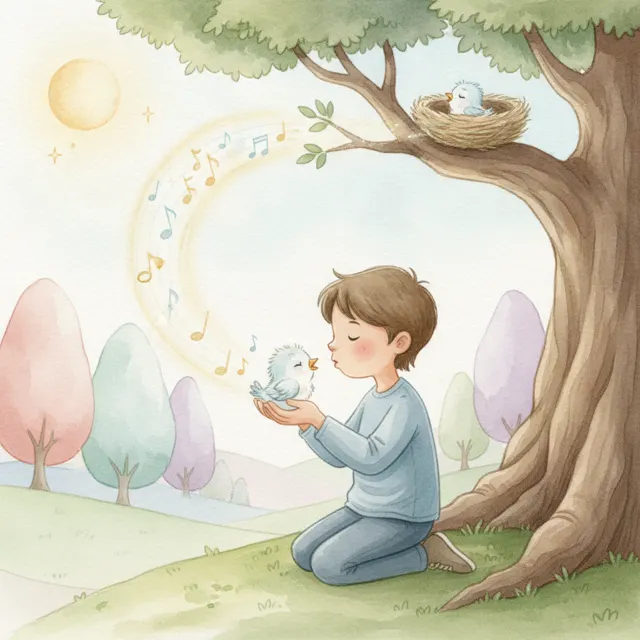
A Lullaby for Baby Bird story for kids illustration

A baby bird falls out of its nest and cannot fall asleep on the cold ground. Amir sings a slow lullaby until the bird closes its eyes, then he carries it safely back to its nest.

Moral: A soft song can help someone rest.

Amir found a baby bird under the big tree. It had fallen out of its nest. "I have to help you," said Amir. "But first I need you to be calm." The baby bird cheeped and cheeped. It would not sit still. "Maybe you are too scared to rest," said Amir. He sat down next to the bird. Then he began to sing a slow, soft lullaby. "Hush now, little bird. The night will keep you warm." His voice was low and gentle. The bird stopped cheeping and tilted its head to listen. Amir kept singing, slow and soft, like the wind in the leaves. The baby bird blinked. Its little head dropped down. It was falling asleep. "Good," whispered Amir. "Now I can carry you home." He cupped his hands very gently around the bird and lifted it up. Carefully, carefully, he climbed the ladder to the nest. He set the baby bird back beside its mother. The mother bird cooed a soft thank you. The next day, Amir went back to the tree. The baby bird was wide awake, cheeping a bright morning song. "You sing for the day now," said Amir. He hummed the lullaby one more time, soft and low, just to say hello. "We are friends now. I will come visit you every day." The mother bird fluffed her feathers and sang a soft song back. Amir waved and headed home, humming the lullaby all the way. "Your baby just needed a lullaby," said Amir. "And a safe ride home."

The Note That Would Not Come Out

Ages 3-84 min readpatience
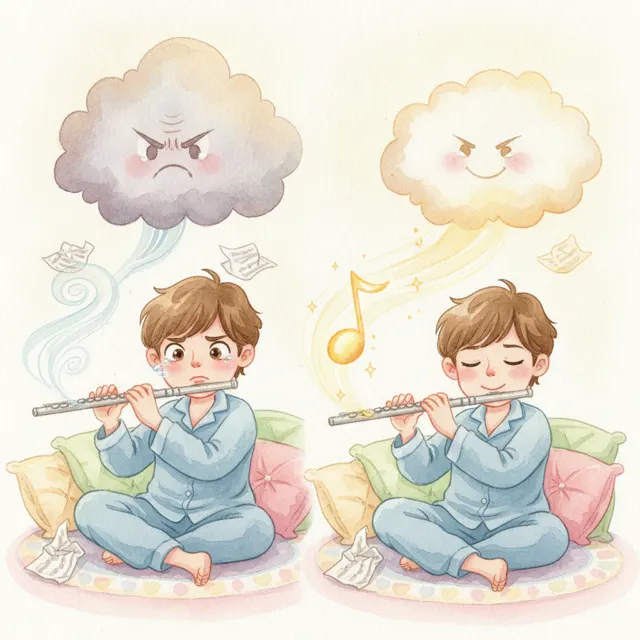
The Note That Would Not Come Out story for kids illustration

Kai tries to blow a low note on his flute, but only air comes out. He gets frustrated and wants to quit, then takes a deep breath, slows down, and finally the note rings out clear.

Moral: Sometimes a deep breath and one more try is all you need.

Kai pressed the flute to his lips and blew. Only air came out. No note at all. He blew harder. Still just air. "I cannot make the low note," said Kai. "It will not come out." He tried again and again, but the note stayed stuck inside the flute. "I give up," he said. He put the flute down on his lap. His grandpa sat beside him. "You are blowing too hard," he said. "A low note needs a slow, warm breath." "Show me," said Kai. Grandpa picked up the flute and blew softly, like he was fogging a window. A low, round note came out. "You have to be gentle," said Grandpa. Kai picked up the flute. He took a deep breath and let it out slowly and warm. A tiny note came out, quiet and low. "I heard it!" said Kai. He tried again, even slower. This time the note came out full and clear. "It is not stuck anymore," said Kai. "I was just trying too hard." Grandpa smiled. "Sometimes the best sound comes when you slow down," he said. The next day, Kai played the note for his grandpa again. It came out strong and warm. "You found it," said Grandpa. "A low note is like a slow, deep breath." Kai practiced the note every day after school. Soon he could play it soft, then loud, then long. He was proud of every single note. His grandpa listened with his eyes closed, smiling the whole time. Kai played the low note again and again, soft and steady, until it sounded just right.

Two Hands, One Little Piano

Ages 3-84 min readsharing
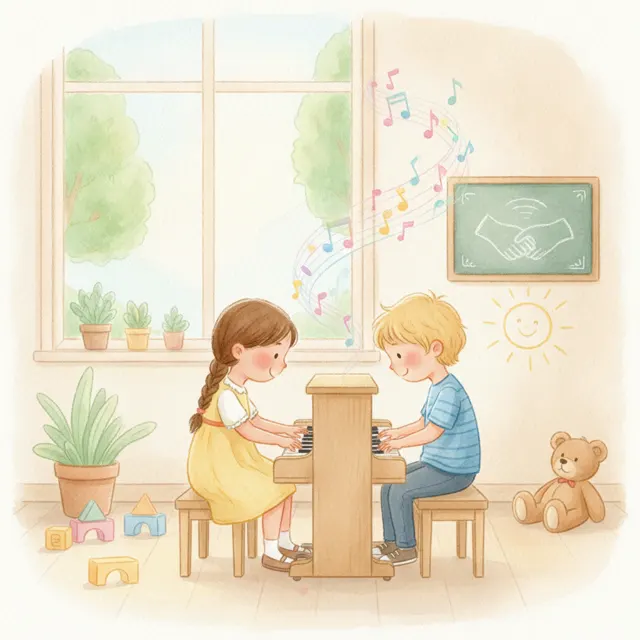
Two Hands, One Little Piano story for kids illustration

There is only one piano in class, and Maya and Eli both want to play. They argue over who goes first, then they try sitting side by side and play a song with two hands together.

Moral: Sharing makes room for everyone to play.

There was only one piano in the class, and two kids wanted to play it at the same time. "I was here first," said Maya. "No, I was," said Eli. "I want to play my song." They both reached for the keys. Neither one would move. "This is not working," said the teacher. "Why not play it together?" "Together?" said Maya. "The piano is small." "But a song has two parts," said the teacher. "One hand can play the high part, and one hand can play the low part." Maya and Eli looked at each other. Then they sat side by side on the bench. "I will take the low part," said Eli. "I will take the high part," said Maya. Eli played a low, steady line with his left hand. Maya played bright, high notes with her right hand. The two parts fit together like puzzle pieces. It sounded like one full song. "That sounds so good," said Maya. "Better than playing alone," said Eli. When the song ended, the class clapped. The next day, Maya and Eli ran to the piano together. "You take the low part," said Maya. "I will take the high part." They played a new song, and then they switched parts. Both ways sounded beautiful. "Now we have twice as many songs," said Eli. "Because we share the one piano," said Maya. The teacher smiled and gave them both a gold sticker. Best of all, no one had to wait for a turn anymore. "There is room for both of us," said Maya. "The piano just needed two hands and two friends."

The Parade Needs a New Sound

Ages 3-84 min readbelonging
The Parade Needs a New Sound story for kids illustration

The school band has drums, bells, and horns, but no one will let Ren play his kazoo because it sounds silly. The band hears it buzz and finds it adds the funniest, happiest sound to the parade.

Moral: A new friend with a new sound makes the music better.

The school band was getting ready for the big parade. Drums boomed. Bells rang. Horns tooted. Ren stood at the back with his kazoo. "Can I play too?" he asked. "A kazoo?" said the drum leader. "That is not a real instrument. It just buzzes." "Yeah," said a bell player. "It sounds silly." Ren's shoulders dropped. He put his kazoo in his pocket and walked away. But as the band practiced, something was missing. The music sounded plain. "It needs something," said the horn player. "Something fun." Ren was sitting on the steps, humming to himself. He buzzed his kazoo softly. The band leader heard it and stopped. "Wait," he said. "What is that sound?" Ren looked up. "It is just my kazoo," he said. "It is silly, I know." "Play it again," said the leader. Ren buzzed a happy little tune. It made everyone smile. "That is it!" said the leader. "The parade needs that happy buzz." So Ren marched in the parade with his kazoo, buzzing right along with the drums and the bells. People clapped and laughed and danced in the street. "Your silly sound is the best part," said the bell player. After the parade, the band sat together to rest. "I am sorry I said your kazoo was not a real instrument," said the drum leader. "That is okay," said Ren. "Now we all know every sound can belong." The band planned to play together again next week, with Ren right up front. Ren smiled. "Every parade needs one sound that makes you smile," he said.

Frequently Asked Questions

Turn Your Child Into the Hero of Their Own Story

Upload their photo and watch as AI creates a beautiful, personalized storybook with illustrations that look just like them. From $5.99/month.

✨ Make Your Child the Hero

Plans from $5.99/month