Prince and Princess Stories for Kids

Magical tales of royalty, kindness, and what it truly means to be a leader

โœจ Make Your Child the Hero

Almost every child has played at being a prince or princess at least once, dreaming of castles, crowns, and a heart full of good manners. These stories go beyond the sparkle to show that kindness, honesty, and treating everyone with respect are what truly make someone royal. They are full of cozy castles, friendly dragons, and gentle choices that turn ordinary moments into something special. Little ones learn that true nobility lives in how we treat others, not in the clothes we wear. With CreateStory.ai, you can create a personalized story where your child becomes the prince or princess of their own kingdom.

Why do young kids love prince and princess stories?

Princes and princesses live in castles, wear crowns, and go on brave little quests. Kids love the bright clothes, the talking horses, and the big parties. These stories feel far away and exciting, so a child's eyes stay wide the whole time.

Fairy tales do real good too. A study in the Asian Journal of Interdisciplinary Research found children who often read fairy tales showed about a 15 percent higher level of empathy. A royal story is more than fun. It helps a child feel for others.

What can my child learn from these stories?

These tales teach kindness, courage, and honesty without a single lesson. A prince shares his lunch. A princess tells the truth. Kids take in the good choices without being told what to do.

Reading them aloud matters a lot. Ohio State University researchers found children who are read five books a day hear about 1.4 million more words by kindergarten than kids who are never read to. A castle story each night adds up fast.

Sample Stories

Read these stories, then create a personalized version where your child is the hero

The Prince Who Worked in the Kitchen
Ages 3-81 min
The Prince Who Worked in the Kitchen story for kids illustration

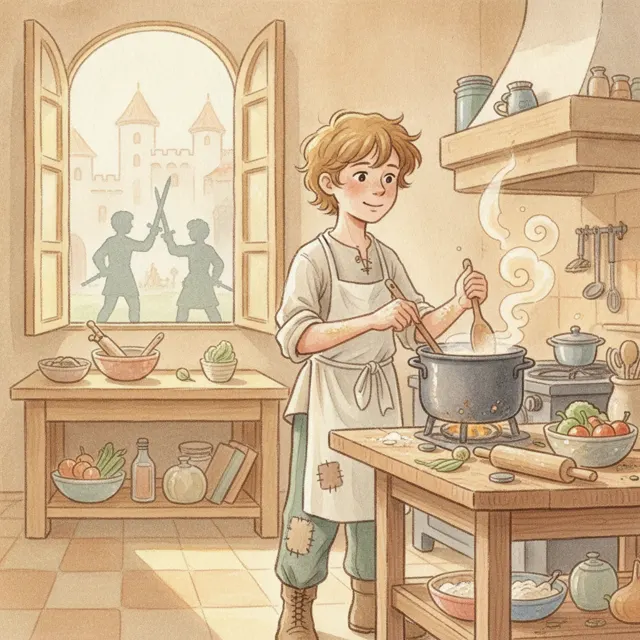
Prince Henry was different from other princes. While they practiced sword fighting, Henry practiced...

Moral: True leadership comes from understanding and serving people's needs, no matter what form that service takes.

Prince Henry was different from other princes. While they practiced sword fighting, Henry practiced cooking. He loved making meals for people! He said, "A full belly makes a happy kingdom." His father, the king, was worried. "Princes don't cook," he said. "They lead armies and make laws." But Henry kept cooking. He learned what the people liked to eat. He made sure no one in the castle went hungry. When a famine came to the land, Henry knew what to do. He had learned about food storage and preservation from the kitchen staff. He organized the kingdom's resources so everyone had enough. He taught people to cook with simple ingredients. The kingdom survived because of Henry's cooking knowledge! The king realized his son was a true leader. "You lead through service," the king said. "That's the best kind of leadership." Henry became known as the Cook Prince. He ruled for many years, and his kingdom was the happiest and best-fed in the land. He taught everyone that leadership comes from understanding people's needs and helping meet them, whether that means wielding a sword or a spoon.
The Princess Who Listened

Ages 3-81 min
The Princess Who Listened story for kids illustration

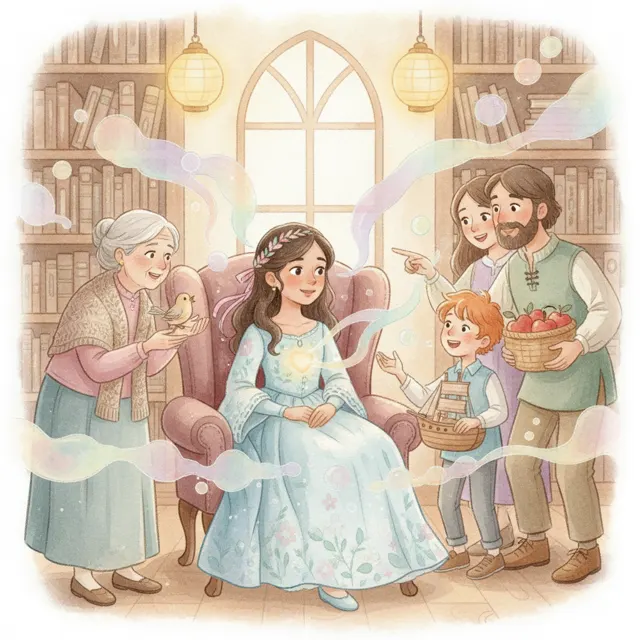
Princess Amara had a special gift. She was a wonderful listener! When people talked to her, they...

Moral: Listening is a powerful leadership skill. Understanding what people need helps you serve them better.

Princess Amara had a special gift. She was a wonderful listener! When people talked to her, they felt heard and understood. She didn't interrupt. She didn't judge. She just listened with her whole heart. Some people thought this wasn't a royal skill. "Princesses should give orders," they said. "Not just listen." But Amara knew better. She walked through her kingdom, listening to everyone. She heard the farmers' worries about crops. She heard the teachers' needs for books. She heard the children's dreams for the future. When she became queen, she remembered everything. She used what she'd learned to make the kingdom better. She changed laws to help farmers. She built schools with plenty of books. She created programs to help children achieve their dreams. Her kingdom prospered because she had listened. Other rulers asked her secret. "I just listened to my people," she said. "They told me everything I needed to know to help them." Amara taught that listening is a powerful skill. Sometimes the best thing a leader can do is be quiet and truly hear what others need. And her people loved her, not because she was a queen, but because she had cared enough to listen.

The Prince and the Pauper's Switch

Ages 3-81 min
The Prince and the Pauper's Switch story for kids illustration

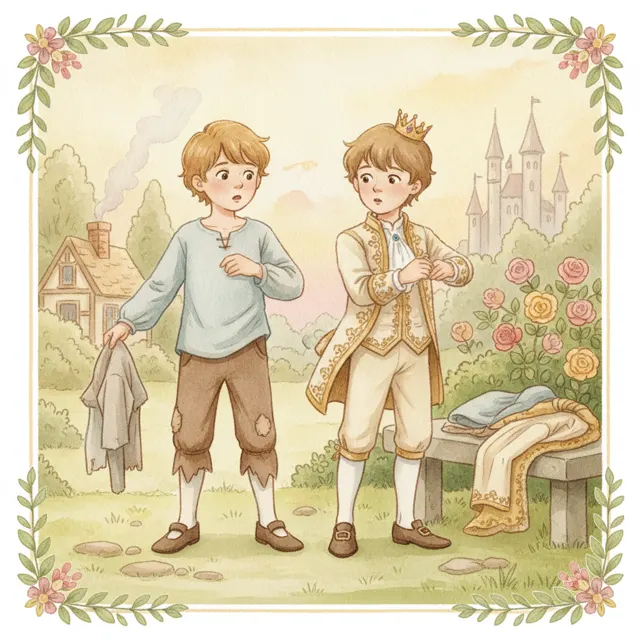
Prince Leo looked exactly like a poor boy named Sam. One day, they met and decided to switch places...

Moral: Understanding how others live creates compassion. Privilege comes with responsibility to help those in need.

Prince Leo looked exactly like a poor boy named Sam. One day, they met and decided to switch places for fun! Leo would live as a commoner, and Sam would live as a prince. Leo discovered that being poor was hard. The food wasn't as good. The bed wasn't soft. People worked all day just to survive. He met Sam's sick mother and realized she couldn't afford a doctor. Meanwhile, Sam discovered that being a prince was lonely. Everyone treated him differently. He couldn't just play with other kids. He had lessons all day and formal dinners at night. He missed his freedom! After one day, they switched back. But both boys were changed. Leo used his royal resources to help Sam's mother get medicine. He started programs to help the poor in his kingdom. Sam taught Leo how to have fun simply, without fancy toys. They became best friends. Leo learned that privilege comes with responsibility to help others. Sam learned that everyone has struggles, even princes. Together, they made the kingdom better by bridging the gap between rich and poor. They taught everyone that understanding each other's lives creates compassion.

The Princess's Garden

Ages 3-81 min
The Princess's Garden story for kids illustration

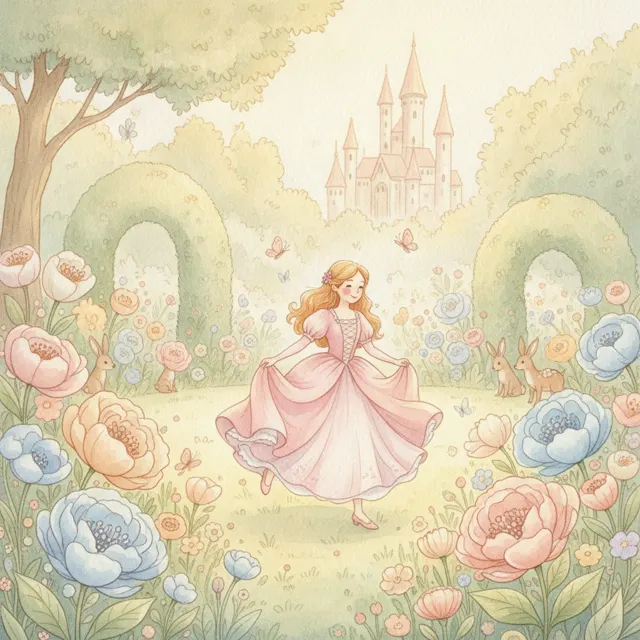
Princess Rose loved her royal garden. It had the most beautiful flowers in the kingdom! But she...

Moral: Beauty and good things are better when shared with everyone, not kept for a select few.

Princess Rose loved her royal garden. It had the most beautiful flowers in the kingdom! But she noticed something. The common people didn't have beautiful gardens. They were too busy working to grow flowers. Rose had an idea. She opened her garden to everyone! At first, the royal advisors were upset. "Common people in the royal garden?" they exclaimed. "It's not proper!" But Rose insisted. She invited children to play among the flowers. She invited elderly people to sit in the shade. She invited everyone to enjoy the beauty. Something magical happened. The people loved the garden so much, they started planting flowers in their own neighborhoods! They shared seeds and cuttings from the royal garden. Soon, the whole kingdom bloomed with color. The air smelled sweet everywhere. People were happier. They smiled more. The kingdom became known as the Land of Flowers. Rose learned that beauty should be shared, not kept behind walls. And her advisors learned that what seems "improper" can actually be wonderful. The princess taught everyone that the best things in life are better when shared with everyone.

The Prince's Promise

Ages 3-81 min
The Prince's Promise story for kids illustration

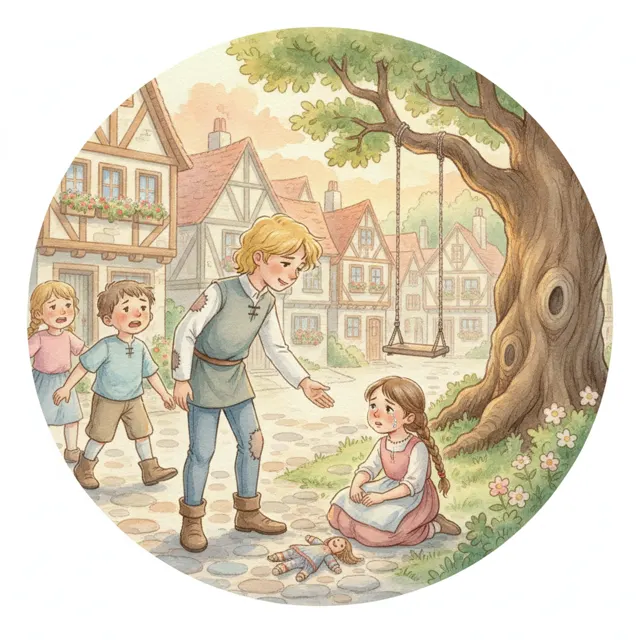
Prince Finn made a promise when he was young. He met a girl in the village who was being bullied....

Moral: Keep your promises, especially those made to help others. Lead by example to create the change you want to see.

Prince Finn made a promise when he was young. He met a girl in the village who was being bullied. He stood up for her and promised, "When I'm king, no one will be bullied in my kingdom." Years passed. Finn became king. He remembered his promise. He made laws against bullying. He created safe spaces in schools. He taught children to be kind. But laws weren't enough. Finn decided to lead by example. He visited schools and talked to children. He listened to those who were hurting. He stood up for anyone being treated unfairly, even when it was inconvenient. One day, he saw his own son teasing a servant's child. Finn corrected him immediately. "Being royal doesn't mean being better," he taught. "It means being kinder." His son learned the lesson. The whole kingdom learned from Finn's example. Bullying became rare. Kindness became common. Years later, the girl Finn had saved became his advisor. She helped him keep his promise every day. Finn learned that promises matter, especially ones made to help others. And that the best way to change the world is to live the change you want to see.

The Princess Who Shared Her Umbrella

Ages 3-84 minuteskindness
The Princess Who Shared Her Umbrella story for kids illustration

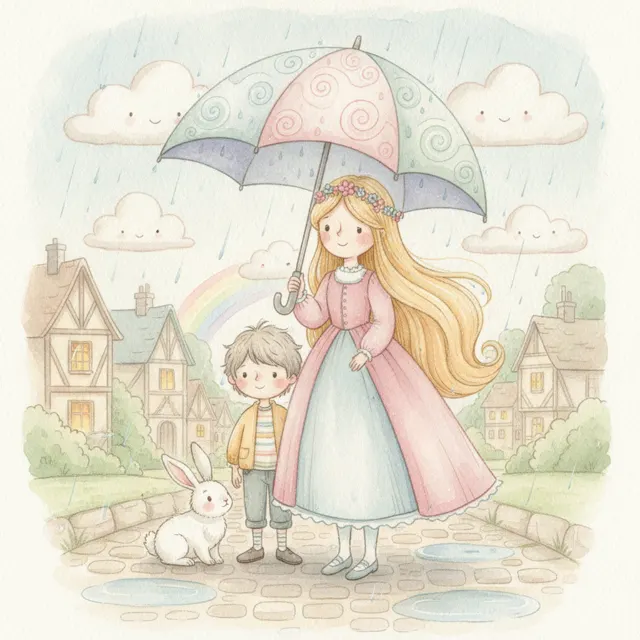
A rainy market day tests Princess Lina and her new pink umbrella. She invites the baker, the flower seller, and a shivering boy to squeeze underneath. By the castle gates everyone is dry, and Lina sees that sharing keeps more people happy.

Moral: Sharing what you have makes room for everyone.

Rain tapped on the castle windows. Princess Lina held her new pink umbrella. "Today is market day," she said. "I will walk to town and stay dry." She opened the umbrella and stepped outside. The path was shiny and wet. Soon she saw the baker. His bread basket was getting soaked. "Come under my umbrella," Lina said. "Thank you, Princess," said the baker. He stepped close, and they walked on. A little later they saw the flower seller. Her red roses were getting wet. "Come under my umbrella," Lina said. "Thank you, Princess," said the flower seller. She squeezed in, and they all walked on. Then Lina saw a small boy by the road. He had no coat and no umbrella. Rain dripped off his nose. "Come under my umbrella," Lina said. "Really?" the boy asked. "But your umbrella is small." "There is always room for one more," said Lina. "We can squeeze." So the boy stepped under the pink umbrella too. It was a tight fit, and Lina's shoulder got a little wet. But everyone smiled all the way to the castle. At the gates, the baker's bread was dry. The flowers were dry. The boy was dry too. "You were very kind today," said the queen. "You gave up your own dry space to help others." "I stayed dry too," Lina said with a smile. "An umbrella works best when it is shared." That night Lina hung her wet coat by the fire. She felt warm inside, and it was not just the fire. It was the good, warm feeling of sharing.

The Prince Who Learned to Dance

Ages 3-83 minutescourage
The Prince Who Learned to Dance story for kids illustration

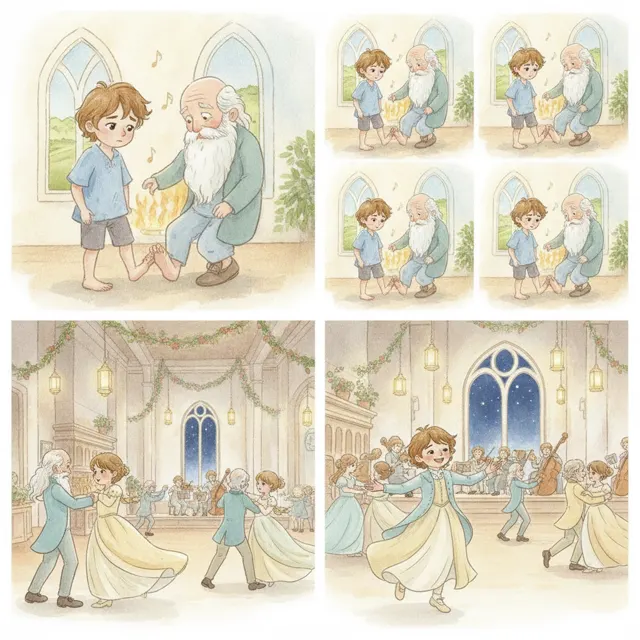
Prince Nico is nervous about the big castle ball. Every time he tries to dance he steps on toes. With help from a patient teacher and a lot of practice, Nico dances at the ball and finds that trying hard beats feeling scared.

Moral: Trying again and again beats being scared.

The big castle ball was three days away. Prince Nico sat by the window and sighed. "I cannot dance," he told his friend Marco. "Every time I try, I step on someone's toes." "Then we will practice," said Marco. "One, two, three. One, two, three." Nico stood up and tried. He stepped on Marco's foot right away. "Sorry!" Nico said. "I am no good at this." "Nobody is good at first," Marco said. "Try again. Go slow." So Nico tried again. Slow step, slow step. He did not step on Marco's toes this time. "See?" said Marco. "You are learning." They practiced every day. Nico stepped on toes twice more, but he kept going. By the third day, he could move around the whole room without a single wrong step. The night of the ball came. The music started, and Nico felt his heart beat fast. But he remembered what Marco said. He took a deep breath and held out his hand. "May I have this dance?" he asked. Nico danced across the floor. Left, right, one, two, three. He did not step on one single toe. "Who taught you to dance?" asked the queen. "I did," said Marco with a proud smile. Nico laughed. "I taught myself to keep trying. Marco just showed me how." "You were brave to try in front of everyone," the queen said. Nico nodded. "I was scared. But trying felt better than sitting by the window."

The Princess and the Squeaky Gate

Ages 3-84 minuteshelpfulness
The Princess and the Squeaky Gate story for kids illustration

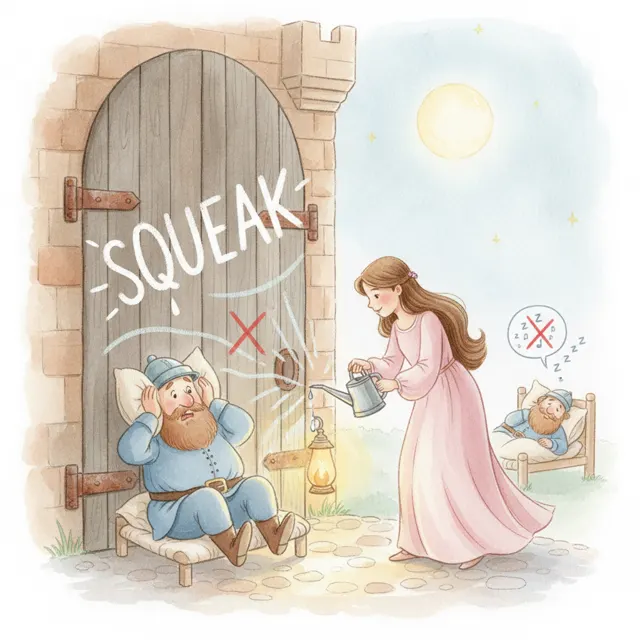
The castle's old gate squeaks so loudly it wakes the night guard. Princess Rosa finds the oil can and fixes it herself. The guard finally sleeps, and Rosa learns that small helpful acts make a big difference.

Moral: Small kind acts can make a big difference.

Every night, the old castle gate went SCREEEAK. The night guard, old Mr. Tomas, could never sleep. Princess Rosa heard the squeak too. "That gate is so loud," she said one morning. "We should fix it." The next night, the gate went SCREEEAK again. Rosa sat up in bed. "That poor guard," she said. "He must be so tired." The next day, Rosa walked to the gate and looked at it closely. The hinges were dry and rusty. "I know what this needs," she said. She ran to the tool shed and came back with a small can of oil. She poured a little oil on one hinge. Then she pushed the gate. It moved softly. She oiled the other hinge too. "Let me try," said the gardener. He pushed the gate open and shut. Not one squeak. That night, the castle was quiet. Mr. Tomas sat in his chair and heard nothing but the soft wind. In the morning he came to Rosa. "Princess, the gate is quiet. Did you fix it?" "I oiled the hinges," Rosa said. "It took two minutes." "Two minutes for you," said Mr. Tomas, "and a whole good night of sleep for me. Thank you." Rosa smiled. "You keep us safe all night. The least I could do was keep the gate quiet." From then on, Rosa walked around the castle looking for small things to fix. A wobbly step here. A stuck window there. Each fix was small, but each one made someone's day a little easier.

The Prince Who Waited for the Bread

Ages 3-83 minutespatience
The Prince Who Waited for the Bread story for kids illustration

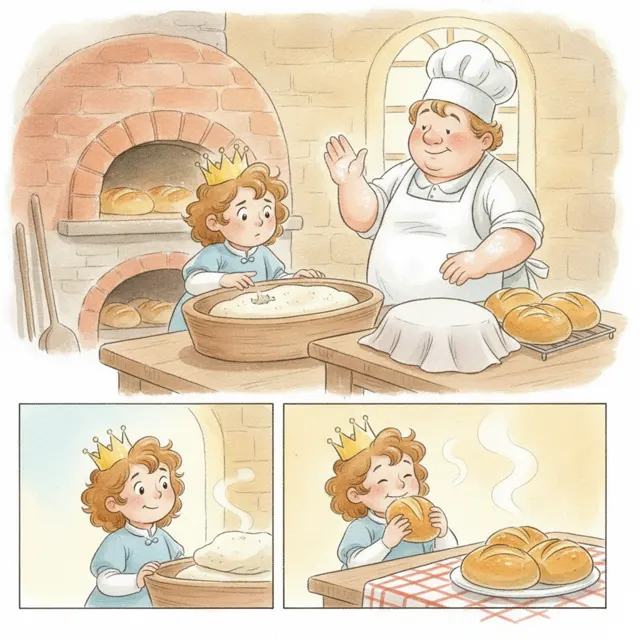
Prince Eli loves fresh bread, but the baker says the loaves need time to rise. Eli wants bread right now and nearly ruins a batch by peeking. He learns to wait, and the warm bread is worth it.

Moral: Good things come to those who wait.

Prince Eli loved the smell of fresh bread. One morning he ran to the bakery and sniffed the air. "Is the bread ready?" he asked. "Not yet," said the baker. "The dough must rise first." "How long?" asked Eli. "An hour," said the baker. "An hour!" Eli cried. "That is so long. Can we make it rise faster?" "No," said the baker. "Good bread takes time." Eli sat down and watched the dough. After one minute he stood up. "Is it done now?" The baker laughed. "Eli, it has been one minute. Go play." Eli walked around the garden. He came back. "Now?" "Not yet," said the baker. Eli could not stand it. When the baker turned away, Eli lifted the cloth and poked the dough. His finger made a deep hole, and the dough fell flat. "Oh no!" Eli said. "I broke it." The baker came over and sighed. "It will still bake, but it will be flat. You poked it because you could not wait." Eli felt bad. "I am sorry. I will wait now. Really." So Eli sat on his hands and waited. The clock ticked. The dough slowly rose again, big and soft. The baker slid it into the oven, and soon the smell filled the room. At last the baker pulled out a golden loaf. He cut a warm slice and put butter on it. He handed it to Eli. Eli took a bite. "This is the best bread I have ever tasted." "Because you waited for it," said the baker. "Good things are worth waiting for."

The Princess Who Found the Lost Bell

Ages 3-84 minuteshonesty
The Princess Who Found the Lost Bell story for kids illustration

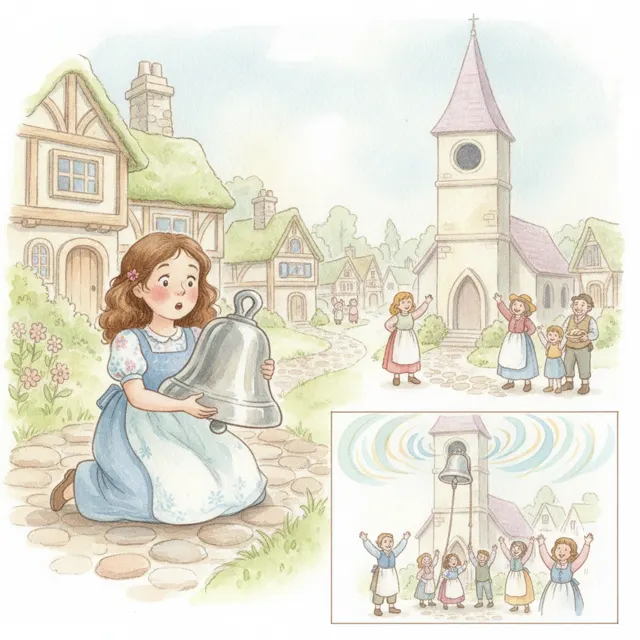
Princess Mae finds a shiny silver bell on the path. It belongs to the church tower, and the whole town misses its ring. Mae returns it, and the town rings with thanks for her honesty.

Moral: Returning what is not yours is always right.

Princess Mae was walking through the tall grass when her foot hit something hard. She looked down. It was a shiny silver bell. "What a pretty bell," she said. She picked it up and gave it a little shake. It rang with a clear, sweet sound. A farmer heard it. "That is the church bell!" he said. "It fell from the tower in the big storm. The whole town has missed its ring." Mae looked at the bell in her hands. It was so pretty. She thought about keeping it in her room. "I should give it back," she said softly. "You found it," said her friend. "You could keep it. Nobody would know." Mae shook her head. "I would know. And the town needs its bell." So Mae carried the bell through the streets. People stopped and pointed. "The bell! She found the bell!" At the church, the bell keeper climbed the ladder and hung the bell back in its place. Then he pulled the rope. DONG. The bell rang out over the rooftops. People came out of their houses and cheered. "This bell calls us to church and to dinner and to bed," said the bell keeper. "You brought it back. You could have kept it, but you did the honest thing." Mae smiled. "It never felt like my bell. It felt like everyone's bell." The bell keeper put a hand on her shoulder. "A princess who gives back what is not hers is a true treasure to the town." That night Mae lay in bed and heard the bell ring one soft time. It sounded like the whole town saying thank you.

The Prince Who Tied His Own Shoes

Ages 3-83 minutesperseverance
The Prince Who Tied His Own Shoes story for kids illustration

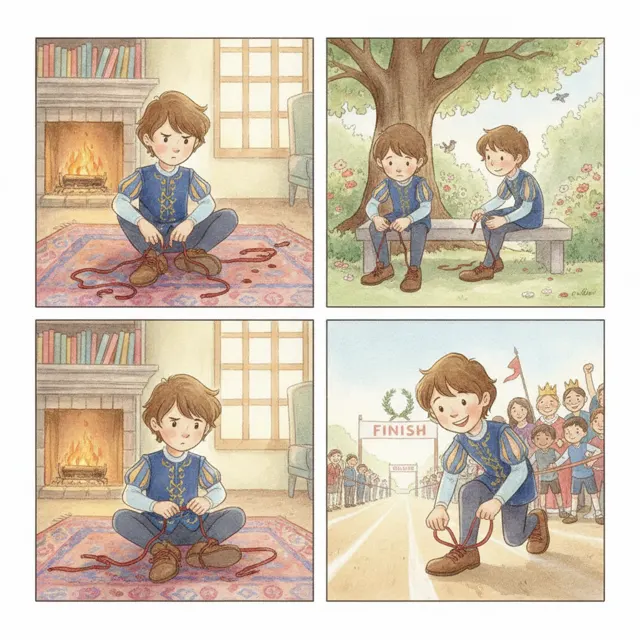
Prince Remy is too old to ask for help with his shoes, but the laces keep winning. He practices every day until his fingers learn the trick. At the royal race he ties them himself, proud and fast.

Moral: Practice turns hard things into easy things.

Prince Remy's shoes had laces, and the laces always won. Every morning he held them up to the nurse. "Please tie them," he said. "Remy, you are six," said the nurse. "You can learn." "But my fingers forget the bunny ears," Remy said. "I have tried." "Then try again," said the nurse. "Slowly." Remy sat on his bed and tried. Over, under, pull. The lace slipped and made a plain knot. He pulled it out and tried again. Over, under, pull, loop. His fingers felt clumsy. "It will not work!" he said. "It will," said the nurse. "Do it ten times. Then ten more." So Remy practiced. One loop. Two loops. The first day his bows were loose and lopsided. The second day they held a little longer. By the fifth day, he could tie both shoes by himself. "Look!" he said, holding up his feet. "I did it all alone." The day of the royal race came. All the children lined up at the start. Remy bent down and tied his shoes tight. The rope dropped, and they ran. Halfway down the field, a boy named Tano stopped. His shoe had come untied. "I cannot tie it!" he said, and his eyes filled with tears. Remy ran back. "I can help," he said. He knelt down and tied Tano's shoe with two neat loops. "There. Now let's run." They ran together to the end. Remy did not win the race, but he did not care. "You tied my shoe," Tano said. "And you tied your own. You are fast with your fingers now." Remy smiled. "I practiced every day. It was hard, but now my fingers remember."

The Princess and the Hungry Birds

Ages 3-84 minutescaring
The Princess and the Hungry Birds story for kids illustration

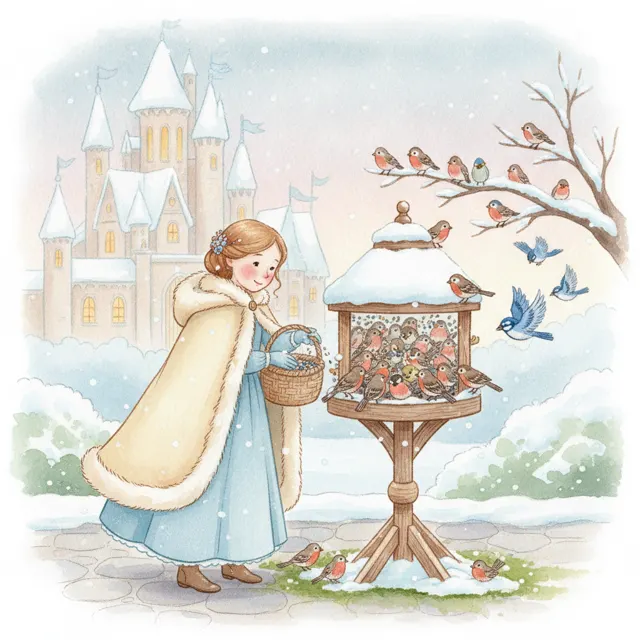
Winter comes and the castle birds have no food. Princess Ada fills a feeder every morning until spring returns. The birds stay, and Ada learns that steady care keeps small lives warm.

Moral: Steady care keeps others safe and warm.

Snow covered the castle garden. Princess Ada looked out at the bare trees. The birds sat in the branches with their feathers puffed up. "They look cold and hungry," Ada said. "Winter is hard for birds," said the gardener. "The ground is frozen. There are no seeds or worms to find." Ada ran to the kitchen and asked for a bag of birdseed. She filled an old wooden feeder and hung it by her window. Then she waited. One small sparrow flew down. It pecked at the seeds. Then two more came. Soon the feeder was busy with little birds. "I will fill it every morning," Ada said. And she did. Every cold morning, Ada pulled on her boots and walked out with a cup of seed. Her hands got cold, but she did not miss a single day. One morning the feeder was empty and the birds waited in a row, looking at her window. "They know you now," said the gardener. "They trust you." Ada smiled. "They know I will come." All winter she fed them. When spring came, the snow melted and the birds could find their own food again. But they still came to Ada's feeder. "Why do they stay?" asked a small boy. "Because I fed them every day," Ada said. "They know this is a safe place." The boy nodded. "You took care of them when it was hard. That is why they stay." Ada watched a bluebird land on her windowsill. It sang one bright note, as if to say thank you. Ada felt warm, even in the cold air.

Frequently Asked Questions

Turn Your Child Into the Hero of Their Own Story

Upload their photo and watch as AI creates a beautiful, personalized storybook with illustrations that look just like them. From $5.99/month.

โœจ Make Your Child the Hero

Plans from $5.99/month