Scientist Stories for Kids

Little questions that lead to big ideas, from a seed that will not sprout to a sky full of why.

✨ Make Your Child the Hero

Children ask why the sky is blue, why plants need sun, and where the moon goes in the morning. Scientist stories take those questions seriously. They show a child that wondering is the first step to knowing, that a failed try is just more information, and that the smallest hands can run the biggest experiments. These gentle tales are full of seeds, rainbows, and jars of busy bubbles, each one answered with a curious mind and a careful look. With CreateStory.ai, you can make your child the one in the lab coat. Upload a photo, and your child becomes the hero who asks, tests, and discovers.

Why are scientist stories so good for young children?

Scientist stories show kids that asking questions and trying things is fun. When a child in a story counts stars or floats an egg, your child wants to try it too. A Scholastic report found 38% of parents read aloud to kids ages 6 to 8 five to seven days a week.

These stories also teach that a wrong answer is not a bad thing. Kids see a character drop two rocks and learn they land together. That small moment makes a child brave enough to test their own ideas at home.

How can I help my daughter fall in love with science?

Start with her questions. When she asks why the sky is blue or why leaves fall, wonder about it together. Women make up 35% of the STEM workforce, according to the National Girls Collaborative Project. Showing her that girls belong in science matters.

Tell her stories about girls who watch puddles, count stars, and float eggs. Then try a tiny experiment at home, like watching salt make an egg float. Little steps like these build a love of science that can last for life.

Sample Stories

Read these stories, then create a personalized version where your child is the hero

The Seed That Would Not Sprout
Ages 3-84 minpatience
The Seed That Would Not Sprout story for kids illustration

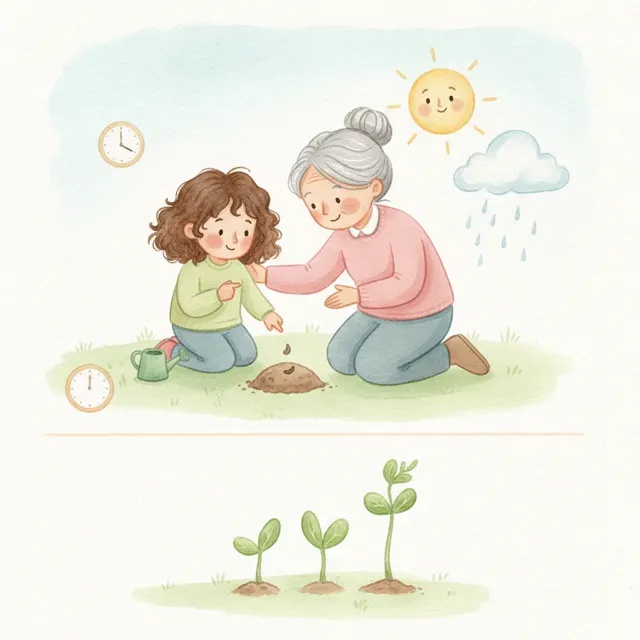
Mina plants a bean seed and waits, but nothing grows. With a little help from her grandmother, she learns that seeds need sun, the right amount of water, and plenty of time.

Moral: Good things grow when you give them time and care.

In a little pot on the windowsill, Mina planted a single bean seed. She pushed it into the dirt, covered it up, and gave it water. Then she waited. The next morning, she ran to the pot. Nothing. Just dark brown dirt. "Why is it not growing?" Mina asked. "Seeds take time," her grandmother said. "They grow when we cannot see them." Mina did not want to wait. She gave the seed more water, then even more. Still nothing. "Maybe it is a broken seed," she said. "Or maybe it needs the sun," her grandmother said, moving the pot to the sunniest spot on the sill. "And a little less water. Too much water can drown a seed, just like too much can be hard for anything." So Mina waited. Every morning she checked the pot. Every night she whispered, "Grow, little seed." Some days she wanted to dig the seed up just to see if it was still there, but her grandmother stopped her gently. "If you dig it up, it cannot grow," she said. "Trust the seed." Then, one bright morning, she saw it. A tiny green shoot, no bigger than a toothpick, pushing up through the dirt. "It grew!" Mina shouted. "The seed was not broken at all. It was just getting ready." Her grandmother smiled. "Good things grow in their own time. You just have to give them what they need and let them be." Mina watched the shoot grow taller each day, unfolding tiny leaves toward the sun. And she learned that the very best things, like a seed, sometimes need patience the most.
Nina's Rainbow in a Jar

Ages 3-83 mincuriosity
Nina's Rainbow in a Jar story for kids illustration

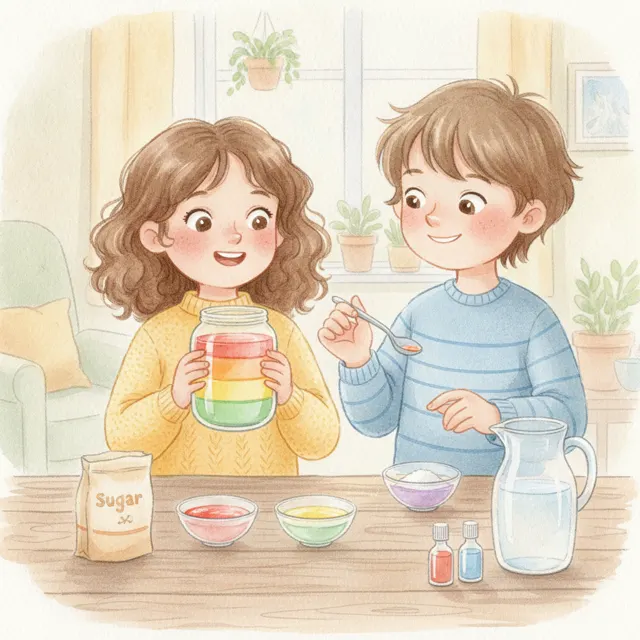
Nina wants to keep a rainbow, and her big brother shows her how. With water, sugar, and food color, they stack four bright layers in a jar and make one of their own.

Moral: A curious question can lead to a beautiful answer.

Nina loved colors. One rainy afternoon, she asked her big brother Tom, "Can I catch a rainbow and keep it?" Tom laughed. "You cannot catch a rainbow. But you can make one in a jar." "How?" Nina asked. Tom brought out a tall glass jar, some water, and little cups of sugar. "Watch," he said. "We will make colored water that floats in layers." They filled four cups with warm water. In the first cup, they added one spoon of sugar and a drop of red food color. In the second, two spoons and yellow. In the third, three spoons and green. In the last, four spoons and blue. "The cups with more sugar are heavier," Tom said. "So they will sink to the bottom." Carefully, Nina poured the blue water into the jar first. Then she tilted the jar and poured the green water slowly down the side. It floated right on top of the blue. Then yellow, then red. Each layer stayed put. Nina's eyes went wide. The jar held a perfect rainbow, four bright stripes stacked on top of each other. "It is a real rainbow!" she whispered. "It is water and sugar," Tom said, "and a little bit of science. The heavier water sinks, and the lighter water floats." Nina carried the rainbow jar to the table and stared at it all afternoon. She set it on the windowsill, and when the sun hit it, the colors glowed. It stayed there all week, a small rainbow she had made with her own hands. She had not caught a rainbow, but she had learned how to make one, and that was even better.

The Bubbles That Ran Away

Ages 3-84 minproblem-solving
The Bubbles That Ran Away story for kids illustration

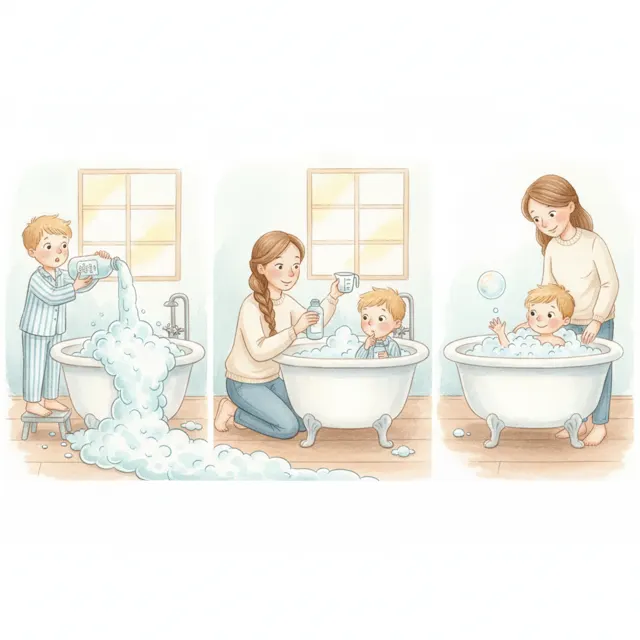
Aiden pours too much soap and his bubble bath overflows onto the floor. His mother shows him how to measure, and he learns that the right amount works best.

Moral: When you measure carefully, things work the way you want.

One sunny Saturday, Aiden wanted to make the biggest bubble bath the bathtub had ever seen. He poured in a little bubble soap, then a little more, and then, just to be sure, the whole bottle. He turned on the water and stirred. The bubbles began to grow. And grow. And grow. Soon the bubbles climbed over the edge of the tub and spilled onto the floor. They covered the bath mat, then the stool, then Aiden's feet. "Help!" Aiden called. "The bubbles are running away!" His mother came running. She laughed so hard she had to hold the wall. "Aiden," she said, "how much soap did you use?" "Just a little," Aiden said, looking at the mountain of bubbles. "Maybe a bit more than a little." "Let me show you a trick," his mother said. She scooped up the bubbles and put them back in the tub. "A little soap makes a lot of bubbles. Next time, we measure." They filled a small cup to the line and poured just that much in. The water turned nice and bubbly, with just enough foam and no spill. "One cup is enough," Aiden said, surprised. "That is the magic of measuring," his mother said. "When you use the right amount, things work the way you want them to." Aiden had a lovely, calm bath with just the right amount of bubbles. And he learned that sometimes, the secret to a perfect result is using a little less, not a little more.

Ollie and the Missing Moon

Ages 3-85 minwonder
Ollie and the Missing Moon story for kids illustration

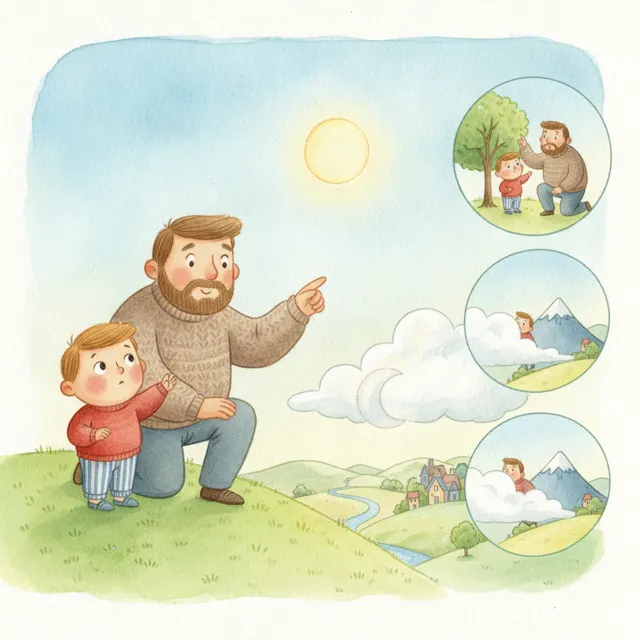
Ollie cannot find the moon in the daytime sky and thinks it has gone away. His father helps him look all day, then shows him the secret of where it hides.

Moral: Some things are still there even when you cannot see them.

Every night before bed, Ollie looked out his window at the moon. It was his favorite thing in the whole sky. But every morning, when he woke up, the moon was gone. "Where does the moon go in the daytime?" Ollie asked his father one morning. "What do you think?" his father asked. "Maybe it sleeps," Ollie said. "Or maybe it hides behind the clouds." "Let us find out," his father said. All that day, they looked for the moon. In the morning, the sky was bright and empty. At noon, the sun was high, but no moon anywhere. In the afternoon, Ollie squinted and searched, but he still could not find it. "It is really gone," Ollie said, feeling sad. "Wait until tonight," his father said. That night, Ollie ran to the window. There it was, the moon, round and silver, right where it always was. "So it comes back every night," Ollie said. "It never leaves at all," his father said. "The moon is always up there. In the daytime, the sun is so bright that we just cannot see it. The moon is hidden by the light." Ollie thought about this. "So it was there the whole time, even when I could not see it." "Exactly," his father said. "Some things are always there, waiting for the right moment to show themselves." Ollie smiled at the moon and waved. He liked knowing it was up there, all day long, even when the bright sun hid it from view.

The Ants' Favorite Snack

Ages 3-83 minobservation
The Ants' Favorite Snack story for kids illustration

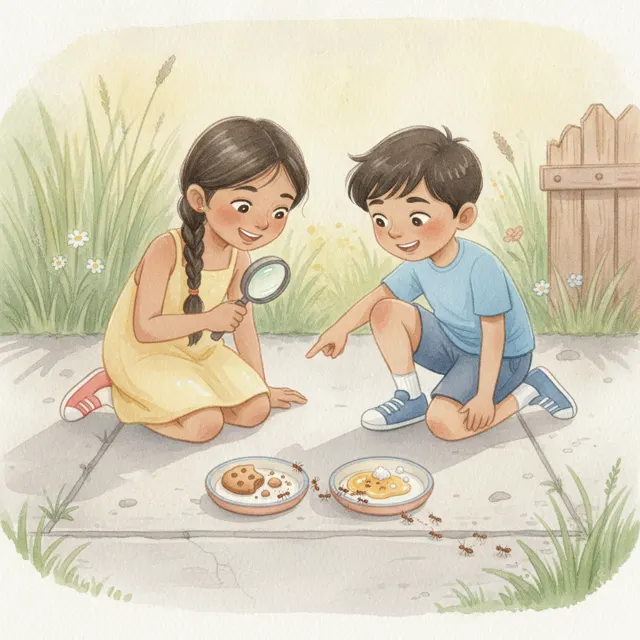
Priya and her friend Dev set out two dishes on the sidewalk to find out what ants like best. By watching closely and waiting, they get their answer.

Moral: Watch closely and the world will tell you its secrets.

On the sidewalk outside her house, Priya saw a long line of ants marching in a row. She crouched down to watch. "I wonder what ants like best to eat," she said. Her friend Dev sat beside her. "I bet they like sugar." "I bet they like bread," Priya said. "Let us find out." They ran inside and came back with a small dish of sugar and a small dish of bread crumbs. They set both dishes on the sidewalk, a little way apart, and sat very still. At first, the ants walked right past both dishes. Priya and Dev waited. Then one ant found the sugar. It stopped, tasted it, and hurried back to the line. Soon, a whole trail of ants marched to the sugar dish. They crowded around it, carrying tiny white grains away. Only a few ants went to the bread. Priya leaned closer. "They carry the grains one at a time," she whispered. "And they all follow the same path." "They like sugar more!" Priya said. "Wait," Dev said. "Let us watch a little longer." They watched until the sugar was nearly gone. The ants had made a busy road from the sugar dish to their nest. "We found the answer," Priya said. "But only because we watched carefully and waited." "And because we tried two things at once," Dev added. They brushed the crumbs away and stood up. Priya smiled. "Now I know how to find the answer to any question. You just look closely and let the world show you."

Maya's Question That Would Not Go Away

Ages 3-84 mincuriosity
Maya's Question That Would Not Go Away story for kids illustration

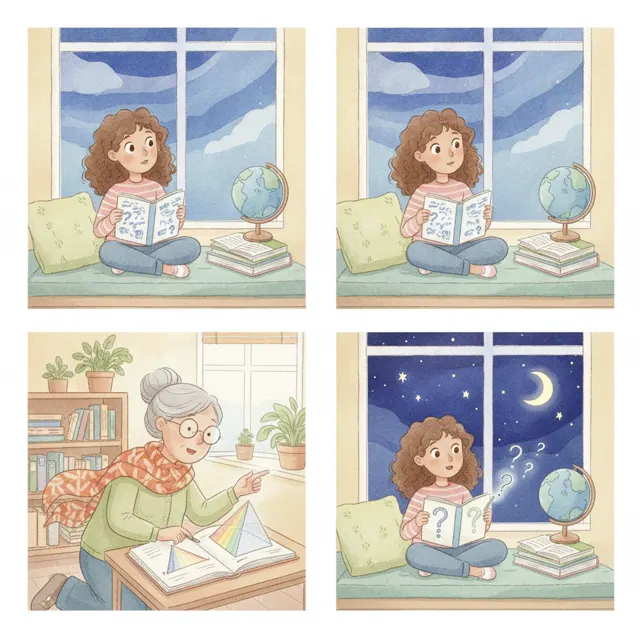
Maya keeps asking why the sky is blue and feels one answer is not enough. She writes her questions in a notebook and takes them to her teacher, who helps her find an answer. That answer leads to a brand new question.

Moral: Asking questions is how every big discovery starts.

Maya looked up at the sky. "Why is it blue?" she asked her mom. "Light from the sun," her mom said. "The blue part spreads out the most." That answer did not feel like enough. Maya had more questions. Why does blue spread out? Why not pink? The question would not go away. It tapped at her brain all day. At dinner she asked her mom about the sky again. Maya got a notebook. She wrote her question at the top. Under it she wrote more questions. Why is the grass green? Why do birds fly? How do seeds grow? Her hand got tired from writing. She had to stop and shake it out. Then she wrote two more. "Mom, I have too many questions," Maya said. "Questions are good," her mom said. "A scientist asks a lot of them." The next day Maya took her list to school. She showed it to her teacher. "These are great questions," the teacher said. "Pick one and find out." Maya picked the sky. She and her teacher looked in a book. They learned that sunlight has many colors. Blue light bounces around the most. That is why the sky looks blue. Maya smiled. She had an answer. But now she had a new question. What makes a rainbow? "That is the best part," her teacher said. "Every answer makes a new question." That night Maya added the new question to her list. She counted them all. There were twenty-one questions now. Her notebook was full. And that felt just right. Asking questions was the fun part.

The Boy Who Measured the Rain

Ages 3-85 minpatience
The Boy Who Measured the Rain story for kids illustration

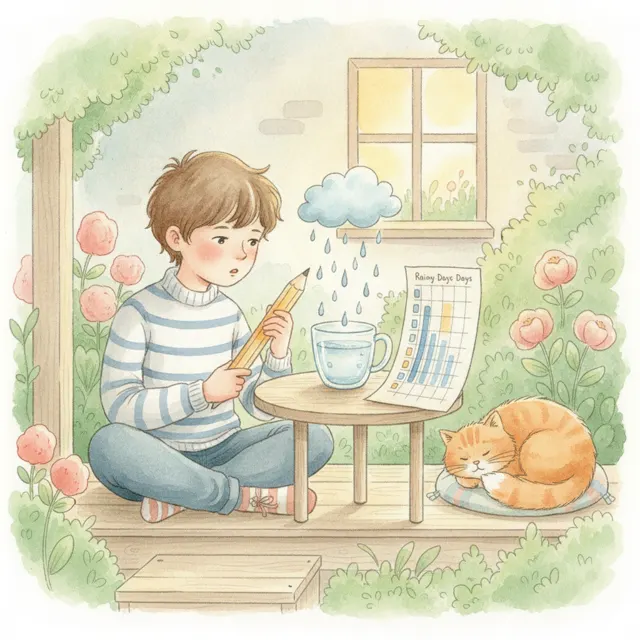
Sam wants to know how much rain falls each week. He puts a cup outside and marks the water line every morning. After a whole month of patient measuring, he has a chart that shows rainy days and dry days.

Moral: Small careful steps over time give you a real answer.

Sam loved the sound of rain on the roof. One stormy night he asked, "How much rain falls in a week?" "Why not find out?" his dad said. "You can measure it yourself." Sam found a clean cup. He set it outside in the open, away from the roof. He put a ruler next to it and waited. The cup sat alone in the yard, ready to catch every drop. The next morning the cup had water in it. Sam marked the line with a pen. "Day one," he said. "Two thumbs of rain." He wrote it down on a chart. Each morning he went outside. Some days the cup was full. Some days it was dry. Some days it had just a tiny bit. After a week Sam looked at his chart. "It rained three days," he said. "Keep going," his dad said. "One week is a good start. A month is even better." Sam kept measuring. It took time. Some mornings he wanted to stay in bed. But he went out anyway. Even when the wind was cold, he marked the line and wrote the number. He marked every line and wrote every number. After one month his chart was full. Sam drew the lines together. Now he could see it all. The rainiest week, the driest week, and one day when it rained twice. "I know how much rain fell," Sam said. "All because I checked a little bit every day." His dad smiled. "That is how real scientists work. Slow and steady wins." Sam nodded. He already had an idea for his next chart.

Zoe and the Vanishing Puddle

Ages 3-83 minobservation
Zoe and the Vanishing Puddle story for kids illustration

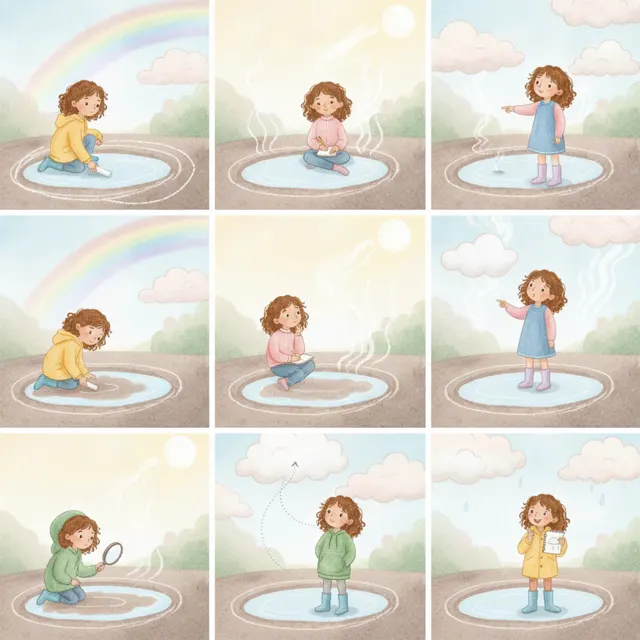
Zoe finds a puddle after a storm and draws a chalk line around it. Each day the puddle shrinks. She watches and writes down what she sees until she learns why water goes up into the air.

Moral: Watching closely can teach you how the world works.

After a big storm, Zoe found a puddle on the sidewalk. It was wide and shiny. It was the biggest puddle on the street. "I will watch this puddle," she said. She drew a chalk line all around it. Then she wrote the day on the ground next to the line. The next day she came back. The puddle was smaller. The chalk line was far from the water now. "The puddle is shrinking," Zoe said. "Where does the water go?" Her big brother walked by. "Maybe a dog drank it," he said. Zoe shook her head. "No dog came. I will keep watching." She came back every day. Rain or shine, she came back to look. She drew a new chalk line each time. The puddle got smaller and smaller. Then one sunny day, it was gone. Only a chalk circle was left. The ground was dry and dusty under her feet. Zoe ran inside. "Mom, my puddle vanished!" she said. "Do you know why?" her mom asked. Zoe thought. "The sun was hot. The water went up into the air. Like when my wet shirt dries." "Yes," her mom said. "That is called evaporation. Water turns into a gas and floats away." Zoe smiled. "So my puddle is in the air now. Maybe it will come back as rain." "It just might," her mom said. That night Zoe watched the clouds. Her puddle was not gone. It was just traveling in the sky. Zoe smiled. Tomorrow she would look for a new puddle.

The Scientist Who Was Glad to Be Wrong

Ages 3-84 minhumility
The Scientist Who Was Glad to Be Wrong story for kids illustration

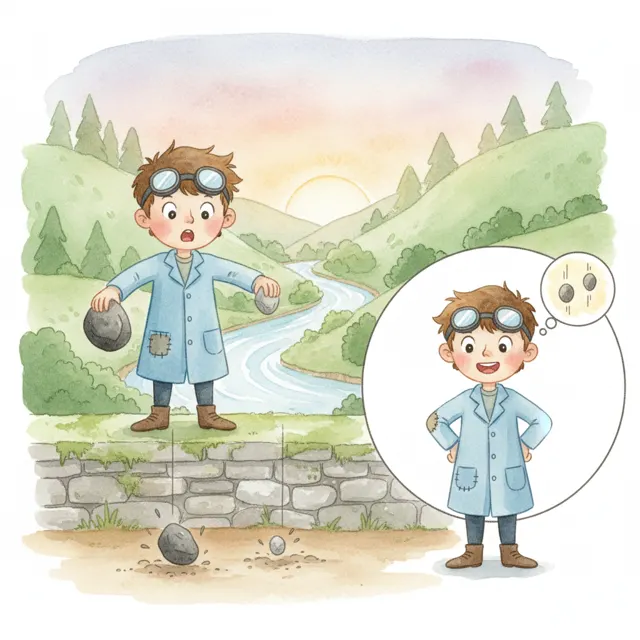
Max is sure a big rock falls faster than a small one. He tests his idea by dropping two rocks from the same height. When both land at the same time, he is surprised. He changes his mind and feels proud of learning the truth.

Moral: It is okay to be wrong because finding the truth is better.

Max was sure of one thing. He told everyone about it at lunch. Big things fall faster than small things. "A big rock will hit the ground first," he told his friend Ava. "Are you sure?" Ava asked. "Very sure," Max said. "Bigger means faster." He had read it somewhere, or maybe he had just guessed. Ava smiled. Ava was always ready to test an idea. "Let us test it." They found two rocks. One was big. One was small. They stood on the porch steps. "Drop them at the same time," Ava said. Max held out his hands and let go. Thump, thump. Both rocks hit the ground together. Max stared at the ground for a long time. Max blinked. "They landed at the same time." "Try again," Ava said. They dropped the rocks again. Thump, thump. Together again. Then a third time. Still together. Max sat down. "I was wrong," he said. "Big things do not fall faster." "How do you feel?" Ava asked. Max thought about it. "A little silly. But also glad. Now I know the truth." "That is what scientists do," Ava said. "They check their ideas. When an idea is wrong, they change it." Max grinned. "Then I am a real scientist. My guess was wrong, and now I know better." He picked up both rocks. He held them out for Ava to see. "Big or small, they fall together. I found that out myself." "And next time I will test my guess before I am so sure," he added.

Leo's Plant That Reached for Light

Ages 3-83 minobservation
Leo's Plant That Reached for Light story for kids illustration

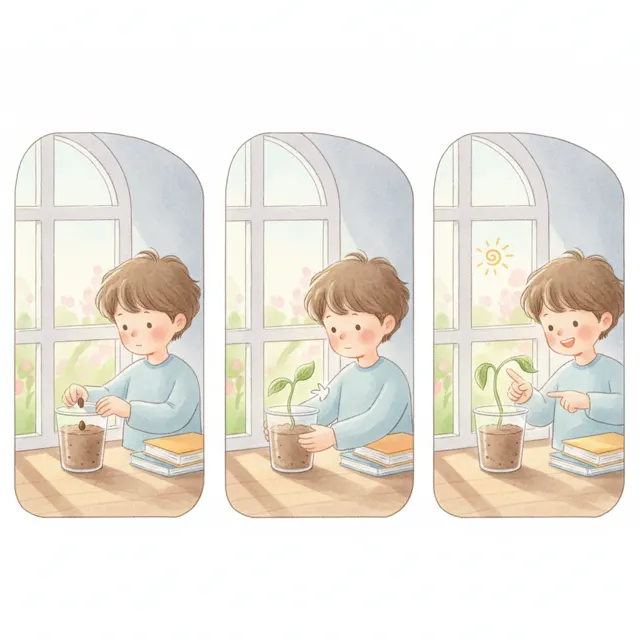
Leo plants a bean seed in a cup near a window. Day by day the little plant grows and leans toward the light. Leo turns the cup and watches the stem turn back, showing him that plants follow the sun.

Moral: Living things grow toward what they need.

Leo planted a bean seed in a cup of soft dirt. It was warm and damp. He set the cup on the windowsill and gave it a little water. Then he waited for something to happen. "Grow, little bean," he said. He said it every single morning. Each morning he checked the cup. For days nothing happened. Leo checked the dirt every morning anyway. Then one day a tiny green stem pushed out of the dirt. "It is growing!" Leo said. The stem got taller every day. It had two small leaves. The leaves were soft and green. But Leo saw something strange. The stem was leaning. It leaned toward the window, toward the light. "Why does it lean?" Leo asked. "Watch it," his teacher said. "You can find out yourself." Leo turned the cup around so the plant leaned away from the window. Then he waited. Two days later the stem had turned back. It was leaning toward the window again. "It moved!" Leo said. The plant had turned all by itself. "The plant turns to find the light." "That is right," his teacher said. "Plants need light to make food. So they grow toward it." Leo wrote that in his notebook. Leo smiled. "My plant is smart. It reaches for the sun." He left the cup by the window. He gave the plant a little more water and smiled. The little bean plant kept growing. Every day it leaned a little more toward the bright, warm light. Leo was proud of his little bean.

The Girl Who Counted the Stars

Ages 3-85 minperseverance
The Girl Who Counted the Stars story for kids illustration

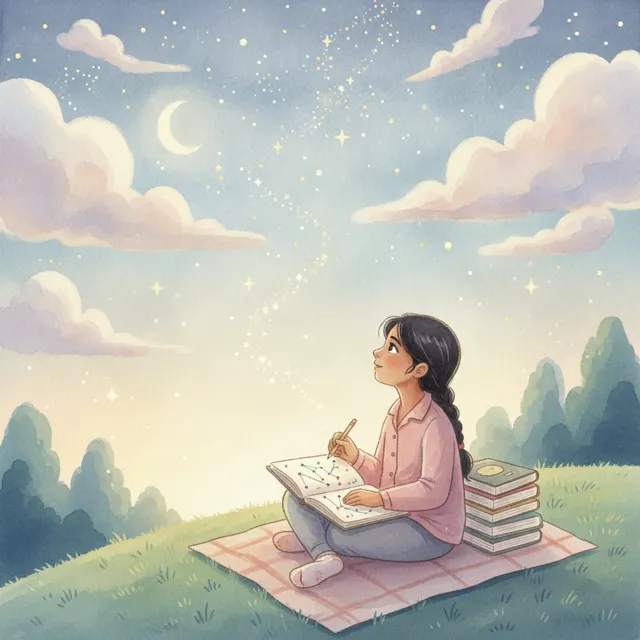
Priya wants to count every star she can see. Night after night she looks up with a notebook and a pencil. Some nights are cloudy, but she keeps trying. Little by little her star map grows bigger.

Moral: Keeping at a hard job, one night at a time, gets you far.

Priya looked out her window one night. The sky was full of stars. They looked like little lights all in a row. "I want to count them all," she said. She took a notebook and a pencil. She started to count. "One, two, three, four..." Soon she lost her place. She had to start over three times. There were so many stars. "I will count a little bit each night," she said. The next night she counted the stars over the tall tree. She wrote down ten. The night after, she counted the stars near the moon. She wrote down twelve more. Some nights the clouds came. Thick gray clouds covered the whole sky. Priya could not see any stars. "No stars tonight," she wrote. But she did not stop trying. Week by week her notebook grew. She drew little dots on a page to make a star map. Each dot was a star she had seen. One night her mom came to look. "How many stars now?" she asked. "Two hundred and ten," Priya said. "And I am not done." "That took a long time," her mom said. "It did," Priya said. "But I did not give up. A little bit every night adds up." "Two hundred and ten stars," she said again, proud of each one. Her mom hugged her. "That is how you do a big job. One small step at a time." Priya looked at her map and smiled. The sky was huge. But now it was a little bit hers.

A Jar Full of Questions

Ages 3-83 mincuriosity
A Jar Full of Questions story for kids illustration

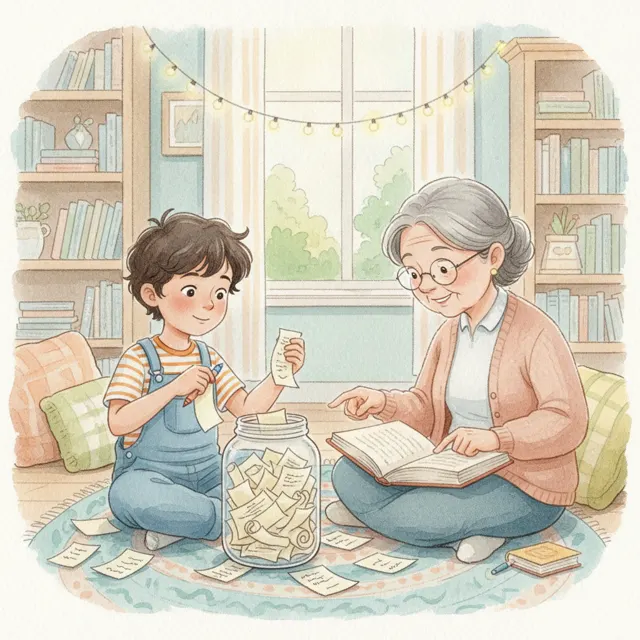
Ravi writes his questions on slips of paper and drops them in a big jar. When the jar is full, he pulls out one question at a time. With a little help, he finds an answer for each one.

Moral: Write your questions down so you do not lose them.

Ravi had questions all day long. They popped into his head while he ate and while he played. Why is the moon round? How do bees make honey? Why do I have ten fingers? His questions were so good that he kept forgetting them. Then he had an idea. "I will put my questions in a jar," he said. He found an empty jar. He cut paper into little slips. Every time a question came to him, he wrote it down and dropped it in. Slip, slip, slip. The jar filled up fast. Soon the slips of paper reached the top. One day Ravi could not close the lid. The jar was full. "Time to find answers," he said. He pulled out one slip. It said, "Why is the moon round?" He and his dad looked it up in a book. The moon is round because it was made from hot rock that pulled into a ball. Ravi wrote the answer on the back of the slip. The next day he pulled out another slip. "How do bees make honey?" His grandma knew. Bees turn sweet flower juice into honey inside the hive. Day by day the jar emptied. Each answer made Ravi smile. Ravi learned why he has ten fingers. He learned why the sky changes color at sunset. When the jar was empty, Ravi smiled. "My questions were not a mess. They were a treasure box." He put the empty jar back on the shelf. It was ready and waiting. "Ready for more questions," he said.

The Team That Built a Better Boat

Ages 3-84 minteamwork
The Team That Built a Better Boat story for kids illustration

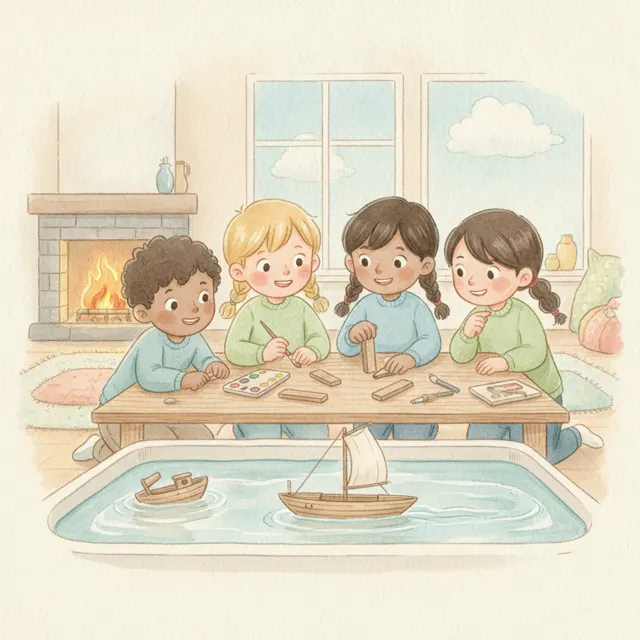
Four friends build little boats and race them in a tub of water. One boat tips over. Another is too slow. They share their ideas and build one new boat together that floats straight and fast.

Moral: Sharing ideas helps a team make something better.

Four friends sat by a tub of water. They each made a little boat to race. They used whatever they could find around the house. Mia folded a paper boat. Ben made a boat from a milk cap. Tess made one from foil. Dan made one from a stick and a leaf. "Ready, set, go!" Mia called. The paper boat floated for a moment, then got soggy and tipped over. The milk cap boat spun in a circle. The foil boat floated well but sat low in the water. The stick boat drifted and fell apart. All four boats sat in the tub, sad and soggy. "None of them worked great," Ben said. "My paper got wet," Mia said. "Paper is too soft." "My cap was too small," Ben said. "It could not stay straight." "My foil is strong," Tess said. "But it was heavy in the middle." "My stick floated," Dan said. "But it fell apart." They looked at each other. "What if we put our best parts together?" Mia said. So they did. They took Tess's foil and shaped it like a wide dish. They made the bottom flat and light. Then they tested it. The new boat slid across the water. It did not tip and it did not spin. It stayed up, and it went straight. "We did it!" they all said. "Together we built something none of us could build alone," Tess said. And that was the best part of all. "We should build together more often," Dan said.

Ana and the Floating Egg

Ages 3-83 minexperimentation
Ana and the Floating Egg story for kids illustration

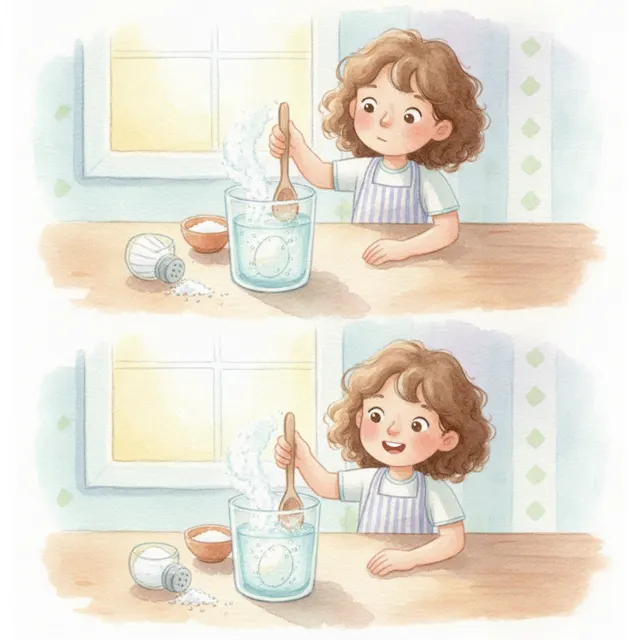
Ana drops an egg in a cup of water and watches it sink. She stirs in salt, one spoon at a time, and tries again. After a few tries the egg floats. Ana learns that salt makes water push up harder.

Moral: Try, change one thing, and try again to find the answer.

Ana had a question. It had been on her mind all morning. "Can an egg float?" she asked. "Let us find out," her mom said. She gave Ana a cup of water and an egg. Ana set the egg in the water. Plop. It sank to the bottom. It sat there, still and quiet. "It sinks," Ana said. "Try adding salt," her mom said. "One spoon at a time." Ana stirred in one spoon of salt. She waited. The egg stayed down. She added a second spoon. Still down. A third spoon. The egg wobbled but sank again. Ana frowned at the cup. "This is taking forever," Ana said. "Keep going," her mom said. "Change one thing at a time." Ana added a fourth spoon of salt. She stirred and stirred until the salt was gone. Then she set the egg in the water. The egg sank a little, then stopped. It floated in the middle of the cup. It did not touch the bottom anymore. "It is floating!" Ana said. She added one more spoon of salt. Now the egg bobbed up to the top. "Why does salt do that?" Ana asked. "Salt makes the water heavier," her mom said. "Heavier water pushes up on the egg more, so the egg floats." Ana smiled. "So I made the water strong enough to hold the egg." She tried it once more to be sure. She set the egg in and watched. The egg floated every time. Her question had a real answer now.

The Scientist Who Shared Her Notes

Ages 3-84 minsharing
The Scientist Who Shared Her Notes story for kids illustration

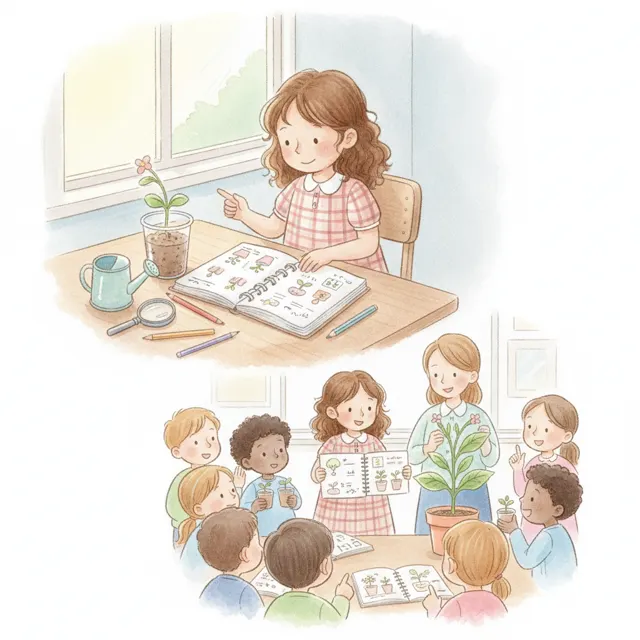
Nora grows a seed in a cup and writes down what she sees every day. When her plant grows tall, she shows her notes to the class. Now everyone can use her notes to grow their own seeds.

Moral: Sharing what you learn helps everyone learn too.

Nora planted a sunflower seed in a cup. It was a shiny black seed. She wanted to watch it grow. She wanted to see every tiny change. "I will write down everything I see," she said. Each day she looked at the cup. On day one she wrote, "No change." On day three she wrote, "A tiny green tip." On day five she wrote, "A stem, taller than my thumb." She wrote about the water she gave it. She wrote about the sun in the window. Her notes grew into a little book. It had drawings and words on every page. After three weeks the plant was tall. It had big green leaves. Nora drew a picture of it in her book. One day she brought her notes to class. "This is how I grew my plant," she told her friends. She showed them each page. "Can I read it?" asked her friend Jonah. "Me too?" asked Lily. Nora passed the book around. Everyone wanted a turn. The whole class wanted to see it. Her teacher smiled. "Nora did what good scientists do. She shared what she learned." The next week every kid in class planted a seed. They used Nora's notes to help them. They knew how much water to give and to keep the cup in the sun. "My seed is growing too," Jonah said. "Thanks to your notes, Nora." Nora beamed. Sharing her work had helped the whole class grow. Nora was glad she did not keep it to herself.

The Boy Who Mixed New Colors

Ages 3-83 mincreativity
The Boy Who Mixed New Colors story for kids illustration

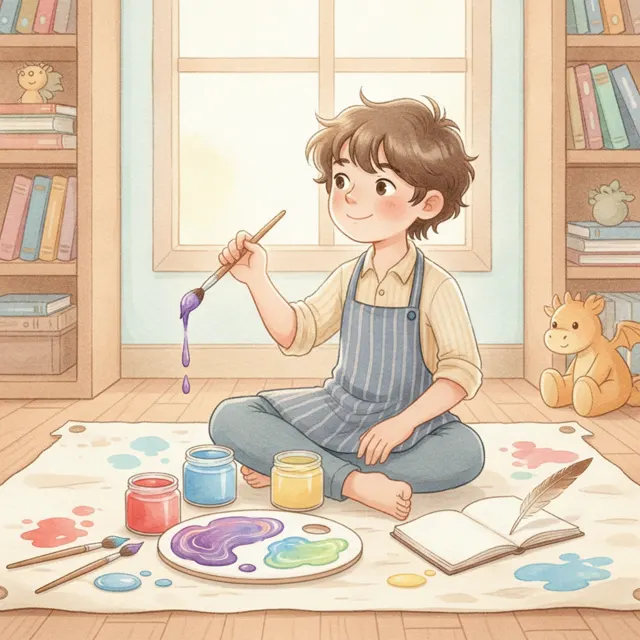
Theo plays with three colors of paint. He mixes red and blue and gets purple. He mixes yellow and blue and gets green. He writes down each new color so he can make it again.

Moral: Mixing and trying new things can make something new.

Theo loved to paint. He could paint for a whole afternoon. He had three pots of paint. Red, blue, and yellow. "What happens if I mix them?" he asked. He put a dab of red on a plate. He added a dab of blue. He stirred with a stick. The two colors swirled together and turned purple. "Purple!" Theo said. "I made purple!" He danced around the table. He tried again. Red and yellow this time. He stirred. The mix turned orange. "Orange!" he said. "This is fun." He tried yellow and blue. He stirred and watched. Green! Theo could not stop. One color led to another. He mixed red, blue, and yellow all together. That made a dark brown. He mixed a lot of yellow with a tiny bit of blue. That made a light green. It was soft like a leaf. "I need to remember these," he said. He got a sheet of paper. Next to each color he wrote down what he mixed. His notes filled the whole page. Purple equals red plus blue. Orange equals red plus yellow. Green equals yellow plus blue. His little sister came over. She was holding a paint brush. "Make me a new color," she said. Theo smiled. "Okay. Pick two colors." She pointed at blue and yellow. Theo mixed them and showed her the green. "You made that," she said. "I wrote it down, so I can make it again," Theo said. "That is what a scientist does with a new find."

The Long, Slow Experiment

Ages 3-85 minpatience
The Long, Slow Experiment story for kids illustration

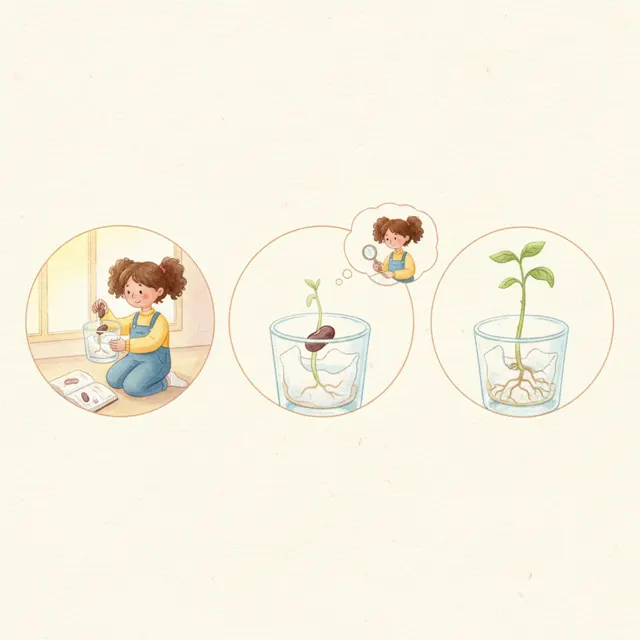
Jade puts a bean in a clear cup with a wet paper towel. For two weeks she checks it every morning and draws what she sees. The slow change from seed to sprout teaches her to wait.

Moral: Some answers take time, and that is okay.

Jade wanted to see a seed open up. She had never seen it happen before. So she did a slow experiment. She put a wet paper towel inside a clear cup. She tucked a bean next to the glass so she could see it. The bean was small and brown and smooth. Then she set the cup on the counter. "Now we wait," she said. The first day, nothing. The second day, nothing. The third day, the bean looked a little bigger. "It is drinking water," Jade said. On day five, a tiny white root poked out. Jade almost missed it at first. Jade drew a picture of it. On day eight, a small green shoot pushed up. She drew that too. Every morning she checked the cup. Some days the bean changed a lot. Some days it looked the same. Jade did not stop looking. Every morning, she checked the cup first thing. Jade did not stop looking. "This is slow," she said to her cat. "But it is working." On day twelve, the shoot was tall. On day fourteen, tiny leaves opened at the top. Jade held the cup up. "Look, Mom! It grew from a plain bean into a plant." Her mom smiled. "You waited a long time." "I did," Jade said. "And the waiting was the experiment. Some answers take two weeks." She set the cup in the window. The little plant was just getting started. Jade smiled. She could not wait to see it grow even more.

The Scientist Who Asked for Help

Ages 3-84 minasking for help
The Scientist Who Asked for Help story for kids illustration

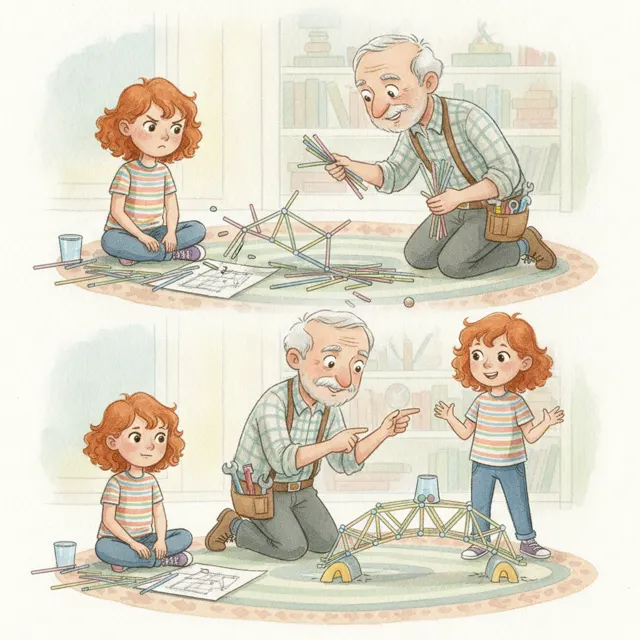
Ivy tries to build a bridge from straws, but it keeps falling down. She feels stuck until she asks her grandpa, who builds things for a living. Together they make the bridge strong enough to hold a cup.

Moral: Asking for help is a smart thing a scientist can do.

Ivy wanted to build a bridge from straws. She taped the straws together and set a toy car on top. The bridge looked good for about one second. The bridge sagged and fell. She tried again with more tape. This time the bridge stood for a moment, then folded in the middle. "Why does it keep falling?" Ivy said. She was stuck. She tried one more time. She used every straw she had. The bridge wobbled and broke apart. Ivy put her head in her hands. She felt like giving up for a minute. Then she looked up. "I need help," she said. She walked to the garage, where her grandpa was working. "Grandpa, my bridge keeps falling down," she said. "Will you help me?" "Of course," he said. "Show me." They went to the table. Grandpa looked at the straws. "The middle is weak," he said. "It has nothing holding it up." He showed Ivy how to put a triangle of straws under the middle. They taped the triangle in place. "A triangle is strong," he said. "It does not bend." They built the bridge again, this time with triangles. Ivy set the toy car on top. The bridge held. Then she set a full cup of water on it. The bridge held that too. "It works!" Ivy said. "Asking for help is not giving up," her grandpa said. "Smart people ask for help all the time." "You were brave to ask," he said. Ivy smiled. "Next time I am stuck, I will ask sooner."

Wren and the Wiggly Worms

Ages 3-83 minrespect for nature
Wren and the Wiggly Worms story for kids illustration

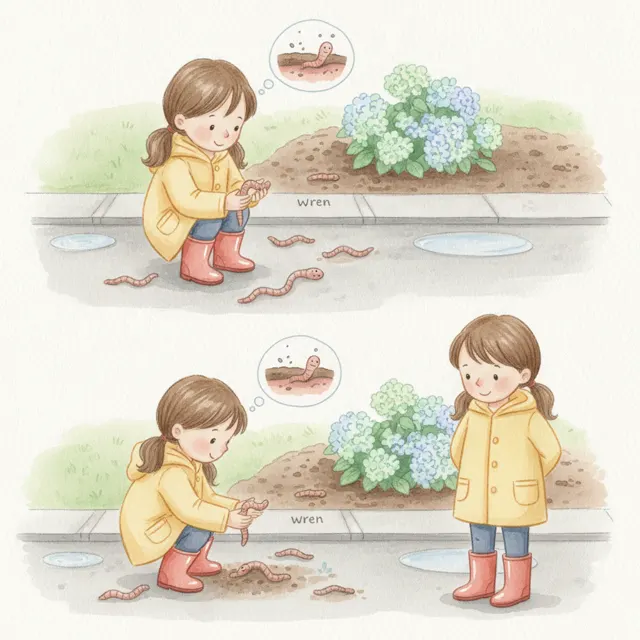
After the rain, Wren finds worms on the sidewalk. She picks one up to study it, then learns worms need damp soil to breathe. She puts them back gently and watches them from a safe distance instead.

Moral: We can learn about nature and still be kind to it.

After a rainy night, Wren found worms all over the sidewalk. "Look at them wiggle," she said. She bent down for a closer look. The worms were all different sizes. She picked one up. It was cool and wet and wiggly. "I want to keep it and watch it," Wren said. Her mom came over. "Worms need to stay wet," she said. "Their skin has to be damp so they can breathe. If they dry out, they can get hurt." Wren looked at the worm in her hand. "I do not want to hurt it," she said. "Worms are living things too," she added. She walked to the garden and set the worm down on the soft, damp soil. It wiggled and began to dig. Soon it was gone. "Where did it go?" Wren asked. "Down into the dirt," her mom said. "That is its home. Worms mix the soil and help plants grow." Wren found more worms on the sidewalk. One by one, she carried them to the garden. She moved slowly so she would not drop any. She was very gentle. Her hands were soft and slow. Then she sat on the grass to watch. The worms moved slowly at first, then slipped into the ground. "I can still be a scientist," Wren said. "I can watch them without holding them." She drew a worm in her notebook. She wrote, "Worms like wet soil." She drew a picture of a worm going into the dirt. That was enough for one day.

The Mistake That Became a Discovery

Ages 3-84 minresilience
The Mistake That Became a Discovery story for kids illustration

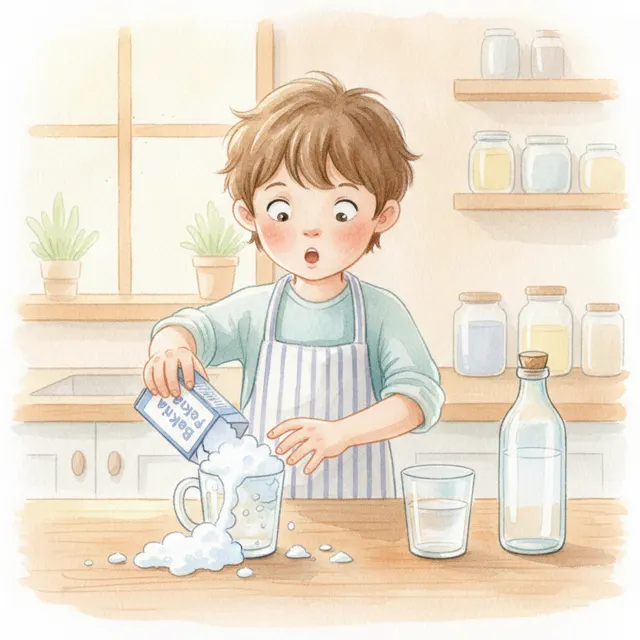
Owen is making a snack when he spills baking soda into a cup of vinegar. The cup fizzes over. His mess surprises him, so he tries it again on purpose. He discovers how baking soda and vinegar bubble together.

Moral: A mistake can turn into a discovery if you pay attention.

Owen was helping in the kitchen. His job was to measure the small things. He had a cup of vinegar for a recipe. He reached for the sugar, but his hand knocked over a box of baking soda. He watched it happen in slow motion. Whoosh! White powder spilled into the vinegar. The cup began to fizz and bubble. It foamed up and spilled over the edge. "Oh no!" Owen said. "I made a mess." Then he stopped. He looked at the bubbles. "That was not a normal spill," he said. "It did something," he said. "Why did it foam?" His dad came over. "Let us clean it up," he said. "Then we can test it." They wiped the table. Then Owen got a clean cup and a little vinegar. He added a tiny spoon of baking soda. Fizz! The cup bubbled again. "It did it again!" Owen said. "Try more," his dad said. Owen added more baking soda. The foam grew tall. It bubbled and popped like a tiny volcano. It bubbled and popped. "Baking soda and vinegar make gas," his dad said. "That is called a reaction." "The gas makes the bubbles." Owen grinned. "So my mess was a discovery." He tried it one more time, slowly this time, and watched the bubbles rise. "Next time I spill something," Owen said, "I will look before I clean it up." His dad laughed. "Good plan. Sometimes the best finds come from a mistake. "I will remember that," Owen said."

Frequently Asked Questions

Turn Your Child Into the Hero of Their Own Story

Upload their photo and watch as AI creates a beautiful, personalized storybook with illustrations that look just like them. From $5.99/month.

✨ Make Your Child the Hero

Plans from $5.99/month