Animal Stories for Kids

Wild, wonderful animal tales that bring the natural world to life for curious young readers.

โœจ Make Your Child the Hero

Animals have always been among children's favorite story characters. They allow us to explore human emotions and situations through a safe, delightful lens. Our animal stories range from the jungle to the Arctic, from farm to ocean deep, introducing children to the incredible variety of creatures that share our planet while teaching friendship, courage, curiosity, and kindness along the way.

Why should you read animal stories to your child?

Animal stories make reading feel like play. Kids want to hear the same tale again and again. That builds a big word bank. One study found kids read five books a day heard 1.4 million more words by kindergarten than kids never read to (Ohio State University, 2019).

How do animal stories help kids learn about feelings?

Animal tales put big feelings on small paws and wings. A child sees a sad fox or a brave rabbit and learns what those feelings look like. This helps kids name their own emotions. Stories give children a safe way to talk about being scared or angry.

Shared reading helps kids act kinder. One study found that when parents and children read picture books with social themes together, children showed more helping and sharing behavior (Frontiers in Psychology, 2025). Talking about the story made the lesson stick.

Sample Stories

Read these stories, then create a personalized version where your child is the hero

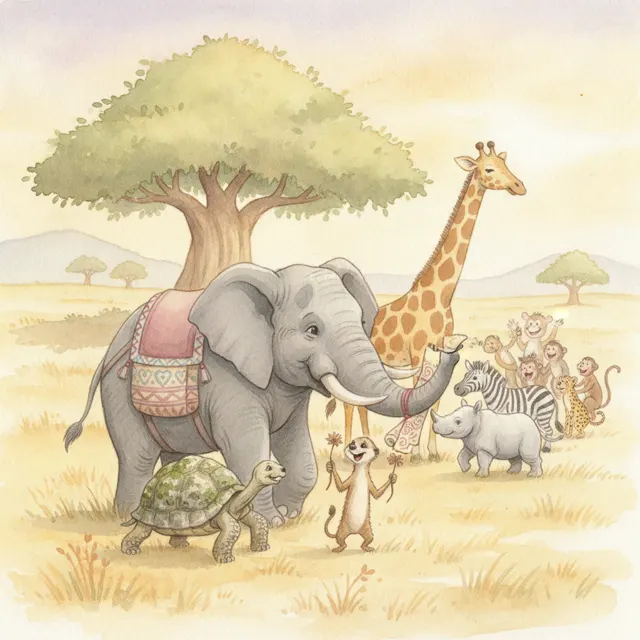
The Elephant Who Never Forgot a Friend
Ages 4-84 minfriendship
The Elephant Who Never Forgot a Friend story for kids illustration

An elephant with a remarkable memory uses it to reunite old friends across the savanna.

Moral: Remembering people and caring about their lives is one of the most powerful acts of love.

Nuru the elephant was famous across the savanna for one thing: she never forgot a face. She remembered the zebra family who had sheltered under the baobab tree during the great storm seven years ago. She remembered the young giraffe she'd helped find water when the dry season was especially hard. She remembered every creature who had ever shown her kindness. Other animals thought this was unusual. "Why remember so much?" the lions asked lazily. "Because everyone matters," Nuru said simply. One dry season, a young wildebeest named Peto got separated from his herd. He wandered for days, tired and afraid. Nuru found him drinking from a small pond. She looked at him carefully. "Your mother is Sala," she said. "I met her at the great river crossing three years ago. She has a notch on her left ear." Peto stared. "You know my mother?" Nuru knew exactly where Sala's herd grazed at this time of year. She walked Peto across the plains for two days, past the rocky hills and through the thornbush corridor. When Peto ran to his mother, Sala lifted her head in astonishment. Then she looked across at Nuru. "Thank you," Sala called. "How did you know?" Nuru touched her large grey head with the tip of her trunk. "I remember everyone who matters," she said.
The Fox Who Learned to Wait

Ages 4-83 minpatience
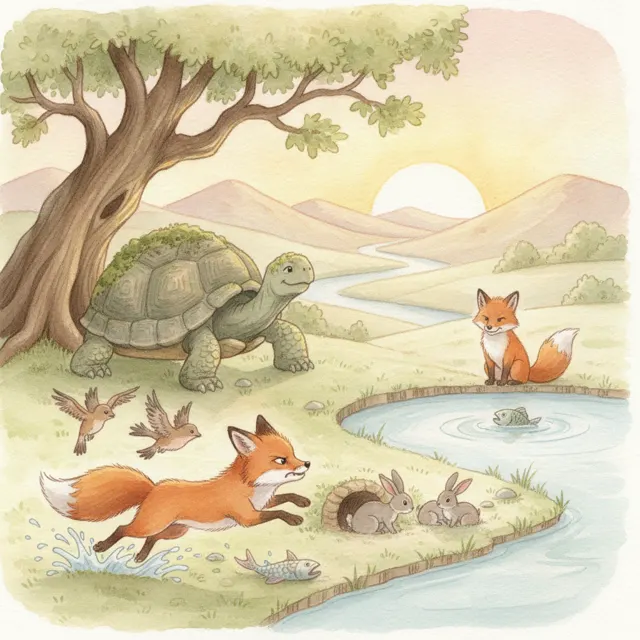
The Fox Who Learned to Wait story for kids illustration

An impatient fox keeps scaring away his meals until a wise old tortoise teaches him about patience.

Moral: Speed alone is not enough. Patience and timing are what turn effort into success.

Finn the fox was the fastest animal in the forest. He could outrun the deer, outleap the hare, and outsprint any creature he cared to name. He was very proud of this. But Finn was also the hungriest animal in the forest. Because every time food was near, he jumped too quickly. He startled the rabbits before he was close enough. He pounced too early. He scared the mice before he could catch them. Day after day, Finn went to bed hungry. One morning, he found old Tortoise sitting perfectly still at the edge of a berry patch. A beetle walked across Tortoise's nose. Tortoise didn't twitch. "How do you sit so still?" Finn asked. "Practice," Tortoise said, not moving his eyes. "But don't you want to move? Don't you get impatient?" "Of course," Tortoise said. "But wanting isn't the same as doing. I want the berries. So I wait until the moment is right." Finn tried it. He sat beside Tortoise. A rabbit hopped close. Finn's tail twitched. He waited. The rabbit came closer. Finn waited. Closer still. He caught the rabbit. "How did that feel?" Tortoise asked. Finn chewed thoughtfully. "Better," he admitted. "Much better."

The Penguin Who Was Afraid of Water

Ages 4-83 mincourage
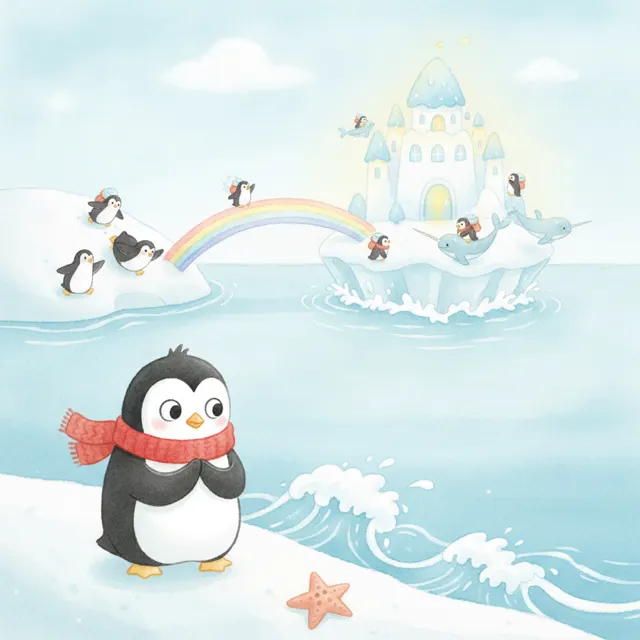
The Penguin Who Was Afraid of Water story for kids illustration

A penguin scared of swimming discovers his fear is holding him back from his greatest adventure.

Moral: Fear can keep us from the very thing we were made to love. Courage is jumping in.

Percy was a penguin who was afraid of water. This was a significant problem, given that he was a penguin. All the other penguins dove into the freezing sea with great joy. They spun and swooped and darted after fish. They leaped out of the waves and slid back across the ice, laughing. Percy watched from the shore. "Come in!" his friends called. "Maybe later," Percy said, every single day. One afternoon, his friend Mila climbed out of the water and sat beside him. "What are you afraid of?" she asked. "What if I sink?" Percy said. Mila tilted her head. "Penguins don't sink. We're built for this." "What if it's too cold?" "Our feathers keep us warm. Percy, you were made for the water. You're afraid of the very thing you were designed to love." Percy thought about this for a long time. The next morning, he waddled to the edge. He looked down at the dark blue water. His heart hammered. He jumped. The cold shocked him first. Then something remarkable happened. His body knew exactly what to do. He swept his flippers and shot forward. He was flying, underwater, smooth and fast and free. He burst through the surface, gasping. "Why did I wait so long?" he cried. Mila laughed. "That's the question, isn't it."

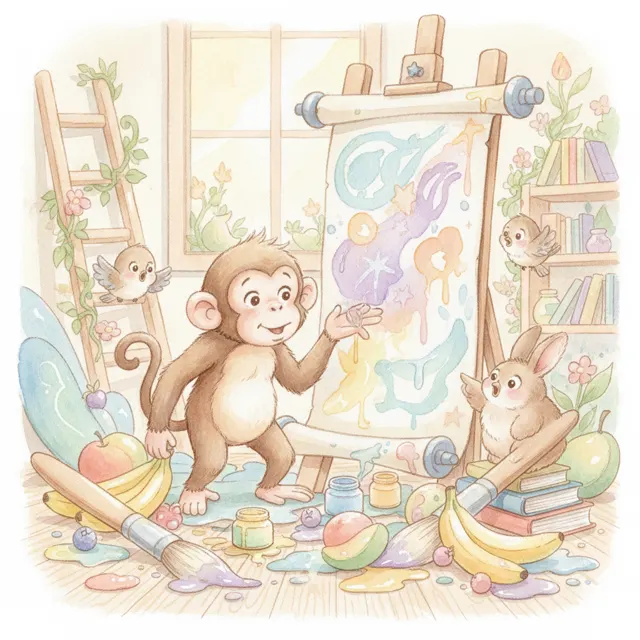
The Monkey's Brilliant Mistake

Ages 4-83 minperseverance
The Monkey's Brilliant Mistake story for kids illustration

A monkey makes a mess trying to help others and discovers that mistakes lead to surprising discoveries.

Moral: Mistakes made with good intentions often lead to unexpected and beautiful results.

Mango the monkey meant well. He really did. He tried to help the birds by rearranging their nests. The birds were less than pleased. He tried to help the river fish by digging them a shortcut. The shortcut filled with mud. He tried to help the ants carry their food by carrying it himself. He tripped and spilled it everywhere. "You make everything worse!" the animals said. Mango drooped. "I just wanted to help." He sat sadly under the mango tree, picking at the fruit and dropping the seeds anywhere. Three months later, a young mango tree was sprouting beside the old one. Then another appeared along the path. Then one near the waterhole. The animals realized what had happened. "Mango planted trees," the parrot announced. "Everywhere he tripped and dropped his fruit." The following year, the new trees gave shade to the birds' nests. The fruit fed the ants. Animals gathered in the cool shadows. Mango looked at all of it, wide-eyed. "I didn't plan any of this," he said. "Most wonderful things aren't planned," the tortoise said wisely. "You just have to keep trying, even badly, and see what grows."

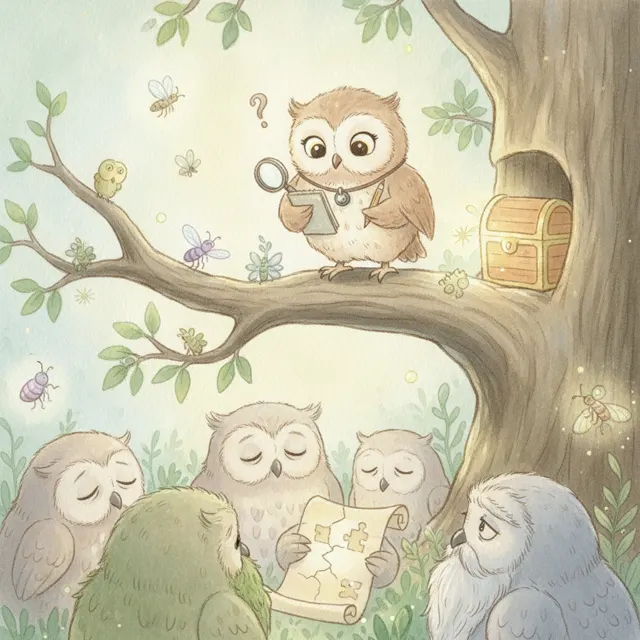
The Owl Who Asked Too Many Questions

Ages 5-94 mincuriosity
The Owl Who Asked Too Many Questions story for kids illustration

A curious young owl who asks questions about everything solves a mystery the older owls could not.

Moral: Questions aren't a nuisance. Curiosity is one of the sharpest tools we have.

Pip was the youngest owl in the Great Oak. She also asked the most questions. "Why is the moon round?" she asked. "Hush," said the elders. "Where do the fish go in winter?" she asked. "Quiet," said the elders. "Why does the wind change direction at sunset?" she asked. "Enough questions!" said the elders. But Pip couldn't stop. Questions just kept bubbling up inside her. One winter, a mystery settled over the Great Oak. The berries that always grew on the north side were disappearing before the birds could eat them. Nobody knew why. The elder owls debated solemnly for three nights. Pip watched. She asked herself questions quietly. Why the north side? What was different about the north side? Who was up during the day? She noticed a family of squirrels who always gathered before sunrise, just when the owls were sleeping. She told the elders. They investigated and found the squirrels had been storing the berries for winter, taking them before the birds arrived. The problem was solved peacefully, with the squirrels agreeing to share. The elder owls looked at Pip. "It was your questions that saw what we didn't." Pip blinked. "Questions are how I see," she said simply. Nobody told her to hush after that.

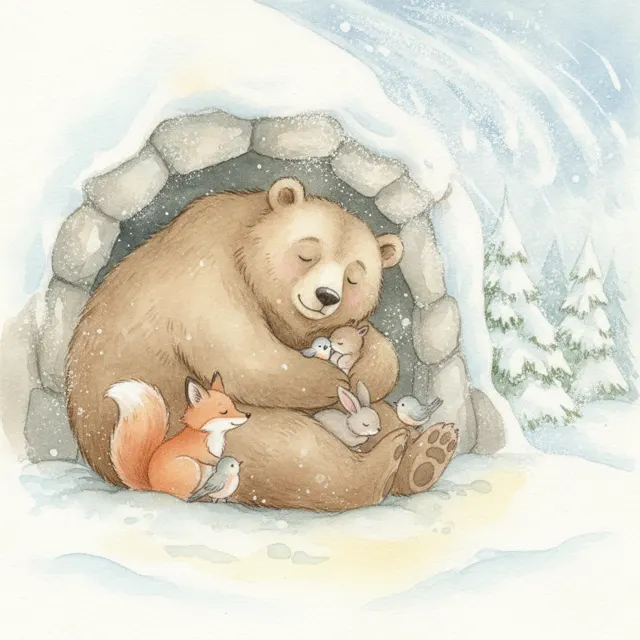
The Bear Who Shared His Winter

Ages 3-74 mingenerosity
The Bear Who Shared His Winter story for kids illustration

A bear who wakes during hibernation shares his warmth with smaller animals caught in an unexpected blizzard.

Moral: Sharing what we have, even when it costs us comfort, warms everyone involved.

Boris the brown bear loved hibernating. He spent all autumn eating, growing round and sleek, and by November he crawled into his den with a happy sigh. He was planning to sleep until March. In January, however, he woke to the sound of crying. It was a strange, small sound. He snuffled at his den entrance. Outside, a blizzard was raging, far harsher than usual. Huddled at the opening of his den were seven small creatures: two rabbits, three mice, a hedgehog, and a very small fox cub who had lost his family. Boris looked at them. They looked at Boris. It was very cold. Boris sighed and pushed backward. "Come in then," he grumbled. They poured into the den. Boris settled back and let them burrow into his thick fur. The rabbits pressed against his belly. The mice tucked into his neck. The hedgehog curled near his feet. The fox cub curled up against his side. They were warm. Boris was warmer. They stayed for six weeks while the blizzard blew itself out. Boris woke properly in March to find them all gone, the den tidy and a gift left near the entrance: a careful stack of seeds and nuts collected by tiny paws in thanks. He ate them for breakfast, happily.

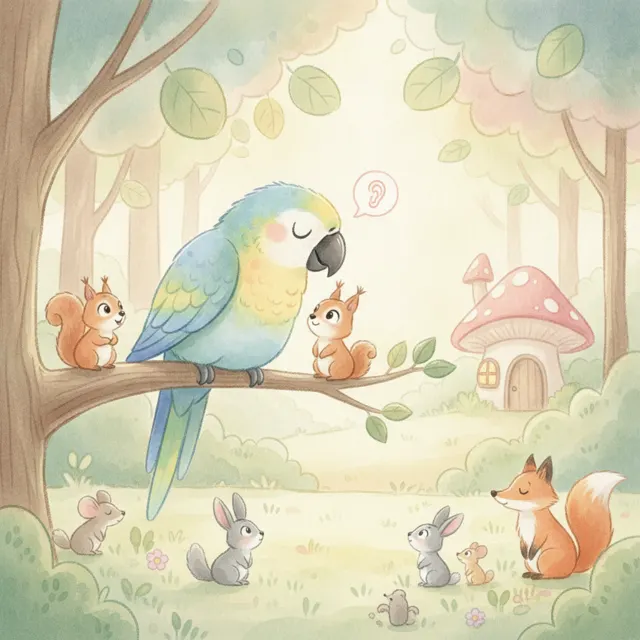
The Parrot Who Listened

Ages 5-94 minempathy
The Parrot Who Listened story for kids illustration

A parrot famous for repeating everything learns that truly listening is far more valuable than speaking.

Moral: True listening, without interrupting or fixing, is one of the greatest gifts we can give.

Cleo the parrot could repeat anything. She was the most famous bird in the rainforest because of this remarkable talent. She repeated the toucan's call perfectly. She mimicked the jaguar's growl. She could reproduce any sound after hearing it once. The animals all thought she was wonderful. But one day, a young macaw named Rio sat near Cleo, crying quietly. Cleo immediately repeated his crying sounds back to him. Rio looked up, confused and a little annoyed. "I'm not asking you to copy me," he said. "I just wanted someone to hear me." Cleo paused. She had never just heard someone before without immediately responding. She sat quietly. Rion kept talking. He had lost his nest in a storm. He was tired and afraid and missed his family. Cleo listened. She didn't repeat a word. She didn't make sounds. She simply sat close and listened to everything. When Rio finished, he let out a long breath. "Thank you," he said. "I didn't say anything," Cleo said. "I know," said Rio. "That's why it helped." Cleo thought about that for a long time. She could copy any sound in the rainforest. But what Rion had needed was something different, something she'd never tried. She started practicing listening as hard as she practiced repeating. It turned out to be the harder skill, and the more valuable one.

The Turtle Who Raced the Wind

Ages 3-83 minutespatience
The Turtle Who Raced the Wind story for kids illustration

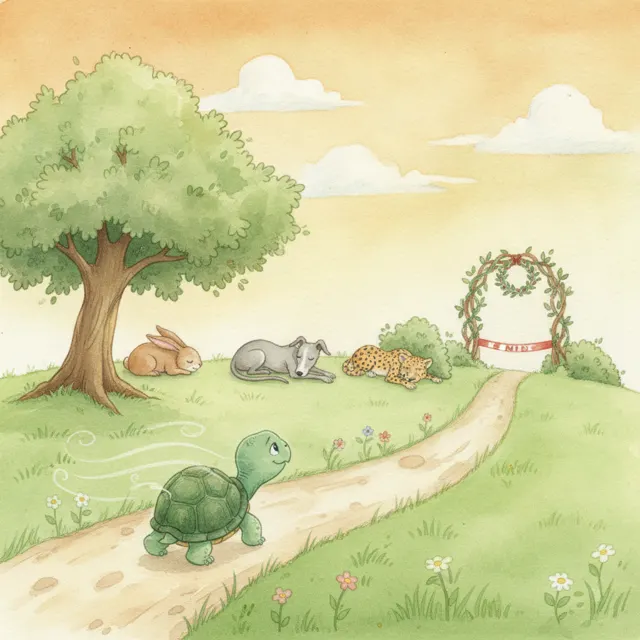
Tommy the turtle was slow. All his friends ran fast and left him behind. One windy day they had a race. Tommy did not rush. He took small, steady steps. The fast friends got tired and slept. Tommy kept going and won the race.

Moral: Slow and steady wins the day.

Tommy was a small turtle. He had a hard green shell. He walked very slowly. The rabbits and hares laughed at him. "You are too slow, Tommy," said a rabbit. "You will never win a race," said a hare. Tommy just smiled. He did not say a word back. One day, the wind blew very hard. The animals planned a big race. The rabbit and the hare joined in. Tommy joined in too. "Ha! You are slow," said the rabbit. "I will win for sure." The race began. The rabbit ran fast. The hare jumped high. The wind pushed them along. They ran far, far ahead. Tommy walked step by step. He did not rush. He looked at every stone on the path. He did not slip. Soon the rabbit got tired. The strong wind pushed him back. The hare got tired too. They stopped to rest under a tree. They closed their eyes and fell asleep. Tommy kept walking. Step. Step. Step. He did not stop. He did not rest. He did not give up. The sun went down. The rabbit and the hare were still asleep. Tommy walked past the tree. He crossed the finish line first. The other animals woke up. They could not believe it. Tommy had won the race. "How did you win?" asked the rabbit. "I did not rush," said Tommy. "I took small, steady steps. I never gave up." The rabbit looked down at his feet. "You are right, Tommy. Slow and steady wins the day." Tommy smiled a big smile. From that day on, no one laughed at him. They all learned that fast is not always best. A calm, steady heart can win the race too.

The Giraffe Who Found Her Voice

Ages 3-83 minutescourage
The Giraffe Who Found Her Voice story for kids illustration

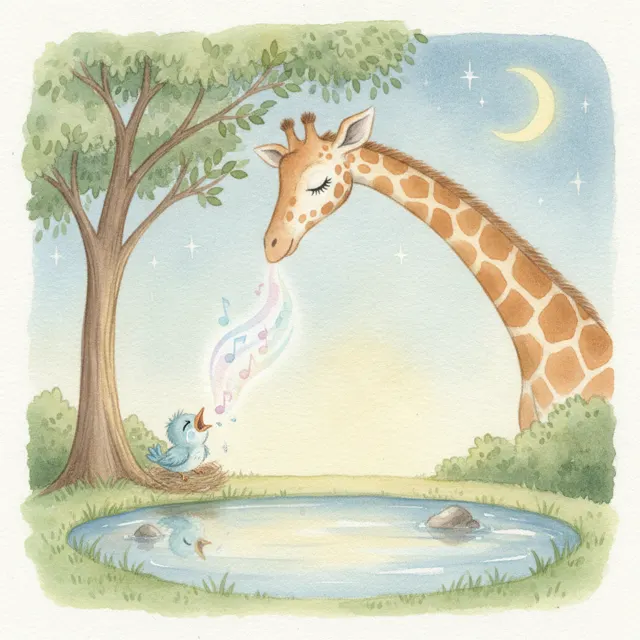
Gigi the giraffe had a tall neck but a very small voice. She was too shy to sing at the pond. One night a baby bird fell and cried for help. Only Gigi could reach it. She sang a soft song and calmed the bird.

Moral: Your soft voice can do big things.

Gigi was a tall giraffe. Her neck was long and her legs were long. But her voice was very small. Every night, the animals sang at the pond. The frogs sang low. The birds sang high. Gigi wanted to sing too. But she was shy. "My voice is too soft," Gigi said. "No one will hear me." She hid behind a big tree and just listened. One night, a baby bird fell from its nest. It landed high up in a tall tree. The baby bird cried and cried. It was scared and far from the ground. The mother bird flew in circles. "I cannot lift my baby back up," she said. "The nest is too high and the branch is too thin." The other animals tried to help. The frog could not climb. The mouse was too small. Only Gigi had a neck long enough to reach the branch. Gigi walked over slowly. Her heart beat fast. She reached up with her long neck. She nudged the baby bird back into the nest. The baby bird still cried. It was scared in the dark. "It is okay, little one," Gigi whispered. Then she sang a soft, gentle song. The baby bird stopped crying. It closed its eyes and fell asleep. The mother bird looked at Gigi. "Your soft voice did a big thing," she said. "You calmed my baby with one small song." The next night, Gigi sang at the pond. Her voice was still soft. But now everyone listened. Gigi learned that a soft voice can be just as strong as a loud one.

The Rabbit Who Shared His Carrots

Ages 3-83 minutessharing
The Rabbit Who Shared His Carrots story for kids illustration

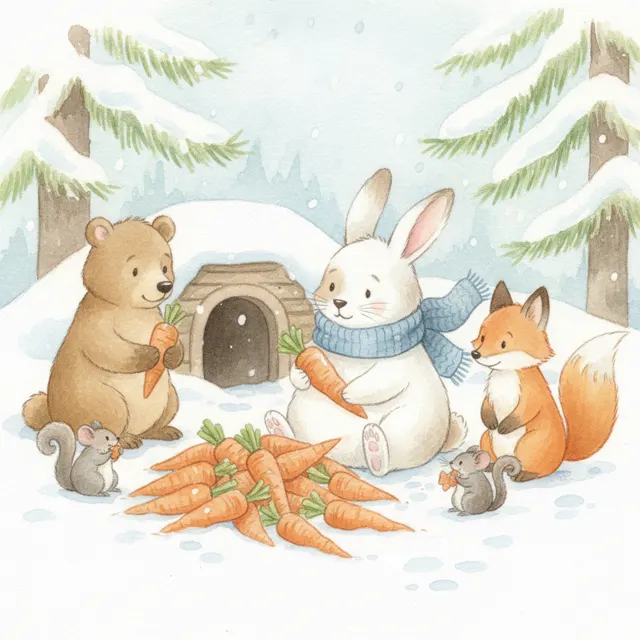
Remy the rabbit grew the best carrots in the woods. He kept every carrot for himself and shared with no one. Then a long snow came and his friends were hungry. Remy shared all his carrots and his heart felt full.

Moral: Sharing makes your heart feel full.

Remy was a little rabbit. He had the best carrot patch in the woods. His carrots were big and orange and sweet. Remy counted his carrots every day. One, two, three. He put them all in his burrow. He did not share them with anyone. "These are my carrots," Remy said. "I grew them all by myself." His friend Pip the mouse came by. "Can I have one small carrot?" asked Pip. "No," said Remy. "These are mine." Pip walked away, sad and hungry. Then a long, cold snow came. The snow covered the ground. No one could find food. The animals were cold and hungry. Pip knocked on Remy's door. "We are so hungry," Pip said. "Do you have any food to share?" Remy looked at his big pile of carrots. He had more than he could ever eat. He thought about Pip. He thought about all his friends out in the cold. "Come in," said Remy. "I have plenty." He gave Pip a warm carrot. Then he called all the animals. He shared his carrots with every single one. They made hot carrot soup. They all sat together and ate. They laughed and told stories all night. Pip smiled at Remy. "Thank you," he said. "You saved us." Remy felt warm inside. "This feels better than keeping all the carrots," he said. "Sharing makes my heart feel full." From that day on, Remy always shared his carrots. And his heart stayed full all winter long. The forest was warmer and happier that whole winter.

The Little Whale's Big Song

Ages 3-83 minutesconfidence
The Little Whale's Big Song story for kids illustration

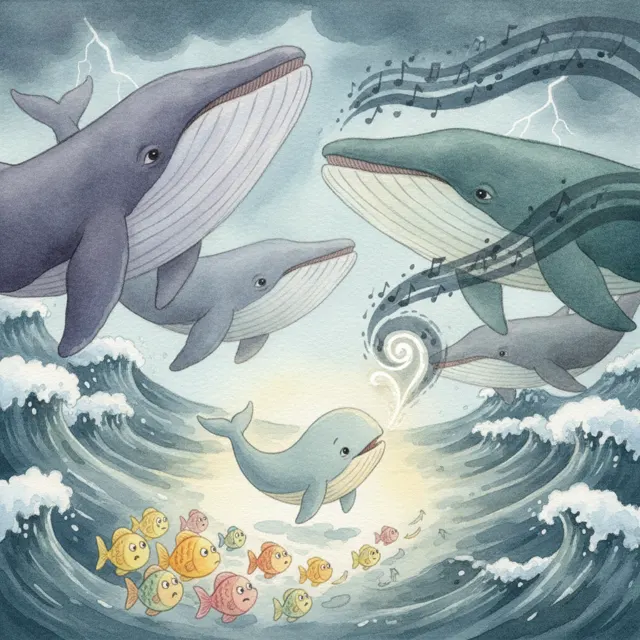
Wally was a small whale with a small, soft song. The big whales sang loud and deep. He felt too little to be heard. Then a storm made the sea too loud. His small clear song was the only sound the fish could follow home.

Moral: Even a small voice can guide others home.

Wally was a small whale. He lived in a big blue ocean. The big whales around him sang loud, deep songs. Wally tried to sing like them. But his song was small and soft. He felt too little to be heard. "My song is too small," Wally said. "No one needs a little whale's song." One day, a big storm churned the water. The ocean became dark and loud. The waves crashed and roared. The fish could not see. They could not hear the big whales over the storm. The little fish swam in circles. "We are lost!" they cried. "We cannot find our way home." The big whales sang their loud songs. But the storm was louder. The fish could not hear a thing. Wally swam up to the fish. He took a deep breath. He sang his small, clear song. His song was soft, but it was steady. It cut through the noise like a thin silver line. The fish stopped and listened. "I can hear it!" said one little fish. "Follow the small song!" One by one, the fish followed Wally's voice. He sang as he swam. He led them through the dark water, past the rocks, all the way home. The storm calmed down. The sea turned blue again. The fish cheered. "Your small song saved us," said a little fish. "It was the only thing we could hear." The big whales looked at Wally with pride. "A small voice can do a big job," they said. Wally smiled. He sang his small, clear song every day after that. He knew now that every voice matters, even a little one.

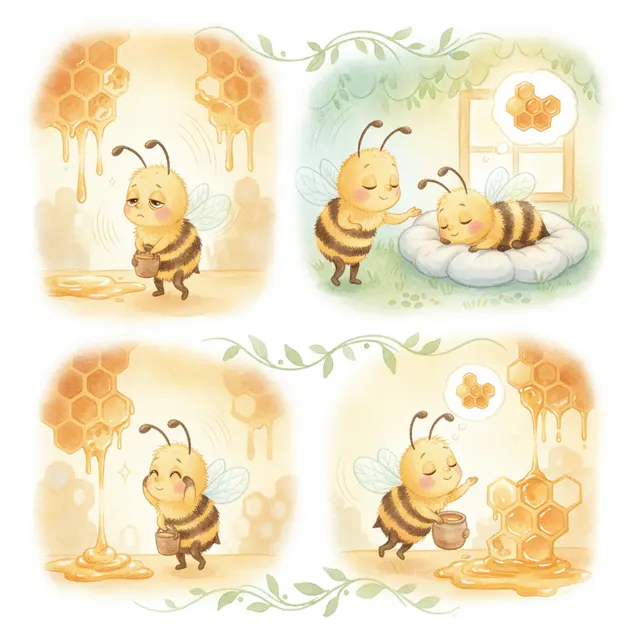
The Bee Who Took a Nap

Ages 3-83 minutesrest
The Bee Who Took a Nap story for kids illustration

Buzzy the bee worked all day and never rested. She grew so tired she made bad honey and wobbly combs. Her friend told her to nap. She slept and woke up strong. Rest helped her do her very best work.

Moral: Rest helps you do your best work.

Buzzy was a busy little bee. She worked from the moment the sun came up. She flew from flower to flower. She never stopped to rest. "Bees must work hard," Buzzy said. "No time for naps." Her friend Daisy the butterfly watched her zoom by. "Buzzy, you look so tired," said Daisy. "Why not take a rest?" "No time!" buzzed Buzzy. "There is so much to do!" She flew on and on. Her wings grew heavy. Her eyes grew blurry. But she did not stop. Then Buzzy made a big mistake. She put the nectar in the wrong hive. She built a wobbly comb that fell down. She even flew into a leaf. "Oh no," Buzzy said. "What is wrong with me?" "You are too tired," said Daisy. "Come sit in the shade. Take a little nap." Buzzy did not want to. But she was so tired she could not say no. She curled up under a soft leaf. She closed her eyes and slept. When she woke up, the sun was low. Buzzy felt new and strong. Her wings were light. Her eyes were clear. "Watch me now!" said Buzzy. She flew from flower to flower. She made the neatest comb the hive had ever seen. She put every drop of nectar in the right place. The other bees were amazed. "How did you do such good work?" they asked. Buzzy smiled. "I took a nap first," she said. "Rest helps me do my best work." From that day on, Buzzy worked hard and rested too. She learned that even busy bees need a little break.

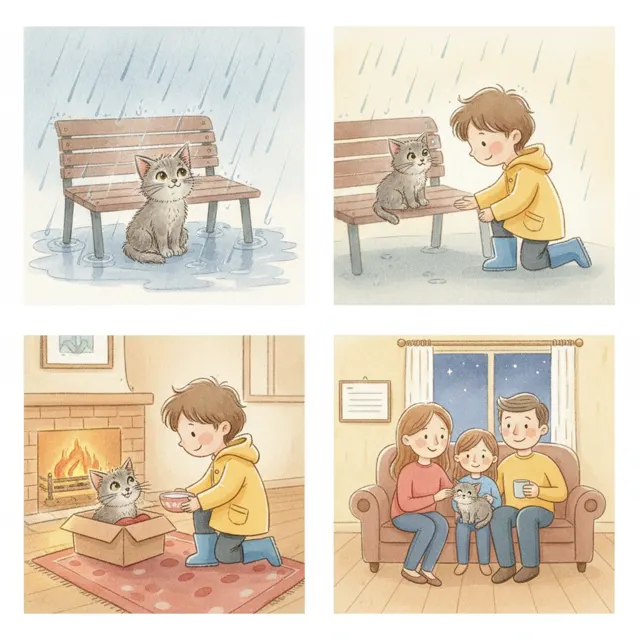
The Kitten Who Found a Home

Ages 3-83 minuteskindness
The Kitten Who Found a Home story for kids illustration

A small gray kitten has no home. It rains and she is cold. A boy named Eli finds her under a bench. He brings her milk and a warm box. The kitten finds a family. She is home at last.

Moral: A little kindness can give someone a home.

A small gray kitten walked down the street. She had no home. Her fur was thin. Her tummy was empty. "Mew," she cried. "Mew, mew." It began to rain. The kitten ran under a bench. She curled up in a ball. She was cold and wet. A boy named Eli walked by. He heard a small sound. "Did you hear that?" he asked his mom. They looked under the bench. There was the kitten. She was shaking. "Oh, you poor thing," said Eli. "Can we take her home?" "Yes, we can," said Mom. Eli wrapped the kitten in his coat. He carried her home. At home, Mom gave her warm milk. Eli made a soft bed with an old towel. "Here is your bed," said Eli. "It is warm and dry." The kitten drank the milk. Then she stepped into the box. She turned around and lay down. "She likes it," said Eli. The kitten purred. It was a soft, happy sound. "We should give her a name," said Mom. "Let us call her Rainy," said Eli. "Because we found her in the rain." Every day, Rainy ate and played. She chased a ball of yarn. She pounced on a toy mouse. She slept on Eli's bed. One night, Rainy curled up next to Eli. She purred and purred. "I am glad we found you," said Eli. Rainy closed her eyes. She was not cold anymore. She was not alone. She had a warm bed and a friend. She was home at last.

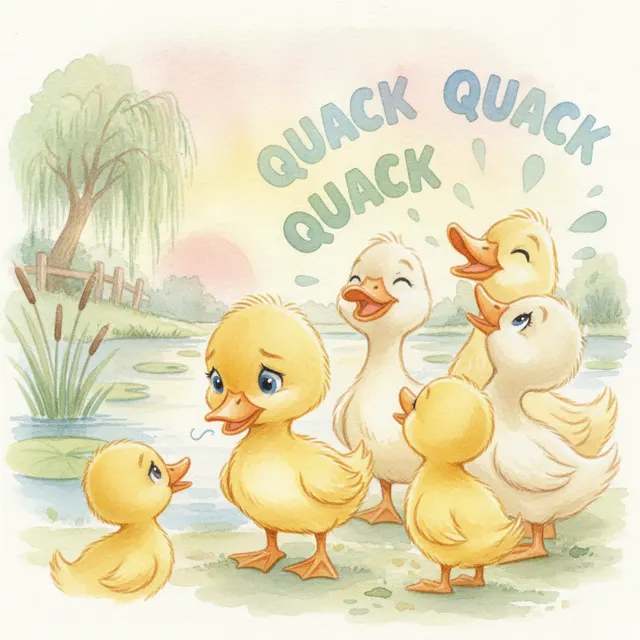
The Duck Who Could Not Quack

Ages 3-84 minutesacceptance
The Duck Who Could Not Quack story for kids illustration

Dot is a little duck. All the other ducks quack. Dot makes a small squeak. She feels sad. Then one day a chick is lost. Dot's squeak helps the chick find its mom. Dot learns her voice is special.

Moral: Your own voice is special, just the way it is.

Dot was a little duck. She lived by a pond. All the other ducks said, "Quack, quack!" But Dot could not quack. When she opened her beak, a small sound came out. "Squeak," she said. The other ducks looked at her. "That is not a quack," said one duck. Dot felt sad. She swam alone at the edge of the pond. "Why is my voice so small?" she said. "I want to quack like the rest." One day, Dot heard a cry. It came from the tall grass. "Peep! Peep!" said a small voice. Dot looked. A tiny yellow chick was lost. The chick looked up at Dot. "I cannot find my mom," said the chick. "Can you help me?" Dot opened her beak. "Squeak," she said. It was soft and gentle. The chick heard it and walked closer. "I am not scared when you speak," said the chick. "Your voice is kind." Dot's heart felt warm. "Stay close," she said. "We will find your mom." They walked through the grass. Dot squeaked a soft tune. The chick followed the sound. Soon they heard a hen. "Cluck, cluck!" called the hen. "Mom!" said the chick. It ran to the hen. The hen looked at Dot. "Thank you," she said. "You brought my baby home." Dot felt proud. Her small voice had done a big thing. It had helped a friend. She swam back to the pond. "Quack," said one duck. "Come play with us." "Squeak," said Dot. And that was just fine.

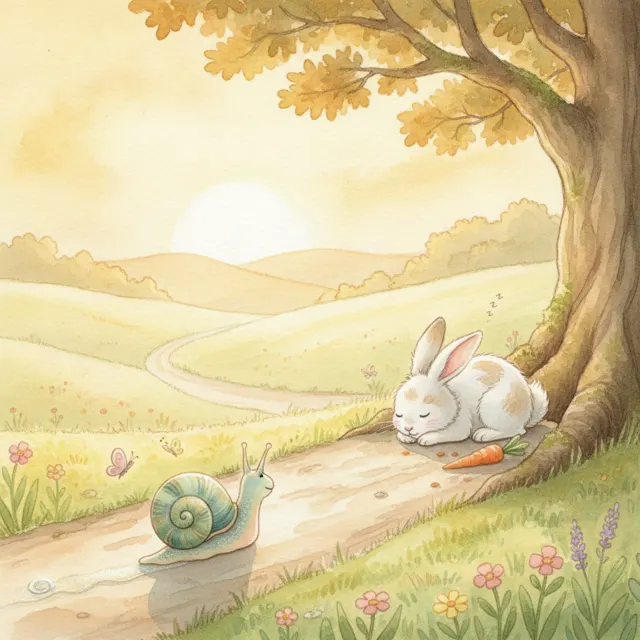
The Snail Who Won the Race

Ages 3-83 minutespatience
The Snail Who Won the Race story for kids illustration

Sid the snail is slow. A rabbit named Zip laughs at him. They have a race. The rabbit stops to sleep. Sid keeps going. He goes slow and steady all day. Sid wins the race. Slow and steady wins.

Moral: Slow and steady wins the race.

Sid was a snail. He was slow. He carried his shell on his back. He slid over leaves and stones. One day, a rabbit named Zip came by. Zip was fast. He hopped here and there. "Hello, slow snail," said Zip. "You move so slow. You will never win anything." Sid looked at Zip. "Slow is not bad," he said. "Slow is just slow." "Let us have a race," said Zip. "I will win. You will see." The other animals came to watch. A bird called out, "Ready, set, go!" Zip hopped off fast. He was gone in a flash. Sid began to slide. He went slow and steady. "At this speed, I can take a nap," said Zip. He lay down under a tree. He closed his eyes. Sid did not stop. He slid past the tree. He slid past Zip, who was snoring. He slid on and on. The sun went across the sky. The animals cheered for Sid. "Go, Sid, go!" they said. Sid was tired, but he kept going. He saw the finish line. It was just ahead. He slid across it. The animals clapped and cheered. "Sid wins!" they said. Zip woke up. "What happened?" he said. He saw Sid at the finish line. "You won," said Zip. He looked down. "I was not careful. I slept too long." "It is okay, Zip," said Sid. "Fast is good. But slow and steady gets there too." Zip smiled. "You are right. Good race, Sid." From that day, Zip did not laugh at Sid. He learned that slow and steady wins.

Frequently Asked Questions

Turn Your Child Into the Hero of Their Own Story

Upload their photo and watch as AI creates a beautiful, personalized storybook with illustrations that look just like them. From $5.99/month.

โœจ Make Your Child the Hero

Plans from $5.99/month