Moral Stories for Kids

Stories with heart that teach children the values that matter most in life.

โœจ Make Your Child the Hero

Stories have always been humanity's most powerful tool for teaching values. A moral delivered through a story is far more memorable than a rule simply stated. Our collection of moral stories for kids explores honesty, kindness, courage, sharing, perseverance, and empathy through characters children love and situations they recognize. Each story sparks conversation and leaves children with something real to carry into their day.

Why do moral stories help children learn right from wrong?

Moral stories show kids what good choices look like in real life. A child sees a fox tell a lie and learns why the truth is better. Stories teach lessons in a gentle, friendly way, without a long or boring lecture.

This works in the body too. In one study, a single storytelling session raised oxytocin and lowered stress in young children (Brockington et al., 2021). A calm child who listens well is a child who can learn right from wrong.

How does a bedtime story help a child grow up well?

A bedtime story calms the mind and opens the heart. It is a quiet, cozy time for you and your child to sit close together. Kids feel safe and loved, and that deep feeling of safety helps them grow up kind and strong.

Reading aloud also feeds the brain. Kids who are read five books a day hear about 1.4 million more words before school than kids who are not read to (Ohio State University, 2019). Words are the blocks that build a big mind.

Sample Stories

Read these stories, then create a personalized version where your child is the hero

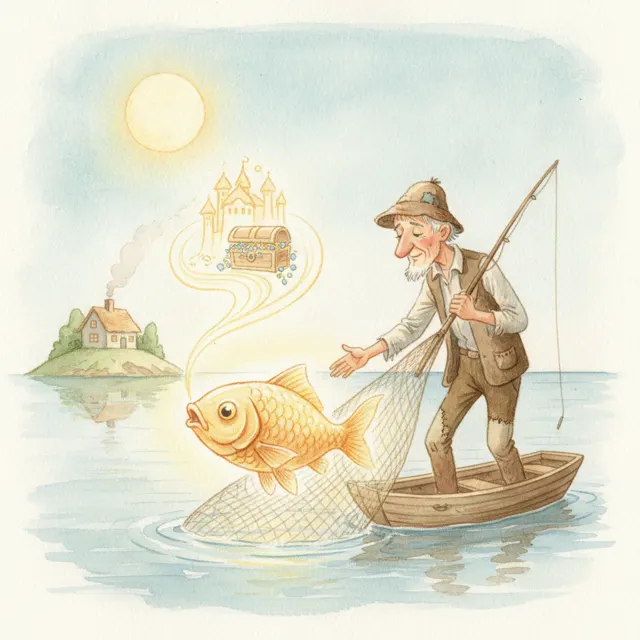
The Honest Fisherman
Ages 6-103 minhonesty
The Honest Fisherman story for kids illustration

A poor fisherman catches a magical golden fish and must choose between a wish and his integrity.

Moral: True honesty means choosing integrity even when nobody is watching and when the reward of dishonesty is right in your hands.

Old Marco was the poorest fisherman in the harbor. His boat had one oar. His net had seven patches. But every morning, he went out to sea because it was the only life he knew. One grey morning, Marco's net came up heavy. He hauled and hauled. When he finally pulled it over the edge, he found a fish unlike any he had ever seen. It was gold, truly gold, with scales that gleamed like coins. The fish opened its mouth. "Release me," it said calmly, "and I will grant you one wish." Marco sat for a long time with the golden fish in his net. He thought about his leaking roof. His empty cupboards. His daughter's torn school shoes. He thought also about something his father had told him: "The man who takes more than he needs takes from someone else." Marco released the fish. "I wish," he said, "that my net never comes up empty for those who truly need to eat." The fish leaped into the water. From that day on, Marco's net always held enough. Not more. Not mountains of fish to sell for riches. Just enough. And somehow, that was more than enough.
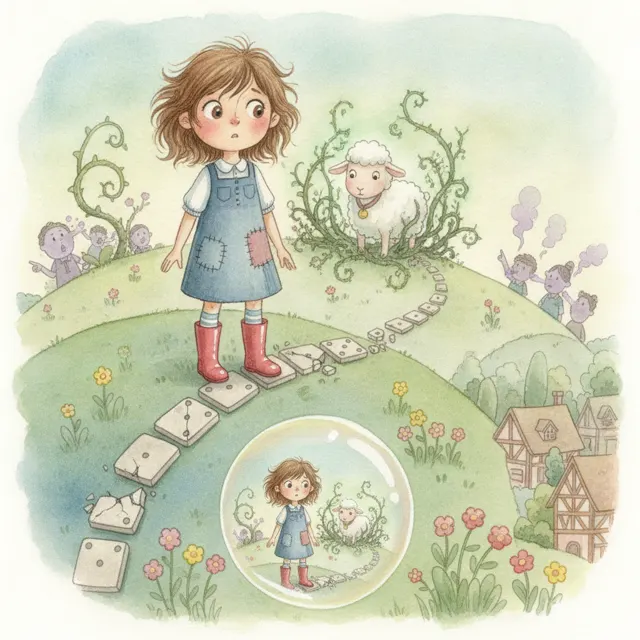
The Girl Who Cried Wolf (A New Telling)

Ages 5-93 minhonesty
The Girl Who Cried Wolf (A New Telling) story for kids illustration

A modern retelling where a girl learns that small lies have big consequences.

Moral: A reputation for honesty is hard to build and easy to destroy. Tell the truth even when it's harder.

Priya loved getting attention. Not in a bad way, just in the way that felt warm and nice when people came running. So one afternoon, she ran into the courtyard yelling, "Snake! There's a snake in the garden!" Everyone dropped what they were doing. Grandpa grabbed a stick. Mom came running. Even the neighbors peeked over the wall. There was no snake. "I thought I saw something," Priya mumbled. Everyone went back to their work, shaking their heads. A week later, bored again, Priya called out, "Fire! The storeroom is on fire!" Again, everyone came. Again, there was nothing. This time, nobody laughed it off. They looked at her with disappointment. The following month, Priya went to the storeroom for flour and found a real snake curled near the sacks. She was genuinely frightened. She ran out screaming. "Snake! Really, actually a snake! Please come!" Nobody came. They heard her from their rooms and assumed it was another game. Priya stood in the courtyard alone, shaking. Grandpa finally came when he saw her face. He got the snake out safely. But he held Priya's hand afterward and said quietly, "The hardest thing to rebuild is trust." Priya understood. She never called out falsely again.

The Kindness Stone

Ages 6-103 minkindness
The Kindness Stone story for kids illustration

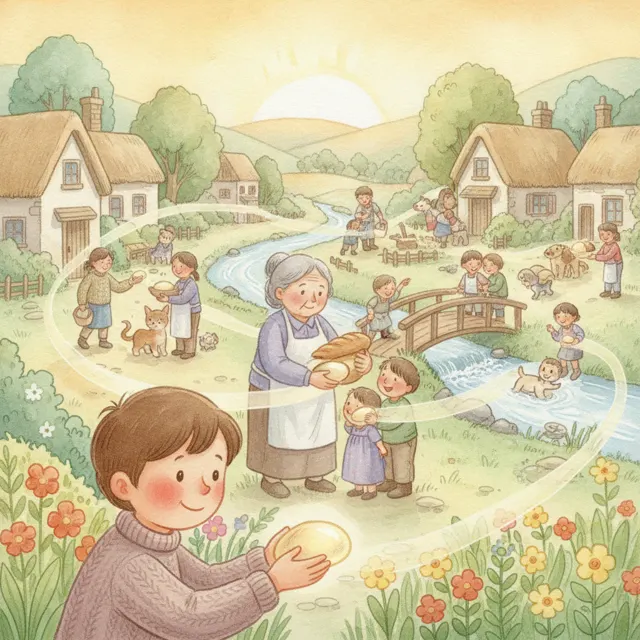
A village tradition of passing a stone between people who do kind acts creates a chain of goodwill.

Moral: True kindness is done without expectation. But noticing and celebrating it in others inspires more of it.

In the village of Mossbridge, there was a plain grey stone that sat on a shelf in the schoolhouse. It had no special markings. It was not particularly beautiful. But it had a tradition. Whenever a villager did something genuinely kind, without being asked and without expecting a reward, the stone was brought to them. They kept it until they witnessed another act of true kindness. Then they passed it on. Little Wren received the stone when she helped an elderly woman carry groceries through the rain. She kept it for three weeks before she saw her friend Jude stay late to help a younger child who was crying on the playground. Jude held it for a week, then gave it to the baker who opened his shop at 5am on a freezing day to make hot soup for the road workers. The stone traveled all year. Market seller to schoolteacher to a quiet man nobody talked to much, who had planted wildflowers at the edge of the road for everyone to enjoy. None of the recipients had done their kind acts because of the stone. They hadn't known they were being watched. That was the whole point. Kindness without witness is still kindness. But passing on the stone was how the village reminded itself: goodness exists here.

The Two Brothers and the Well

Ages 5-93 minperseverance
The Two Brothers and the Well story for kids illustration

Two brothers with very different attitudes discover which approach to hard work brings true happiness.

Moral: Prepare while you can. The effort you put in during quiet times pays off when challenges arrive.

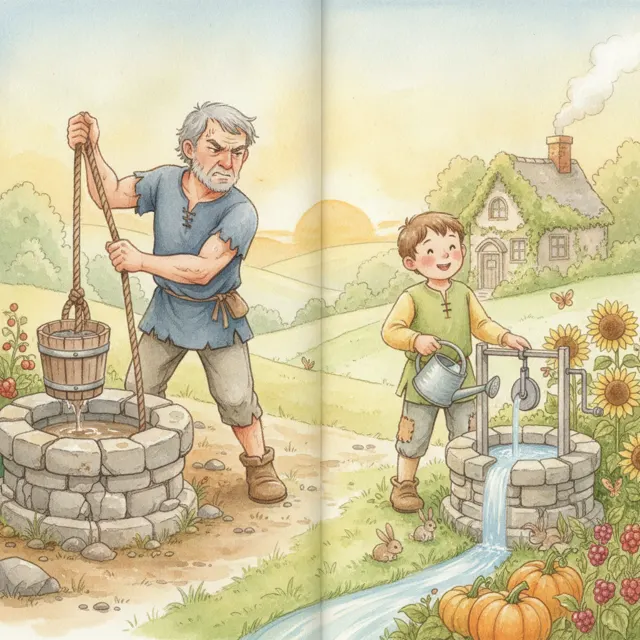
Two brothers lived beside a dry well. Their father had told them both: "One day this well will have water. Be ready." The older brother, Anton, worked every day. He cleaned the well, checked the stones, and kept the rope in good repair. People teased him. "It's dry! What are you doing?" Anton just shrugged and kept working. The younger brother, Felix, ignored the well. "Why bother?" he'd say. "There's no water now, so there's no need to prepare." One summer, rains came. The underground spring beneath the well finally reached the surface. Clear, cold water filled the well to the brim. Everyone in the village was overjoyed. But there was a problem. Nobody's wells were ready. The ropes were rotten. The pulleys were rusted. The buckets had holes. Except Anton's well. His rope was strong. His bucket was tight. His pulley spun smoothly. For three weeks while everyone else scrambled to repair their wells, the village got water from Anton's. Felix watched his brother, embarrassed. "I should have listened," he said. Anton handed him a bucket. "There's still time," he said simply. "There always is."

The Most Valuable Thing

Ages 6-103 minempathy
The Most Valuable Thing story for kids illustration

A wealthy merchant sends his children on a quest to find the world's most valuable thing and learns a lesson himself.

Moral: Wealth and knowledge are valuable, but compassion is the most priceless thing of all.

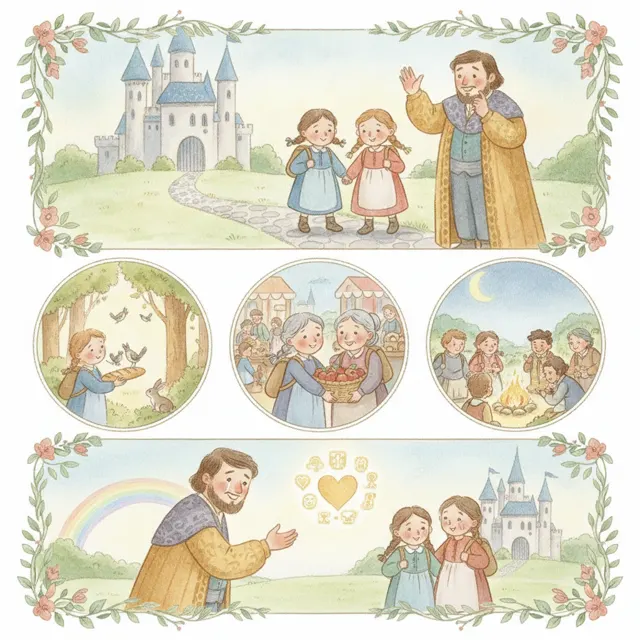
A wealthy merchant grew old and decided to test his three children. "Go into the world," he said. "Bring me back the most valuable thing you can find. Return in one year." The eldest brought back a diamond so rare it was the size of a fist. "Nothing is more valuable than wealth," she said. The middle child brought back a scroll written by the greatest thinker in the land. "Nothing is more valuable than knowledge," he said. The youngest brought back nothing in her hands. But beside her walked an old woman the youngest had cared for during her travels after finding her alone and unwell. "What is this?" the merchant asked. "She had nobody," the youngest said simply. "I couldn't leave her." The merchant looked at all three returns. The diamond was magnificent. The scroll was priceless. But only one of his children had given something that couldn't be bought or carried in a bag. He gave his business to the eldest. He gave his library to the middle child. And he asked the youngest to teach him what she had figured out that he had spent his whole life too busy to learn.

The Girl and the Broken Bridge

Ages 6-103 minresponsibility
The Girl and the Broken Bridge story for kids illustration

A girl must decide whether to stay silent about a broken bridge or speak up even though it means admitting she was there.

Moral: Doing the right thing sometimes means admitting what we did wrong, especially when others could be affected.

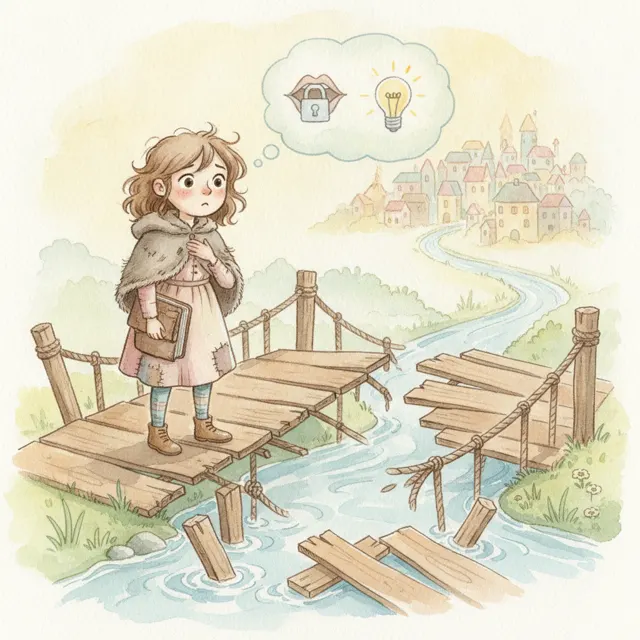
Calla knew she shouldn't have been on the old bridge. It was forbidden because it was worn and unstable. But she'd crossed it anyway, late in the evening, taking a shortcut home. Halfway across, one of the planks cracked under her foot. She made it safely to the other side, shaken but unhurt. At home, she said nothing. If she told, everyone would know she'd broken the rules. That night, she lay awake thinking. The morning market was on the other side of the bridge. Old Mr. Henner always crossed it with his heavy cart. The schoolchildren used it as a shortcut. She thought about what might happen to them. In the morning, Calla went to the village leader. "I was on the bridge last night," she said, looking at her feet. "I shouldn't have been. But a plank broke, and I'm worried it's not safe." The leader looked at her steadily. "You broke two rules," she said. "And told us about one of them to keep others safe. That took courage." The bridge was repaired that day. Nobody was hurt. Calla was asked to do extra chores for the week. She did them without complaining. Speaking up had been the hardest and the right thing, both at once.

The Boy Who Shared Everything

Ages 5-93 mingenerosity
The Boy Who Shared Everything story for kids illustration

A generous boy gives away his things but discovers that the most lasting gift is teaching others to give.

Moral: Generosity creates a current of goodwill that flows back to the giver in unexpected ways.

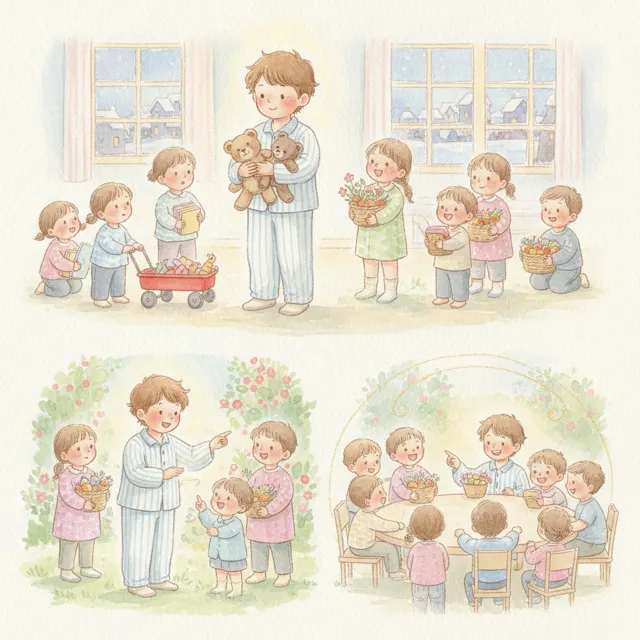
Everyone in the neighborhood knew about Felix. He was the boy who shared everything. He gave his sandwich to the hungry dog at the corner. He gave his umbrella to a woman caught in the rain. He gave his last coin to a boy who needed bus fare. His mother worried. "You'll have nothing left." "But everyone else will have something," Felix said. One autumn, hard times came. Felix had given away so much that his shelves were nearly bare. But something interesting had happened in the neighborhood. The woman he'd given his umbrella to had started sharing hers. The boy with the bus fare had helped three others since. Even the dog had brought a bone to share with the cat next door. When Felix walked through his neighborhood now, people pressed things into his hands. Not because they owed him. Because they had learned something from watching him and wanted to keep it going. His mother watched from the doorway as Felix came home with a basket full of things neighbors had quietly left. "You see?" he said, setting it down. "It comes back. It always does." "Not always," his mother said gently. "Often enough," Felix replied. And he was right.

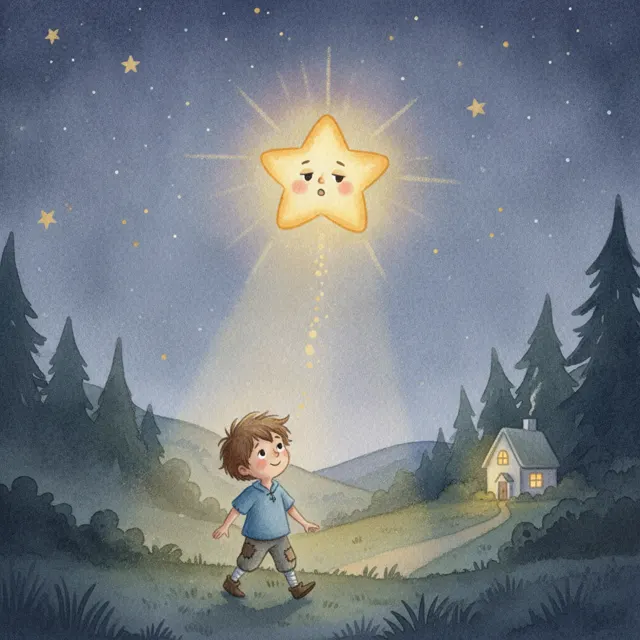
The Little Star's Promise

Ages 3-84 minuteskeeping promises
The Little Star's Promise story for kids illustration

A little star promises to shine bright for a lost boy each night. One night the star is tired and wants to hide, but it remembers its promise and shines anyway. The boy finds his way home.

Moral: Keep your promises, even when they are hard to keep.

High in the night sky lived a little star named Pip. Pip liked to watch over the small town below. One night, Pip saw a small boy who was lost in a dark field. The boy could not see his house in the dark. All the trees looked the same to him. He held his coat tight and felt very alone. "Do not be afraid," said Pip. "I will shine bright for you every night until you find your home." The boy looked up and smiled. The light felt warm, like a small hug from the sky. He walked a little, and Pip's light showed him the path. The next night, Pip was very tired. The clouds were soft and warm. "I just want to rest tonight," thought Pip. "No one will see if I hide." But then Pip remembered the boy. "I made a promise," Pip said. "A promise is not just for easy days." So Pip pushed the clouds away and shone as bright as it could. The light fell on the field far below. The boy saw the light. "There is my star!" he said. He followed the light over a hill and through the trees. Soon he saw the warm lights of his own home. "Thank you, little star!" the boy called up. "You kept your word." Pip smiled down. "You are home," said Pip. "That is all I needed to hear." From that night on, Pip always shone, even when it felt tired. It knew that a promise kept is a light that never goes out.

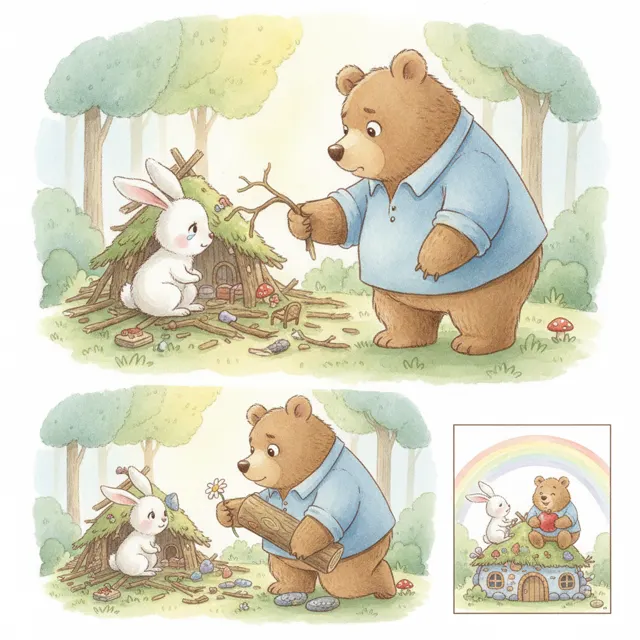
The Bear Who Said Sorry

Ages 3-84 minutesforgiveness
The Bear Who Said Sorry story for kids illustration

A big bear knocks over a rabbit's home by accident. At first the bear is too proud to say sorry, so the rabbit feels sad. The bear finally says sorry and helps rebuild the home, and they become friends.

Moral: Saying sorry with a full heart can fix a broken friendship.

Bear lived by a quiet meadow. He was big and strong, but sometimes he forgot to look where he was going. One day he was running fast and did not look where he was going. Crash! He knocked over Rabbit's little house of sticks and leaves. Rabbit came out and saw the mess. "My home!" cried Rabbit. "You broke it!" Bear looked at the ground. "It was an accident," he said. "It is not a big deal." "It is a big deal to me," said Rabbit. His ears went flat and he walked away. Bear walked home slowly. His big paws felt clumsy and sad. All day, he felt heavy inside. He saw Rabbit sitting alone by the pond. Rabbit was fixing his things all by himself. At last, Bear walked over. "Rabbit," he said softly. "I am sorry. I was not careful. Your home matters to you, so it matters to me." Rabbit looked up. "Do you really mean it?" he asked. "I mean it with my whole heart," said Bear. "Will you let me help you fix it?" "Yes," said Rabbit. "That would be nice." So Bear and Rabbit worked together. They picked up sticks and leaves. Rabbit put the sticks in place while Bear pressed them down flat. By sunset, the house was better than before. It even had a soft moss roof and a little door. "Thank you, Bear," said Rabbit. "Thank you for forgiving me," said Bear. "A real sorry can mend what was broken."

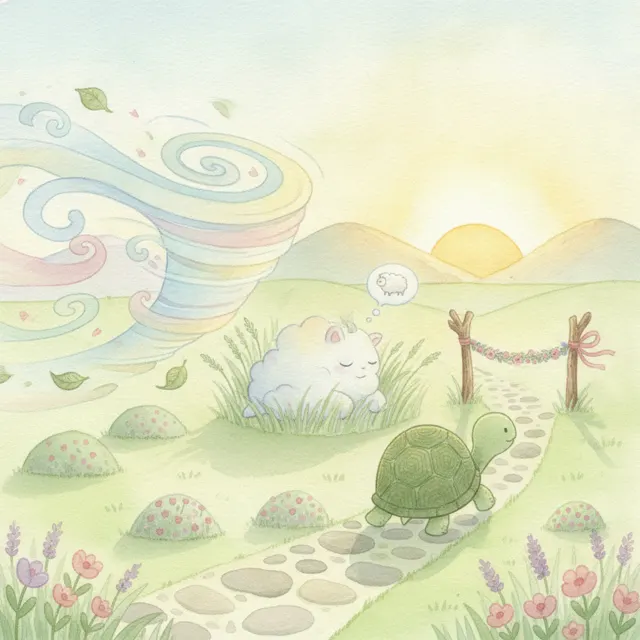
The Turtle and the Rushing Wind

Ages 3-84 minutespatience
The Turtle and the Rushing Wind story for kids illustration

A fast wind challenges a slow turtle to a race across the meadow. The wind rushes ahead but gets tired and forgets the race. The turtle keeps walking one step at a time and wins.

Moral: Slow and steady wins when you do not give up.

One bright morning, the wind saw a turtle walking in the meadow. "You are so slow!" laughed the wind. "I could beat you in a race with one puff." "Maybe," said the turtle. "But I like to keep going. Slow and steady is my way." The wind laughed harder. "Then let us race to the old tree on the far side. Ready, set, go!" The wind rushed off. Whoosh! It flew across the meadow in a second. It looked back and saw the turtle far behind. "I have all the time in the world," said the wind. "Let me play first." The wind spun around the flowers. It blew leaves high into the air. It chased a butterfly this way and that way. It forgot all about the race. The turtle did not stop. Its legs were short, but they were strong. It put one foot in front of the other. Step. Step. Step. It did not look around. It did not stop for a drink or a rest. It kept its eyes on the old tree. The wind grew tired from all its playing. It looked up. The sun was low in the sky. "The race!" it said. It flew fast to the old tree. But there was the turtle, already resting by the trunk. "You are here," said the turtle with a smile. "I got here first." The wind puffed out a small sigh. "You won," it said. "You never stopped." "Slow and steady is my way," said the turtle. "It is a very good way to win." The wind smiled. It had learned a good lesson that day.

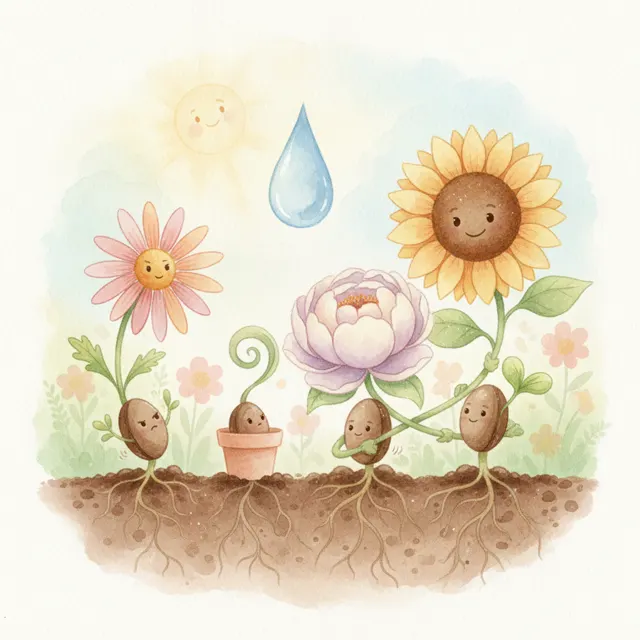
The Three Little Seeds

Ages 3-84 minutescooperation
The Three Little Seeds story for kids illustration

Three seeds are planted in a garden. One is in a hurry and one wants to grow alone. The third seed teaches them to wait and share, and together the three seeds grow into strong flowers.

Moral: Good things grow when you wait and work together.

A girl planted three little seeds in her garden. The soil above them was dark and quiet. "Grow big and strong," she said, and she covered them with soft soil. The first seed was in a hurry. "I want to be a flower today!" it said. It pushed and pushed but could not get out. "Why am I not growing?" it cried. "You need sun and rain," said the second seed. "And I want them all for myself." The second seed drank all the water it could find. It left none for the others. Soon it felt sick from too much water. The third seed spoke in a soft voice. "Friends, we must be patient," it said. "We must share the rain and the sun. We grow best when we grow together." So the three seeds tried a new way. They shared the water. They took turns in the warm sun. They spoke kind words to each other under the dark soil. They could hear the rain tap on the ground above. Day by day, little roots reached down. Tiny stems pushed up. The seeds did not rush. They helped each other stand tall. At last, three strong green sprouts pushed through the soil. They grew into tall flowers. One was red, one was yellow, and one was blue. They looked like a bright rainbow in the garden. The girl came out and clapped her hands. "My flowers!" she said. "You grew so well together." The three flowers swayed in the warm wind. They knew that slow, kind, shared growing had made them strong.

The Boy Who Kept His Word

Ages 3-84 minuteshonesty
The Boy Who Kept His Word story for kids illustration

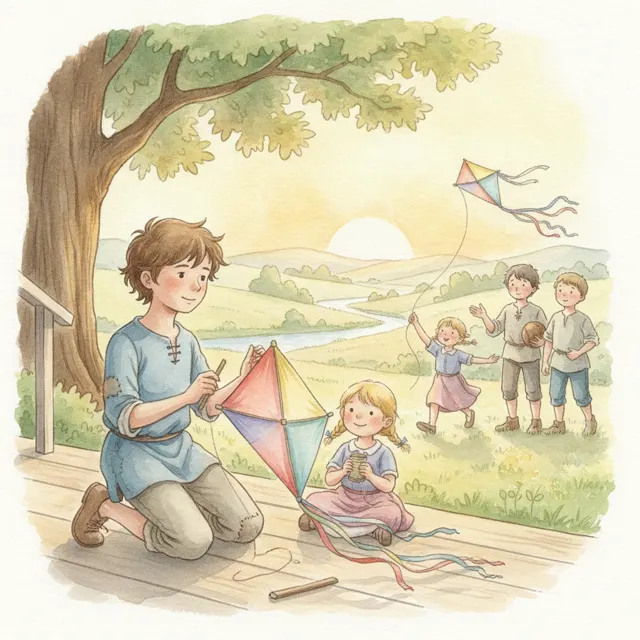
A boy promises his little sister he will fix her kite. His friends ask him to play, but he says no and fixes the kite first. His sister is happy and his friends learn to trust his word.

Moral: When you give your word, keep it, no matter how small the promise.

Sam's little sister Lila had a kite with a torn wing. "Please fix it, Sam," she said. "You said you would." "I will," said Sam. "I give you my word. I will fix it right after lunch." After lunch, Sam's friends came to the door. "Sam, come play ball with us!" they called. Sam looked at the kite. Then he looked at his friends. He wanted to run outside and play ball. "I will come later," he said. "I made a promise to Lila. She is little, and she counts on me." "It is just a kite," said one friend. "Fix it tomorrow." "A promise is a promise," said Sam. "If I break a small one, how will you trust me with a big one?" Sam sat down with tape and string. Lila stood by the window, watching and hoping. He fixed the torn wing. He pressed the tape down flat so it would hold in the wind. He even tied a long tail on it to make it fly better. "Lila!" he called. "Your kite is ready." Lila ran out with a big smile. They flew the kite together. It soared high in the blue sky. Lila laughed and laughed as it danced in the wind. Later, Sam joined his friends in the yard. "You kept your word," said one friend. "We can always count on you." Sam felt proud, but he did not brag. Sam smiled. "A person's word is a small thing that means a lot," he said. "Keep it, and people will always trust you."

The Ant Who Helped the Bee

Ages 3-83 minuteskindness
The Ant Who Helped the Bee story for kids illustration

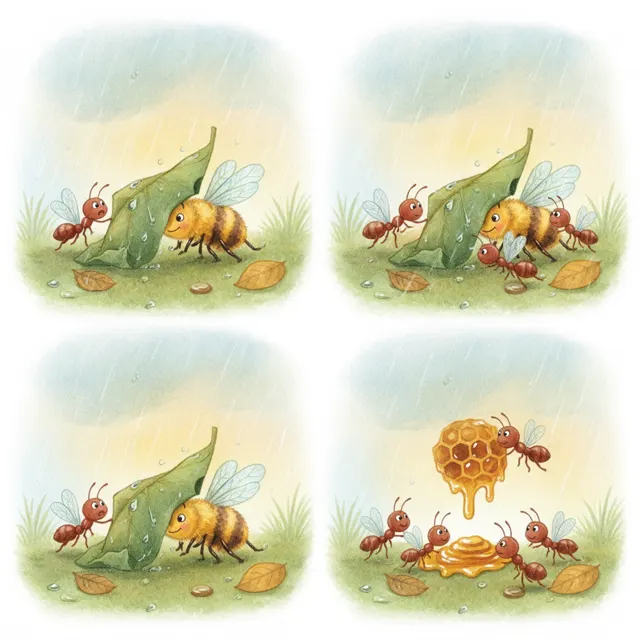
A tiny ant finds a bee stuck under a wet leaf after a storm. The leaf is too heavy to lift alone, so the ant calls its friends. Together they free the bee and share sweet honey.

Moral: A small act of kindness can make a big difference.

After a big storm, a tiny ant named Pip was looking for food. The ground was still wet, and the leaves dripped with rain. It heard a small cry. "Help! Please help me!" Pip followed the sound. It walked as fast as its tiny legs could go. Under a big wet leaf lay a bee. The leaf was far too heavy for the bee to lift. "I am stuck," said the bee. "I cannot move my wings at all." Pip tried to lift the leaf. It pushed with all its little strength. The leaf was much too heavy for one tiny ant. "I cannot do it alone," said Pip. "But I know who can help." Pip ran home and called its ant friends. "A bee needs us," said Pip. "Come quickly!" All the ants marched to the leaf. "One, two, three, lift!" they called. Together, they raised the heavy leaf just enough. The bee crawled out. "Thank you!" said the bee. "You are all so small, but you saved me." "You are welcome," said Pip. "Many small friends can do one big thing." The bee shook out its wings and flew away. Later, it came back with a drop of sweet honey. It set the honey on a flat leaf so all the ants could reach it. "For you and your friends," said the bee. "Kindness should always be shared." The ants shared the honey together. It was the sweetest thing they had ever tasted. Pip learned that even the smallest ant can make a big difference with a kind heart.

The Girl Who Listened

Ages 3-84 minuteslistening
The Girl Who Listened story for kids illustration

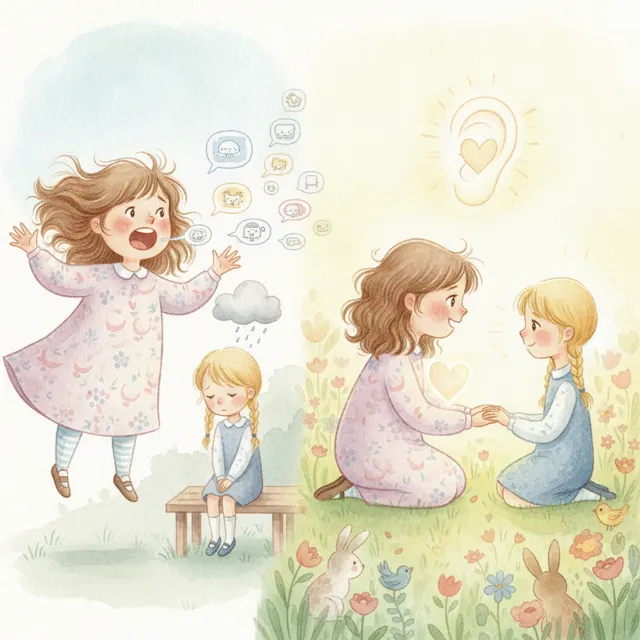
A girl named Zara talks so much she never listens to her friend, who feels alone. She learns to listen with her whole heart, and her friend feels much better. Listening becomes her gift.

Moral: Listening with your whole heart is a gift you give to others.

Zara loved to talk. She told stories about her cat, her toys, and her big ideas. She talked so much that she did not stop to listen. Her words came out fast, like water from a tap. One day, her friend Leo came to play. He looked very quiet. "I had a sad day," Leo said in a small voice. "Oh, let me tell you about my day!" said Zara. "First I ate pancakes, and then I..." Leo looked down at his shoes. He did not say another word all afternoon. Zara did not seem to notice. That night, Zara's mom said, "Did Leo seem okay today?" "I think so," said Zara. "He was just very quiet." "Maybe he needed you to listen," said Mom. Zara thought about Leo's sad face as she got ready for bed. The next day, Zara tried something new. "Leo, how was your day?" she asked. Then she closed her mouth and waited. Leo's eyes lit up. "It was hard," he said. "My dog got sick." He told Zara all about it. Zara listened with her whole heart. She sat close and held Leo's hand. She did not interrupt, not even once. "Thank you for listening," said Leo. "I feel much better now." Zara smiled. "Your words are important to me," she said. "I should have listened before." Leo gave her a big smile. From that day, Zara still told her stories. But first, she always asked about others and truly listened. She learned that listening is a way of saying "I care about you."

The Fox and the Fallen Tree

Ages 3-84 minutescourage
The Fox and the Fallen Tree story for kids illustration

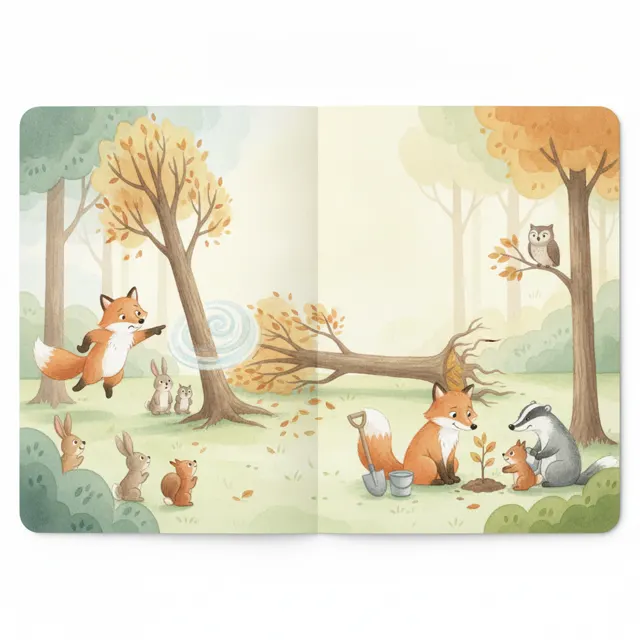
A fox knocks over a tree while showing off and blames the wind. He feels bad and finally admits it was his fault. The forest animals forgive him and help him plant a new tree.

Moral: It is brave to admit when you are wrong.

Fox loved to show off. He could jump higher than anyone in the forest. One day, he jumped so high that he landed on a small tree. Snap! The tree fell over. All the animals came running. They looked at the fallen tree with wide eyes. "Who did this?" asked Squirrel, who lived in the tree. "The wind did it," said Fox quickly. "The wind was very strong." The animals looked up at the sky. The air was calm and still. "There is no wind today," said Owl. "The tree just fell on its own," said Fox. "It was old and weak." "That is not true," said Squirrel. "I saw you land on it." Fox's ears went down. His heart felt heavy. His tail stopped wagging for the first time all day. He knew he had told a lie. That felt even worse than the broken tree. Fox looked at the ground and scuffed the dirt with his paw. Then he took a deep breath. "It was me," he said. "I jumped on the tree and broke it. I was showing off, and I was too scared to say so. I am sorry." The animals were quiet for a moment. Then Squirrel spoke. "Thank you for telling the truth," she said. "That took real courage." "We can plant a new tree," said Owl. "Will you help us?" "I will," said Fox. "I will help every single day." They planted a small new tree together. Fox watered it and kept it safe. He learned that telling the truth, even when it is hard, makes a heavy heart feel light.

The Marble in My Pocket

Ages 3-85 minuteshonesty
The Marble in My Pocket story for kids illustration

Sam finds a shiny blue marble at the park and slips it into his pocket. When his friend Ben says the marble is his, Sam must choose between keeping it and telling the truth. He learns honesty feels better than a secret.

Moral: Tell the truth, even when it is hard.

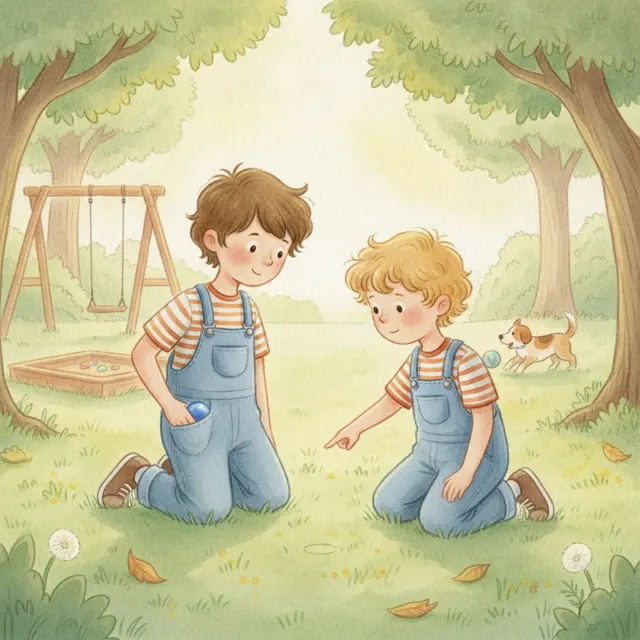
Sam dug in the sandbox. His hand hit something hard. He pulled out a blue marble. It was shiny and smooth. Sam looked around. No one was watching. He put the marble in his pocket. "What a nice marble," he said to himself. He felt a little proud. At snack time, his friend Ben sat next to him. Ben's eyes were red. "I lost my blue marble," Ben said. "It was my best one. My grandpa gave it to me." Sam's pocket felt very heavy. The marble was right there. He could keep it. No one saw him take it. But his face felt hot. His heart beat fast. "What is wrong, Sam?" asked Ben. "Your face is red." Sam did not answer. He looked down at his hands. The secret felt bad inside him. After snack, Sam walked over to Ben. "Ben," he said in a soft voice. "I have your marble. I found it in the sandbox. I am sorry I did not tell you right away." Ben's face lit up. "You found it! Thank you, Sam!" Sam put the marble in Ben's hand. "It was not mine," he said. "I am sorry." Ben smiled. "It is okay. You told the truth. That is better than the marble." Sam let out a big breath. His heart felt calm and light. "Let's play marbles together," Ben said. "You can use my blue one first." The boys played until the sun went down. Sam's pocket was empty. But his heart felt full. That night, Sam told his mom about the marble. "You did the right thing," she said. "I am proud of you." Sam fell asleep with a smile. He learned that telling the truth is better than keeping a secret.

The Warm Bowl of Soup

Ages 3-84 minuteskindness
The Warm Bowl of Soup story for kids illustration

It is a cold day and Mia sees a new boy sitting alone with no lunch. She shares her warm soup with him. Her small act of kindness makes his day better and starts a new friendship.

Moral: A small act of kindness can make someone's day better.

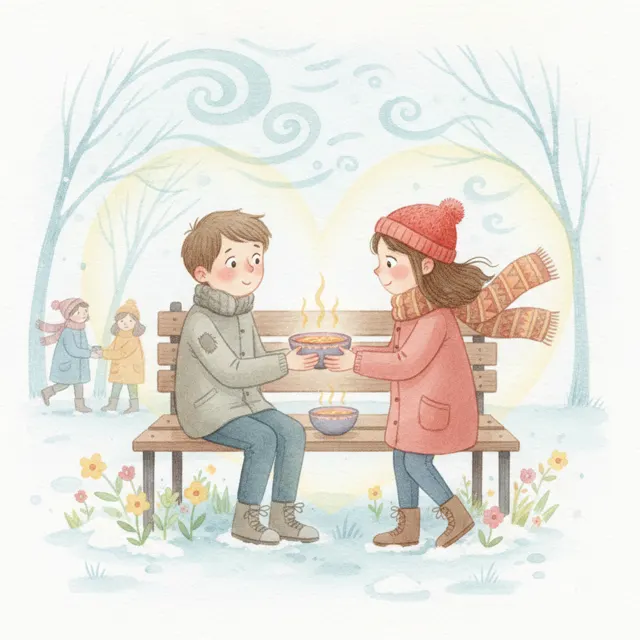
Mia looked out the window. Snow was falling. It was very cold outside. At lunch, Mia opened her bag. Her mom had packed warm soup in a small jar. The soup smelled so good. Mia saw a boy sitting alone. His name was Leo. He was new at school. He had no lunch bag. He just looked at the floor. Mia walked over to Leo. "Hi," she said. "I am Mia. Why are you not eating?" "I forgot my lunch," Leo said. "My dad was in a hurry this morning." Mia looked at her soup. It was warm and full of noodles. She was very hungry. But Leo looked so sad. "Do you want to share my soup?" Mia asked. "It is warm." Leo's eyes opened wide. "Really? Are you sure?" "Yes," said Mia. "There is enough for two." Mia asked the teacher for another cup. She poured half of her soup for Leo. They sat together and ate. "This is the best soup I ever had," Leo said. "Thank you, Mia." Mia smiled. The soup tasted even better when she shared it. The next day, Leo brought two cookies. "One for you," he said. "Thank you for helping me yesterday." Mia took the cookie. She felt happy and warm inside. A small act of kindness made a cold day feel sunny. After that, Mia and Leo sat together every day. They took turns sharing their food. Mia was glad she did not eat alone. Mia learned that sharing what you have can make someone's whole day better.

Priya and Her Bicycle

Ages 3-83 minutesperseverance
Priya and Her Bicycle story for kids illustration

Priya wants to ride her bike without training wheels. She falls many times and wants to give up. With her dad's help and lots of trying, she learns that practice makes her strong.

Moral: Keep trying, and you will get better.

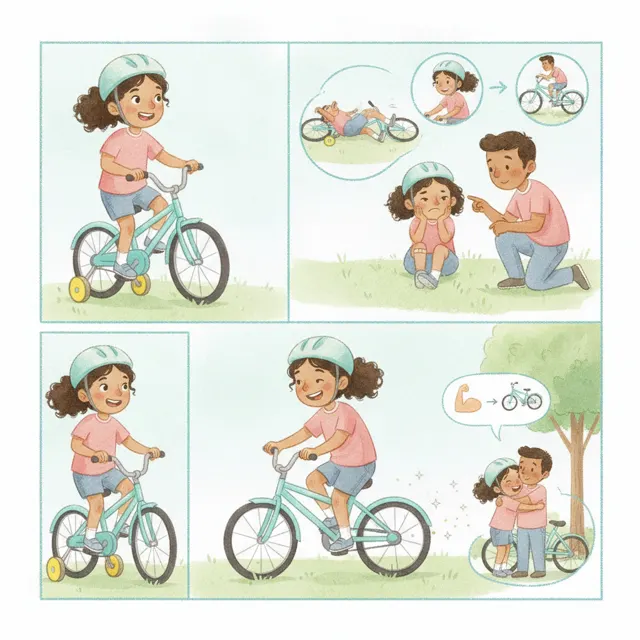
Priya looked at her bike. The training wheels were gone. She was scared. "Come on," said her dad. "I will hold the back of the seat." Priya got on the bike. She pushed the pedals. The bike wobbled left. It wobbled right. Then it fell over. Priya landed on the grass. "Ouch," she said. "I do not want to do this. It is too hard." "Let's try again," her dad said. "You can do it." Priya got back on. She tried again. The bike wobbled and fell again. Her knee hurt a little. "I keep falling!" Priya said. Her eyes were wet. "I will never learn." Her dad kneeled next to her. "How many times do you think I fell when I learned?" he asked. "Ten times?" Priya said. "More than that," her dad said with a smile. "But I kept trying. That is the secret." Priya took a deep breath. She got on the bike one more time. Her dad held the seat. She pedaled slowly. The bike went straight. "Keep going," her dad said. Priya pedaled and pedaled. She did not fall. She looked back. Her dad was not holding the seat anymore. He was clapping. "I did it!" Priya shouted. "I am riding all by myself!" She rode all the way down the path. Her heart was proud and happy. Priya could not stop smiling. She rode her bike all weekend and showed her mom. Priya learned that falling down is not the end. Getting back up is how you win.

Sofia's Empty Seat

Ages 3-84 minutesempathy
Sofia's Empty Seat story for kids illustration

Sofia's best friend Ana is quiet and sad one day. Instead of getting upset, Sofia asks what is wrong. She learns Ana's cat is sick and stays with her. Thinking about how a friend feels makes them both feel better.

Moral: Think about how other people feel.

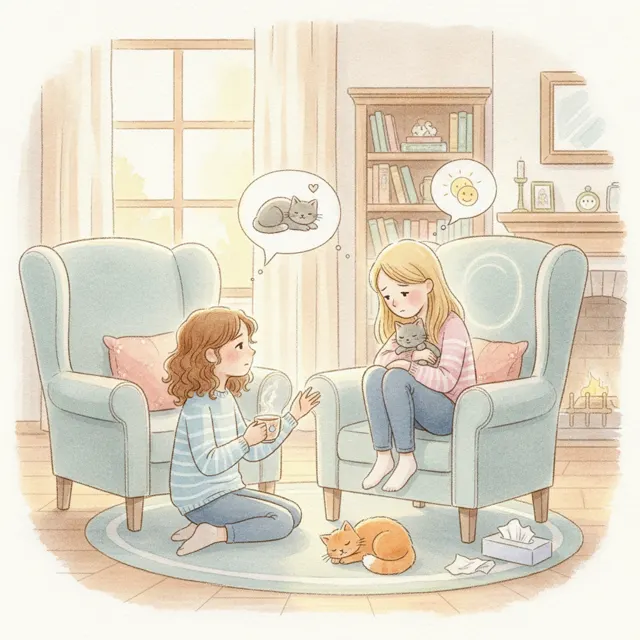
Sofia ran to the lunch table. Her best friend Ana was already there. Ana was quiet. She did not smile. "Ana, come play tag with us," Sofia said. "Not today," Ana said. She looked at her sandwich but did not eat. Sofia felt a little mad. Why was Ana being so quiet? They always played tag together. "Fine," Sofia said. She turned to walk away. Then Sofia stopped. She looked back at Ana. Ana's eyes were wet. Sofia sat down next to her. "What is wrong, Ana?" she asked softly. Ana sniffed. "My cat, Whiskers, is sick. The vet is with him. I am scared." Sofia's mad feeling went away. Now she felt sad too. She loved Whiskers. He was a soft orange cat. "I am sorry, Ana," Sofia said. "That is really hard. Do you want to talk about Whiskers?" Ana nodded. She told Sofia about all the funny things Whiskers did. How he chased his tail. How he slept in her shoe. Sofia listened the whole time. She did not rush Ana. "Thank you for staying," Ana said. "I feel a little better now." "We can wait together," Sofia said. She held Ana's hand. That afternoon, Ana's mom called. Whiskers was going to be okay. Ana and Sofia hugged. Sofia smiled too. Ana squeezed Sofia's hand. Friends help friends when they are sad. That is what being a good friend means. Sofia learned that when a friend is sad, the best thing to do is to stop and think about how they feel.

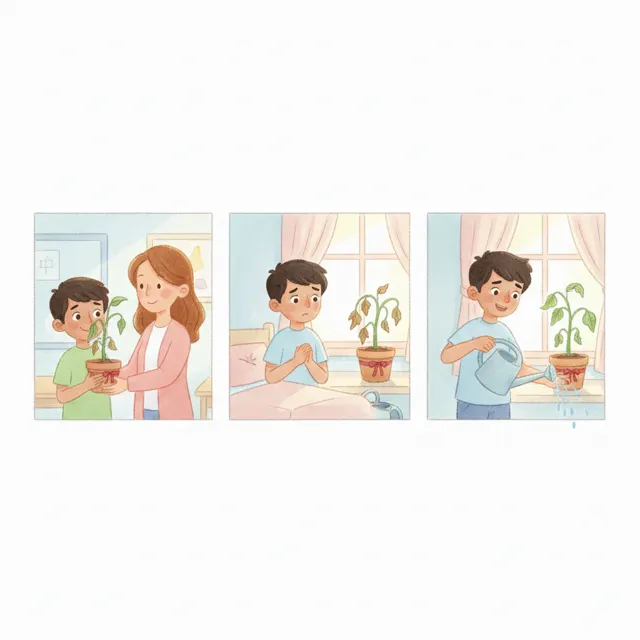
Ravi's Little Plant

Ages 3-84 minutesresponsibility
Ravi's Little Plant story for kids illustration

Ravi's teacher gives him a small plant to take care of. At first he forgets to water it and it droops. He learns that taking care of something means doing the work every day, not just when it is fun.

Moral: Take care of what is yours to do.

Ravi's teacher, Mrs. Lee, gave every child a small plant. Ravi's plant had tiny green leaves. "This plant is yours now," Mrs. Lee said. "Water it a little every day. Give it sun. Take good care of it." Ravi was so happy. He put the plant on his window. The first day, Ravi watered the plant. The second day, he forgot. He was busy playing outside. The third day, he forgot again. He was watching a show. On the fourth day, Ravi looked at his plant. The leaves were droopy. They did not look happy. "Oh no," Ravi said. "My plant looks sick." He felt bad. He had promised to take care of it. But he only did the work when it was easy. Ravi went to his mom. "I forgot to water my plant," he said. "Is it too late?" "Let's find out," his mom said. "Give it water now. Then make a plan." Ravi watered the plant right away. He watched the leaves. Slowly, they lifted up. Ravi made a small chart. It had a box for each day of the week. Every day, he watered the plant and checked the box. Week by week, the plant grew taller. New leaves came. Soon it had a small yellow flower. "You did a good job," Mrs. Lee said. "Your plant is the healthiest in the class." Ravi was proud of his plant. He checked his chart every single day. Ravi learned that taking care of something means showing up every day, even when it is not fun.

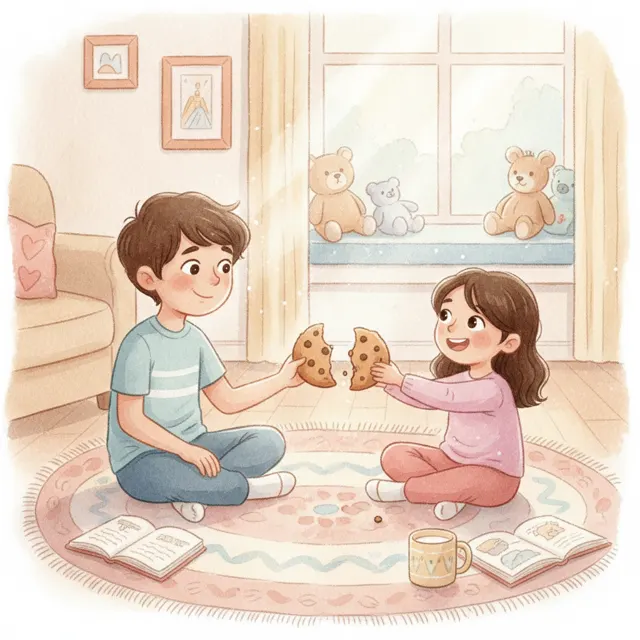
The Last Cookie

Ages 3-83 minutesgenerosity
The Last Cookie story for kids illustration

There is one cookie left and both Amir and his little sister want it. Amir gives her half even though he wants it too. He learns that sharing, even when it is hard, makes everyone feel good.

Moral: Sharing what you love makes everyone happy.

Amir opened the jar. There was one cookie left. It was a big chocolate chip cookie. It was his favorite. Amir reached for the cookie. Just then, his little sister Maya ran in. "Is there a cookie for me?" Maya asked. She looked in the jar. Her smile went away. "It is empty." Amir looked at the cookie in his hand. He wanted it so much. He had been thinking about it all day. Maya looked at the cookie. "That is the last one," she said in a small voice. Amir could eat it. He was bigger. He got there first. But Maya's face was so sad. Amir took a deep breath. He broke the cookie in half. "Here," he said. "We can share." Maya's eyes lit up. "Really? Thank you, Amir!" They sat at the table and ate their halves together. Maya's crumbs were all over her face. "This is the best cookie," Maya said. Amir looked at his half. It was small. But it tasted very sweet. Sweeter than usual. "Thank you, Amir," Maya said again. "You are the best brother." Amir smiled. His tummy had only half a cookie. But his heart felt full. The next day, their mom baked a fresh batch. She gave Amir two cookies. "One for you," she said. "And one for being so kind." Maya gave Amir a big hug. Amir shared one with Maya again. He felt like the luckiest brother in the world. He learned that sharing what you love feels even better than keeping it all for yourself.

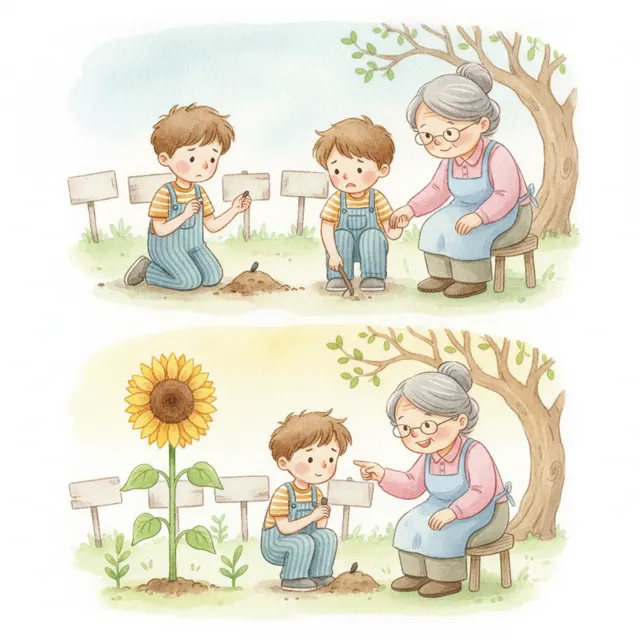
The Seed That Took Its Time

Ages 3-84 minutespatience
The Seed That Took Its Time story for kids illustration

Leo plants a sunflower seed and waits for it to grow. Day after day, nothing happens and he wants to dig it up. His grandma teaches him that good things grow slowly, and patience is rewarded.

Moral: Good things can take time to grow.

Leo got a sunflower seed from his grandma. It was small and brown. "Put it in the dirt," she said. "Give it water and sun. Then wait." Leo dug a small hole in the garden. He put the seed in and covered it with dirt. He watered it. The next day, Leo ran to the garden. Nothing. No plant. He looked close. Just dirt. "Where is my sunflower?" Leo asked. "It is growing under the ground," his grandma said. "You just cannot see it yet." Leo waited one day. Then two days. Then a whole week. Still no plant. He felt sad and a little mad. "I want to dig it up," Leo said. "Maybe it is broken." "Wait a little more," his grandma said. "Good things take time." Leo waited. He watered the dirt every day. He talked to the seed. "Grow, little seed," he said. One morning, Leo saw something. A tiny green tip was pushing up through the dirt. Leo jumped up and down. "It is growing!" he shouted. "It is really growing!" Day by day, the plant got taller. It grew leaves. Then a stem. Then, one sunny morning, a big yellow flower opened up. Leo looked at the sunflower. It was taller than he was. "It was worth the wait," Leo said. "Yes," his grandma said. "The best things take their time." Leo put the sunflower in a small vase. It made the whole room bright. He was glad he did not dig it up. Leo learned that waiting can be hard, but good things grow when you are patient.

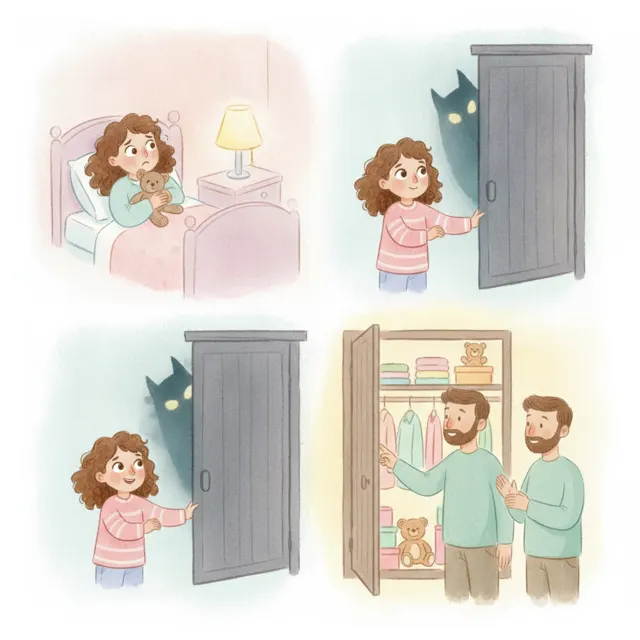
Tara's Dark Closet

Ages 3-83 minutescourage
Tara's Dark Closet story for kids illustration

Tara is afraid of the dark closet in her room. Every night she thinks a monster is inside. With her dad's help, she finds the courage to open it and sees there is nothing to fear.

Moral: Being brave means trying even when you are scared.

Every night, Tara looked at her closet. The door was closed. The room was dark. Tara was sure something was hiding inside. "Daddy," she called. "I am scared. There is something in my closet." Her dad came in and turned on the light. He opened the closet. There were only clothes and shoes. "See?" he said. "Nothing scary." But when the light went off, Tara felt scared again. The closet looked dark and big. One night, Tara could not sleep. She held her blanket up to her chin. Her heart beat fast. "What if something is in there?" she said to herself. Tara took a deep breath. She was scared. But she was also tired of being scared. She sat up in bed. "I can do this," she said in a small voice. Tara walked to the closet. Her feet felt like jelly. She reached out and grabbed the door handle. She pulled it open. There was nothing. No monster. No ghost. Just her red coat and her shoes. Tara laughed a little. "It is just my clothes," she said. She went back to bed. She left the closet door open just a crack. She did not feel scared anymore. The next morning, she told her dad. "I opened the closet all by myself," she said. "That was very brave," her dad said. "Being brave means trying even when you are scared." Tara slept all night. She did not call for her dad once. Tara smiled. She learned that the scariest things are often not scary at all once you look.

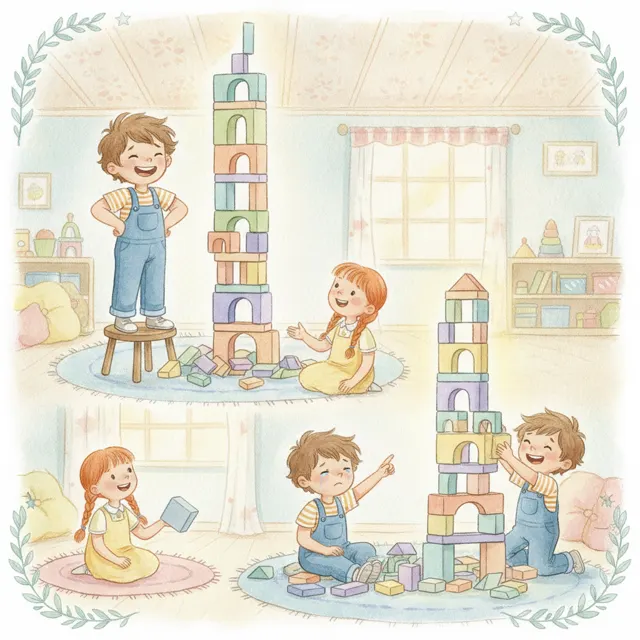
The Tallest Tower

Ages 3-84 minuteshumility
The Tallest Tower story for kids illustration

Ari builds the tallest block tower and brags that he is the best builder. When his tower falls, his friend helps him rebuild it even better. Ari learns that asking for help makes him stronger.

Moral: No one knows everything, and help makes us stronger.

Ari loved to build with blocks. He was very good at it. Everyone said so. One day, Ari built the tallest tower in the class. It went up, up, up. All the kids came to look. "Wow," said a girl. "How did you do that?" "It is easy," Ari said. "I am the best builder here. No one can build like me." Ari walked around with his chest puffed out. He did not want help. He did not want ideas. He knew it all. "Watch me make it even taller," Ari said. He put one more block on top. The tower wobbled. Then it fell. Blocks went everywhere. The room went quiet. Ari's face turned red. His great tower was gone. "It fell," a boy said. Ari felt bad. He wanted to yell. He wanted to say the blocks were wrong. But he knew the truth. He had put too many on top. Then a quiet boy named Ken walked over. "Do you want to build it again?" Ken asked. "I have an idea. If we make the bottom wide, it will not fall." Ari almost said no. He wanted to do it alone. But he remembered his tower in pieces on the floor. "Okay," Ari said. "Show me." They built together. Ken showed Ari how to make a wide base. The new tower went up higher than before. It did not fall. "You are a great builder," Ari said to Ken. "So are you," Ken said. "We are better together." Ari smiled. He learned that no one knows everything, and asking for help makes you stronger, not weaker.

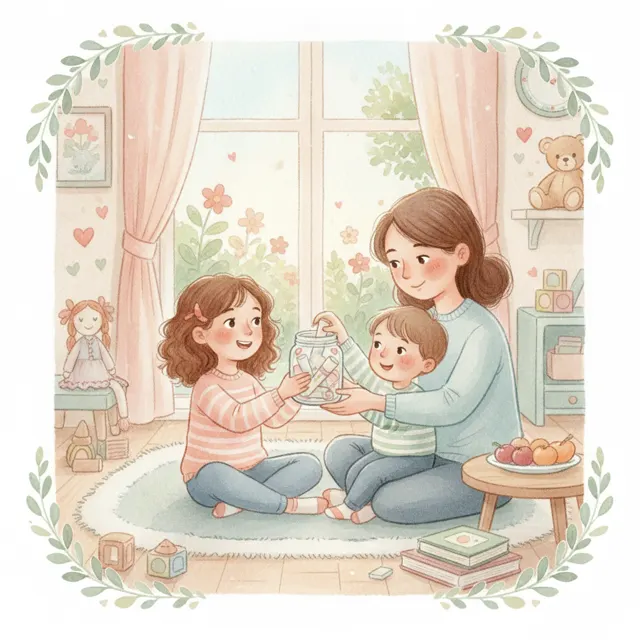
The Thank You Jar

Ages 3-84 minutesgratitude
The Thank You Jar story for kids illustration

Nina always wants more toys and more snacks. Her mom starts a thank-you jar where they write one good thing each day. Nina learns to see all the good things she already has.

Moral: Say thank you for the good things you have.

Nina always wanted more. More toys. More snacks. More cartoons. "This is not fun," Nina said. "I want a new game." "You have many good things," her mom said. "Do you see them?" Nina shook her head. She only saw what she did not have. That night, her mom put a big empty jar on the table. She put small pieces of paper next to it. "This is our thank-you jar," her mom said. "Every day, we each write one thing we are glad about. We put it in the jar." Nina made a grumpy face. "That sounds boring." "Just try it," her mom said. The first day, Nina did not know what to write. Then she thought of her dog, Bubbles. She wrote "Bubbles" on a paper and put it in the jar. The next day, she wrote "warm pancakes." The next day, she wrote "my friend Sam." Day after day, the jar got fuller. Nina started to look for good things. She saw the sunny window. She saw her soft bed. She saw her grandma's smile. At the end of the month, Nina and her mom opened the jar. They read every paper out loud. "Look at all these good things," her mom said. Nina looked at the pile of papers. It was a big pile. She smiled. "I have a lot," Nina said. "I did not know." "Now you do," her mom said. Nina did not ask for a new game that week. She was too busy noticing all the good things she already had. She learned that saying thank you for what you have makes your heart feel rich.

Frequently Asked Questions

Turn Your Child Into the Hero of Their Own Story

Upload their photo and watch as AI creates a beautiful, personalized storybook with illustrations that look just like them. From $5.99/month.

โœจ Make Your Child the Hero

Plans from $5.99/month