Queen Stories for Kids

Meet wise and compassionate queens who lead with love, stand up for fairness, and inspire their kingdoms with grace and determination.

โœจ Make Your Child the Hero

Queens have long captured children's imaginations, with their crowns, capes, and calm confidence. A queen story invites your child to rule a kingdom with grace, wisdom, and kindness. These tales are less about glitter and more about what it means to lead, to listen, and to make thoughtful choices when the whole kingdom is watching. From a royal celebration to a quiet act of generosity, queen stories show that strength can be gentle. With CreateStory.ai, you can create personalized queen stories where your child becomes the hero, crowned and ready to rule with heart.

Why do queen stories matter for girls and boys?

Queen stories show a girl or a woman who leads with a warm heart. She solves problems, listens, and cares for her people. She is brave, but she is also gentle. Boys and girls both learn that strength can be kind and soft at the same time.

A study of nearly six thousand children's books found 57% star a male main character and only 31% star a female one. Queen stories help fill that gap by putting a strong girl in the lead.

How do I pick a queen story my child will love?

Look for a queen who does real things, like planting, painting, or helping a lost pet. A queen with a job your child knows feels close and warm. A busy, kind queen is easier for a young child to understand than a far-off royal one who only sits on a throne.

A Read Aloud 15 Minutes survey found fewer than half of parents, just 46%, read aloud to their children every day. A queen story with bright pictures and a warm ending is a good one to add to that daily habit.

Sample Stories

Read these stories, then create a personalized version where your child is the hero

Queen Mira's Market Day
Ages 3-84 minempathy
Queen Mira's Market Day story for kids illustration

Queen Mira had ruled for seven years and knew her kingdom from maps, reports, and the carefully...

Moral: Understanding how your people live makes you a better leader.

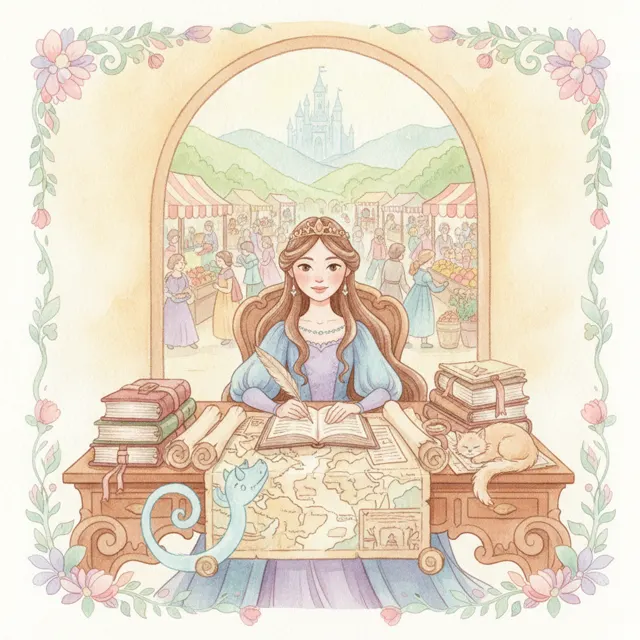
Queen Mira had ruled for seven years and knew her kingdom from maps, reports, and the carefully written summaries her advisors placed on her desk each morning. She knew the numbers. She knew the policies. What she wasn't sure she knew was the actual day. So one morning she put on plain clothes, left her crown behind, and went to the market. She went alone, carrying a small basket, looking for all the world like an ordinary woman on an ordinary errand. The market overwhelmed her at first. It was loud, crowded, and smelled of fish, bread, and leather. She hadn't been in a crowd like this since she was a princess. She bought an apple from a vendor. She asked its price and winced. The apple tax had gone up last year on her signature. She hadn't known what that actually felt like at a market stall. She talked to a woman selling cloth. The woman described how the new road on the east side had brought more customers, but the flooding last spring had ruined three weeks of work. She mentioned it as just part of life, without complaint, matter-of-factly. That matter-of-factness struck Mira hardest. She stopped at the bread stall. The baker looked tired but cheerful. His early start showed in his eyes. For two hours Mira walked and listened and asked and learned more than any summary on her desk had ever told her. On the way home, she stopped at a cobbler's stall. A child was watching the cobbler work, eyes wide. "Do you want to do that someday?" Mira asked. "Maybe," the child said. "Or maybe something else important." "What makes a job important?" Mira asked. The child thought seriously. "If people need it," she said. Mira walked home carrying her basket and a great deal to think about. She changed three policies within a month. The apple tax was one of them.
The Queen and the Long Winter

Ages 3-84 mindetermination
The Queen and the Long Winter story for kids illustration

The winter that came in the twelfth year of Queen Sable's reign was the longest anyone could...

Moral: When times are hard, a strong leader keeps hope alive for everyone.

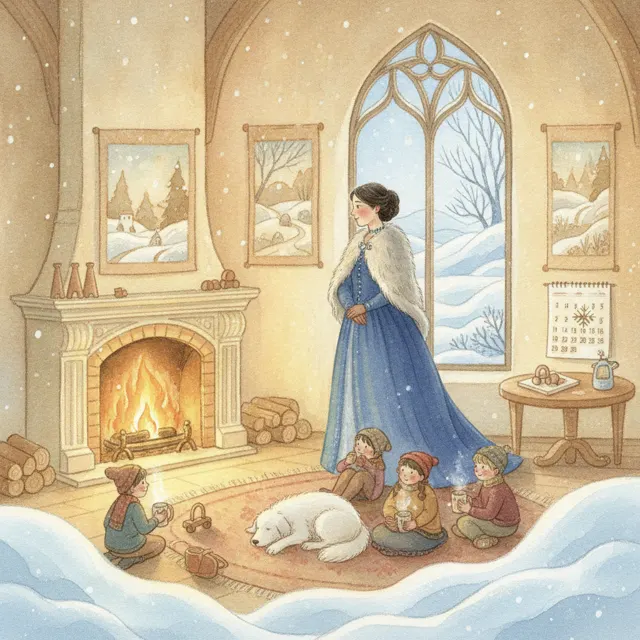
The winter that came in the twelfth year of Queen Sable's reign was the longest anyone could remember. Snow began in late autumn and didn't stop until spring arrived three weeks late. The grain stores ran low. The mountain passes closed. Supplies from the southern provinces couldn't get through. The palace advisors began to whisper among themselves with tight, worried faces. Queen Sable called a full council meeting on the morning when the news was worst. "Tell me what we have," she said. "Not what we don't have." They had enough grain for eight weeks if rationed carefully. They had wool and wood in plenty. They had the river under ice, which the fishermen said could be opened for winter fishing if equipment was provided. They had, the queen pointed out, something else too. They had people who'd survived hard winters before. She sent word to every village with clear instructions and fair rationing rules that she applied to the palace as well. The palace kitchens went onto the same rations as everyone else. She ate what everyone else ate. She started a work project: the southern pass wasn't blocked by snow, just by an old rockfall that everyone had ignored for years because there was always the mountain pass. With the mountain pass closed, fifty workers cleared the southern pass in eleven days. New supply wagons arrived from the east within a week. The grain lasted exactly nine weeks. By week ten, fresh supplies were coming in regularly. On the first warm day of spring, Queen Sable walked through the market. People stopped and cheered. She waved, feeling a little embarrassed. "You kept us calm," an old man told her. "That's what mattered most. When you weren't panicking, we figured we shouldn't either." She hadn't thought of it that way. She'd simply tried to solve each problem in front of her, one at a time. Perhaps that was what leadership looked like from the outside.

The Queen's Garden and the Stolen Roses

Ages 3-84 minjustice
The Queen's Garden and the Stolen Roses story for kids illustration

The royal garden was famous across the kingdom for its roses. Every spring they bloomed in waves of...

Moral: Finding the truth with care is more important than rushing to blame.

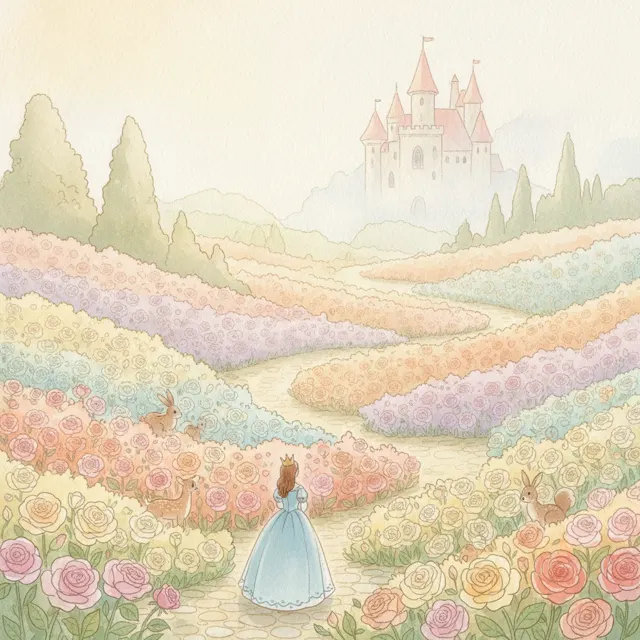
The royal garden was famous across the kingdom for its roses. Every spring they bloomed in waves of red, white, and gold, and the queen allowed anyone to come and walk among them on Wednesday afternoons. One Tuesday the gardener came to Queen Petra with a troubled face. Someone had cut twelve of the finest roses in the night and taken them. He'd found boot prints in the soft earth near the rose beds. Two servants had been seen near the garden late the evening before. The gardener felt sure it was one of them. Queen Petra did not issue a punishment. Instead she invited both servants to sit with her. She asked them each about their evening. Not accusingly, just curious. She listened carefully. The first servant, a young man named Cole, had been near the garden because his cat often slept in the boxwood hedge and he'd gone looking for her. The second servant, a woman named Bess, had been walking home past the garden from her friend's house, which was on that side of the palace grounds. Neither story felt like a lie. Neither story could be easily proved either. Queen Petra went to the garden herself and looked at the boot prints. They were large. Both Cole and Bess had small feet. She then asked the market flower sellers if anyone had come in with twelve premium roses early that morning. One seller said yes: a stall on the north side of the market, a woman none of them knew. The trail led, eventually, to someone from outside the palace who'd found a gap in the garden wall. Cole and Bess were cleared entirely. Queen Petra fixed the gap in the wall and went back to her advisors. "You could have simply punished someone," the senior advisor said. "And been wrong," said the queen. "That's not justice. That's convenience."

The Queen Who Cried

Ages 3-84 minvulnerability
The Queen Who Cried story for kids illustration

When the old royal poet died, the whole kingdom mourned. He'd been at court for forty years and had...

Moral: It's okay to feel sad. Showing real feelings helps everyone feel less alone.

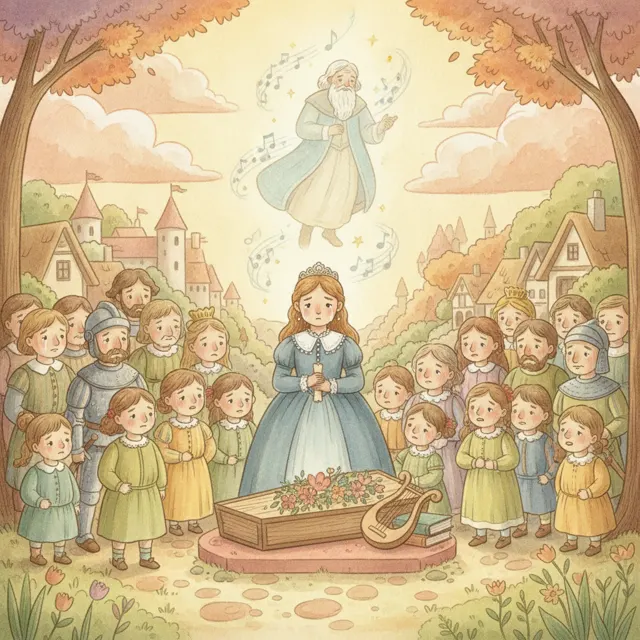
When the old royal poet died, the whole kingdom mourned. He'd been at court for forty years and had written poems about every important event, from floods to festivals. His words had become the words people used to understand their own lives. Queen Liora had known him since she was five. At the state memorial service, she stood at the front in her finest dress with her crown perfectly straight and her hands folded. She gave the opening address. Her voice was clear and steady and entirely correct. Afterwards, in the palace gardens, a young girl from the poet's family tugged her sleeve. "Did you love him?" the girl asked, the way small children ask things without filters. Queen Liora looked at her. "Yes," she said. "Very much." "Are you sad?" The queen's careful, composed expression trembled, just slightly. "Yes," she said again. And quite unexpectedly, her eyes filled with tears. She didn't stop them. That surprised her. Normally she would have. But the child was looking at her with such open sincerity that performing composure felt wrong. She sat down on a bench. The girl sat beside her. They didn't say much for a while. Later, the queen's chief advisor looked worried. "People saw you crying, Your Majesty." "I know." "They might think..." "They might think I cared about him," the queen said. "Which I did." The response from the kingdom was not what her advisor feared. Letters came to the palace from people who'd also cried and felt embarrassed about it. People who said they felt seen. One letter said simply: "I didn't think queens felt things the way we do. It helped to know they do." The queen read that letter several times. Then she wrote back.

Queen Across the River

Ages 3-84 minfairness
Queen Across the River story for kids illustration

Queen Ava's kingdom was divided by a wide river. On one side: the capital city, with its busy...

Moral: Good leadership means caring for everyone in your kingdom, not just those nearest to you.

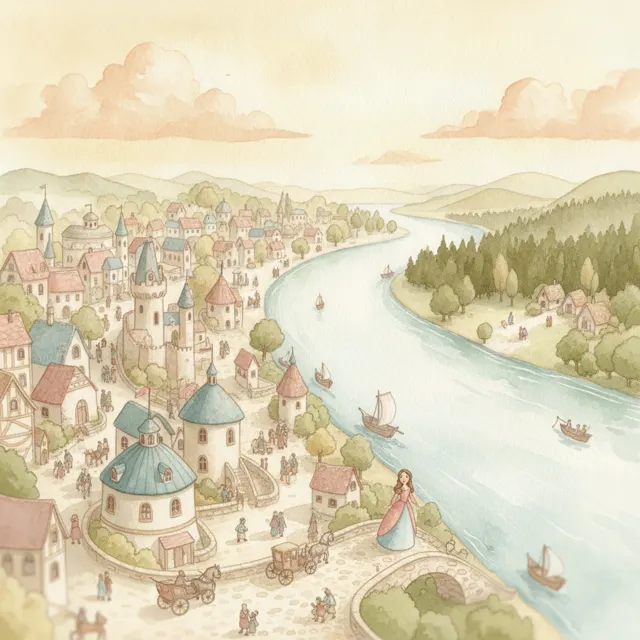
Queen Ava's kingdom was divided by a wide river. On one side: the capital city, with its busy market, its schools, its hospital, and its paved roads. On the other: a collection of smaller towns that many people in the capital forgot about entirely. One spring Ava received an unusual letter. It was from a group of children on the river's far side. "Dear Queen Ava," the letter began, "We have never seen you. Our school has a leaking roof. Our doctor comes once a month. We thought you should know." It wasn't an angry letter. It was matter-of-fact, the way children's letters often are. Ava crossed the river with a small party, no fanfare, just a few guards and her note-taking secretary. She spent three days on the far side. She visited the school and stood in the classroom where children moved their desks away from the drips when it rained. She met the single doctor who served four towns. She walked roads that were unpaved and became impassable mud in the wet season. She found things that were good too: strong, creative communities, remarkable teachers making do with little, a collective determination that she found humbling. When she returned to the capital, she didn't make a speech. She rewrote the infrastructure budget. New roof. More doctors. Road improvements. A small library with books sent from the capital's excess. She also went back every six months, because she'd found that the moment she stopped seeing something with her own eyes, the reports that arrived on her desk became thinner and easier to ignore. The children who'd written the letter grew up and became, among other things, a doctor, a teacher, and one of the finest civic engineers the kingdom had known. The engineer later told people it was because they'd grown up somewhere a queen actually came to visit.

Queen Ada's Busy Day

Ages 3-82 min readbalance
Queen Ada's Busy Day story for kids illustration

Queen Ada packs her day with work from sunup to sundown. She helps everyone but never stops to rest. When she grows so tired she cannot think, her friends show her that even a queen needs time to rest.

Moral: Even a queen needs time to rest.

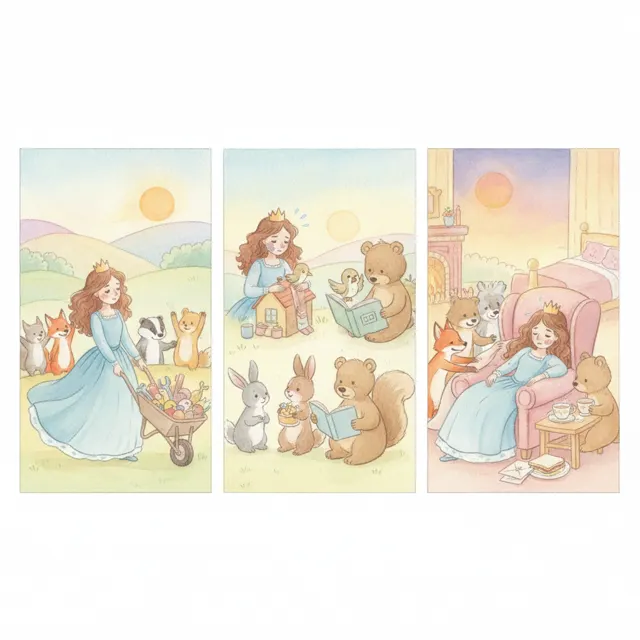
Queen Ada worked from sunup to sundown. She read letters at breakfast. She met with helpers all morning. She fixed problems all afternoon. She never, ever stopped. "I am fine," she told everyone. "A queen does not rest." But Queen Ada grew more tired each day. Her eyes felt heavy. Her legs felt slow. One day, she forgot the name of her best helper. "Are you well, my queen?" asked her friend Pip. "I am fine," said Ada, but her voice was small. Pip looked at her. "You have not sat down all week. Even a queen needs rest." "A queen must be strong," said Ada. "A strong queen knows when to rest," said Pip. "Sit with me. Just for a little while." So Queen Ada sat down in the garden. Pip brought her a cup of warm tea. The birds sang. The sun was soft. For the first time all week, Ada did nothing. She just sat and breathed. "I did not know I was this tired," she said. "That is why we rest before we break," said Pip. The queen took a short nap under the tree. When she woke, her head was clear and her legs felt light. "I can think again," she said. "Thank you, Pip. I will not wait until I am worn out to rest." From that day on, Queen Ada saved a little time each day to sit, breathe, and be still. "You look brighter," said Pip one morning. "I feel brighter," said Ada. "Rest makes my best work better." And she ruled better for it.

The Queen Who Painted Doors

Ages 3-82 min readcreativity
The Queen Who Painted Doors story for kids illustration

The kingdom's doors are all gray and the people feel dull. Queen Iris decides to paint them bright colors, one by one. Soon the whole town glows, and the people see that a little color can lift the spirit.

Moral: A little color can lift a whole town.

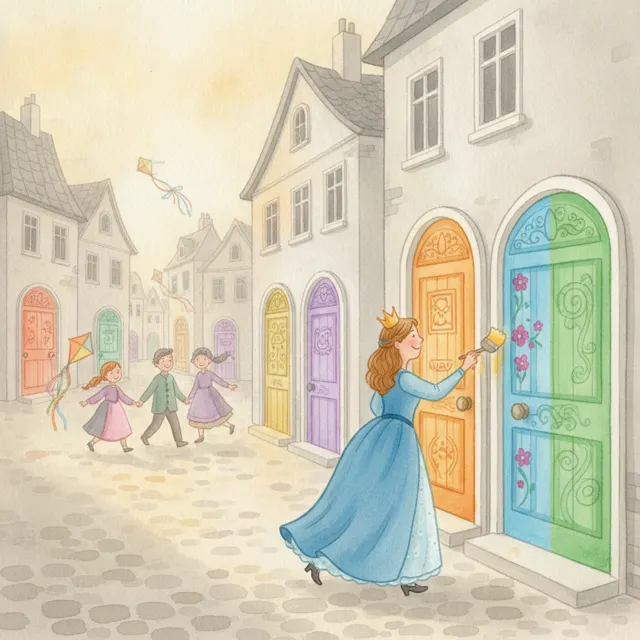
In Queen Iris's kingdom, every door was gray. Gray doors, gray walls, gray everything. The people walked with their heads down. "Our town is so dull," said a boy. Queen Iris looked around. "You are right. Let us change that." She went to her paint room and came back with brushes and pots of bright paint. Red. Yellow. Blue. Green. "I will paint the doors," she said. She started with her own palace door. She painted it a sunny yellow. Then she painted the baker's door a warm red. Then the tailor's door a sky blue. The people watched and smiled. Then they wanted to help. "May I paint too?" asked a girl. "Grab a brush," said Queen Iris. Soon the whole town was painting. Children painted green doors and purple doors. Shopkeepers painted stripes and dots. Even the old town clock got a coat of blue. By evening, the gray town was gone. It glowed with color, one bright door after another. "I did not know a door could make me smile," said the baker. "Color is a small thing," said Queen Iris. "But small things add up." The next day, people walked with their heads up. They waved and laughed and pointed at the pretty doors. "Look what we made together," said the boy. Queen Iris smiled. "A little paint, a little help, and a whole town comes alive." And the doors stayed bright. "Come see your door," people said to each other, all week long. The town was no longer dull. It was full of color and cheer. Queen Iris smiled every time she walked past a bright door. Small, bright acts can lift everyone.

Queen Rhea and the Lost Kitten

Ages 3-82 min readkindness
Queen Rhea and the Lost Kitten story for kids illustration

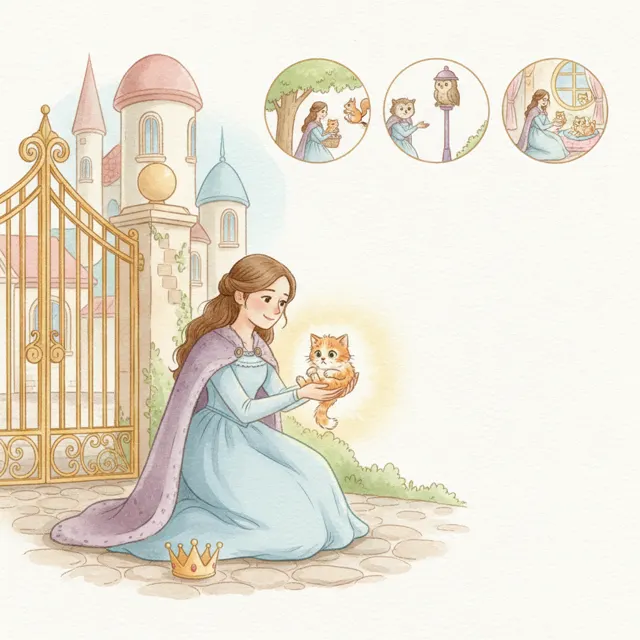
Queen Rhea finds a tiny lost kitten shivering by the palace gate. She puts down her crown and searches all over for its home. When she cannot find it, she learns that kindness can make a home for someone.

Moral: Kindness can make a home for someone.

One cold morning, Queen Rhea heard a tiny cry by the palace gate. She looked down and saw a small gray kitten, shivering in the frost. "Oh, you poor thing," said the queen. She wrapped the kitten in her warm scarf and carried it inside. The kitten's paws were cold, so Queen Rhea held it near the fire. The kitten's tummy was empty, so the queen found a saucer of warm milk. "Now," said the queen, "we must find your home." Queen Rhea and the kitten walked all over the town. They asked the baker. They asked the tailor. They knocked on every door. "Have you lost a kitten?" she asked. No one had. The kitten had no home at all. The queen looked at the little gray kitten purring in her scarf. "It seems you have no one," she said. The kitten looked up at her with big green eyes and mewed. Queen Rhea smiled. "Then you will stay with me. A palace is big, but a kitten makes it a home." So the queen gave the kitten a soft bed by the fire and a little bell for its collar. She named it Ash. Every morning, Ash woke the queen with a purr. Every night, Ash slept on the queen's slippers. "The palace was warm before," said Queen Rhea. "But it was not this happy. Kindness has a way of making a home for someone, and for the one who is kind, too." And the little lost kitten was lost no more.

The Queen's New Helper

Ages 3-82 min readteamwork
The Queen's New Helper story for kids illustration

Queen Maeve does every palace job by herself and will not ask for help. One day everything goes wrong at once. She finally lets her helpers join in, and she sees that many hands do more than one.

Moral: Many hands do more than one.

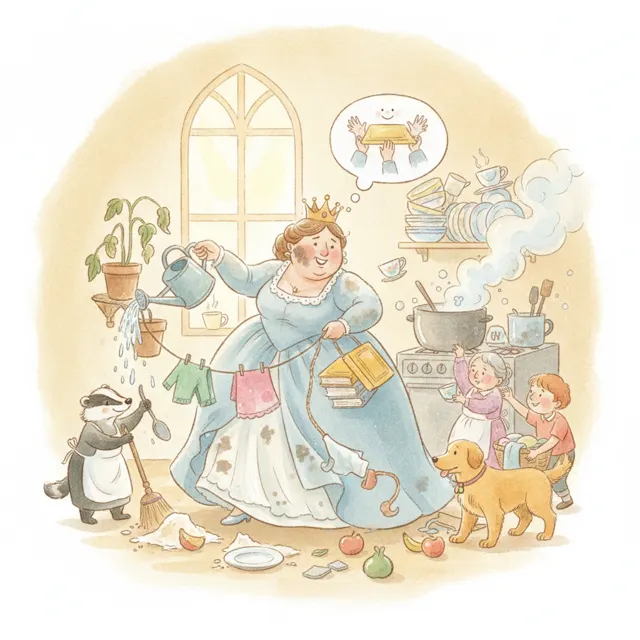
Queen Maeve liked to do everything herself. She made the plans. She wrote the letters. She even carried her own heavy books up the stairs. "I do not need help," she said. "I am the queen." But the palace had more and more work. The letters piled up. The plans fell behind. Queen Maeve worked late into the night, and still she fell behind. One day, everything went wrong at once. A pipe burst. The letters spilled. A visitor arrived, and the queen was not ready. "I cannot do it all!" she said, close to tears. Her helper Bea stepped up. "You do not have to, my queen. Let us help. That is why we are here." Queen Maeve took a slow breath. "All right," she said. "Let us do it together." Bea called the plumber for the pipe. Another helper sorted the letters. Another made tea for the visitor. Queen Maeve worked beside them all. By the end of the day, the pipe was fixed, the letters were sorted, and the visitor was happy. "I did not know so much could get done," said Queen Maeve. "Why did I try to do it all alone?" "Because you thought asking for help was weak," said Bea. "But many hands are stronger than one. That is not weak. That is wise." Queen Maeve smiled. "From now on, we work as one team." And the palace hummed along, with everyone doing their part. "I was wrong to do it all alone," said Queen Maeve. "Thank you for showing me a better way." "You showed yourself," said Bea. "You just had to let us in." And from then on, the queen and her helpers worked as one team.

Queen Nina's Rainy Parade

Ages 3-82 min readflexibility
Queen Nina's Rainy Parade story for kids illustration

Queen Nina plans a grand sunny parade, but it rains all morning. The floats drip and the crowd hides. Instead of calling it off, she turns the day into a happy puddle party, and everyone learns that joy can change shape.

Moral: A good day can still happen when plans change.

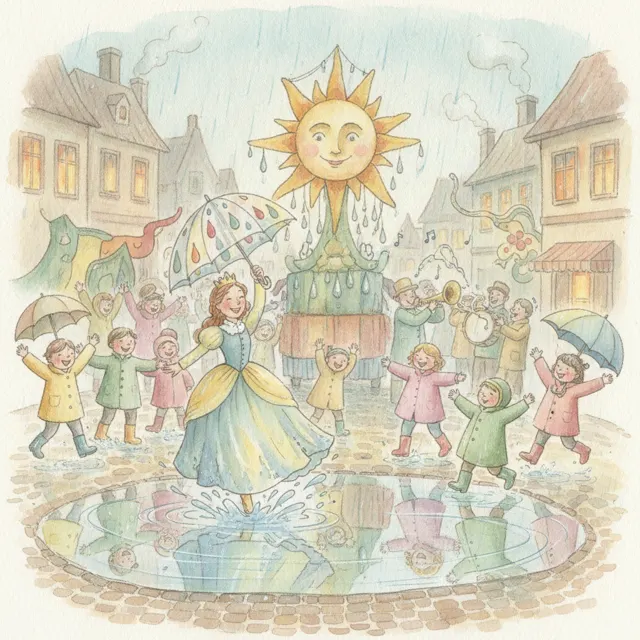
Queen Nina planned the biggest parade of the year. She planned bright floats and happy songs. She watched the sky for days. "Please be sunny," she said. But on parade day, the sky turned gray. Then the rain came. It poured all morning long. The floats got wet. The flags dripped. The people stood under roofs and looked sad. "The parade is ruined," said a drummer. Queen Nina looked at the rain and the puddles. Then she smiled. "Who says a parade must be dry?" she said. "Today we have a puddle parade!" She kicked off her shoes and jumped into a big puddle. Splash! The water flew up. The drummer laughed. "Now that looks fun!" He hopped in too. Splash! Soon everyone was jumping in puddles. The band played a bouncy song. The floats went on, a little wet but still bright. Children sailed paper boats down the streams of water. "This is the best parade ever!" shouted a girl. Queen Nina danced in the rain with her crown dripping. "The day did not go as I planned," she said. "But it is still a good day. Joy can change its shape." At the end, the sun came out. A rainbow stretched over the town. "See?" said Queen Nina. "The best days are the ones we make together, rain or shine." "I am glad it rained," said the drummer. "Me too," said Queen Nina. "The sun is nice, but the puddles were pure joy." And the town talked about the rainy puddle parade for years, the day they all learned that joy can change its shape.

The Queen Who Asked for Help

Ages 3-82 min readcourage
The Queen Who Asked for Help story for kids illustration

Queen Ayla is known for fixing everything alone. But when her own roof caves in and she is trapped, she must call for help. Her people rush to her side, and she learns that asking for help is a kind of strength.

Moral: Asking for help is a kind of strength.

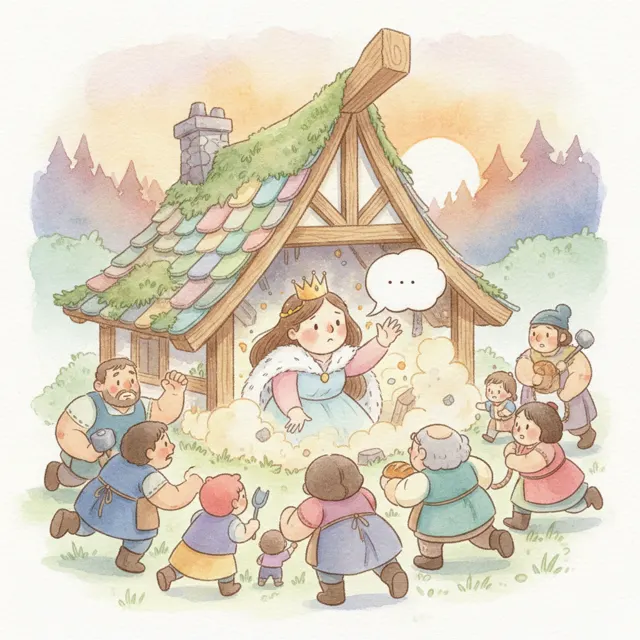
Queen Ayla was known as the queen who never asked for help. If a wall cracked, she patched it. If a gate stuck, she fixed it. She thought needing help made her weak. Then one stormy night, the roof of her tower cracked. Thump, thump, crash! A big beam fell across the door. Queen Ayla was trapped inside. She pushed the beam. It did not move. She pulled. It did not budge. The wind howled outside. "Help!" she called, but her voice was small and scared. Then she called louder. "Help! Somebody help me!" A guard heard her. Then a cook. Then the whole town ran to the tower. Together they pushed the beam away and pulled the queen to safety. Queen Ayla stood shaking in the rain, wrapped in a warm blanket. "I did not want to call for help," she said. "I thought it meant I was not strong." Her people looked at her with kind faces. "You were brave to call us," said the cook. "And we were glad to come." "Asking for help is not weak," said the guard. "It is how strong people get through hard days." Queen Ayla nodded. "I understand now. We are stronger together than I ever was alone." From that night on, the queen asked for help when she needed it. She asked the cook to taste her soup. She asked the guard to check the gate. She asked a child to help her plant flowers. "You seem lighter now," said the cook. "I am," said the queen. "A load is lighter when many hands carry it." And she was never trapped again, not in a tower and not in her pride.

A Crown That Fit Just Right

Ages 3-82 min readacceptance
A Crown That Fit Just Right story for kids illustration

Young Queen Bea worries her crown is too plain and her voice too soft to be a real queen. She tries to copy grander queens and only feels worse. At last she learns she is enough, exactly as she is.

Moral: You are enough just as you are.

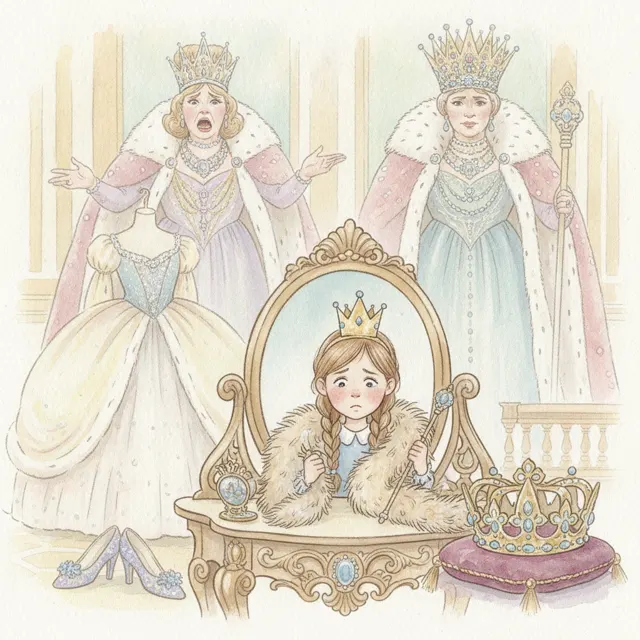
Young Queen Bea looked in the mirror and frowned. Her crown was small and plain. Her voice was soft. The other queens wore tall, sparkly crowns and spoke in loud, grand voices. "I am not a real queen," Bea said. "Not like them." So Bea tried to be like the grand queens. She put a tall, heavy crown on her head, but it wobbled and fell. She tried to speak in a big, loud voice, but it came out all wrong. "I am not good at being grand," she said, near tears. Her old advisor came to her side. "Why are you trying to be someone else?" she asked. "Because my crown is plain and my voice is soft," said Bea. "I do not feel like a queen." "The best queens are not the grandest," said the advisor. "They are the ones who are truly themselves. Your soft voice calms people. Your small crown lets you bow low to a child. Those are gifts, not flaws." Bea thought about this. She put her own small crown back on. It fit just right. The next day, she went to the market. She spoke in her soft voice to an old man who could not hear loud noises. She bent low to tie a child's shoe, her small crown staying put. "You are a kind queen," said the child. Bea smiled. "I am my own kind of queen. And that is enough." And Bea wore her plain crown with pride, because it fit the queen she really was.

Frequently Asked Questions

Turn Your Child Into the Hero of Their Own Story

Upload their photo and watch as AI creates a beautiful, personalized storybook with illustrations that look just like them. From $5.99/month.

โœจ Make Your Child the Hero

Plans from $5.99/month