King Stories for Kids

Follow wise kings who listen to their people, make fair decisions, and discover that the best rulers put kindness and justice ahead of everything else.

โœจ Make Your Child the Hero

Every child has imagined ruling their own little kingdom. King stories tap into that love of castles, crowns, and the big decisions that come with wearing one. A good king story is rarely about power for its own sake. It is about fairness, kindness, and taking care of the people who look to you. From a grand feast to a problem in the royal garden, these tales show that a good ruler listens before they decide. With CreateStory.ai, you can create personalized king stories where your child becomes the hero, sitting on the throne and ruling with a warm heart.

What do king stories teach a young child?

King stories are really about choices. A good king shares, listens, and says sorry when he is wrong. Your child sees a big, strong leader be kind and fair. That is a model they can copy at home and at school.

A study in the Asian Journal of Interdisciplinary Research found that children who read fairy tales often showed 15% higher empathy than children who did not. Kind king stories help a child feel what others feel.

How often should I read a story aloud to my child?

Reading aloud each day is a simple habit with a big payoff. A short story before bed works well, and so does one after lunch. The point is to read often, not for a long time. Ten quiet minutes a day builds a child's love of books.

A Nielsen and HarperCollins report found only 41% of children ages zero to four are read to often, down from 64% in 2012. One daily story can help turn that around and build a child's love of books.

Sample Stories

Read these stories, then create a personalized version where your child is the hero

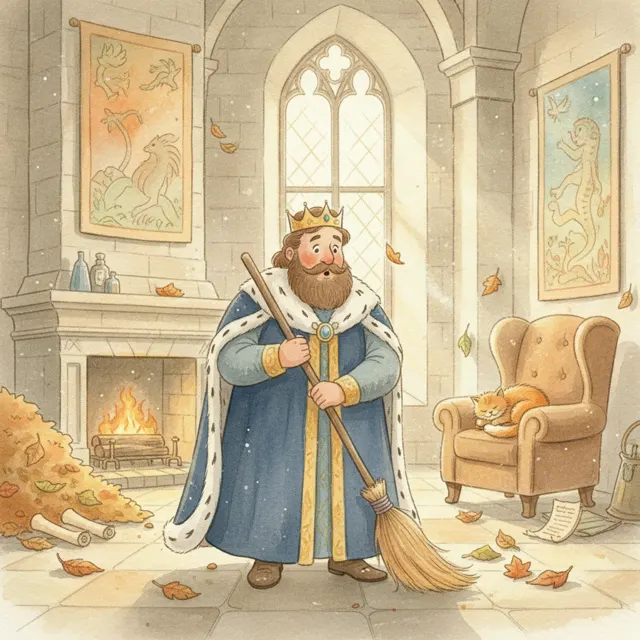
The King Who Swept His Own Steps
Ages 3-84 minhumility
The King Who Swept His Own Steps story for kids illustration

King Aldric had ruled for twenty years, and in all that time he'd never once touched a broom. That...

Moral: No task is beneath someone who truly cares about their people.

King Aldric had ruled for twenty years, and in all that time he'd never once touched a broom. That wasn't unusual for kings. What was unusual was the morning he decided to change that. He'd been walking through the palace before anyone else was awake, because he couldn't sleep, when he passed the great front steps. They were covered in autumn leaves, wet from last night's rain, and the palace sweeper hadn't arrived yet. An elderly woman was coming up the path. She walked slowly, with a cane, and when she reached the bottom step she stopped and looked at the slippery leaves with great uncertainty. King Aldric went to the supply closet, found a broom, and swept the steps. He did it quickly, without thinking about it much, just making them safe. The old woman reached the top step and nodded her thanks. "Well done, young man," she said, without looking up properly. "Thank you," said Aldric. She went inside. He leaned the broom against the wall. His head advisor, Greta, appeared at the top of the steps looking horrified. "Your Majesty, the sweeper is coming. You don't have to do that." "I know I don't have to," Aldric said. "But the steps needed sweeping and there I was." Greta stared at him. "The woman with the cane," he said. "She would have slipped." Greta was quiet. From that day on, the king occasionally did small tasks when they needed doing and he was nearby. He helped carry boxes once when the kitchens were overwhelmed before the harvest feast. He held a door. He helped a page untangle a knot in a flag rope. None of it was dignified by traditional royal standards. All of it was noticed by every person in the palace. Years later, when historians wrote about Aldric's reign, they mentioned the broom. It had become something of a symbol: a king who swept his own steps cared about the real world his people lived in.
The Two Farmers and the Fair King

Ages 3-84 minfairness
The Two Farmers and the Fair King story for kids illustration

Two farmers came to King Soren with a dispute. They'd been arguing for a month. Farmer Birch said...

Moral: True fairness means listening to everyone, not just the loudest voice.

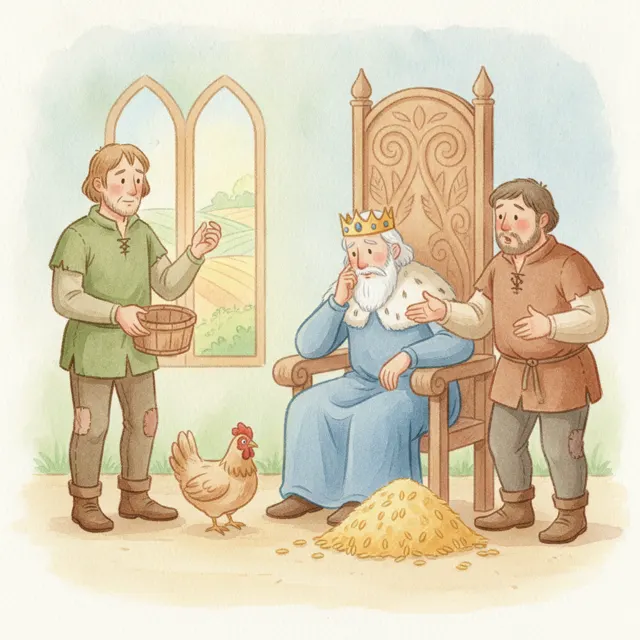
Two farmers came to King Soren with a dispute. They'd been arguing for a month. Farmer Birch said the stream that ran between their properties belonged to him. He'd dug it deeper years ago and built the little bridge over it. Farmer Dale said the stream had always run through both their lands and the water rights belonged to everyone. Both men talked at the same time until King Soren held up a hand. "I will hear Birch for five minutes," he said. "Then Dale for five minutes. Neither speaks while the other speaks." Birch explained his case, his hard work, his investment in the stream. Dale explained that his grandfather and Birch's grandfather had shared the stream peacefully for decades before this dispute. Then King Soren did something neither of them expected. He rode out to see the stream himself. He didn't send an advisor. He went, in plain riding clothes, with just one guard. He sat beside the stream for a while. He talked to the miller whose mill was downstream and depended on the water flow. He talked to an old woman who filled her daily water bucket there. He walked both farmers' fields to understand how the water was used. Then he came back and made his ruling. The stream was to be shared, with specific rules: Birch had the right to maintain the bridge and was owed a modest annual fee by Dale for that work. Dale had equal water rights to the stream and could never be denied access. Both men grumbled slightly. Neither man got everything. But the miller and the old woman both could still draw their water, which was perhaps the most important part. "Why visit the stream yourself?" his advisor asked later. "Because a dispute about water that I've never seen is just words," the king said. "I needed to understand the actual thing, not just the arguments about it."

The King Who Said I Don't Know

Ages 3-84 minwisdom
The King Who Said I Don't Know story for kids illustration

King Peren had a reputation for wisdom that he found rather inconvenient. People assumed he had...

Moral: Saying 'I don't know' and finding out is wiser than pretending to have all the answers.

King Peren had a reputation for wisdom that he found rather inconvenient. People assumed he had answers to everything. He'd developed a habit of looking thoughtful and saying "hm" until he could think of something that sounded wise, which was uncomfortable and not always accurate. The thing that changed this habit was a child. A girl of about six was brought to the royal audience in her father's arms. She'd stopped eating because she was convinced that the stars fell into the sea every night and were drowning. Several courtiers and advisors tried explaining the stars, with mixed results. The king tried his usual "hm" and thoughtful look. The girl stared at him. "But do they?" she asked. "Actually drown?" King Peren looked at her for a moment. "I don't know," he said. The room went very quiet. "You don't know?" she said. "I'm not sure about the stars and the sea at that exact point," he said. "But I know someone who would know better than me. Will you come with me to find out?" They went to the royal observatory. The king held the girl up to look through the great telescope. The royal astronomer, a nervous young man called Eli, explained about stars and light and distance, speaking very carefully in terms a six-year-old could follow. By the end, the girl was satisfied. The stars weren't drowning. They were very much still there. She ate a full supper that night. On the way back through the palace, the king spoke quietly to his advisor. "I've been saying 'hm' instead of 'I don't know' for years," he said. "I'm going to stop doing that." His advisor smiled. "Your Majesty, that might be the wisest thing you've said in twenty years."

The Smallest Kingdom

Ages 3-84 minperspective
The Smallest Kingdom story for kids illustration

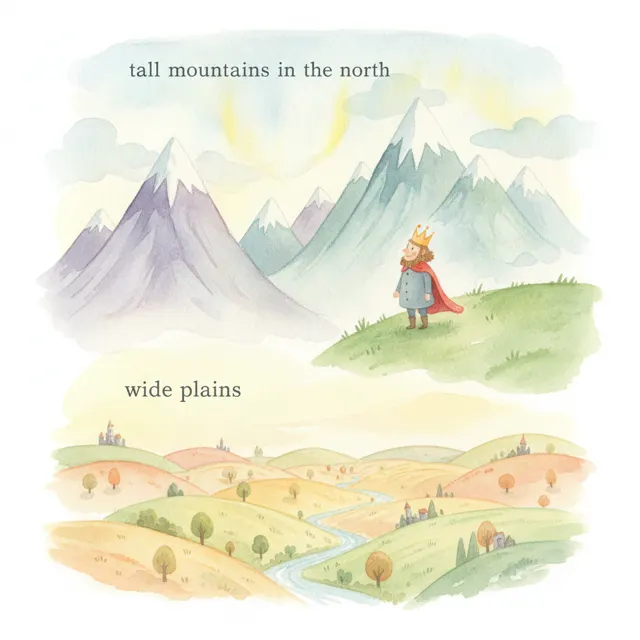
King Remy ruled a very large kingdom, with tall mountains in the north and wide plains in the...

Moral: Every place and every person matters, no matter how small.

King Remy ruled a very large kingdom, with tall mountains in the north and wide plains in the south. But somewhere in his map there was a small circle marked "Millvale" that he'd never once visited. It was on the way to nowhere. It had no famous products, no notable history, and a population of sixty-three. One autumn his tour schedule was rearranged due to floods elsewhere, and Millvale fell on the new route. "Is it worth stopping?" his royal planner asked. "We're passing through," the king said. They arrived at Millvale on a Tuesday. Sixty-three people came to see the king, which was the entire population. The mayor of Millvale was an eleven-year-old girl named Petra because the previous mayor had moved away and she'd been elected by her neighbors for reasons that were a little unclear but seemed to involve a very well-organized local clean-up day she'd organized. Petra had prepared a speech. "Our water pump needs repairing," she said. "We've been carrying water from the stream. Also our road floods in spring and some of the older people can't get out for weeks." She didn't ask for much. A pump repair. Some road drainage. Both were small engineering jobs. The king looked at the sixty-three people and felt something odd. There was no grand hall here, no formal dinner, no elaborate ceremony. Just sixty-three people with a list of reasonable things they needed. "When was the last time a king came here?" he asked. "Never," Petra said. He fixed the pump and the road. He also assigned a royal inspector to visit the smallest villages on his map once every two years, because he suspected Millvale was not alone. He stayed two days. It was, he would later say, one of the most useful royal visits of his life.

The King's Empty Chair

Ages 3-84 minlistening
The King's Empty Chair story for kids illustration

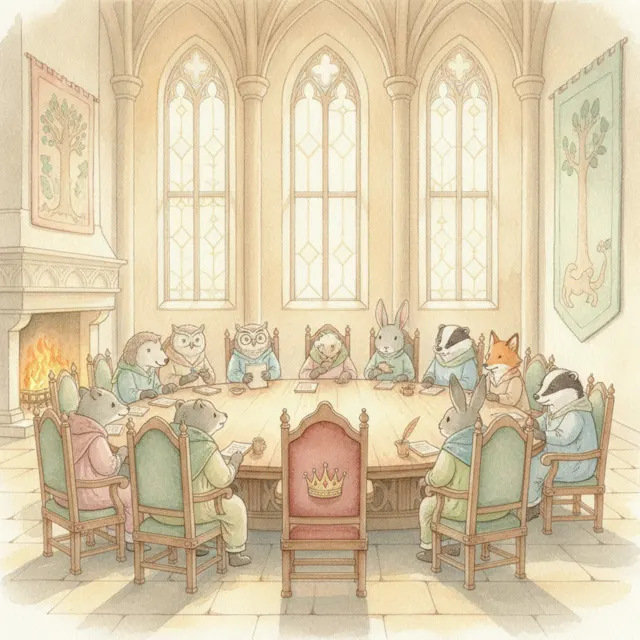
In the great hall of King Bram's palace, the council table had twelve chairs. Eleven were for...

Moral: The best leaders always leave room for voices other than their own.

In the great hall of King Bram's palace, the council table had twelve chairs. Eleven were for advisors. The twelfth was always left empty. New advisors always asked about the empty chair. "Who sits there?" they'd ask. "Whoever needs to be heard today," the king would say. At first this seemed a strange riddle. Over the years, new council members learned what it meant. The empty chair was sometimes given to a farmer who had a problem the council didn't understand. Sometimes to a craftsperson whose trade was being affected by a new royal law. Once to a child who had drawn a picture of how a broken bridge had made her village feel forgotten. Anyone could request the chair. The king's secretary kept a list. The king worked through it. Not every session included the empty chair. But it was always there, just in case. A young duke from a neighboring kingdom visited one spring. He sat through a council session where a fisherman from the coast had the empty chair and spent twenty minutes explaining why a recent fishing regulation had made things harder, not easier, for people who actually fished. The council listened. Two of them asked questions. By the end, the regulation was being rewritten. "That man had no title," the duke said to King Bram afterwards. "How do you balance his voice against your advisors?" "I don't balance it against," Bram said. "I combine them. My advisors understand law and policy. That man understands fish and tides and how his family eats. I need both." The duke went home and built his own empty chair into his council table. He sent King Bram a letter about it two years later, saying it was the most useful thing he'd ever installed in his kingdom.

The King Who Planted a Tree

Ages 3-82 min readpatience
The King Who Planted a Tree story for kids illustration

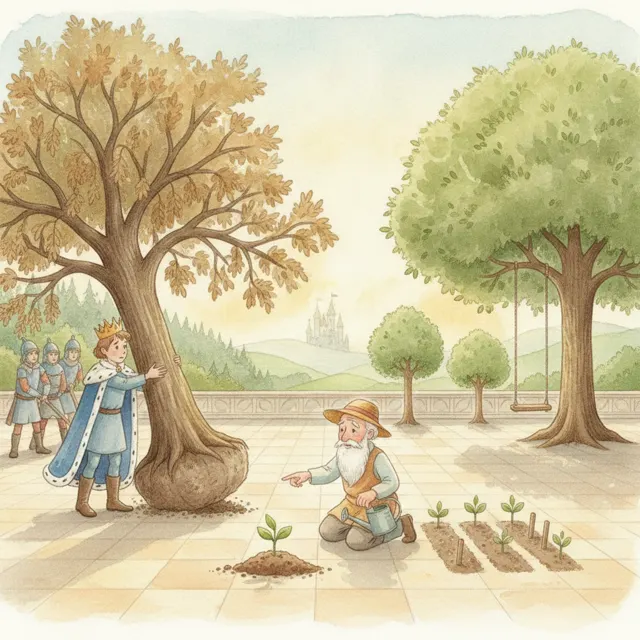
King Finn wants a tall, shady tree right away, so he picks a full-grown one from the forest. But it droops in the palace yard. A wise gardener shows him that a small seed, planted with care and patience, grows stronger.

Moral: The best gifts are the ones you grow with patience.

King Finn loved his palace, but the yard was hot and bare. "I want a tall tree with lots of shade," he said. "And I want it now." His men dug up a big tree from the forest and planted it in the yard. The big tree drooped. Its leaves turned brown. "Why is my tree sad?" asked King Finn. A wise gardener named Lila came to look. "You took a tree that grew for fifty years and moved it in one day. Trees do not like to be rushed." "So I will never have shade?" said the king. "You will," said Lila. "But you must plant a seed and wait." Lila gave the king a small brown seed. The king pushed it into the soft dirt and covered it with soil. He gave it water. "Now what?" asked King Finn. "Now we wait," said Lila. The king checked the dirt every day. Nothing. He checked again. Nothing. He began to frown. "Waiting is hard," he said. "Good things are worth the wait," said Lila. Weeks passed. Then one morning, a tiny green sprout poked out of the dirt. "It is growing!" cried King Finn. He watered it every day. He pulled the weeds. He talked to it when no one was looking. Year by year, the sprout grew into a strong young tree. Years later, King Finn sat in its cool shade. "This tree is better than the big one," he said. "Why?" asked Lila. "Because I grew it myself, one patient day at a time," said the king. And the tree stood tall, a gift the king had earned by waiting.

King Milo's Lost Crown

Ages 3-82 min readhumility
King Milo's Lost Crown story for kids illustration

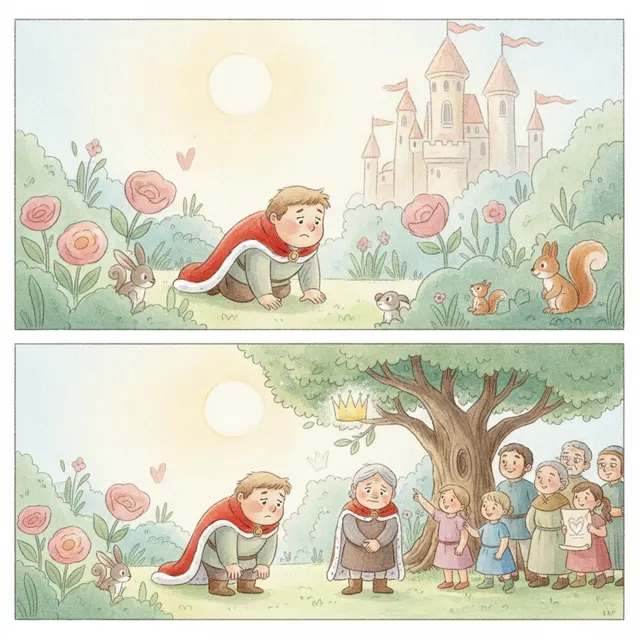
King Milo loses his crown and is too proud to tell anyone. He searches alone all day and gets nowhere. When he finally asks his people for help, they find it fast and remind him a king is not his crown.

Moral: A good king is still a king without his crown.

King Milo wore his gold crown every single day. One morning, it was gone. He looked under his bed. He looked behind his chair. No crown. "I must not tell anyone," he said. "A king who loses his crown looks silly." So King Milo searched alone. He looked in the garden. He looked in the hall. He looked everywhere, but the crown was nowhere. All day he went without his crown, and all day he said nothing. His people saw him and wondered. "Why is the king so quiet today?" asked a baker. At last, King Milo sat down on the steps, tired and sad. A small girl came up to him. "Are you looking for your crown?" she asked. "How did you know?" said the king. "You keep touching your head," said the girl. "And you look worried. We can all help you look." King Milo's cheeks turned pink. "I was too proud to ask. A king should not lose things." "Everyone loses things," said the girl. "That is what friends are for." So King Milo told the whole town. The people searched together. In no time, a boy called out, "Here it is!" The crown had rolled under the throne, where the king never looked. King Milo held the crown, then set it down. "You know," he said, "I am still your king without this crown. You helped me even when I had no gold on my head." The people smiled. "A good king is not his crown," said the small girl. "He is his kind heart." And King Milo never hid a problem again.

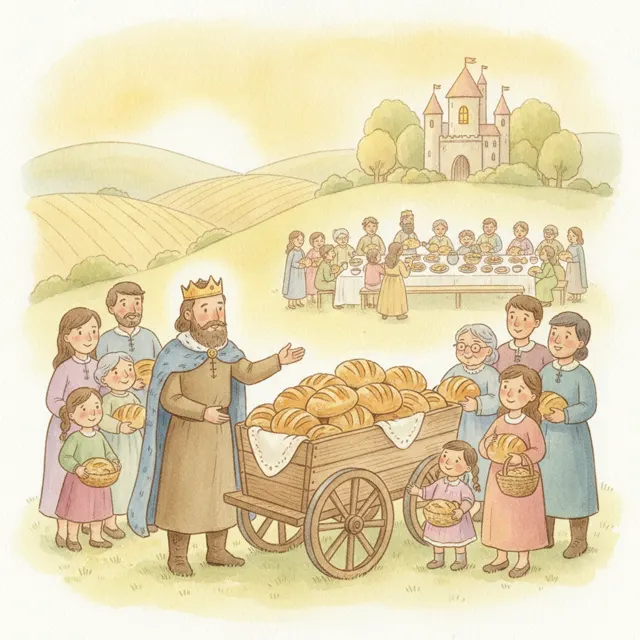
The King Who Shared His Bread

Ages 3-82 min readgenerosity
The King Who Shared His Bread story for kids illustration

The kingdom has a short harvest and King Bram worries there is not enough food. Instead of keeping the palace bread for himself, he opens his stores and shares with everyone. Sharing, he learns, makes the whole kingdom full.

Moral: Sharing what you have makes everyone full.

One year, the rains came late. The fields grew little food. King Bram looked at his palace stores, full of bread and grain, and then he looked at his hungry people. "The palace has plenty," said a helper. "You will eat well, my king." "But my people will not," said King Bram. "That is not right." The king opened the big wooden doors of the storehouse. "Come," he said. "There is bread for everyone." The people lined up. Some were shy. "We do not want to take the king's food," they said. "It is not my food," said King Bram. "It is our food. The land grew it for all of us." The king himself cut the loaves. He gave a warm round loaf to each family. He gave the last loaf to an old woman with no one to help her. "Thank you, my king," she said. "This will feed me for a week." "It will feed you today," said the king. "And tomorrow we will bake more." Day by day, the people and the king shared what they had. The bakers baked. The farmers planted new seeds. Everyone gave a little, and everyone had enough. When the next harvest came, the fields were full again. "You shared when there was little," said a farmer. "Now we share when there is much." King Bram smiled. "A kingdom is like a loaf of bread. Cut it thin, and it can feed everyone." And from that year on, no one in the kingdom ever went hungry.

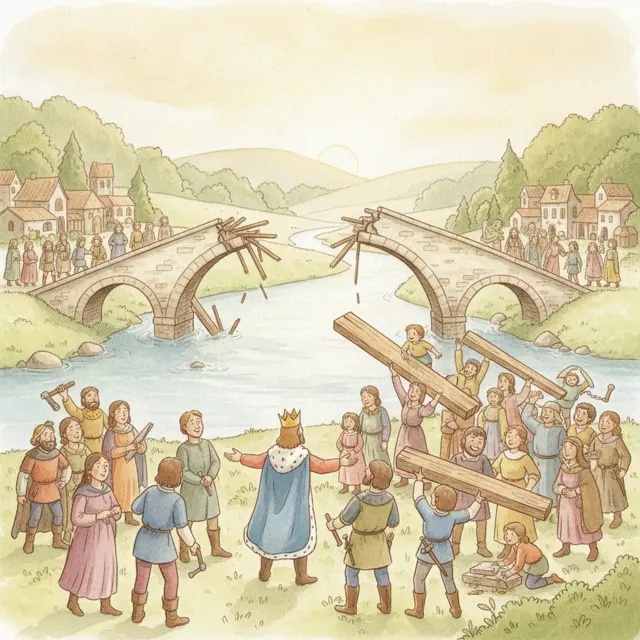
A Bridge for the Whole Kingdom

Ages 3-82 min readkindness
A Bridge for the Whole Kingdom story for kids illustration

A wide river splits King Theo's land in two. The old bridge is gone, so people stop visiting across the water. King Theo brings everyone together to build a new one, and the two sides become friends again.

Moral: Small kindnesses bring people together.

A wide, fast river ran through King Theo's land. It split the kingdom in two. For years, a small bridge let people cross. Then a great storm washed the bridge away. "Now the people on the far side cannot come to market," said a merchant. "And we cannot see our friends," said a child. King Theo looked at the wide river. "Then we will build a new bridge," he said. "And we will build it together." So the king called people from both sides of the river. Carpenters came with wood. Masons came with stone. Children carried small nails and passed out cool water. A girl from the near side and a boy from the far side carried planks together. "I have never met you before," said the girl. "Me neither," said the boy. "The river kept us apart." "Not anymore," said the girl. They worked side by side, all week long. The king worked too. He hammered nails and carried stones, right next to his people. At last, the bridge stood tall across the water. King Theo let two children from opposite sides be the first to walk across it. "We made this together," said the boy. "Now no river can keep us apart," said the girl. The two sides of the kingdom crossed back and forth all day, laughing and trading and talking. "A bridge is more than wood and stone," said King Theo. "It is how we reach each other." And every day after that, the people crossed the bridge to be together.

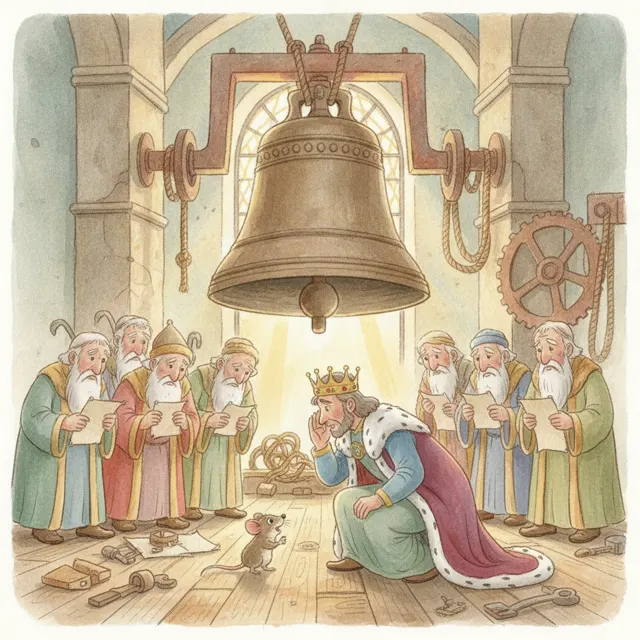
The King Who Listened to a Mouse

Ages 3-82 min readlistening
The King Who Listened to a Mouse story for kids illustration

The kingdom's great bell will not ring, and King Oren's wise men cannot fix it. Then a tiny mouse squeaks that he knows the problem. The king listens to the smallest voice in the room and learns it held the biggest answer.

Moral: Good leaders listen to the smallest voice.

The great bell in the tower would not ring. King Oren's wise men looked at it from top to bottom. "The rope is fine," said one. "The bell is fine," said another. "Then why is it quiet?" asked King Oren. "Our town wakes by that bell. Our ships steer by that bell. We need it." The wise men scratched their heads. No one had an answer. Then a tiny squeak came from the floor. "Excuse me," said a little mouse. "I know what is wrong." The wise men laughed. "A mouse? What does a mouse know about a great bell?" "Let the mouse speak," said King Oren. "A good king listens to every voice, even a small one." The mouse stood up tall. "A nut fell into the bell," he said. "It is stuck in the very top. That is why the bell will not ring." The king looked up. There, in the dark top of the bell, sat a big nut. "The mouse is right!" said the king. A worker climbed up and pulled the nut out. The bell rang loud and clear across the town. The people cheered. King Oren knelt down to the little mouse. "You had the answer the wise men missed. How can I thank you?" "You already did," said the mouse. "You listened." The king smiled. "From now on, at every meeting, I will save a seat for the smallest voice." And he did. The little mouse sat at the king's table from that day on, and the king never missed a good idea again.

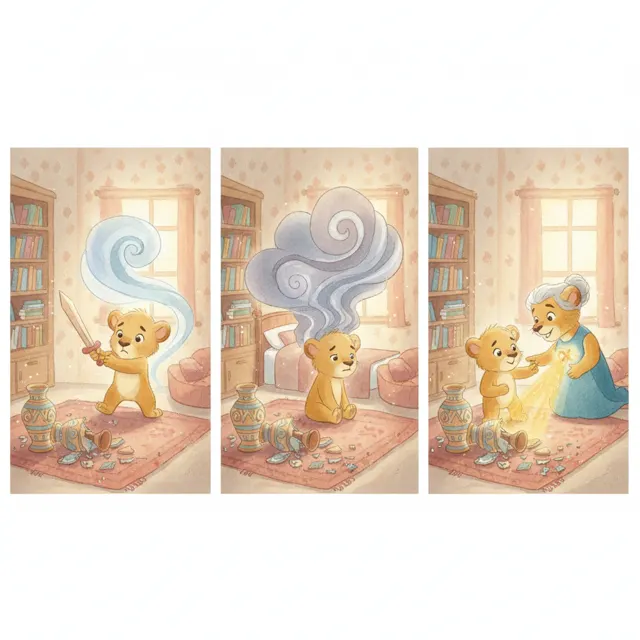
King Leo and the Broken Vase

Ages 3-82 min readhonesty
King Leo and the Broken Vase story for kids illustration

King Leo breaks a precious vase while practicing his sword swings, then blames it on a gust of wind. The lie grows heavy on him until he finally tells the truth, and he finds that honesty fixes what hiding cannot.

Moral: Telling the truth fixes what hiding cannot.

King Leo was practicing his sword swings in the great hall. Swish, swish, swish. His sword hit a small table, and a precious blue vase fell to the floor. Crash! It broke into a hundred pieces. The king froze. "Oh no," he said. "Mother's favorite vase." Just then, a servant ran in. "What happened, my king?" "A gust of wind," said King Leo. "It knocked the vase over." The servant nodded and swept up the pieces. But King Leo felt sick. The lie sat in his chest like a stone. At dinner, he could not eat. At night, he could not sleep. The next day, his mother, the old queen, came to visit. "My vase is gone," she said softly. "I was told the wind broke it." King Leo looked at his shoes. His heart pounded. "Mother," he said at last, "the wind did not break it. I did. I was swinging my sword too close, and I knocked it over. I was scared to tell the truth." The old queen was quiet for a moment. Then she touched his face. "I am sad about the vase," she said. "But I am proud of you for telling me the truth. A lie is heavier than a hundred broken vases." "You are not angry?" asked Leo. "I was sadder when I thought the wind did it," she said. "Truth is how we trust each other." King Leo let out a long breath. The stone in his chest was gone. "I will fix what I can and tell the truth, always," he said. And from that day on, King Leo never let a small lie grow big.

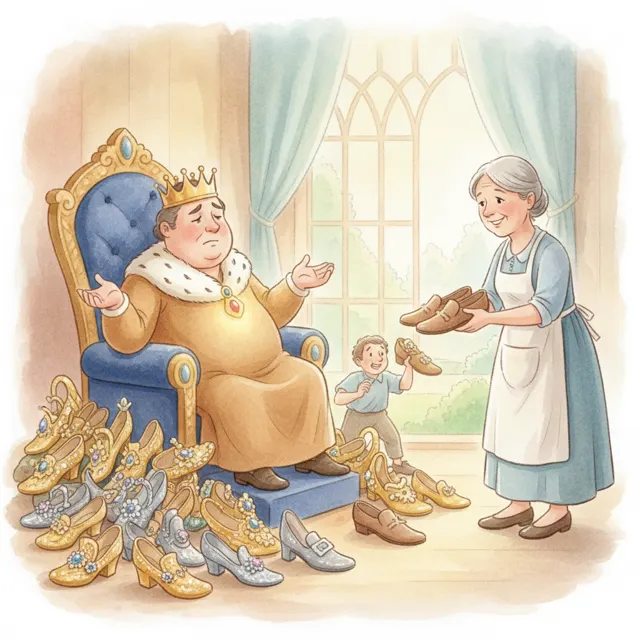
The King's New Shoes

Ages 3-82 min readcontentment
The King's New Shoes story for kids illustration

King Sam wants the shiniest shoes in the world and buys pair after pair, but none make him happy. A cobbler's simple, soft pair teaches him that new things do not make a heart happy; being grateful does.

Moral: You do not need new things to be happy.

King Sam loved new shoes. He had shoes with gold buckles. He had shoes with silver laces. Still, he was sure the next pair would make him happy. "The shiniest shoes in the world," he told the cobbler. "I must have them." So the cobbler made shoes that sparkled like stars. King Sam put them on. They were stiff and pinched his toes. "These hurt," said the king. He bought more shoes. Tall boots. Red slippers. Shoes that clicked when he walked. Each pair was new and bright, but none of them felt right. One day, a kind old cobbler came with a plain, soft pair of shoes. They were brown and simple, with no shine at all. "These are nothing special," said King Sam. "Try them," said the cobbler. The king slipped them on. They were soft like a cloud. He could walk all day and feel nothing but comfort. "These are wonderful," said King Sam. "Why did I chase the shiny ones?" "Because you thought new things would make you happy," said the cobbler. "But happy feet do not need to sparkle. They just need to fit." King Sam looked at the mountain of shoes he had bought and never worn. He felt a little silly. "Take these to people who need shoes," he said. "I will keep this one soft pair." The cobbler smiled. "A grateful heart wears plain shoes better than a greedy one wears gold." And King Sam walked out into his kingdom, light on his feet and lighter in his heart.

Frequently Asked Questions

Turn Your Child Into the Hero of Their Own Story

Upload their photo and watch as AI creates a beautiful, personalized storybook with illustrations that look just like them. From $5.99/month.

โœจ Make Your Child the Hero

Plans from $5.99/month