Counting Stories for Kids

Tiny hands counting acorns, stars, and steps, learning that numbers are everywhere and every one of them matters.

✨ Make Your Child the Hero

Counting is one of the first things children fall in love with, and it starts long before school. A child who counts crackers on a plate, steps up a staircase, or socks in a drawer is not just practicing numbers. They are learning that the world can be sorted, named, and understood one thing at a time. These stories turn counting into a gentle game, with characters who count one by one and learn a small life lesson along the way. With CreateStory.ai, you can make it personal. Upload a photo and your child becomes the hero of their own counting story.

Why do counting stories help young children learn numbers?

Counting stories put numbers into a fun story, so children count along with a character instead of just reciting numbers. This makes counting feel natural and easy.

Early counting skills really matter. Research by Greg Duncan and his team found that early math skills, like counting, are the strongest predictor of later success in school. In their study, early math mattered even more than early reading.

How can I help my child practice counting every day?

Count real things around you. Count steps as you climb, apples at the store, or cars on the road. Real objects help children understand what each number means.

Make it a habit, not a lesson. A quick count here and there all day long works better than one long session. Children learn numbers best when counting feels like part of everyday life.

Sample Stories

Read these stories, then create a personalized version where your child is the hero

Nora Counts Ten Acorns
Ages 3-83 mincounting
Nora Counts Ten Acorns story for kids illustration

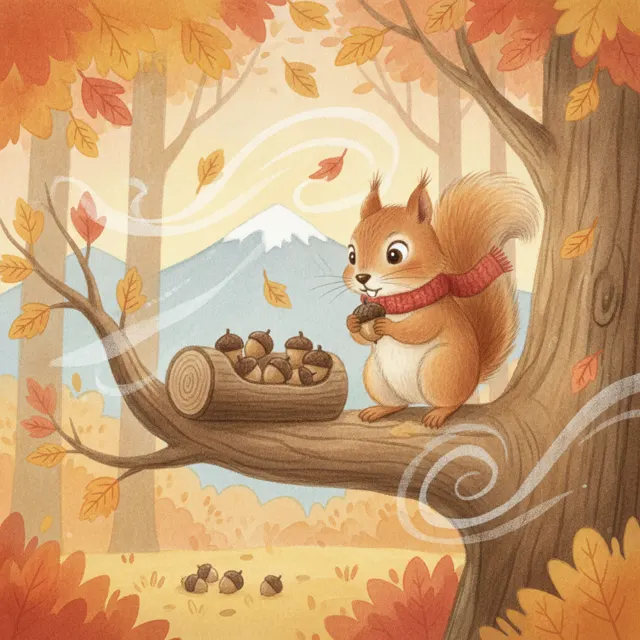
Nora the squirrel must gather ten acorns before winter comes. When the wind blows and she loses her place, she learns that counting one thing at a time keeps a big job from feeling too big.

Moral: Big jobs are just small jobs done one at a time.

Nora the squirrel had a problem. Winter was coming, and her little nest had no food at all. "Ten acorns," said Papa Squirrel. "That is how many you need. Count them one at a time, and do not stop until you reach ten." Nora nodded and hopped out into the yard. She found her first acorn under the big oak tree. "One," she said, and tucked it into her cheek. She found two more by the garden fence. "Two. Three." Under the porch she found a fat brown acorn. "Four." By the gate she found two tiny ones. "Five. Six." Then the wind blew, and Nora stopped to watch the leaves dance. She forgot all about counting. "Oh no," she said. "I lost my place. Now I have to start over." She counted the acorns in her nest one more time, touching each one with her paw. "One, two, three, four, five, six. Good, I am still at six." So Nora went looking again. She found one by the birdbath. "Seven." She found one under the steps. "Eight." She found one rolling down the hill. "Nine." But the last acorn was nowhere. Nora looked and looked, and her tail drooped. A little voice said, "Are you looking for this?" It was Benny the blue jay, holding a big acorn in his beak. "Yes!" said Nora. "That makes ten." She counted all her acorns one last time, all the way from one to ten, and her nest was finally full. "That is the secret," said Papa Squirrel. "Big jobs are just small jobs done one at a time."
The Bakery Mouse and the Missing Bun

Ages 3-84 mincounting
The Bakery Mouse and the Missing Bun story for kids illustration

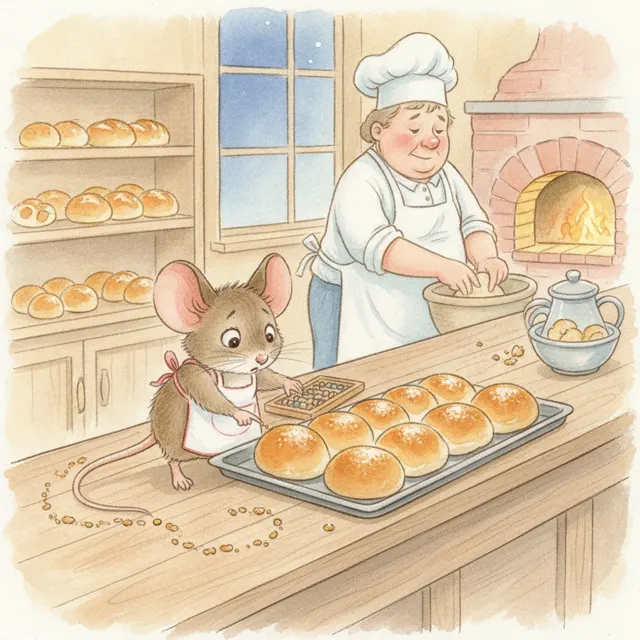
Pip the mouse counts twelve buns every night to keep them safe. When one bun goes missing, he counts the row again, finds the crumb trail, and helps the baker make things right.

Moral: Counting carefully keeps you from losing track.

Every morning, Mr. Otto the baker made twelve buns and set them in a neat row. Every night, Pip the mouse counted them before he went to sleep. "One, two, three, four, five, six, seven, eight, nine, ten, eleven, twelve," Pip would whisper. "All safe." One Tuesday morning, Mr. Otto came in and frowned. "Something is wrong," he said. "I made twelve buns, but the row looks short." Pip poked his head out from behind the flour sack. "Let me count them, Mr. Otto," he said. Pip counted slowly, tapping each bun with his tiny paw. "One, two, three, four, five, six, seven, eight, nine, ten, eleven." "Eleven?" said Mr. Otto. "There should be twelve." "One bun is missing," said Pip. "Let us look for it." They searched the counter, the floor, and under the oven. At last Pip spotted a crumb trail leading to the window sill, where a hungry pigeon sat with the twelfth bun. "That is our missing bun," said Pip. The pigeon looked sorry. "I was so hungry," she cooed. "I did not know it was counted." Mr. Otto smiled. "You may keep it," he said, "but from now on, please ask first." Then Pip counted the row again. "One, two, three, four, five, six, seven, eight, nine, ten, eleven. And one with the pigeon. That makes twelve." "All safe again," said Mr. Otto. Pip patted the last bun. "Counting is the best way to keep watch," he said. "Nothing sneaks away when you know how many you started with." "Nothing at all," said Mr. Otto, and they both slept well that night.

Five Stars for Grandma's Quilt

Ages 3-83 mincounting
Five Stars for Grandma's Quilt story for kids illustration

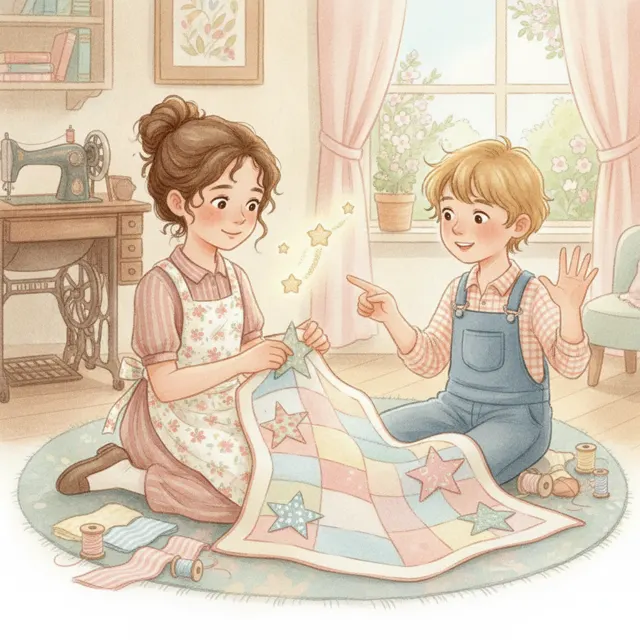
Mara plans to sew five stars onto a quilt for her grandma, but five feels like too many. With her friend Theo counting beside her, each finished star brings her one step closer.

Moral: Sharing a job with a friend makes the counting go faster.

Mara wanted to make her grandma a quilt for her birthday. Grandma loved stars, so Mara planned to sew five stars onto a soft blue blanket. "Five stars is a lot," Mara said to herself. "I will never finish." Her friend Theo came over to help. "Let us count them as we go," he said. "That way we will know exactly how far we have come." Mara sewed the first star, a yellow one in the corner. "That is one," she said. Theo handed her the thread for the next star. "Two," he said when it was done. They stopped for lemonade, then sewed a third star. "Three," they said together. Mara's fingers were getting tired. "Only two more," said Theo. "You can do it." She sewed the fourth star, a little crooked but still lovely. "Four." The last star was the hardest. The needle went in, out, in, out. At last it was done. "Five!" Mara cheered. "One, two, three, four, five. I made them all." On Grandma's birthday, Mara wrapped the quilt in a big bow. Grandma counted the stars too. "One, two, three, four, five," she said. "Five beautiful stars. This is the best gift ever." Mara smiled at Theo. "Counting the stars made the work feel smaller," she said. "And doing it together made it feel easy." That night, Grandma folded the quilt and laid it on her bed, right where she could see all five stars before she slept. Mara and Theo sat on the porch and looked up at the real stars in the sky. "Can we count those too?" Theo asked. "Sure," said Mara. "But there are more than five." "Then we will count them one at a time," Theo said, and they began. One, two, three.

Milo Counts His Steps to School

Ages 3-85 mincounting
Milo Counts His Steps to School story for kids illustration

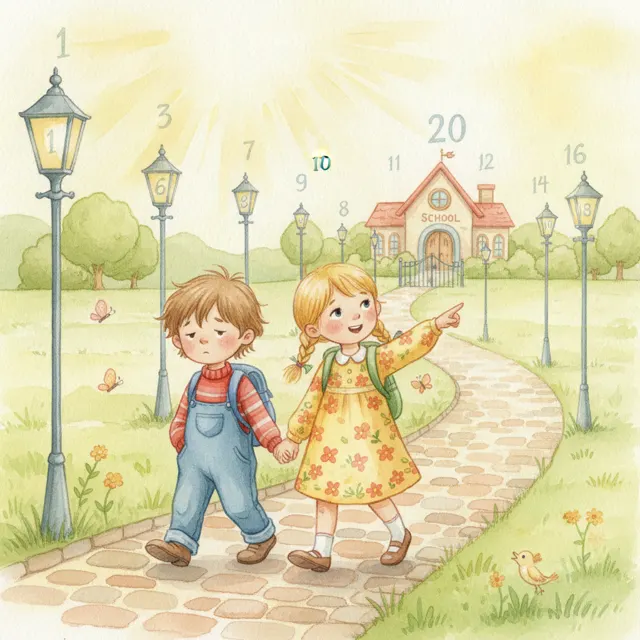
Milo dreads the long walk to school until his sister June turns it into a counting game. Step by step, lamppost by lamppost, he forgets his tired legs and finds his way to twenty.

Moral: Slow and steady steps still get you there.

Milo did not like walking to school. It was a long way, and his legs always felt tired before he reached the corner. "Let us make a game of it," said his big sister June. "We will count our steps. One step for every lamppost we pass." Milo sighed. "That will take forever." "Just try," June said. "We will count together." They started walking. "One," said Milo as they passed the first lamppost. "Two," he said at the next one. By the fifth lamppost, Milo was not thinking about his tired legs at all. He was thinking about the next number. "Six, seven, eight," he counted. "How many lampposts are there all the way to school?" "Twenty," said June. "And we are already at eight. That is almost half." Milo's eyes went wide. "Almost half? Then we are doing great." He counted faster now. "Nine, ten, eleven, twelve." They passed the bakery, and Milo counted the pies in the window. "One, two, three pies. Can we get one after school?" "Maybe," June laughed. They kept going. "Thirteen, fourteen, fifteen, sixteen," Milo chanted. His legs did not feel tired at all anymore. "Seventeen, eighteen, nineteen," he said, and then he saw the school gate. "Twenty! We made it!" June gave him a high five. "See? The walk is not so long when you count your way through it." "That was the fastest walk ever," said Milo. "Counting made my feet forget to be tired." And from that day on, Milo counted his steps every single morning, all the way to twenty.

The Lost Ducklings of Willow Pond

Ages 3-84 mincounting
The Lost Ducklings of Willow Pond story for kids illustration

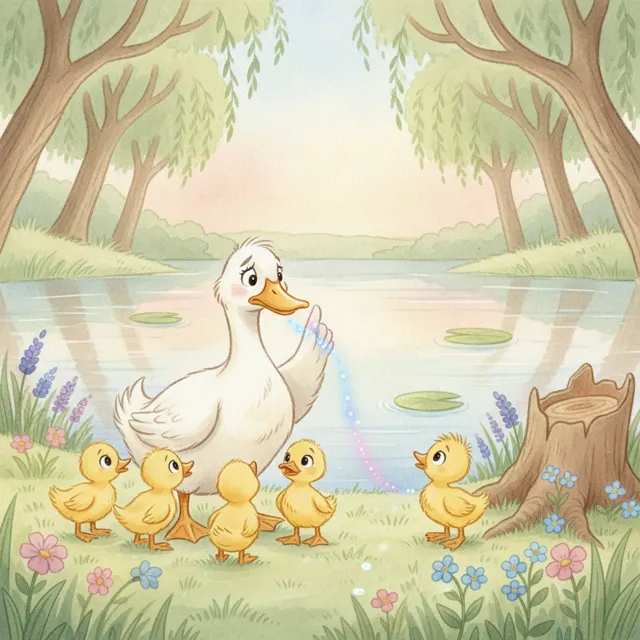
Mama Duck always counts her six ducklings before they swim. When little Pip wanders off, counting the ones who are left shows her exactly who is missing, and she brings everyone safely home.

Moral: Every single one matters, so count them all.

Mama Duck had six ducklings, and she counted them every time they went to the pond. "One, two, three, four, five, six," she would say. "All here." One morning, as the ducklings waddled through the tall grass, Mama Duck heard a splash. She turned around and counted. "One, two, three, four, five." She counted again. "One, two, three, four, five." "Someone is missing!" she quacked. The littlest duckling, Pip, was not in line. Mama Duck flapped her wings in a panic. "Calm down, Mama," said Dilly, the oldest duckling. "Let us count who is here, and then we will know who is gone." They lined up and called out names. "Dilly is one. Dot is two. Dash is three. Dolly is four. Dizzy is five." "Pip is six," said Mama Duck, "and Pip is not here." They searched the grass, the reeds, and the edge of the pond. At last they heard a tiny quack from behind a log. "Pip!" they all cried. Pip came out, covered in mud. "I chased a dragonfly and got lost," he said. Mama Duck counted them all again, touching each head with her wing. "One, two, three, four, five, six. All six, back together." "Counting showed us exactly who was missing," said Dilly. "That is why we always count," said Mama Duck. "So we never leave anyone behind." From then on, the ducklings waddled in a straight line, and every morning Pip waited for his turn to be counted. "Six," Mama Duck would say with a smile, "and every one of you is right where you belong." And the six ducklings waddled into the pond, one by one, splash, splash, splash, splash, splash, splash.

Ten Little Buttons

Ages 3-83 minutescounting
Ten Little Buttons story for kids illustration

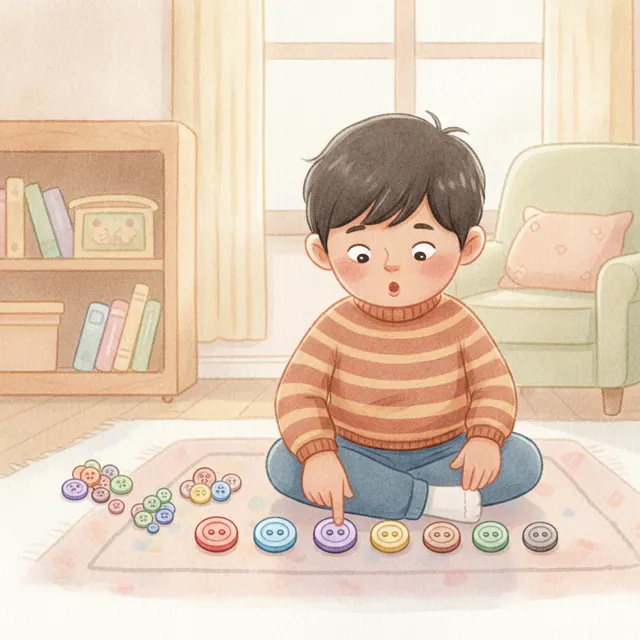
Ravi finds ten buttons of different colors on the floor. He counts them one by one, then sorts them into groups. Ravi learns that counting slowly and touching each button keeps the count right.

Moral: Counting one by one keeps your numbers right.

Ravi was cleaning his room when he found a button. Then another. Then another. "One, two, three buttons," he said. "Where did all these come from?" He kept looking. He found a button under the bed and two by the closet. "Four, five, six," he counted. Soon he had a small pile. He wanted to count them all, but they kept rolling around. "Counting is hard when they roll," said Ravi. "I need a way to keep track." He made a long line of buttons on the floor. He touched each one as he counted. "One, two, three, four, five, six, seven, eight, nine, ten," he said. "Ten buttons!" "Now let me count again to be sure," said Ravi. He touched each button again. "One, two, three, four, five, six, seven, eight, nine, ten. Yes, ten!" His mom came in. "What are you doing, Ravi?" she asked. "I found ten buttons," he said. "I counted them by touching each one." "Good job," said Mom. "Touching each one as you count helps you not skip any." "Look," said Ravi. "I can sort them too. Five are round and five are square. Five and five make ten." "You are right," said Mom. "You know your numbers well." Ravi smiled. He put the buttons in a little jar. Ten buttons, all counted, all sorted. Counting was not so hard after all. It just took a steady hand and one button at a time. Before bed, Ravi counted the buttons one last time. Still ten. Good night, buttons.

The Cookies That Kept Counting

Ages 3-83 minutessharing
The Cookies That Kept Counting story for kids illustration

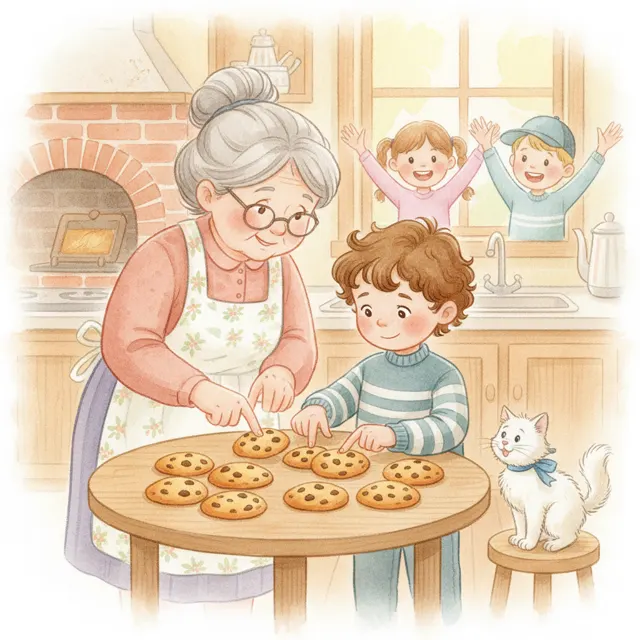
Grandma bakes twelve cookies and tells Sam to share them fairly. Sam counts them into two equal piles. He learns that counting helps him share, and sharing makes everyone happy.

Moral: Counting fairly helps everyone share the same.

Sam smelled cookies from the kitchen. He ran in and saw a big tray. "How many cookies, Grandma?" asked Sam. "Twelve," said Grandma. "Count them and share them with your sister, Mia. Fairly." Sam counted the cookies one by one. "One, two, three, four, five, six, seven, eight, nine, ten, eleven, twelve. Twelve cookies!" "Now share them fairly," said Grandma. "Half for you, half for Mia." Sam thought. How do you share twelve cookies fairly? "I will make two piles," he said. "One cookie for Mia, one cookie for me. One for Mia, one for me." He went back and forth until the cookies were gone. "Now let me count each pile," said Sam. He counted his pile. "One, two, three, four, five, six. Six cookies for me." He counted Mia's pile. "One, two, three, four, five, six. Six cookies for Mia. Six and six is twelve!" "You did it," said Grandma. "You shared fairly." Mia came in and saw her six cookies. "Thank you, Sam," she said. "You gave me the same as you." "Fair means the same," said Sam. "Six for you and six for me." They ate their cookies together. Sam's heart felt warm. Counting had helped him share, and sharing made the cookies taste even better. Later, Mia gave Sam one of her cookies. "You shared, so I share too," she said. Sam smiled. "Now I have seven and you have five." They counted their cookies together and laughed. Grandma watched them and clapped her hands.

The Bear Who Counted Backward

Ages 3-83 minutespatience
The Bear Who Counted Backward story for kids illustration

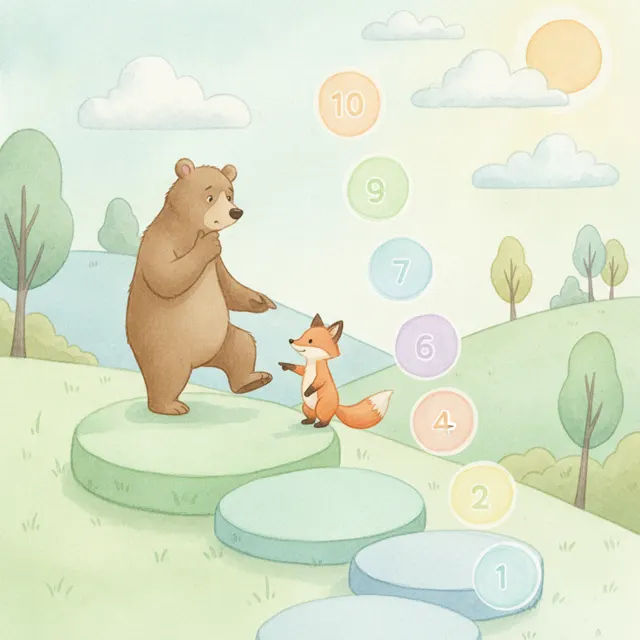
Ben the bear can count up to ten, but counting backward is hard. His friend teaches him to count down from ten like stepping down a hill. Ben learns that counting down helps him wait and stay calm.

Moral: Counting down can help you wait and stay calm.

Ben the bear could count up. "One, two, three, four, five, six, seven, eight, nine, ten," he said. Easy. But counting backward was hard. "Ten, nine, eight... um..." Ben always got stuck. "Why do I need to count backward?" Ben asked his friend Ollie the owl. "Counting down helps you wait," said Ollie. "Like before a rocket goes up. Ten, nine, eight, seven, six, five, four, three, two, one, blast off!" "I want to try," said Ben. "But I keep losing my place." "Think of it like walking down a hill," said Ollie. "Ten steps at the top. Each number is one step down." Ben closed his eyes. "Ten, nine, eight, seven, six..." "You are doing it," said Ollie. "Keep going." "Five, four, three, two, one," said Ben. "I did it! I counted all the way down!" "Now let us use it," said Ollie. "Count down slowly when you feel like rushing." The next day, Ben wanted his honey before dinner. He felt like grabbing it. But he counted down instead. "Ten, nine, eight, seven, six, five, four, three, two, one." By the time he reached one, he felt calm. "I can wait," he said. "Counting down helps you be patient," said Ollie. Ben smiled. Counting backward was not so hard now. It was like walking down a soft hill, one steady step at a time. That night, Ben counted down before bed. Ten, nine, eight, seven, six, five, four, three, two, one. He fell asleep calm and happy. And the honey could wait just a little longer.

Nia Counts Six Shells

Ages 3-83 minutescarefulness
Nia Counts Six Shells story for kids illustration

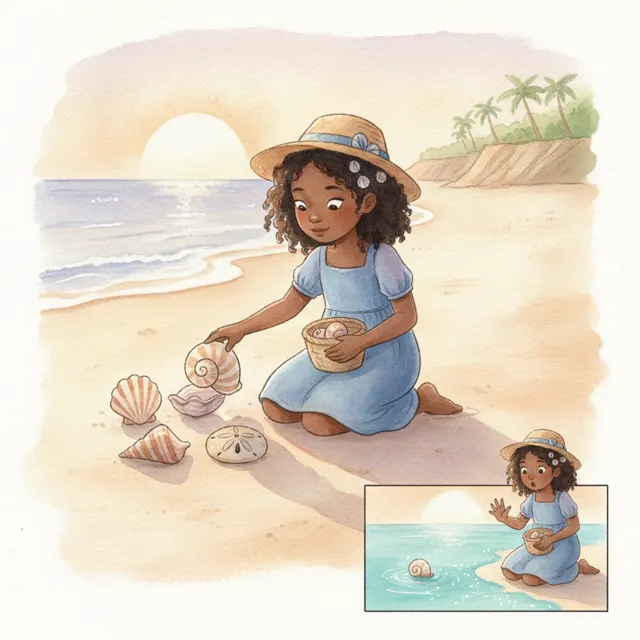
Nia picks up shells at the beach and counts six. When one rolls back into the sea, she counts again and finds only five. Nia learns to count carefully so she knows exactly how many she has.

Moral: Counting carefully helps you know what you have.

Nia walked along the beach, picking up shells. Each one was pretty and different. "One, two, three, four, five, six," she counted. "Six shells!" She put them in her bucket and walked on. But the bucket tipped, and one shell rolled out and splashed back into the sea. "Oh no," said Nia. "Did I lose one?" She sat down and counted her shells. "One, two, three, four, five. Only five! I lost one shell." Nia felt sad. "I should have counted more carefully," she said. Her dad came over. "What happened, Nia?" he asked. "I had six shells, but one rolled back into the sea," said Nia. "Now I have five." "That is okay," said Dad. "The sea will give it back some day. But let us count what you have, so you know for sure." Nia counted again. "One, two, three, four, five. Five shells." "Good," said Dad. "Now you know exactly how many you have. Counting helps you keep track." "You are right," said Nia. "Let me find one more shell so I have six again." She looked around and found a tiny pink shell. "Now I have six!" she said. "One, two, three, four, five, six." "Counting to check is a smart habit," said Dad. Nia smiled and held her six shells tight. She would count them all the way home, so none would roll away again. At home, Nia set the six shells in a neat row on her desk. She counted them one more time, just to be sure.

The Ladybug's Seven Spots

Ages 3-83 minutesself-acceptance
The Ladybug's Seven Spots story for kids illustration

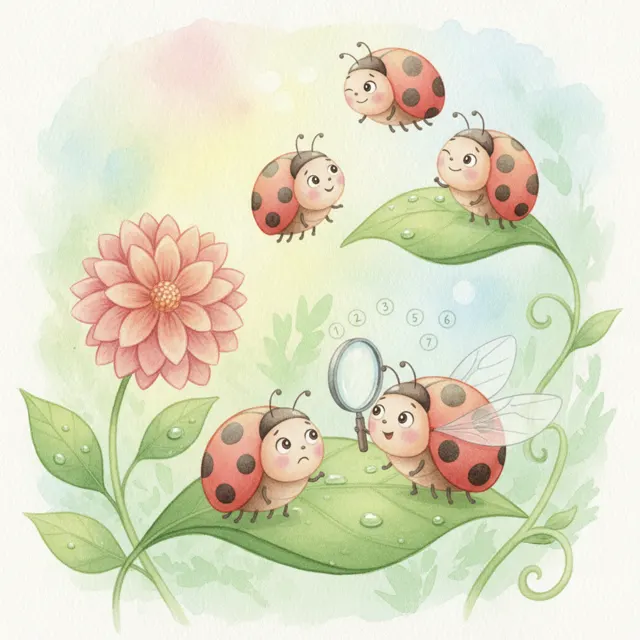
Dot the ladybug worries because she has only six spots, not seven like her friends. She counts again with help and finds the seventh spot hidden on her wing. Dot learns that counting twice helps you be sure.

Moral: Count twice to be sure, and love yourself either way.

Dot was a little red ladybug. All her friends had seven spots. But when Dot counted her spots, she only found six. "One, two, three, four, five, six," she counted. "I only have six spots! I am not like everyone else." Dot felt sad. She walked along a leaf with her head down. A snail saw her. "Why so sad, little bug?" asked the snail. "I have only six spots," said Dot. "Everyone else has seven." "Let me look," said the snail. "Count them again, slowly." Dot counted. "One, two, three, four, five, six. See? Six." "Hmm," said the snail. "Turn around. Let me look at the other side." Dot turned around. The snail looked closely. "There it is!" said the snail. "A seventh spot, hiding on your other wing!" Dot twisted and looked. Sure enough, there was one more spot. "Seven!" she said. "One, two, three, four, five, six, seven. I have seven spots!" "You had seven all along," said the snail. "You just missed one because you did not look at both sides." "Counting twice helps you be sure," said Dot. "Thank you, snail." "You are welcome," said the snail. "And remember, you are special no matter how many spots you have." Dot smiled and flew off to tell her friends. Seven spots, all counted. She was exactly like everyone else. And even if she had not been, she knew she would still be wonderful. That night, Dot counted her spots one last time before bed. Seven, every single one.

One More Penguin

Ages 3-83 minutesteamwork
One More Penguin story for kids illustration

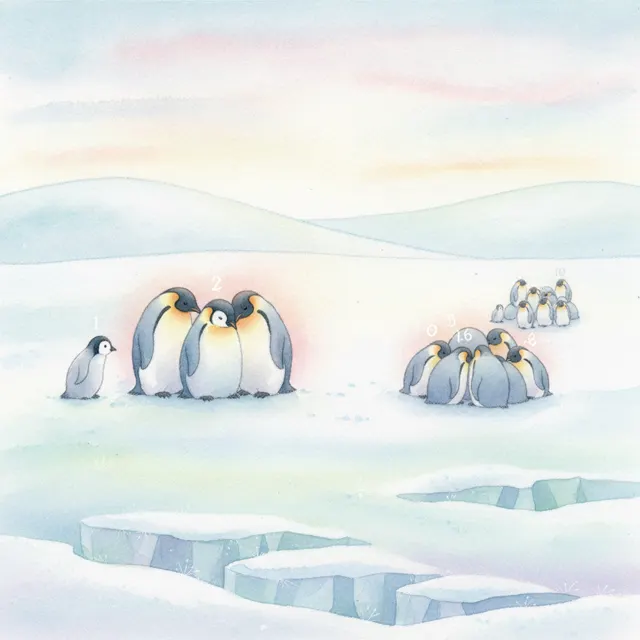
A group of penguins huddles together to stay warm. Each time a new penguin joins, they count again. They learn that adding one makes the number grow, one by one, until there are ten.

Moral: Adding one at a time makes a big group.

On a cold, snowy day, one little penguin stood alone. "I am cold," it said. "I wish I had a friend to huddle with." Along came another penguin. "Now we are two," said the first penguin. "Two is warmer than one." Then another penguin waddled over. "One, two, three," they counted. "Three penguins!" More penguins came. "Four, five, six," they counted. "The more, the warmer." They huddled close together. Each time a new penguin joined, they counted again. "Seven," they said when one more came. "Eight," when another arrived. "Nine," as the group grew big and cozy. At last, a tenth penguin joined the huddle. "One, two, three, four, five, six, seven, eight, nine, ten," they counted. "Ten penguins!" "Look how many we are," said the first penguin. "We started as one, and now we are ten." "Each new friend made us one more," said another. "One more, one more, one more, until ten." "Counting up is easy," said a little penguin. "You just add one each time." The ten penguins huddled tight and warm. The snow fell around them, but they did not feel cold. Ten friends, counted one by one, made the coldest day feel warm. The next day, one more penguin came to the huddle. "Now we are eleven," they said. The penguins laughed. "Tomorrow maybe twelve!" They squeezed closer and counted again, warm as a blanket. The first penguin smiled. Every friend matters, even the very first one. The snow kept falling, but inside the huddle it was toasty and bright.

Twelve Eggs in the Nest

Ages 3-83 minutesconfidence
Twelve Eggs in the Nest story for kids illustration

Hen counts the eggs in her nest and finds twelve. She worries it is too many to keep safe. With help, she counts them into groups of three. Hen learns that counting in groups makes big numbers easy.

Moral: Breaking a big number into small groups makes it easy.

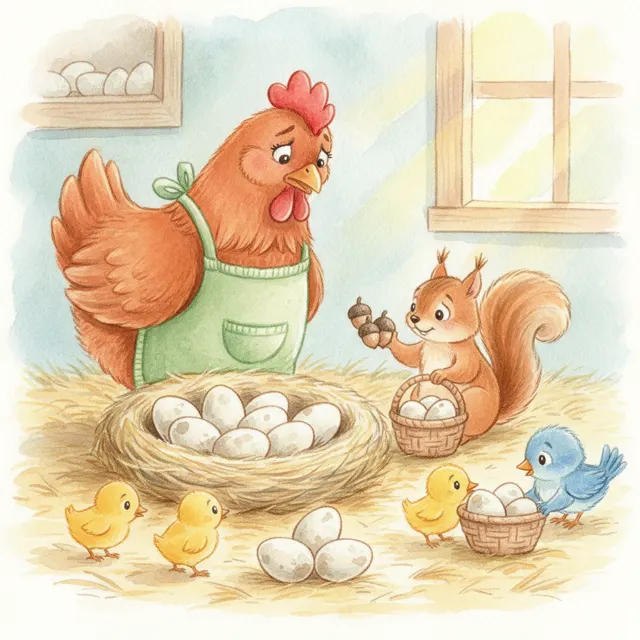
Hen sat on her nest and counted her eggs. "One, two, three, four, five, six, seven, eight, nine, ten, eleven, twelve," she said. "Twelve eggs! That is so many. How will I keep them all safe?" Her friend Duck came by. "What is wrong, Hen?" asked Duck. "I have twelve eggs," said Hen. "Twelve is a big number. I am worried I cannot look after them all." "You can," said Duck. "Let us count them in small groups. That makes big numbers easy." "Groups?" asked Hen. "Yes," said Duck. "Watch. We will put the eggs in groups of three." They made a group of three eggs. Then another group of three. Then another. Then one more. "Now count the groups," said Duck. "One group, two groups, three groups, four groups. Four groups of three eggs." "Four groups of three," said Hen. "And three plus three plus three plus three is twelve!" "You see?" said Duck. "Twelve is not so scary when you break it into small groups." Hen smiled. "I can look after four little groups. That is easy." "And I will help you," said Duck. So Hen and Duck watched over the eggs together, four small groups of three. When the chicks hatched, Hen counted them the same way. Four groups of three, twelve happy chicks. "Counting in groups helped me," said Hen. "Big numbers are just small numbers put together." Hen tucked her wing around the four little groups. Twelve eggs, safe and sound. Soon, twelve fluffy chicks would say hello to the world.

Frequently Asked Questions

Turn Your Child Into the Hero of Their Own Story

Upload their photo and watch as AI creates a beautiful, personalized storybook with illustrations that look just like them. From $5.99/month.

✨ Make Your Child the Hero

Plans from $5.99/month