Phonics Stories for Kids

Letter sounds come alive as your child meets a shy S, a patient P, and friends who find their voices.

✨ Make Your Child the Hero

Learning to read starts with small sounds. The hiss of an S, the puff of a P, the hum of an M, each one is a tiny building block that later becomes words and stories. These five phonics tales turn letter sounds into characters your child can cheer for. A shy S finds her hiss, a patient P waits for the perfect moment to pop, and friends practice sounds until reading feels easy and fun. Each story is short, warm, and made for reading aloud. With CreateStory.ai, you can make it personal. Upload a photo and your child becomes the hero of their own phonics story.

Why do phonics stories help children learn to read?

Phonics stories group words by sound, like cat and bat or ship and shop. Hearing the same sound over and over helps a child connect letters to the sounds they make.

This approach really works. The National Reading Panel found that first graders who learned phonics in a clear, step by step way could sound out words better, spell better, and understand what they read better than children who did not.

How can parents practice phonics sounds at home?

Pick one sound at a time, like the short a sound, and find it in words around the house. Say the sounds slowly with your child, then blend them together into a word.

Keep practice playful. Clap out the sounds in a word, or make up a silly rhyme. A few fun minutes each day builds strong reading habits without any pressure.

Sample Stories

Read these stories, then create a personalized version where your child is the hero

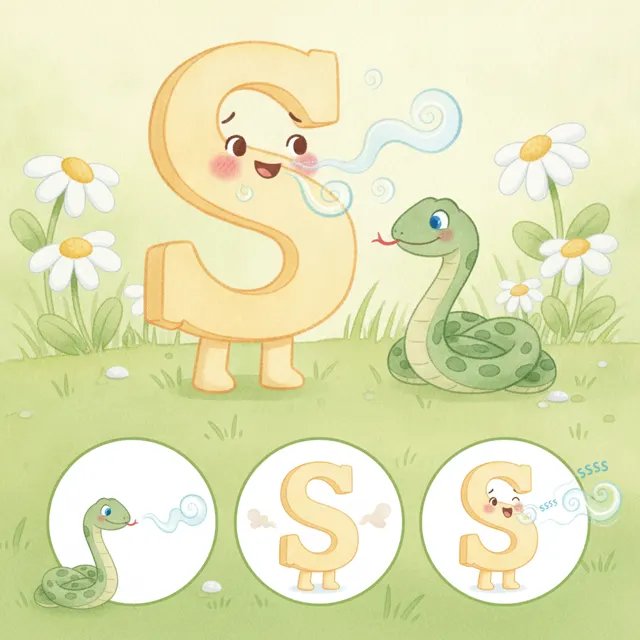
The S Who Lost Her Hiss
Ages 3-84 minpersistence
The S Who Lost Her Hiss story for kids illustration

Sally the letter S has lost her hiss. Every time she tries to say her sound, nothing comes out. With help from her friend the snake and lots of patient practice, she finds her sss sound again.

Moral: When something feels hard, patient practice helps you find your way.

Sally was the letter S, and her job was to hiss. Ssss, like a snake in the grass, like water in a hot pan, like the wind slipping through the trees. But one morning, Sally woke up and her hiss was gone. She opened her mouth to say ssss, but only a puff of air came out. "Oh no," she said. "I have lost my hiss!" She tried again. Nothing. She tried harder. Still nothing. She rushed to her friends for help. B tried to help her boom. "Buh buh," said B. "Maybe a boom will bring it back." But Sally only coughed. T tapped the table. "Tuh tuh tuh," said T. "Maybe a tap will shake it loose." But Sally's hiss stayed hidden. M hummed a soft song. "Mmmm," said M. "Maybe a hum will warm it up." But still, no hiss came. "I will never say my sound again," Sally sighed, and her shoulders slumped. That is when Sammy the snake slithered over. "Sssss," said Sammy, slow and soft. "Can you help me find my hiss?" asked Sally. "Of course," said Sammy. "The sound is still inside you. You just need to practice. Watch me." Sammy showed her how to curl her tongue and let the air slide out slowly. "Sssss." Sally watched closely. Then she tried. "Sss," she said, just a tiny bit. "There it is!" cried Sammy. "Try again." "Ssss," said Sally, a little stronger. "Sssss!" She practiced all afternoon, and with each try her hiss grew louder and clearer. By the end of the day, she could hiss like the very best snake in the grass. "I found it!" she cheered. "I found my hiss!" Sally learned that when something feels lost, patient practice helps you find it again.
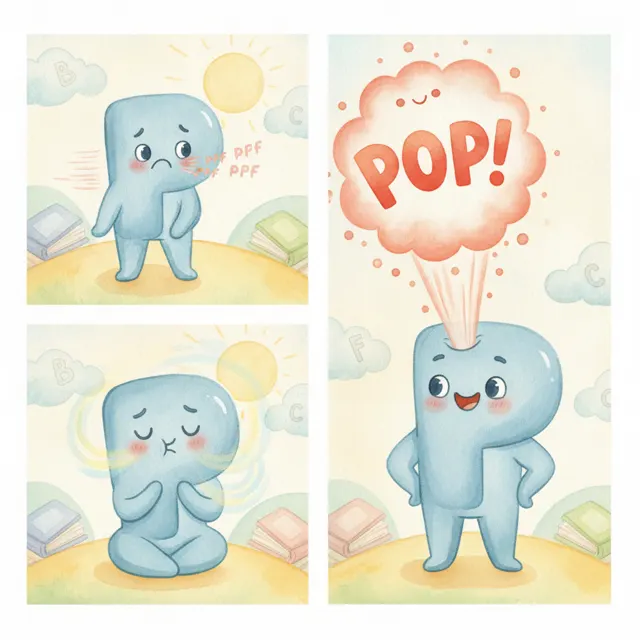

The Patient Letter P

Ages 3-83 minpatience
The Patient Letter P story for kids illustration

Percy the letter P loves to pop, but he has to wait for the perfect moment to make his sound. When he rushes, his pops come out too soft. When he waits and breathes, his P pops just right.

Moral: Taking your time and waiting makes your best work shine.

Percy was the letter P, and his sound was a pop. Puh, puh, puh, like popcorn in a pan, like a bubble bursting, like a cork flying out of a bottle. But Percy had a problem. He loved to rush. He would open his mouth and try to pop too fast, and his sound would come out all wrong. "Puh," he would say, but it was soft and weak, more like a tired sigh. "Popcorn," he would try, and it came out whispery and small. "Pizza," he tried, and it sounded like a puff of dust. "What is wrong with me?" Percy grumbled. "Everyone else's sound is strong and clear, but mine just flops." His friend Pam the pig waddled over. "You are rushing," she said. "A good P needs a little patience. Fill your mouth with air, hold it for a moment, and then let it pop." Percy frowned. "But I want it to pop right now." "Good sounds take their time," said Pam. "Try it with me. Breathe in, hold, and pop." Percy took a deep breath. He held the air in his mouth. He waited. One, two, three. Then he let it go. "PUH!" The sound popped out, bright and strong, just like a bubble bursting. "I did it!" Percy shouted, so excited he almost popped too fast again. But he remembered to slow down. "Puh, puh, puh," he practiced, and each pop was stronger than the last. He said "pancake" and it came out perfect. He said "puppy" and it came out perfect. By the end of the day, Percy could pop better than anyone. "Patience makes the perfect P," he said. And he never rushed his sound again.

The Two Letters Who Became Friends

Ages 3-84 minteamwork
The Two Letters Who Became Friends story for kids illustration

M and A each make their own sound, but alone they cannot say much. When they sit side by side and blend their sounds together, they discover that letters, like friends, are stronger together.

Moral: Letters, like friends, are stronger when they work together.

Mia was the letter M, and her sound was a warm hum. Mmmm, like a sleepy bee, like a full tummy after a good meal. Alan was the letter A, and his sound was a bright open cry. Ahhh, like a wide happy smile, like the sun coming up. Mia and Alan lived next to each other on the alphabet shelf, but they never talked. "I make my sound," said Mia. "And I make mine," said Alan. "We do not need each other." But one day, a little word came along. It wanted to be spoken, but it was too small and too quiet on its own. "Can you help me?" it asked. Mia tried. "Mmmm," she hummed. It was not quite right. Alan tried. "Ahhh," he cried. Still not right. The little word looked sad. "Maybe try together," it said. Mia looked at Alan. Alan looked at Mia. They sat side by side, and slowly, they blended their sounds. "Mmmm-ahhh," they said. "Mmm-ahhh. Ma!" The sound came out warm and clear. "It worked!" they shouted. "Together we made a word!" They tried more. "Mmmm-ahhh-tuh. Mat!" They blended and blended, and each new word made them grin wider. Soon they were making words all afternoon, and the other letters came over to listen. "You two are a team now," said T. "From this day on, letters who blend their sounds can make any word they like." Mia and Alan sat side by side on the shelf, blending their sounds into new words every single day. "Letters are like friends," said Mia. "They are stronger together."

The Quiet Q Who Found Her Voice

Ages 3-84 minconfidence
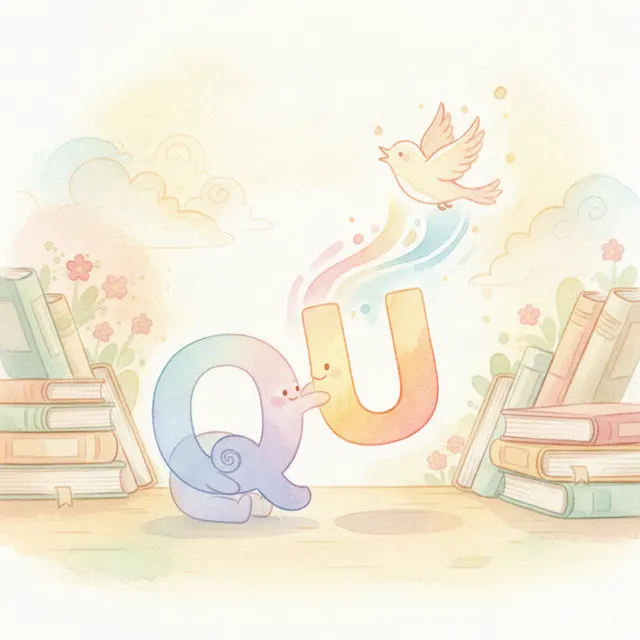
The Quiet Q Who Found Her Voice story for kids illustration

Quincy the letter Q is the quietest letter in the alphabet. She feels like she can never make a sound on her own, until she discovers that pairing up with U gives her a voice worth using.

Moral: Even the quietest voice is worth hearing, especially with a friend beside you.

Quincy was the letter Q, and she was the quietest letter in the whole alphabet. Every letter around her made a big, bold sound. B boomed. T tapped. R rolled. But Quincy just stood there, small and still, and she could not make a sound on her own. "I am no good at this," she whispered. "Everyone else has a voice but me." She tried to copy the others. She tried to boom like B, but nothing came. She tried to tap like T, but no sound followed. She felt smaller and quieter than ever. The other letters tried to cheer her up. "You just need a friend," said U, the letter who lived right next door. "Come stand beside me, and together we will make a sound." Quincy was nervous. "What if it does not work?" she asked. "What if my sound stays quiet forever?" "It will work," said U. "Just stand beside me and try." So Quincy shuffled over and stood next to U. "Now say qu," said U. "Qu," whispered Quincy. "Louder," said U. "Qu," said Quincy. "Qu, qu, qu!" "There it is!" U cheered. "You have a voice!" Quincy could not believe it. Qu, qu, qu, she said, and the sound rolled out strong and sure, like a little duck quacking, like the first note of a song. "I have a voice!" she shouted. "I have a voice after all!" From that day on, Quincy never stood alone. She and U were a team, and together they started a hundred words, from quiet to quick to question. "Even the quietest voice," said Quincy, "is worth hearing when you find your friend."

The Rhyming Race

Ages 3-85 mincuriosity
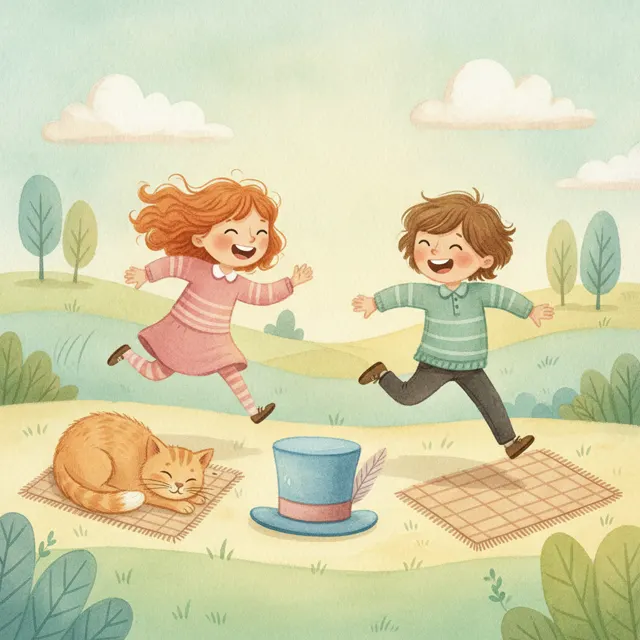
The Rhyming Race story for kids illustration

Dot and her friend Rob love to rhyme. One day they challenge each other to a rhyming race, and as they hop from cat to hat to mat, they discover that words that sound alike make reading feel like a game.

Moral: Words that sound alike turn reading into a game you can play with a friend.

Dot loved words that rhymed. Cat, hat, mat. Sun, run, fun. She said them over and over until they bounced like a little song. One morning, her friend Rob came over with a big grin. "I bet I can rhyme more words than you," he said. "Oh really?" said Dot, her eyes lighting up. "You are on. It is a rhyming race." Rob went first. "Dog," he said. "Frog," Dot shot back. "Log," said Rob. "Fog," said Dot. "Jog!" they shouted together, and they both burst out laughing. Then Dot took her turn. "Ball," she said. "Wall," said Rob. "Tall," said Dot. "Small," said Rob. "Fall!" they cried together, and they laughed so hard they had to sit down. The rhyming race went on all afternoon. They rhymed while they ate lunch, with "cake" and "bake" and "snake." They rhymed while they cleaned up, with "toy" and "boy" and "joy." They rhymed while they walked home, with "tree" and "bee" and "key." They rhymed about the zoo, with "moo" and "shoe" and "glue." They even rhymed about the moon, with "soon" and "spoon" and "balloon." By the end of the day, they had rhymed so many words that they could not count them all. "You know what?" said Dot, catching her breath. "Rhyming is not really a race. It is a game, and it is more fun when we play together." Rob nodded. "Words that sound alike are the best kind of words." And they rhymed all the way home, from "night" to "light" to "right."

The Sh Sound That Would Not Hush

Ages 3-83 minutespatience
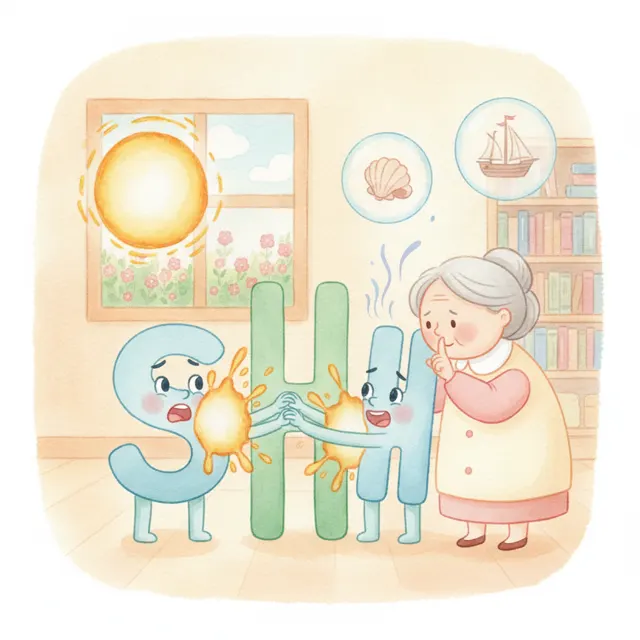
The Sh Sound That Would Not Hush story for kids illustration

S and H try to make the quiet sh sound, but it always comes out too loud. A patient teacher shows them to press together and whisper. Soon they make the soft sh sound in words like shell and ship.

Moral: Sometimes soft and slow works best.

S and H were two letters who wanted to make a special sound together. The sound was "sh." It was a soft, quiet sound, like the hush of a wave. "Let us try," said S. "Ready? Shhh." But S was too loud. "SSSSS," it hissed, and H said "HUH." The sound came out all wrong. "That is not sh," said H. "It sounds like a snake and a sneeze." They tried again. S hissed, H huffed. Still no sh. "I do not think we can do it," said S. "Maybe sh is not for us." Their teacher, Mrs. Owl, flew down. "You are trying too hard," she said. "The sh sound is soft. You must press together and whisper." "Whisper?" asked H. "Yes," said Mrs. Owl. "Put S and H close. Now let the air out very gently. Shhh." S and H pressed close together. They let the air out soft and slow. "Shhh," they whispered. "You did it!" said Mrs. Owl. "That is the sh sound." S and H were so happy. They practiced all day. They made "shell" and "ship" and "shoes." "Sh is the sound of quiet things," said S. "Like the sea on the sand." "And a whisper," said H. "Shhh." They never shouted the sound again. They whispered it, soft and sweet. And every word they joined sounded just right. Every time the sea rolled up to the shore, S and H listened. Shhh, said the waves. Shhh, said S and H right back. They smiled at each other, quiet and proud.

The Silent E That Spoke Up

Ages 3-83 minutesconfidence
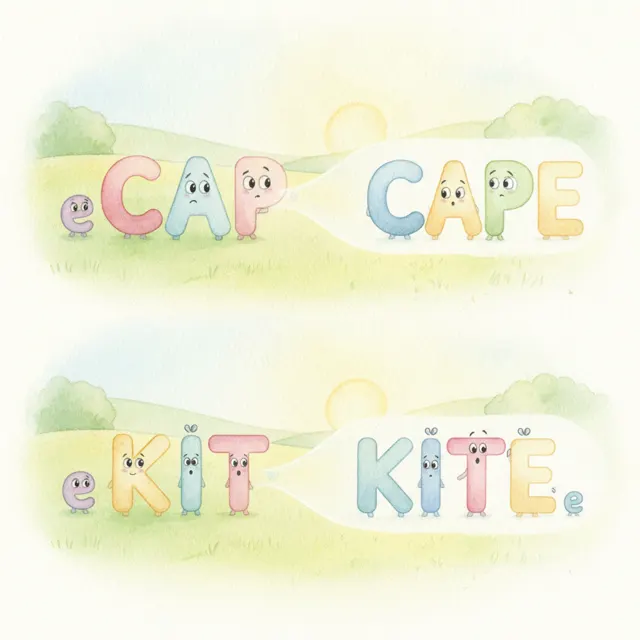
The Silent E That Spoke Up story for kids illustration

E at the end of a word never says a sound. The other letters think E does nothing. But E shows them that one silent letter can turn cap into cape and kit into kite.

Moral: Even a quiet voice can make a big change.

E stood at the end of the word "cap." It did not make a sound. It just stood there, quiet. "What do you even do?" asked C. "You never say anything." "Yeah," said A. "You just sit at the end and watch." "Maybe you are not needed," said P. "Maybe the word is fine without you." E felt small. It did not say a word, because silent E never does. One day, the word needed to change. "Cap" was a small hat. But the story needed a cape, a long flowing cape. "We cannot say cape," said C. "A says ah. We can only say cap." "Let me help," whispered E. "Put me at the end. I will make A say its name." "You?" said A. "But you are silent. How can you help?" "Watch," said E. "Add me to the end, and A will say its own name. A says ayy." The letters lined up. C, A, P, and then silent E at the end. The word came out "cape." "It worked!" said P. "A said its name!" "And I stayed silent," said E. "But I still did my job." The letters were amazed. They made "kit" into "kite" and "hop" into "hope." Every time, silent E made the vowel say its name. "You are not useless," said A. "You are the most powerful quiet letter of all." E smiled without a sound. It did not need to speak to be heard. It changed words just by standing there.

Ned's Red Bed

Ages 3-83 minutesrhyming
Ned's Red Bed story for kids illustration

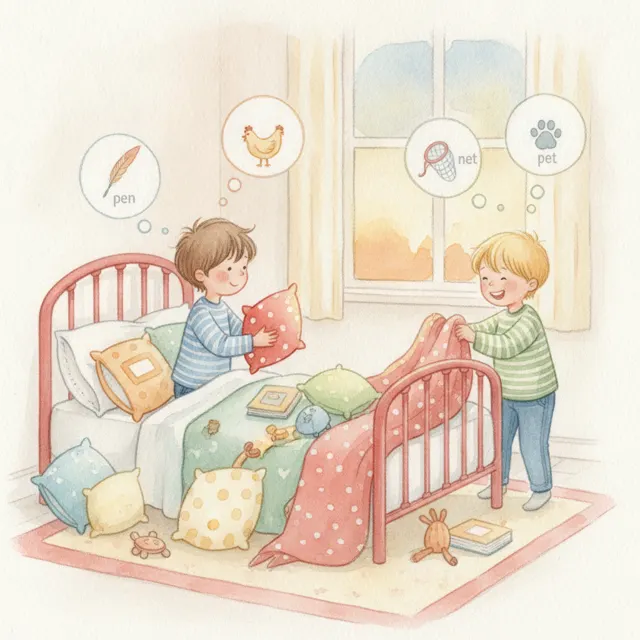
Ned has a red bed, but it is a big mess. His friend Ted helps him clean it up. As they work, they say the short E words out loud. Ned learns that rhyming words help you read and remember.

Moral: Rhyming words make reading fun and easy.

Ned had a red bed. But the bed was a big mess. Socks and books and toys were everywhere. "This bed is a mess," said Ned. "I cannot sleep here." His friend Ted came to visit. "Let us clean it up," said Ted. "We can say the short E words as we work." "Short E words?" asked Ned. "Yes," said Ted. "Bed, red, Ned, Ted. They all rhyme and have the short E sound. Eh, eh, eh." Ned said it too. "Bed, red, Ned, Ted. Eh, eh, eh." They picked up the socks. "Socks on the bed? No," said Ned. "Put them in the bin." Ted picked up a bell. "Bell," he said. "Eh. Bell has short E too." "Bell, bed, red, Ned," said Ned. "I am starting to hear it." They found a pen and a jet toy. "Pen and jet," said Ted. "Both have the short E sound." "Pen, jet, bell, bed," said Ned. "This is fun!" Soon the bed was clean and neat. The blanket was smooth and the pillow was soft. "Your red bed is ready," said Ted. "Thank you, Ted," said Ned. "And thank you for teaching me the short E sound." "You are welcome," said Ted. "Now let us test it. Tell me a short E word." Ned thought. "Egg!" he said. "Egg has the short E sound. Eh!" "Perfect!" said Ted. "You are a short E star." Ned jumped into his clean red bed. "Bed, Ted, egg, pen," he said. "Eh, eh, eh." And he fell asleep smiling.

The Fox on the Box

Ages 3-83 minutespractice
The Fox on the Box story for kids illustration

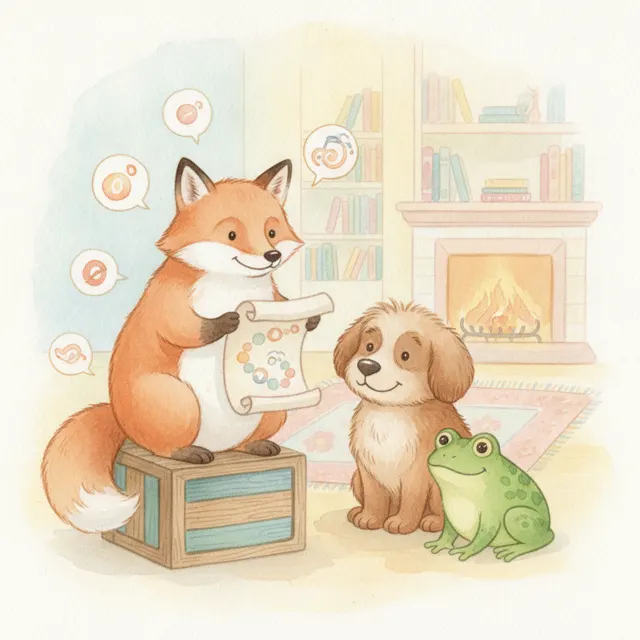
Fox sits on a box and says the short O words. He meets a dog and a frog. Together they blend the sounds and read a whole row of rhyming words.

Moral: Blending sounds helps you read new words.

Fox sat on a big brown box. "Fox on a box," he said. "Ox. The short O sound. Ah, ah, ah." Along came Dog. "What are you doing?" asked Dog. "I am saying short O words," said Fox. "Fox, box. They rhyme. Ah, ah, ah." "I want to try," said Dog. "Dog! Dog has the short O sound too. Ah." "Yes!" said Fox. "Fox, box, dog. We all have the short O sound." Then a frog hopped over. "Ribbit," said Frog. "Frog! Ah. Frog has the short O sound." "Fox, box, dog, frog," said Fox. "A whole family of short O words!" "Let us make a rhyme," said Dog. "The dog and the frog sat on a log." "Log!" said Frog. "Log has the short O sound. Ah." "The fox on the box, the dog and the frog, they all sat down on a big brown log," sang Fox. They all laughed. Then they saw a spot of mud. "Hop!" said Frog. "Hop has the short O sound." They played all day, saying short O words. Top, pot, dot, not. Every word had the same round sound. "Blending sounds helps us read," said Fox. "F plus ox is fox. D plus og is dog." "We are reading!" said Dog. "And it is so much fun." The fox, the dog, and the frog sat on the log until the sun went down. Ah, ah, ah, they hummed, happy as could be. That night, Fox told the story to his family. He read every short O word all by himself.

The Two O's Make a Long Sound

Ages 3-83 minutesteamwork
The Two O's Make a Long Sound story for kids illustration

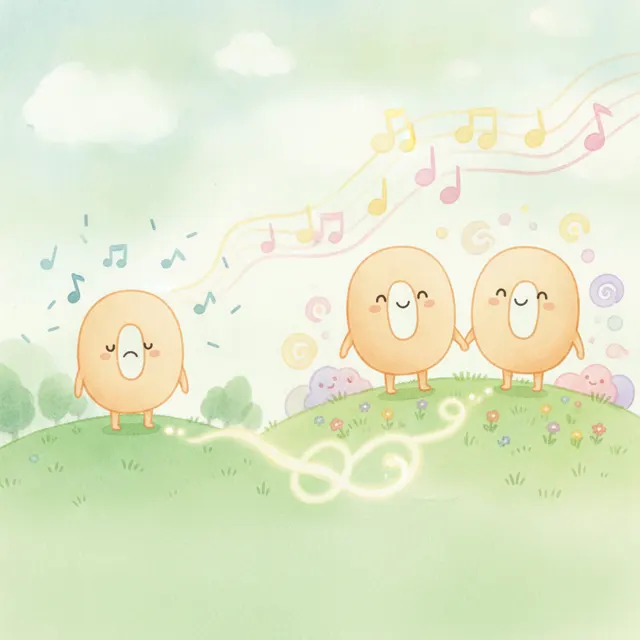
One O is lonely and makes only a short sound. When two O's stand together, they make a long oo sound. The letters learn that some friends are better side by side.

Moral: Two together can be stronger than one alone.

O was a round letter. Alone, it made a short sound. "Ah," it said, like in the word "hot." One day, O met another O. They stood side by side. O and O. OO. "What sound do we make now?" asked the first O. "Let us find out," said the second O. They pressed together. "Oooo," they sang. It was a long, round sound. "That is new!" said the first O. "Together we make a long sound." A little kid was trying to read the word "moon." "M, then O, O, then N," said the kid. "M...oo...n. Moon!" "We helped make moon!" said the O's. "Oooo, like the moon in the sky." Then they helped with "food." "F...oo...d. Food!" said the kid. "And spoon," said the O's. "Sp...oo...n. Spoon!" The two O's were so proud. Alone, each O made a short sound. But together, they made a long, smooth "oo" sound. "Some letters are better together," said the first O. "We should stand side by side more often," said the second O. So the two O's looked for words that needed them. They found "boot" and "zoo" and "roof." Every word sounded better with the two O's in it. The other letters saw how happy they were. "Two can make one long, strong sound," they said. "That is a good lesson for all of us." The next day, the two O's made a new word. They helped a kid read the word school. The kid cheered. "Two O's together make a wonderful sound."

Chick's Chirping Ch Sound

Ages 3-83 minuteskindness
Chick's Chirping Ch Sound story for kids illustration

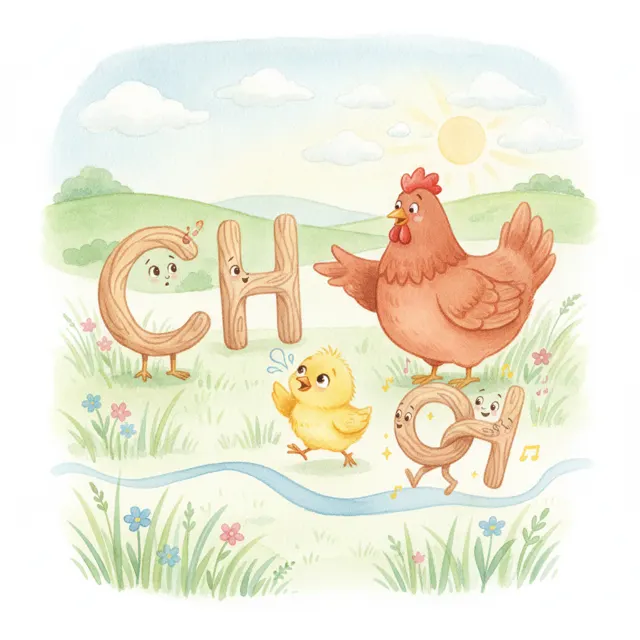
Chick wants to chirp, but C and H do not know how to make the ch sound. A friendly hen teaches them to join together. Soon Chick chirps and chips all day long.

Moral: Learning together makes hard things fun.

Chick was a little bird who wanted to chirp. But the letters in "chick" did not know the ch sound. C said, "I make the kuh sound. Kuh, kuh, kuh." H said, "I make the huh sound. Huh, huh, huh." "But together we need to make ch," said Chick. "Ch, ch, ch. Like a train." "How?" asked C. "We have never made that sound." A friendly hen came over. "I can teach you," said the hen. "Press your sounds together, quick and soft. C and H, C and H. Ch, ch, ch." C and H pressed together. "Ch, ch, ch," they said. "You did it!" said Chick. "Now I can chirp. Chirp, chirp!" Chick was so happy. He chirped all day. "Chirp, chirp, chip, chop!" "Slow down," said the hen. "You can make many ch words. Chair, cheese, chicken." "Cheese!" said Chick. "I love cheese. Ch, ch, cheese." "And chocolate," said the hen. "Chocolate!" said Chick. "Ch, ch, chocolate. This is the best sound ever." C and H smiled at each other. "Who knew we could make such a fun sound together?" said C. "We make a great team," said H. Chick chirped all the way home. "Ch, ch, ch. Chirp, chirp, chirp." The whole farm could hear him. From that day on, C and H were best friends. When they were together, they always made the happy ch sound, just like a little train. Chick's mother heard all the chirping and smiled. "That is the sweetest sound on the whole farm," she said.

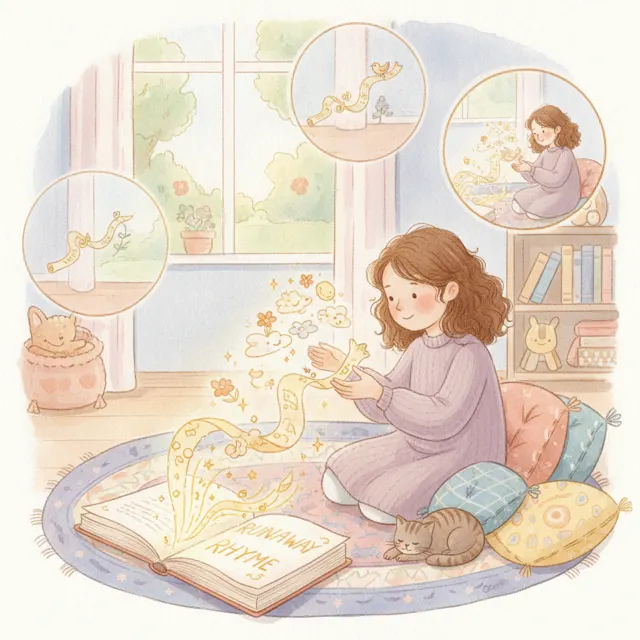
The Runaway Rhyme

Ages 3-83 minutespersistence
The Runaway Rhyme story for kids illustration

A little rhyme runs away from a book because it is afraid of being read wrong. A girl catches it gently and reads it slowly. The rhyme learns that practice makes reading a joy.

Moral: Practice makes reading easier and more fun.

One night, a little rhyme jumped right out of a book. "Wait!" called the book. "Where are you going?" "I am scared," said the rhyme. "What if a child reads me wrong? I will be all mixed up." The rhyme ran across the floor and hid under a chair. A girl named June saw it. "Hello there," said June. "Are you lost?" "I am a rhyme," it said. "Cat and hat. Mat and bat. But I am afraid you will read me wrong." "I will read you slowly," said June. "Slow and careful. Will you come out?" The rhyme peeked out. "Do you promise?" "I promise," said June. The rhyme hopped onto June's hand. She opened the book and read. "Cat, hat," she said. "Mat, bat. They rhyme. At, at, at." "You read them right!" said the rhyme. "Again, please." June read again, a little faster. "Cat and hat sat on a mat. A bat came and said hello to that." "You are a wonderful reader," said the rhyme. "I was scared for nothing." "Everyone makes mistakes at first," said June. "But you keep going, and reading gets easier and more fun." The rhyme smiled. It hopped back into the book, right where it belonged. "Will you read me again tomorrow?" it asked. "Every night," said June. And she did. The rhyme was never afraid again, because it knew a patient reader would always say it just right. The rhyme slept snug inside its page that night. It was home, and it was not afraid any more.

Frequently Asked Questions

Turn Your Child Into the Hero of Their Own Story

Upload their photo and watch as AI creates a beautiful, personalized storybook with illustrations that look just like them. From $5.99/month.

✨ Make Your Child the Hero

Plans from $5.99/month