Doctor Stories for Kids

Follow caring doctors who listen carefully, help patients feel better, and show kids that healing starts with kindness, patience, and a gentle heart.

โœจ Make Your Child the Hero

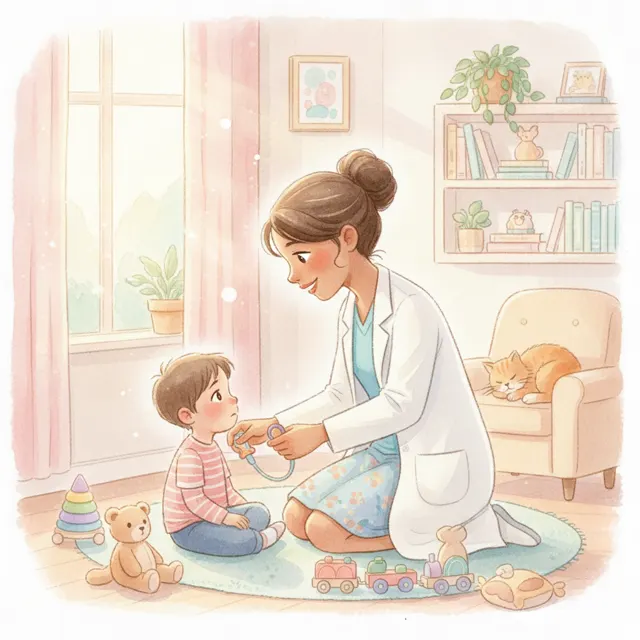
Doctors are the heroes kids meet in real life, so it's no surprise they love stories about them. From a friendly stethoscope checkup to helping a stuffed animal feel better, doctor stories give kids a gentle way to understand what happens at a clinic while turning brave helpers into everyday champions. These tales spark empathy, reduce worry about visits, and show little ones that caring for others is one of the bravest things a person can do. With CreateStory.ai, you can create personalized doctor stories where your child becomes the hero, wearing the white coat and helping every patient feel better.

How Many Doctors Help People in the United States?

There are 1,082,187 licensed doctors in the United States, according to the Federation of State Medical Boards (FSMB). That is more than one million people who spend their days helping others feel better, from tiny babies to grandmas and grandpas.

Doctors do many different jobs. Some take care of kids and give checkups. Some fix broken bones. And some help people stay well before they ever get sick. Every doctor works to keep people healthy and strong all year long.

How Often Should a Child See the Doctor?

The American Academy of Pediatrics says children should see the doctor for a checkup once a year starting at age three (AAP). These yearly visits help the doctor watch how a child grows taller and stays healthy and strong every single year.

A checkup is a visit when a child feels fine. The doctor checks how the child is growing and answers any questions the family has. It is a good time to talk about food, sleep, play, and any question at all.

Sample Stories

Read these stories, then create a personalized version where your child is the hero

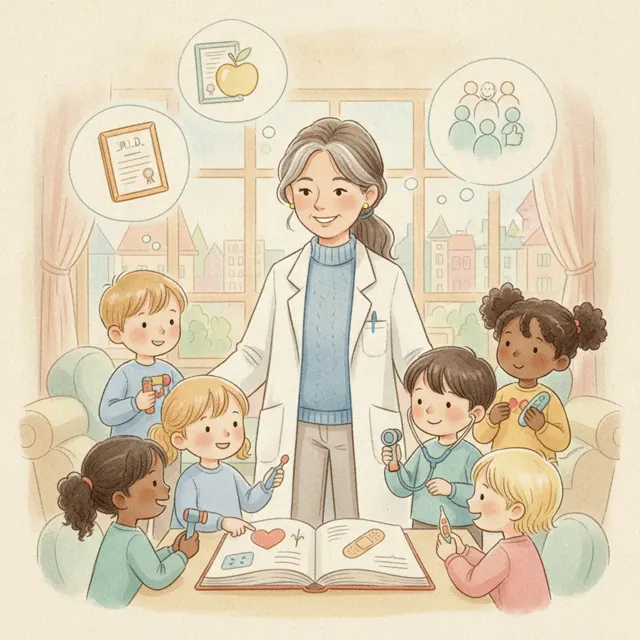
Dr. Nina Listens

Ages 3-84 minlistening
Dr. Nina Listens story for kids illustration

Dr. Nina had been a doctor for fifteen years, and she believed the most important part of her job...

Moral: Listening carefully is the first step to helping.

Dr. Nina had been a doctor for fifteen years, and she believed the most important part of her job happened before any examination. It happened when she listened. Six-year-old Ben had come with his mom for a checkup. He'd been having stomachaches that nobody could explain. He'd had three tests, all normal. Dr. Nina sat down at Ben's height on a low stool. "Tell me about the stomachaches," she said. "When do they happen?" "In the mornings," Ben said. "Before school." "Any other time?" "Sometimes on Sundays." "What's different about Sunday mornings?" Ben's mom started to answer but Dr. Nina gently raised one finger: let him talk. Ben thought. "Sundays are when we go to Gran's. I love Gran. But the dog there barks a lot and it scares me." "And school?" Dr. Nina asked. Ben looked at his shoes. "There's a kid who says mean things on the bus." His mom's face changed. She hadn't known. Dr. Nina talked with both of them gently for twenty minutes. She explained that when children feel worried or scared, their stomachs often hurt because the body and the feelings are connected. She wrote a referral to the school counselor. She suggested talking to the bus driver. She suggested maybe fewer Sunday visits with the barking dog until Ben felt more settled. "Is Ben sick?" his mom asked. "His stomach is telling him that something is bothering him," Dr. Nina said. "Now we know what to listen to." Ben's stomachaches got better within a month. He told his teacher about the bus, and things improved. He still loved Gran, just from a comfortable distance from the dog. He told people for years that the doctor who helped him most was the one who asked him what was wrong and then waited to hear.
A Visit to the Doctor

Ages 3-84 minfacing fears
A Visit to the Doctor story for kids illustration

Sam was very afraid of the doctor's office. The smell, the sound, the instruments that looked...

Moral: It's okay to be scared. Being honest about your fear helps others help you.

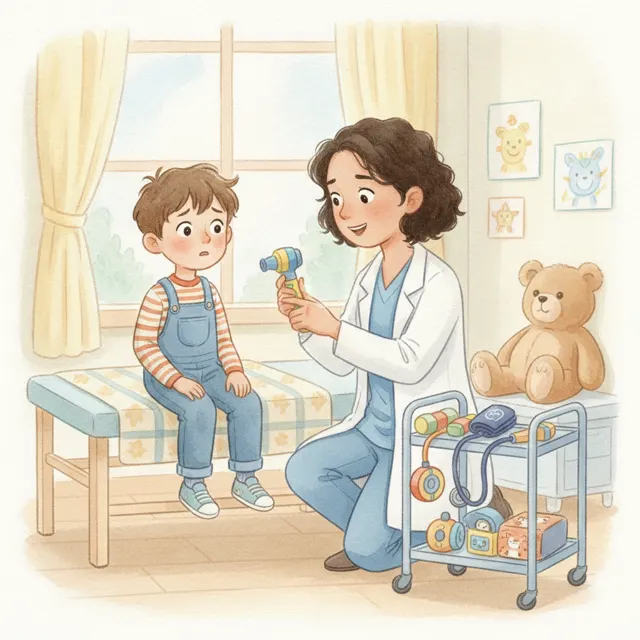
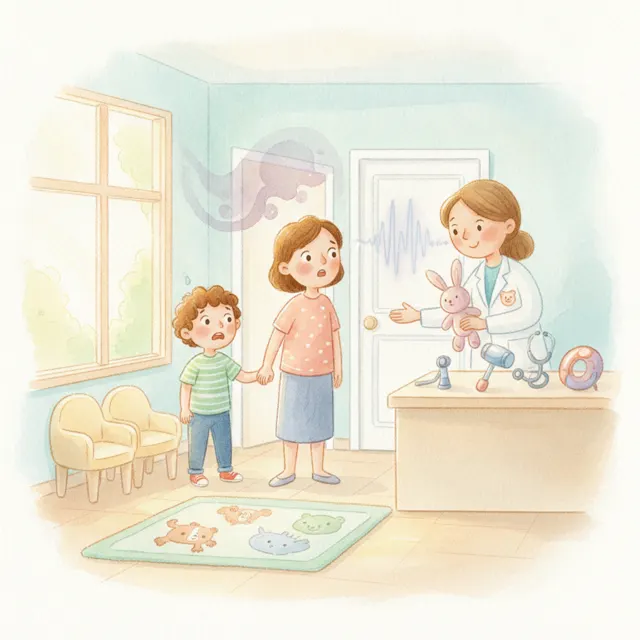
Sam was very afraid of the doctor's office. The smell, the sound, the instruments that looked complicated: all of it made his heart beat fast before he even walked through the door. He hadn't told anyone this. He was seven and he felt like being scared of the doctor was babyish. But at his next checkup, Dr. James noticed that Sam's hands were in fists and he was staring at the floor. "Are you nervous?" Dr. James asked. Sam started to say no. Then he looked up. Dr. James was looking at him like it would be okay to tell the truth. "Yes," Sam said. "Thank you for telling me," Dr. James said. "A lot of people are. Even some of my adult patients. Can I show you the things I'm going to use today before I use them?" He picked up the otoscope, the light used to look in ears. He showed Sam how it turned on, what it did, and what Sam would feel: "Just a little pressure, and bright light." He showed Sam the stethoscope. "Cold metal on your chest. That's it. Want to hear your own heartbeat?" He put the stethoscope in Sam's ears and held the other end to Sam's chest. Sam heard his own heart beating: clear, steady, real. "Wow," Sam said. By the end of the checkup, Sam had held every instrument except the needle, which he still wasn't keen on. "You're still a little scared," Dr. James said at the end. "Yes," Sam said. "But less." "That's the idea," Dr. James said. "Next time, even less. And by the time you're grown up, you'll probably bring your own kids here and tell them it's fine." Sam thought about that. He thought it might actually be true.

The Doctor Who Made House Calls

Ages 3-84 minkindness
The Doctor Who Made House Calls story for kids illustration

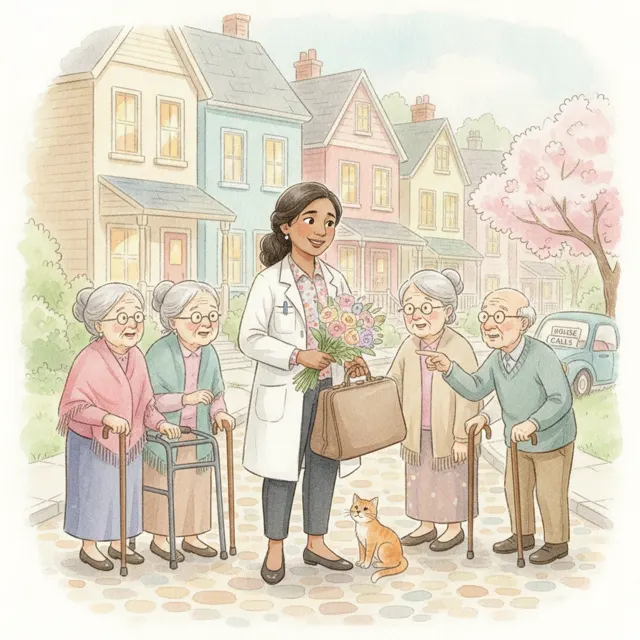
Dr. Amara worked at the community clinic in a neighborhood where many older residents had trouble...

Moral: Going the extra mile for others shows the deepest kind of care.

Dr. Amara worked at the community clinic in a neighborhood where many older residents had trouble getting to the clinic. Some had no cars. Some had trouble with stairs. Some were simply too unwell to make the journey. One rainy Tuesday afternoon, after her scheduled patients were done, Dr. Amara put her bag in her car. Her nurse, Petra, found her loading the car. "House calls?" Petra asked. "Four patients who haven't come in for their follow-ups. I'm going to them." Petra got her coat. The first patient was Mr. Santos, eighty-two, whose blood pressure medication needed adjusting. He'd been managing his steps badly and hadn't wanted to ask for help getting to the clinic. The second was Mrs. Liu, whose diabetes management had slipped since her daughter moved away. She needed a full review and support. The third was a young mother with three children who'd been managing a persistent cough for two weeks, treating it herself with things from the pharmacy because bringing the children on the bus to the clinic was too much. The fourth was old Mr. Dayo, who was fine physically but hadn't spoken to anyone in several days and had called the clinic just to hear a voice. Dr. Amara sat with each of them for as long as they needed. She adjusted medications, answered questions, and at Mr. Dayo's apartment she stayed for a cup of tea. On the drive back Petra said, "You didn't have to do all of that." "I know," Dr. Amara said. "But you did." "They're my patients," she said simply. "A doctor doesn't just fix the body in the room. You follow where the need is." Petra looked at her. "I want to do house calls too," she said. "Good," said Dr. Amara. "Same time next Tuesday."

Learning to Be a Doctor

Ages 3-84 minlearning
Learning to Be a Doctor story for kids illustration

Dr. Phoebe had been a doctor for twenty-five years. She was an expert. Everyone said so. Her...

Moral: Learning never really stops. Staying curious makes you better at everything.

Dr. Phoebe had been a doctor for twenty-five years. She was an expert. Everyone said so. Her patients trusted her completely. But one Tuesday a new young doctor, fresh from school, came to the clinic for her first day. Her name was Tia, and she was nervous and full of the newest research and a little bit sure she knew things the older doctors didn't. Phoebe took Tia under her supervision. That week Tia mentioned a new study on pediatric asthma management. She was right that Phoebe hadn't read it. She was also a little condescending about it. Phoebe read the study. It was good. She updated her approach. "Thank you for mentioning this," she told Tia. "I learn things from new doctors every year." Tia stared. "Really?" "Medicine changes fast," Phoebe said. "The day I stop learning from new research, new colleagues, or my patients themselves is the day I start falling behind." She showed Tia something in return: how to have a conversation with a frightened elderly patient, the kind that required patience and a very particular gentleness, which was not in any study but lived in twenty-five years of sitting with people. They taught each other for the whole year of Tia's rotation. At the end, Tia gave Phoebe a small card. "Thank you for not making me feel stupid," it said. "And for keeping learning yourself. That made me want to." Phoebe kept the card on her desk. Learning together was, she had always believed, better than learning alone. Every teacher had something to learn from their student, if they were willing to look.

The Night the Doctor Stayed

Ages 3-84 mincompassion
The Night the Doctor Stayed story for kids illustration

Dr. Marcus's shift had officially ended two hours ago. He'd signed off, said good night, and was...

Moral: Compassion means caring about the whole person, not just the problem.

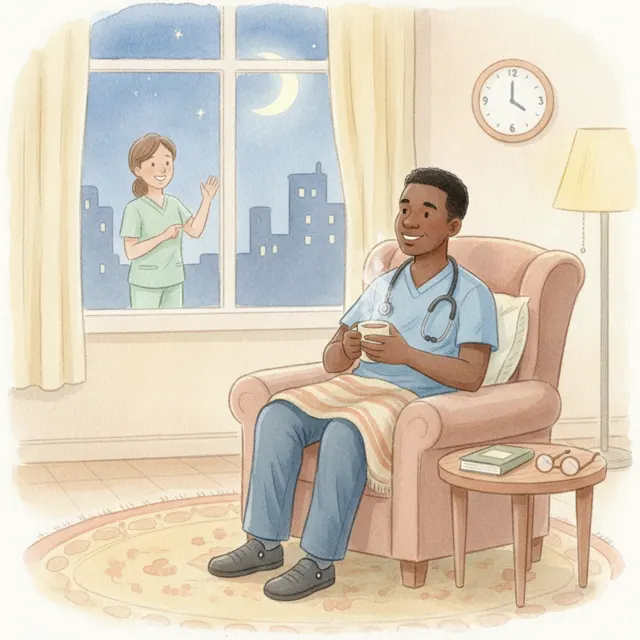
Dr. Marcus's shift had officially ended two hours ago. He'd signed off, said good night, and was putting on his coat when he passed room 4. Eight-year-old Zoe had been admitted with pneumonia three days ago. She was recovering well, the charts said. But she was crying, quietly, in the way that meant she'd been crying for a while. Her parents had gone to the cafeteria to eat. She was alone. Dr. Marcus sat down in the chair by her bed. "What's going on?" he asked. "I don't know when I can go home," Zoe said. "And I miss my cat." Dr. Marcus nodded. He could tell her the standard answer: probably two more days, depending on her breathing tests. That was accurate. "What's your cat's name?" he asked instead. "Biscuit." "What does Biscuit do when you come home from school?" Zoe smiled a little despite herself. "He waits at the door. He always knows exactly when I'm coming." "How?" "I don't know. He just does." They talked about Biscuit for fifteen minutes. Then about the things Zoe would do first when she got home. Then about the book on her bedside table that she'd been reading. By the time her parents came back from the cafeteria, Zoe wasn't crying anymore. She was in the middle of explaining the plot of her book to Dr. Marcus. Her mother looked at him with surprised eyes. "Your coat's on," she said quietly. "I was on my way out," he said simply. He said goodnight and went home. Some nights helping was medicine. Some nights it was just sitting in a chair and asking about a cat.

The Doctor Who Was Afraid of Needles

Ages 3-84 min readcourage
The Doctor Who Was Afraid of Needles story for kids illustration

Doctor Ben is a kind doctor, but he has a secret. He used to be afraid of needles when he was a boy. When a scared child needs a shot, Ben uses his own story to help.

Moral: Understanding fear helps us comfort others.

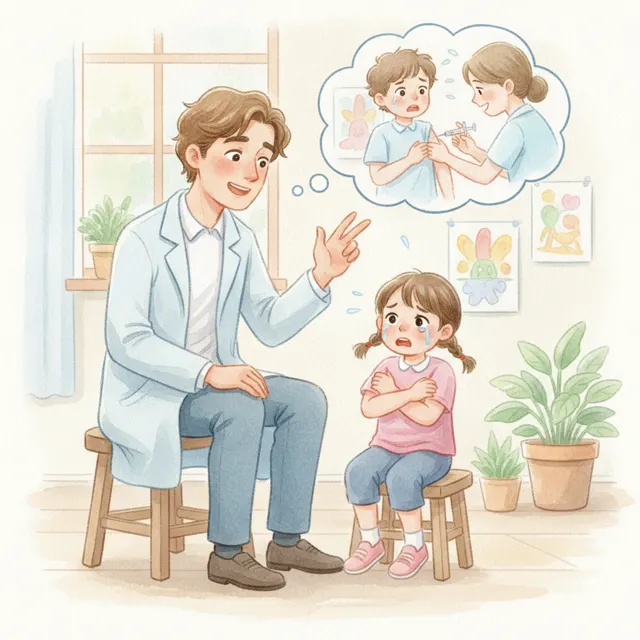
Doctor Ben helped people feel better all day long. But Doctor Ben had a secret. When he was a little boy, he was very afraid of needles. One day, a small boy named Eli came to the clinic. He hid behind his mom. "He needs a shot today," said Eli's mom. Eli shook his head. "No! Shots hurt! I am scared!" Doctor Ben sat down next to Eli. "Can I tell you a secret?" he asked. Eli peeked out from behind his mom. "What secret?" "When I was your age," said Doctor Ben, "I was afraid of needles too. I used to hide under the table." Eli's eyes went wide. "You were? But you are a doctor!" "Even doctors can be scared," said Ben. "Let me show you how I got brave." Doctor Ben showed Eli the small shot. "It is very small. It feels like a quick little pinch, then it is done. And I will count to three with you." "One, two, three?" asked Eli. "Yes," said Ben. "You can hold your mom's hand. And when we say three, it is all finished." Eli took a deep breath and held his mom's hand. "Ready?" asked Ben. "One. Two. Three." Eli felt a tiny pinch. Then it was over. "All done," said Ben. "You were so brave!" Eli looked surprised. "That was fast! It was not so bad." "You did great," said Ben. "And now you are braver than I was at your age." Eli smiled. "Maybe I can be a doctor too someday." Doctor Ben smiled back. "I think you can be anything."

Milo's Brave Checkup

Ages 3-84 min readcourage
Milo's Brave Checkup story for kids illustration

Milo is scared of his first doctor visit. He thinks the doctor will hurt him. Doctor Ana shows him all the tools one by one, and Milo learns the doctor is there to help, not to hurt.

Moral: The doctor is there to help, not to hurt.

Milo held his mom's hand very tight. Today was his first checkup, and he did not want to go. "Do I have to?" Milo asked. "The doctor is there to help you," said Mom. "You will see." In the room, Doctor Ana smiled. "Hello, Milo. I am so glad to meet you." Milo looked at the floor. "I do not want you to hurt me." "I will not hurt you," said Doctor Ana. "Would you like to see my tools first? Then you will know what each one does." Milo nodded slowly. Doctor Ana held up a small light. "This is my little flashlight. It helps me look in your ears and mouth. It does not hurt at all." Next she showed him a long silver tube. "This is my stethoscope. It helps me hear your heart. Want to listen to mine?" Milo put the small ends in his ears. He heard a soft thump-thump. "That is your heart!" said Milo. "It sure is," said Doctor Ana. "Now let me listen to yours." Milo sat very still. Doctor Ana listened to his heart and his breathing. "You sound strong and healthy," she said. Then Doctor Ana checked his eyes, his ears, and his throat. Milo opened his mouth wide and said, "Ahhh." "All done!" said Doctor Ana. "That was a great checkup." Milo smiled. "That was not scary at all." "See?" said Mom. "The doctor is your friend." Doctor Ana gave Milo a high five. "You were very brave today, Milo." Milo felt proud. The doctor was not scary. The doctor was there to help.

The Teddy Bear Patient

Ages 3-84 min readkindness
The Teddy Bear Patient story for kids illustration

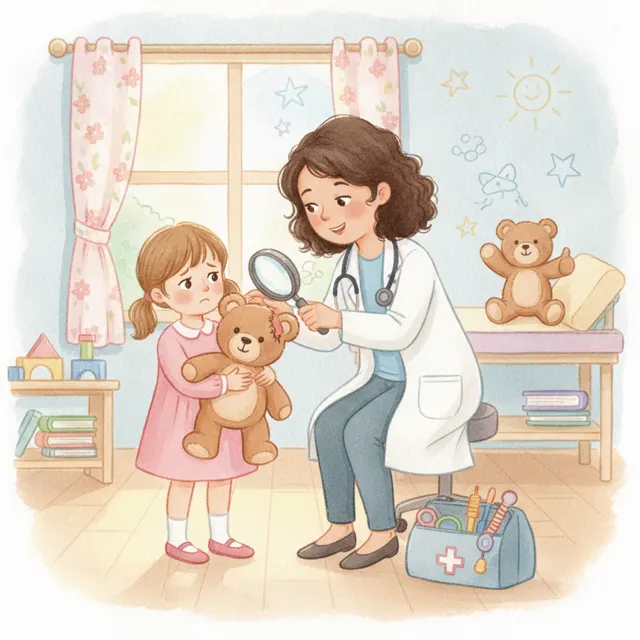
A little girl named Zoe brings her teddy bear to the doctor. The bear has a torn ear and Zoe is worried. Doctor Lea checks the bear first, then Zoe feels brave enough for her own checkup.

Moral: Being kind can calm a worried heart.

Zoe walked into the clinic holding a brown teddy bear. The bear had one floppy ear and a small rip in its side. "Hello, Zoe," said Doctor Lea. "Who did you bring with you today?" "This is Buster," said Zoe. "He has a torn ear and I am very worried about him." Doctor Lea nodded. "Let me take a look." She put a little bandage on Buster's ear and a soft sticker over the rip. She listened to Buster's chest with her stethoscope. "His heart sounds strong," said Doctor Lea. "Buster just needs a little rest and lots of hugs." Zoe hugged Buster tight. "Thank you, Doctor Lea." "Now," said Doctor Lea, "it is your turn. May I check you too?" Zoe looked at Buster. Then she looked at the doctor. "If Buster was brave, I can be brave too." "That is a wonderful way to think," said Doctor Lea. Zoe sat up tall. Doctor Lea looked in her ears and mouth. She listened to Zoe's heart and checked her breathing. Zoe did not flinch even once. "All done," said Doctor Lea. "You are healthy and strong. And so is Buster." Zoe smiled. "I was not scared because you were so kind to Buster first." Doctor Lea smiled back. "Sometimes helping a toy helps a friend feel safe. And that is a very important part of my job." Zoe hugged Buster and hopped off the table. "Bye, Doctor Lea! We will see you next time!" "See you then," said Doctor Lea with a wave.

The Doctor and the Quiet Boy

Ages 3-84 min readlistening
The Doctor and the Quiet Boy story for kids illustration

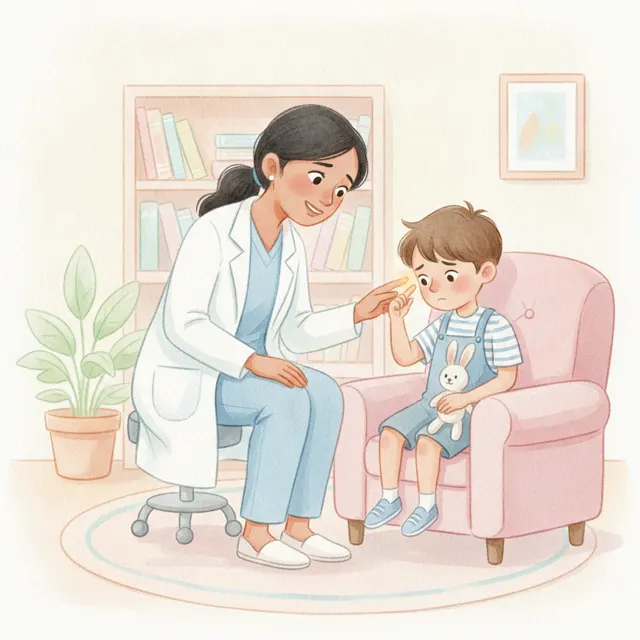
A quiet boy named Sam will not say what hurts. Doctor Priya does not rush him. She waits and listens, and at last Sam points to his ear. Listening helps her find the problem.

Moral: Listening helps us find out what is wrong.

A quiet boy named Sam sat on the exam table. He did not speak. He just looked at his shoes. "Sam, can you tell me what hurts?" asked Doctor Priya. Sam shook his head and said nothing. Doctor Priya did not rush. She sat down in her chair so she was at Sam's level. "That is okay," she said. "We have all the time we need." Sam's mom sighed. "He has been quiet all week. He will not tell me what is wrong." Doctor Priya smiled at Sam. "Sometimes it is hard to find the words. Would you like to point instead?" Sam looked up for the first time. He slowly raised his hand and pointed to his ear. "Your ear?" asked Doctor Priya. Sam nodded. Doctor Priya looked inside his ear with her little light. "I see the problem. Your ear is red inside. That is why it hurts." Sam's eyes went wide. "It hurts when I chew," he whispered. "That makes sense," said Doctor Priya. "An ear can hurt when you chew. I will give you some medicine that will make it feel better." She wrote a note for Sam's mom and gave Sam a sticker. "You did a great job telling me with your point," she said. "Next time, you can tell me with words or with a point. Both are fine." Sam smiled a tiny smile. "Thank you, Doctor." "Thank you for being patient with me," said Doctor Priya. "Listening helps us find out what is wrong. And you were a very good helper today." Sam walked out holding his sticker and his mom's hand. His ear still hurt a little, but he felt much better inside.

Nina Fixes a Broken Wing

Ages 3-84 min readkindness
Nina Fixes a Broken Wing story for kids illustration

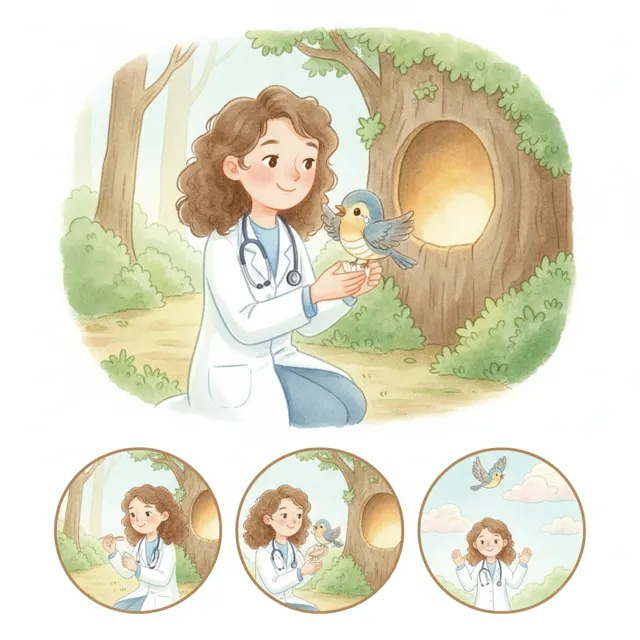
Doctor Nina finds a small bird with a broken wing on her walk to work. She makes a soft splint and cares for the bird until it is strong enough to fly again.

Moral: Helping those who cannot speak is a kind thing to do.

Doctor Nina was walking to the clinic when she saw something under a tree. It was a small blue bird. It was not flying. It just sat there, shivering. Nina knelt down slowly. "Hello, little one. What happened to you?" The bird tried to flap, but one wing hung down. It was hurt. "I will help you," said Nina softly. She wrapped the bird in her scarf and carried it to the clinic. At the clinic, Nina looked at the wing. "It is broken," she said to herself. "But I can fix it." She cut a tiny piece of soft cloth and made a small splint. She wrapped the wing very gently so it could rest and heal. "You have to be very still for a while," Nina told the bird. "But I will take care of you." Every day, Nina fed the bird a little seed and gave it fresh water. She talked to it in a soft voice. The bird's eyes got brighter and brighter. After a week, Nina took off the splint. "Let us see if you can fly now." She opened the window wide. The bird hopped to the edge. It looked at Nina. Then it spread its wings and flew up into the blue sky. Nina watched it go. "Fly high, little bird," she said. The bird circled once, then flew away to a tall tree. A nurse smiled at Nina. "You did not just help people today. You helped a bird too." "A doctor helps anyone who needs it," said Nina. "Even the ones who cannot ask out loud."

The Baby Who Would Not Stop Crying

Ages 3-84 min readpatience
The Baby Who Would Not Stop Crying story for kids illustration

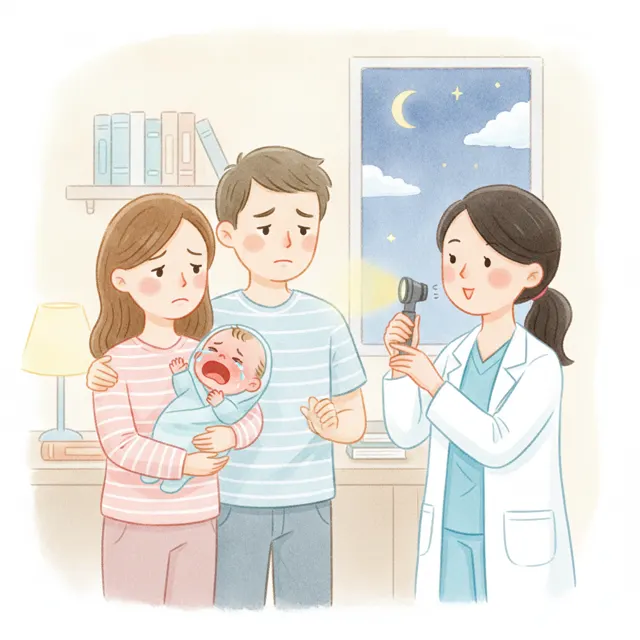
A worried mom and dad bring their crying baby to the night clinic. Doctor Priya stays calm and kind. She checks the baby and shows them how to soothe it. Patience and calm help in a storm.

Moral: Patience and calm help in a storm.

It was late at night when the clinic door opened. A mom and dad came in, and the baby in their arms was crying very loud. "Doctor, she will not stop crying," said the mom. "We do not know what to do." Doctor Priya led them to a quiet room. "Let me take a look," she said in a soft voice. She checked the baby's ears and mouth. She felt the baby's tummy. The baby cried and cried, but Doctor Priya stayed calm. "Her body is healthy," said Doctor Priya. "She may just have a sore tummy. Some babies cry a lot at night. It is called colic." "Will she be okay?" asked the dad. "She will be okay," said Doctor Priya. "Let me show you something that helps." She wrapped the baby in a soft blanket, nice and snug. Then she rocked her back and forth and made a soft shushing sound. Shhh. Shhh. Shhh. The baby's crying got softer. Then it stopped. The baby's eyes closed. "She fell asleep," whispered the mom. "The soft sounds and the snug wrap help her feel safe," said Doctor Priya. "When she cries, stay calm. Take turns. And know that it is okay to ask for help." The dad let out a long breath. "Thank you, Doctor. We were so worried." "You did the right thing by coming in," said Doctor Priya. "You are good parents. Babies just need a little extra calm sometimes." The family left with a sleeping baby and much calmer hearts. Doctor Priya smiled. Some nights, her job was to calm everyone, not just the baby.

A Shot for Everyone

Ages 3-84 min readbravery
A Shot for Everyone story for kids illustration

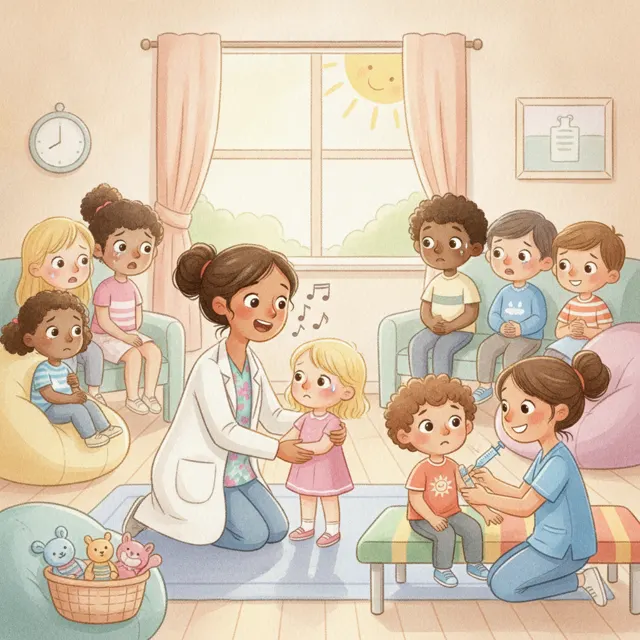
It is shot day at the clinic, and the waiting room is full of scared kids. Doctor Rosa helps each one feel brave with kind words and a small song. A little pinch keeps everyone healthy.

Moral: A little pinch keeps everyone healthy.

It was shot day at the clinic. The waiting room was full of kids. Some were quiet. Some were crying. Nobody likes a shot. Doctor Rosa came out with a big smile. "Who is first?" she asked. Nobody moved. A little girl named Ava hid behind her mom. "Shots hurt," said Ava. "A shot feels like a tiny pinch," said Doctor Rosa. "And it keeps you from getting very sick. A little pinch today means a strong, healthy you tomorrow." "But I am scared," said Ava. "I know," said Doctor Rosa. "Let us be brave together. We can sing a song while I do it. Do you like songs?" Ava nodded. "Then pick a song," said Doctor Rosa. Ava thought. "The Wheels on the Bus," she said. "Great choice," said Doctor Rosa. She got the small shot ready. "Ready? Sing with me. The wheels on the bus go round and round..." Ava sang along. Doctor Rosa did the shot quick and gentle. "All done!" Ava looked up. "That was it? It barely hurt!" "You were so brave," said Doctor Rosa. "Here is a sticker for you." One by one, the other kids saw that Ava was fine. They each sang a song and got a shot. Soon the whole waiting room was full of singing and stickers. At the end of the day, Doctor Rosa sat down and smiled. "Every one of you was brave today," she said. "A little pinch now means a strong, healthy body later. And that is worth it." The kids went home with stickers and big smiles. Doctor Rosa felt happy too. A tiny pinch for everyone had kept the whole town safe from a bad sickness.

Frequently Asked Questions

Turn Your Child Into the Hero of Their Own Story

Upload their photo and watch as AI creates a beautiful, personalized storybook with illustrations that look just like them. From $5.99/month.

โœจ Make Your Child the Hero

Plans from $5.99/month