Island Stories for Kids

A faraway shore, a brand new discovery, and a child who becomes the hero of every sunny island adventure.

✨ Make Your Child the Hero

Islands hold a special kind of magic for kids. A small patch of land surrounded by blue, a place where every palm tree could hide a secret and every shell could tell a story. Island stories let your child paddle out to that world, meet friendly turtles, and discover that being brave and kind matters even far from home. With CreateStory.ai, that island daydream becomes theirs. Upload a photo and your child becomes the hero of a personalized island story, exploring hidden coves and learning gentle lessons with every page they turn.

Why do kids love island stories for kids?

Islands are small worlds full of beaches, boats, shells, and sea animals, and kids love that feeling of adventure by the water. A story turns the island into a cozy home or a brave trip.

The variety is real. Indonesia alone is made up of more than 17,000 islands, according to Britannica.

What can a child learn from an island story?

Island tales show courage, patience, and sharing. The child builds a raft, the turtle finds its way home, and the crab shares its coconut. Kids learn that trying and caring make a small place feel big and full.

Sample Stories

Read these stories, then create a personalized version where your child is the hero

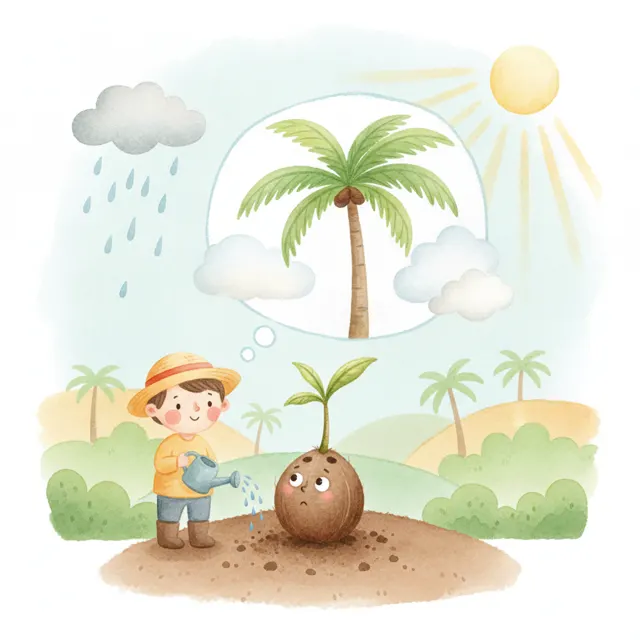
The Coconut That Wanted to Grow Tall
Ages 3-84 minperseverance
The Coconut That Wanted to Grow Tall story for kids illustration

A tiny coconut dreams of becoming the tallest palm tree on the island. But growing is slow work, and it needs rain, sun, and a patient gardener friend to reach the sky.

Moral: Growing strong takes time, sun, and a little help from friends.

On the edge of a small island, a tiny coconut sat in the sand. All day it watched the tall palm trees sway in the wind. "I want to be tall like them," the coconut said to the crab who scuttled by. "You will," said the crab. "But first you have to wait for rain." "Rain?" The coconut did not like the sound of that. "Can I grow right now?" The crab chuckled. "Nothing big grows in one day, little one. Not even trees." The coconut waited. Days passed. The sun warmed its shell. Then one morning, gray clouds rolled over the island and the rain came down in soft, warm drops. "Drink up," the crab said, "and rest." The coconut drank and rested. A small root poked out, reaching into the sand. Then a green shoot, so small you could blink and miss it. "Is that me?" the coconut whispered. "That is you," said the crab. "You are on your way." Seasons passed. The shoot became a stem. The stem became a trunk, thin at first, then sturdier. The little tree grew past the crab's head, past the rocks, and up toward the blue sky. Years later, the coconut tree stood taller than every tree on the island. Travelers rested in its shade. Birds nested in its leaves. And every day, a very old crab scuttled by and looked up with pride. "I knew you would be tall," the crab said. "And you were right about the waiting," the tree said, swaying gently. "Good things really do grow slow."
Mila and the Map to Nowhere

Ages 3-84 mincuriosity
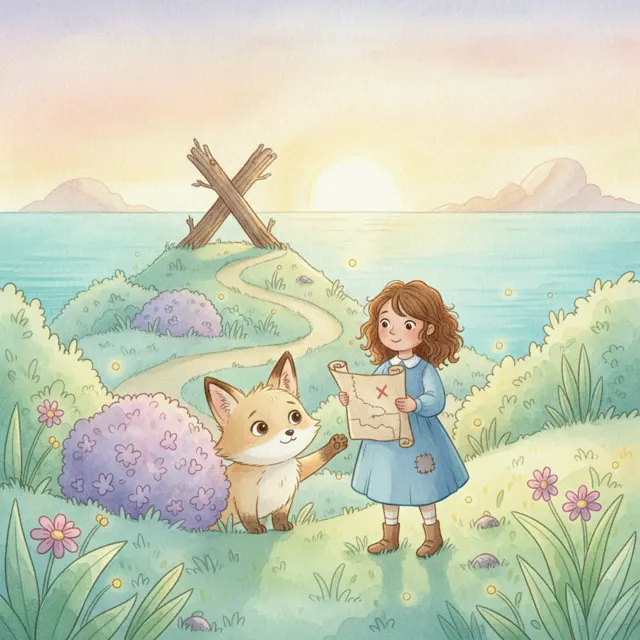
Mila and the Map to Nowhere story for kids illustration

Mila finds a faded map that leads to an X with no treasure at all. But the walk across the island, and the shy friend she meets on the way, turn out to be worth far more than gold.

Moral: The best treasure is often the friends you find along the way.

Mila found the map under a loose floorboard in her family's beach hut. It was yellow and crinkled, and it showed the whole island with a big red X on the far side. "Treasure!" Mila whispered. She grabbed her hat and her water bottle and set off. The path led through the mango grove, where the air smelled sweet. Then up a rocky hill, where her legs burned. Then down to a quiet lagoon she had never seen before. And there, at the foot of a banyan tree, was the X. Mila dropped to her knees and dug. She dug and dug until her fingers ached. But there was no gold. No chest. Not even a coin. Just sand, and roots, and one very disappointed feeling. Then she heard a small voice. "Are you looking for the treasure too?" A girl about her age stood behind the tree, holding a coconut half filled with water. "I thought there would be treasure," Mila said, "but the map was wrong." The girl smiled. "I am Lani. I live just over the hill. The treasure is not in the ground. Come see." Mila followed Lani to the top of the hill. And there, spread out before her, was the whole island, green and gold and blue, with the sun setting behind the reef. "This," Lani said, "is the treasure. Everyone with the map finds it." Mila stared. It was the most beautiful thing she had ever seen. "And I found a friend too," Mila said softly. Lani grinned. "The best treasure of all." Mila rolled up the map and tucked it in her pocket. "Next time, we can find it together."

The Two Turtles Who Built a Bridge

Ages 3-83 minteamwork
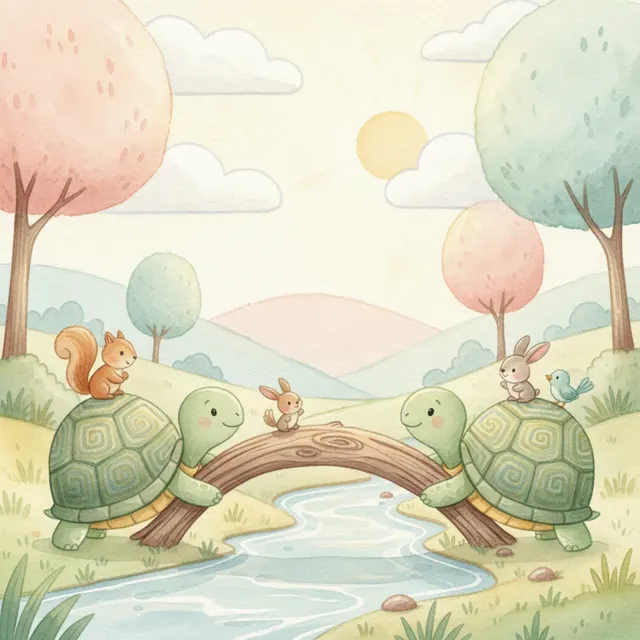
The Two Turtles Who Built a Bridge story for kids illustration

Two turtles on opposite sides of a stream each want to visit the other, but neither can cross alone. They learn that when friends put their shells together, no problem is too wide.

Moral: Big jobs get easier when friends work side by side.

Tiko the turtle lived on one side of the stream. Bella the turtle lived on the other. Every day they waved to each other across the water. "I wish I could visit you," Tiko called. "Me too," Bella called back. "But the stream is too wide to swim." "And too deep to walk," said Tiko. "And too fast," said Bella. They sat on their separate banks, feeling very far apart. One morning, Tiko had an idea. "What if we find a log?" "A log is heavy," Bella said. "You cannot push it alone." "Then I will not push it alone," said Tiko. "I will push it with you." So Tiko pushed one end of a long, fallen log while Bella pushed from her side. It was slow work. They pushed and grunted and slipped on the wet bank. "Together now," Tiko called. "One, two, three, push!" The log rolled into the stream and settled across the water, one end on each bank. A perfect bridge. Tiko stepped onto the log carefully. It wobbled. He held his breath and walked to the middle. "Your turn," he said. Bella stepped on. The log wobbled again, but Tiko held it steady with his strong front legs. When they met in the middle, they touched noses and laughed. "We made it," Bella said. "We made it together," Tiko said. From that day on, the two turtles crossed the log bridge whenever they liked. They shared meals and stories and watched the stars from the same side of the stream. "Funny," Bella said one night. "The stream never got smaller. We just got smarter about it."

Kimo's First Night Under the Stars

Ages 3-85 mincourage
Kimo's First Night Under the Stars story for kids illustration

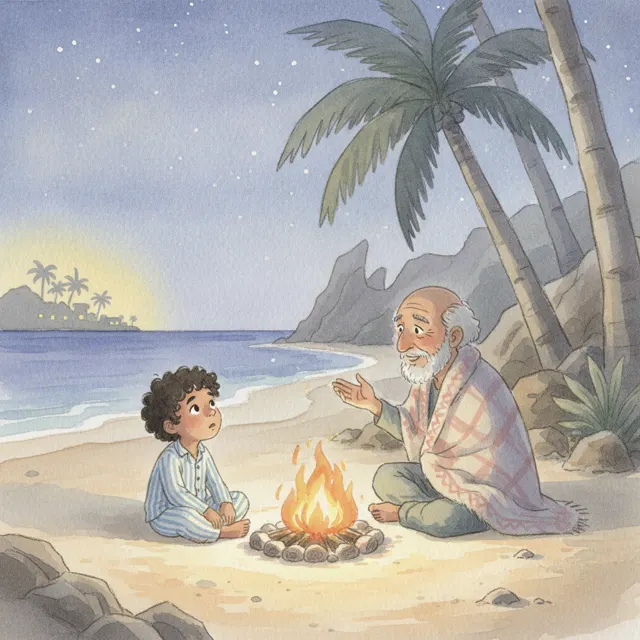
Kimo is excited to camp out on the island beach, until the sun goes down and the shadows grow long. With his grandfather's stories and a friendly fire, he finds courage in the dark.

Moral: The dark is less scary when you remember you are never really alone.

Kimo had never slept outside before. Tonight, on the island beach, that would change. His grandfather, Lono, was building a small fire. "Are you ready for your first night under the stars?" Lono asked. "I am ready," Kimo said, trying to sound sure. But when the sun dropped behind the water, the beach changed. The shadows stretched long. The waves sounded louder. The coconut trees rustled like they were whispering secrets. "Grandpa," Kimo whispered, "is it always this dark?" Lono poked the fire, and it glowed brighter. "The dark is just the day taking a rest. Look up." Kimo tilted his head back. The sky was full of stars, thousands of them, scattered like spilled sugar. "Wow," he breathed. "That bright one there," Lono said, "is Hokupa'a. Sailors used it to find their way home. When you see it, you are never truly lost." Kimo stared at the star. "So even in the dark, someone can find home?" "That is right," Lono said. "And the fire keeps us warm, and I am right here beside you." A breeze blew through the trees. It did not feel scary anymore. It felt like a soft song. Kimo lay back on his mat. "I think I like the dark now," he said. "The dark was never the problem," Lono said with a smile. "It was only new." Kimo watched Hokupa'a blink down at him until his eyes grew heavy. He fell asleep with the fire crackling and his grandfather humming, and in the morning, the sun came up like a promise kept.

The Shell That Sang a Quiet Song

Ages 3-83 minkindness
The Shell That Sang a Quiet Song story for kids illustration

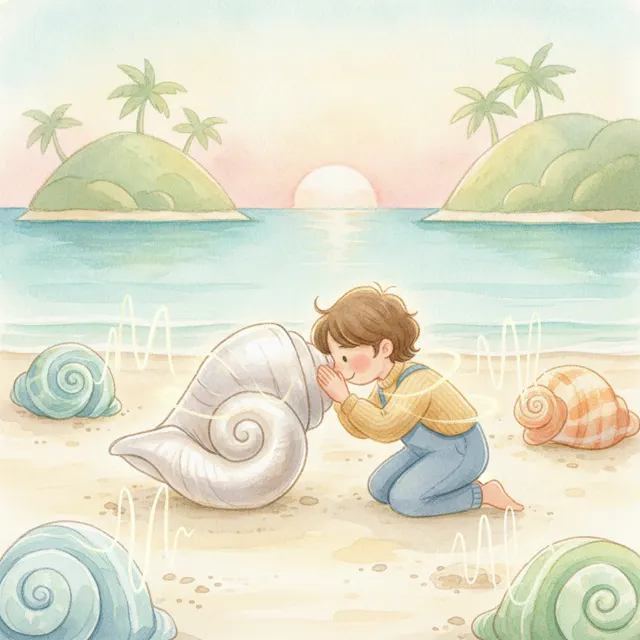
A shy conch shell worries she has nothing special to offer, because her song is softer than all the others. But when a lonely child presses an ear close, her quiet song becomes the most important sound on the island.

Moral: A quiet voice is still a voice worth listening to.

Every evening, the shells of the island held a singing contest. The big conch shells boomed. The little clams clicked. Even the sand dollars hummed a bright, tinny tune. Only one shell never sang. Her name was Shelly, and she sat tucked under a rock at the edge of the water. "Why do you not sing?" asked a hermit crab. "My song is too quiet," Shelly said. "Nobody would hear it anyway." "Nonsense," said the crab. "Every song has someone who needs to hear it." But Shelly shook her shell and stayed quiet. One day, a child came to the island for the very first time. Her name was Nani, and she sat alone on the sand while the other children played. She missed her old home and her old friends. Nani picked up shells and set them down again. None of them felt right. Then she spotted Shelly, half hidden under the rock. "Hello, little shell," Nani said softly. She lifted Shelly to her ear. And Shelly, without meaning to, began to sing. A soft, slow song that sounded like the sea rolling in from very far away. Nani closed her eyes. "It sounds like home," she whispered. Shelly's song grew a little braver. It rose and fell like the tide, and it wrapped around Nani like a warm hug. When Nani opened her eyes, she was smiling. "I have never heard anything so beautiful," she said. From that day on, Nani visited the edge of the water every evening. She did not need the big, booming shells. She only needed the quiet one. "You see?" said the hermit crab, scuttling by. "Every song has someone who needs to hear it." And Shelly, tucked safely in Nani's palm, sang louder than she ever had before.

Kai and the Tide Pool Secret

Ages 3-84 minutescuriosity
Kai and the Tide Pool Secret story for kids illustration

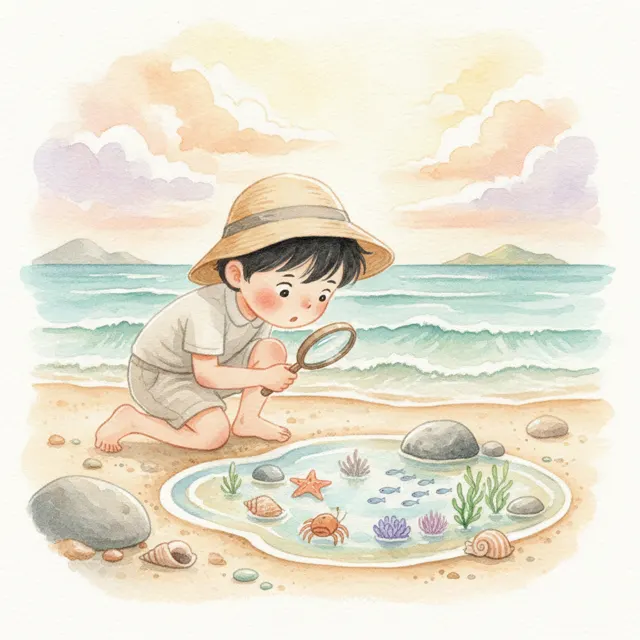
Kai finds a small tide pool full of tiny sea creatures on the beach. He visits it every day to watch them. He learns that the tide brings in new surprises, and that small things are worth a careful look.

Moral: Look closely and you will find a small world.

Kai lived on a small island by the sea. Every morning he walked along the beach and looked for shells. One day, he found a little pool of water between two big rocks. It was full of tiny, busy sea creatures. "What is this place?" Kai wondered. He crouched down for a closer look. A tiny crab waved its claw. A little snail slid slowly across the rock, leaving a shiny trail. A small silver fish darted in and out of the green seaweed. "It is a tide pool," said his mother. "The sea leaves water here when the tide goes out." Kai was amazed. He came back every day. He watched the crab find its food. He watched the snail slide along. He watched the little fish hide from a passing shadow. "The pool changes every day," said Kai. "The tide brings in new surprises." One morning, Kai saw a tiny starfish in the pool. It was bright orange, and it had five small arms. He had never seen one before. He sat and watched it all morning, very still and quiet. "You are so patient," said his mother. "Not many children stop to look so carefully." Kai smiled. "The tide pool is full of secrets," he said. "I just have to look." From that day on, Kai was the keeper of the tide pool. He never touched the creatures. He only watched and learned. And every new tide brought him a new surprise. The smallest places, Kai learned, often hold the biggest secrets.

The Sea Turtle Returns Home

Ages 3-84 minutesperseverance
The Sea Turtle Returns Home story for kids illustration

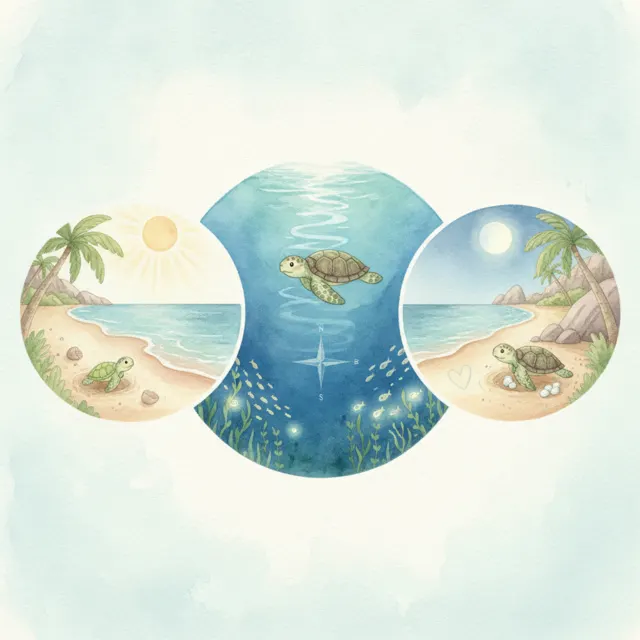
A little sea turtle hatches on the island beach and swims far into the big ocean. Years later, she feels a pull to go back. She finds her way home to the same beach to lay her own eggs. She never forgot home.

Moral: No matter how far you go, home is always waiting.

On a warm island beach, a tiny sea turtle hatched from her egg. She dug up through the soft sand and saw the big blue ocean for the very first time. "Go, little one," whispered the waves. "The ocean is your home now." The tiny turtle crawled across the sand as fast as her little flippers could go. She slipped into the sea and swam and swam, far from the island. The ocean was big and wide, and it went on forever. "Where am I going?" she asked a passing fish. "Follow the current," said the fish. "The sea will guide you." The little turtle grew and grew. She swam past bright coral reefs and friendly whales. She ate sea grass and jellyfish. But deep in her heart, she always remembered the warm sand where she was born. One day, many years later, the turtle felt a strong pull. "I must go home," she said. "I must go back to my own beach." She swam for many days and nights. The current helped her along. At last, she saw a familiar shore. It was her island, with its tall palm trees and soft sand. She crawled up the beach, just like she had long ago, and dug a deep nest for her own eggs. "I made it home," she said softly. The waves sang, "Welcome back, little one." The turtle smiled. You can swim far and see the whole wide ocean, she thought, but your home is always waiting for you.

Nina's First Boat Ride

Ages 3-84 minutescourage
Nina's First Boat Ride story for kids illustration

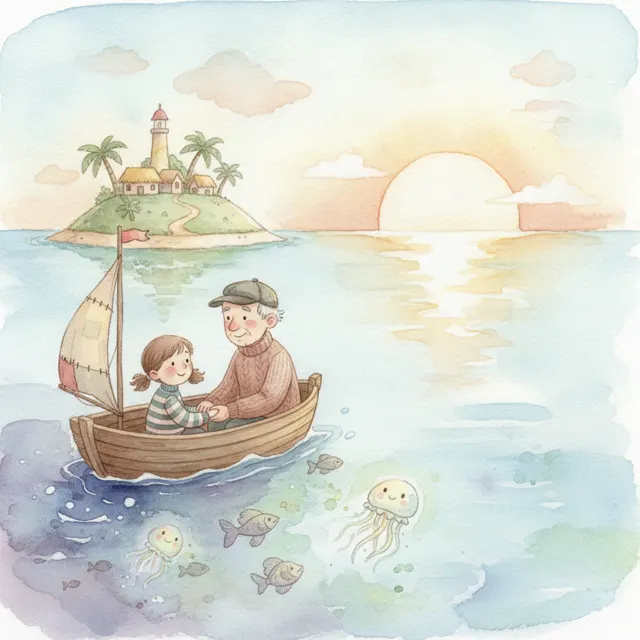
Nina has never left her little island. She is scared of the deep, dark water. When Grandpa takes her out in his boat, she learns the sea is not so scary when you have someone with you.

Moral: Being with someone you trust makes you brave.

Nina lived on a little island. She loved the warm sand and the bright shells, which she kept in a little bag. But she had never been out on the deep water. She was scared of it. "The water is so dark and deep," said Nina. "I will never go out in a boat." Her grandpa smiled. "The sea looks scary from far away," he said. "But up close, it is full of friends." One morning, Grandpa took Nina's hand. "Come with me," he said. "It is time for your first boat ride." Nina's heart beat fast. "But Grandpa, what if the boat tips? What if the water is too deep?" "I will be right beside you," said Grandpa. "You are safe with me." Nina climbed into the little wooden boat. It rocked gently on the waves. Grandpa rowed slowly out into the bay. The water was clear and blue, and the sun made it sparkle. "Look, Nina," said Grandpa. "The sea is saying hello." Nina looked over the side. She saw bright fish and soft green sea grass. She saw a big sea turtle glide slowly by. The water was not scary at all. It was full of life and color. "I like the sea!" said Nina, laughing. "It is beautiful." Grandpa smiled. "The sea is a friend," he said. "And now you are a sailor." Nina rode back to shore with a happy heart. She had been brave, and now she had a whole new world to love, and she could not wait to sail again tomorrow.

The Coconut Crab Shares His Coconut

Ages 3-84 minutessharing
The Coconut Crab Shares His Coconut story for kids illustration

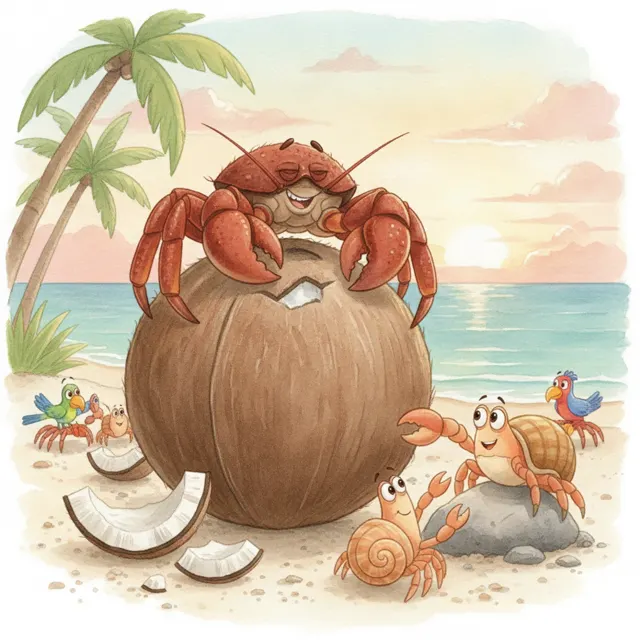
A coconut crab finds the biggest coconut on the island. He wants it all for himself. But when a hungry hermit crab needs food, the coconut crab learns that sharing tastes better than keeping it all.

Moral: Sharing makes everything taste better.

On a little island lived a big coconut crab named Kona. He had strong claws and a hard shell. One day, he found the biggest coconut on the whole island. It had just fallen from the tallest palm tree. "This is mine!" said Kona. "All mine!" He cracked the coconut open with his strong claws. The white inside smelled sweet and good. Kona was about to eat it all by himself. Just then, a little hermit crab crawled by. His tummy rumbled. "That coconut looks so good," he said. "May I have a small piece?" "No," said Kona. "I found it. It is all mine." The hermit crab sighed and crawled away, hungry. Kona sat alone with his big coconut. He took a bite. It was sweet. But eating all alone did not feel as good as he thought it would. Kona looked at the hermit crab, far down the beach. He looked at his big coconut. There was more than enough for two. "Wait!" Kona called. "Come back! There is plenty. Come share with me." The hermit crab hurried back. Kona broke off a big white piece and gave it to him. They sat together and ate, watching the blue waves roll in. "This is the best coconut I ever had," said the hermit crab. "Mine too," said Kona. "It tastes better when I share it." From that day on, Kona always shared what he found. And every meal on the beach tasted sweeter because he did not eat alone.

The Lighthouse on the Little Island

Ages 3-84 minuteshelping
The Lighthouse on the Little Island story for kids illustration

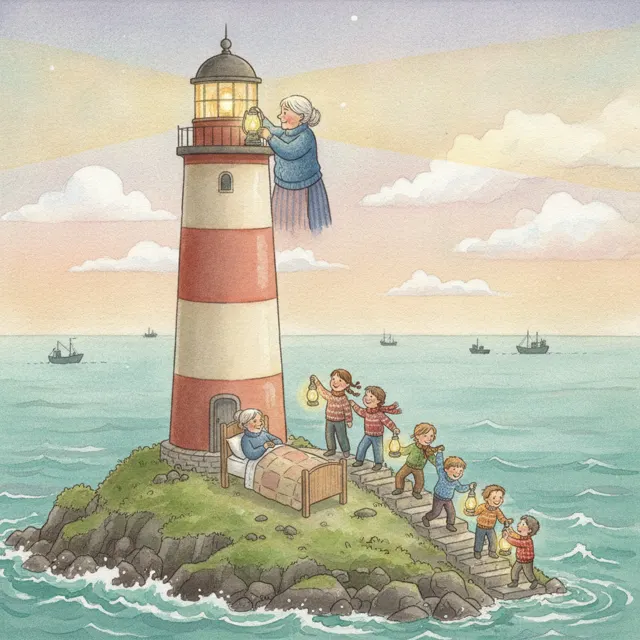
A lighthouse stands on a rocky point of the island. Its keeper is an old woman who lights the lamp every night. When she falls ill, the island children climb up to keep the light burning for the boats.

Moral: A light kept for others is the best light of all.

On a rocky point of the island stood a tall lighthouse. Every night, its bright light swept over the sea, guiding boats safely home through the dark. It was the tallest thing on the whole island. The lighthouse keeper was an old woman named Maka. Every evening, she climbed the winding stairs and lit the lamp. "Why do you do this every night?" asked a boy named Tilo. "It looks like hard work." "Because boats need the light," said Maka. "Without it, they cannot find the way home in the dark." One day, Maka fell ill. She could not climb the stairs. Night was coming, and the lamp was dark and cold. "The light must go on!" said Tilo. "The boats need it." The island children gathered at the lighthouse door. Together they climbed the winding stairs. They were careful and brave. At the top, they lit the lamp. It glowed bright and strong. The lamp swept over the sea, round and round, its warm beam cutting through the dark. Far out on the water, a fishing boat saw the light and turned toward home. "You did it!" said Maka, resting below. "You kept the light burning." The children took turns every night until Maka was well. They learned that the light was not just a lamp. It was a promise to every boat on the sea. And Maka knew the island was in good hands. "A light for others," said Tilo, "is the best light of all. And every boat found its way home."

Two Birds, One Palm Tree

Ages 3-84 minutescooperation
Two Birds, One Palm Tree story for kids illustration

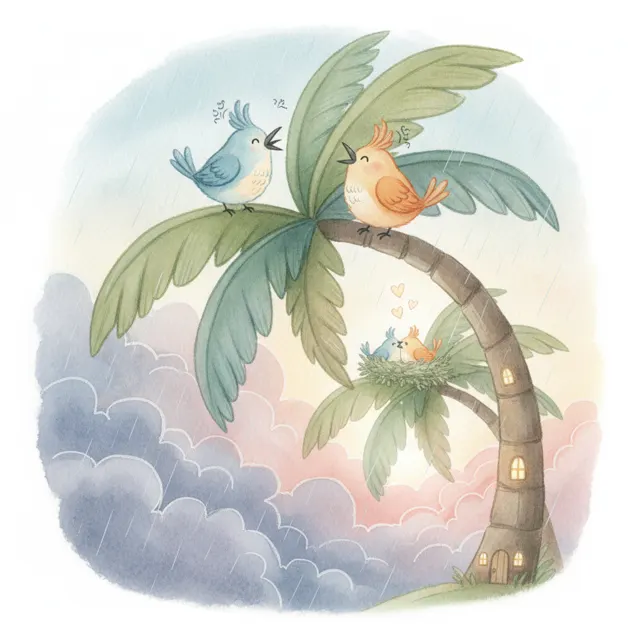
Two birds argue over the best branch on the one palm tree. They fight and fuss until a big storm teaches them that the tree is big enough for both. Sharing the tree makes it a home for all.

Moral: Sharing a home makes it better for everyone.

On a small island stood one tall palm tree. Two birds lived in it, and they were friends, but they often fought. Lio lived on the top branch. Kiki lived in the middle. "The top branch is the best!" said Lio. "It sees the whole island." "No, the middle is best," said Kiki. "It is safe from the wind." The two birds argued all day. They flapped their wings and squawked. They pushed each other for the best spot in the tree. They pulled the same twigs and tangled the same leaves. "The tree is mine!" said Lio. "No, it is mine!" said Kiki. They were so busy fighting that they did not see the dark clouds coming. A big storm rolled in from the sea. The wind shook the palm tree hard, and the leaves whipped back and forth. "Hold on!" cried Lio. "We must help each other!" cried Kiki. The two birds huddled together on the strongest branch. They wrapped their wings around each other, and the wind could not pull them apart. The storm howled, but they stayed safe together. When the storm passed, the sun came out. The palm tree still stood tall and green. "The tree is big enough for both of us," said Lio. "Yes," said Kiki. "We just had to share it." From that day on, the two birds shared the palm tree. They sang together in the morning and watched the sunset together at night. And the tree felt like a home for both.

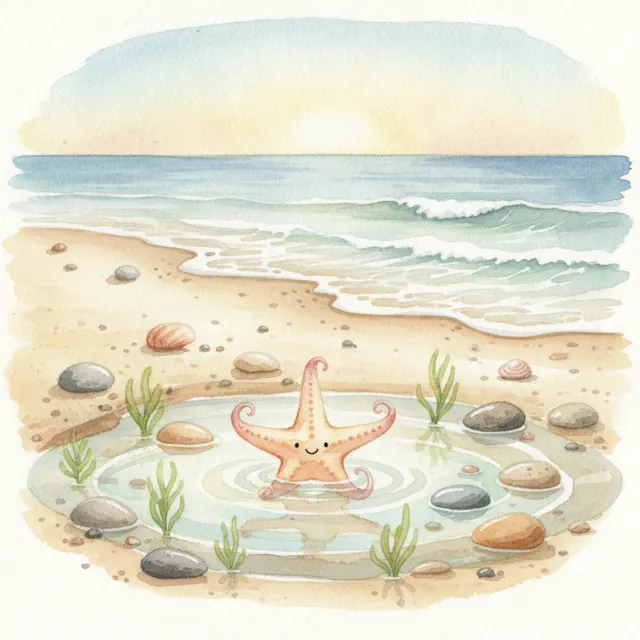
The Starfish Who Waited for the Tide

Ages 3-84 minutespatience
The Starfish Who Waited for the Tide story for kids illustration

A little starfish gets stuck in a tide pool when the tide goes out. It cannot move fast enough to follow. It waits patiently all day, and when the tide comes back, the water carries it home to the sea.

Moral: Patience carries you safely home.

A little starfish lived in the clear water near the island. One day, she followed the tide over the rocks, chasing a tasty treat. But the tide went out. The water slipped away, leaving the starfish in a small, shallow pool. She could not move fast enough to follow it back. Her five arms were too slow on the dry rock. "Oh no," said the starfish. "I am stuck until the tide comes back." The sun beat down. The little pool grew warm. The starfish stayed very still, saving her strength. A starfish cannot hurry, but she can wait very well. She would not waste a single move. A crab scuttled past. "Why are you just sitting there?" it asked. "I am waiting," said the starfish. "The tide will come back. I must be patient." The crab laughed. "That will take all day!" "That is okay," said the starfish. "I can wait." The starfish waited through the long, warm afternoon. She watched the clouds drift by and counted the little crabs that walked past. She listened to the gulls calling above. She stayed calm and still. At last, the water began to rise. The tide was coming back! It flowed over the rocks and filled the pool with cool water. The starfish felt herself lift and float. "Goodbye, little pool," she said. "Thank you for keeping me safe." The starfish floated back into the wide, open sea. She was patient, and patience had carried her home, and she would never fear a low tide again.

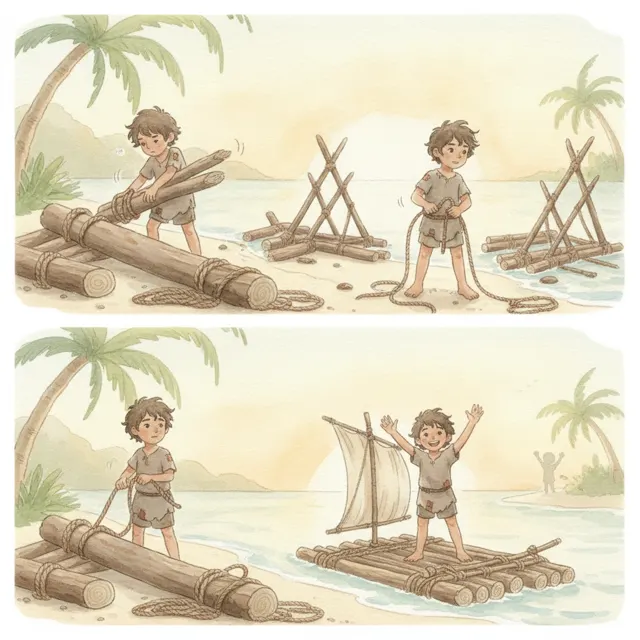
Liko Builds a Raft

Ages 3-84 minutesdetermination
Liko Builds a Raft story for kids illustration

Liko wants to visit his friend on the next island, but there is no boat. He gathers driftwood and rope and builds a raft himself. It takes many tries, but he does not give up.

Moral: Do not give up, and a hard job gets easier.

Liko lived on a small island. Across the water, on the next island, lived his best friend, Manu. But Liko had no boat to get there. The water between them was deep and wide. "I want to see Manu," said Liko. "But how will I cross the water?" "Build a raft," said his father. "The island is full of driftwood." Liko gathered long pieces of driftwood from the beach. He found strong vines to use as rope, pulling them down from the trees and winding them into coils. He tied the wood together, but the raft fell apart in the water. He tried again, tying tighter. The raft held a little, then sank. "This is too hard," Liko sighed. "Do not give up," said his father. "Each try teaches you something." Liko tried again. This time he crossed the pieces and knotted the vines tight. He tested it in the shallow water near the shore. It floated! "It floats!" Liko shouted. "It really floats!" He pushed the raft into the sea and climbed on. Slowly, he paddled across the calm water to the next island. Manu was waiting on the beach, waving with both hands, and he splashed into the shallow water to pull the raft ashore. "You built that yourself?" said Manu. "You are amazing!" Liko grinned. "It took many tries," he said. "But I did not give up." The two friends spent the whole day together, playing on the sand. And Liko learned that a hard job gets easier every time you try it again.

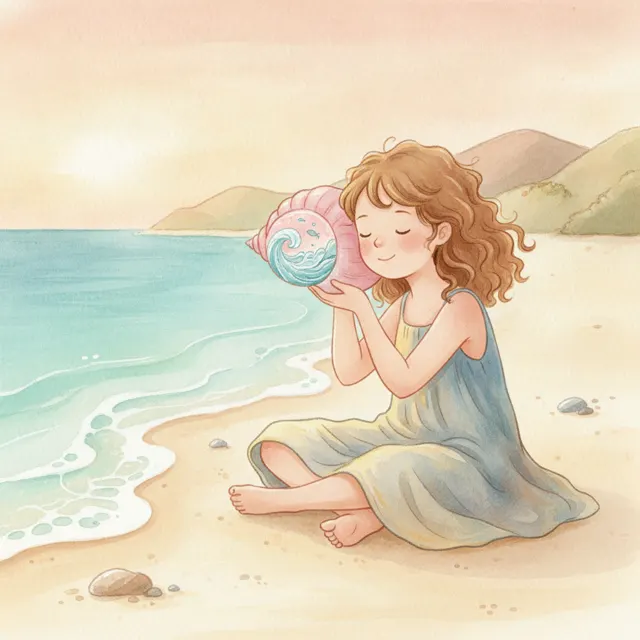
The Conch Shell That Held the Ocean

Ages 3-84 minuteslistening
The Conch Shell That Held the Ocean story for kids illustration

Mara finds a big pink conch shell on the beach. When she holds it to her ear, she hears the ocean inside. The shell teaches her to be still and listen, and she finds calm in the sound.

Moral: Being still helps you hear the quiet song.

Mara walked along the beach of her island, looking for pretty shells. She found small white ones and striped brown ones. Then she saw something big and pink, half buried in the sand. "It is a conch shell!" said Mara. She dug it out and held it up. It was heavy and smooth and the color of a sunset. "Put it to your ear," said her mother. "You will hear a secret." Mara pressed the shell to her ear. She heard a soft, low sound, like the waves rolling in. Whoosh, whoosh. "I can hear the ocean!" said Mara. "The shell is holding the sea inside!" Her mother smiled. "The shell is shaped like a little cave. It catches the quiet sounds around you and turns them into the sound of waves." Mara kept the shell on her little shelf and held it close every day. When the house was loud, she listened to the shell. The soft whoosh made her feel calm and still. "The shell helps me be quiet inside," said Mara. One day, Mara's little brother was crying. Mara gave him the shell. "Listen," she said softly. The little boy pressed the shell to his ear. His crying stopped. He listened to the whoosh, whoosh, and his face grew peaceful. "It works," said Mara, smiling. "The ocean is inside, calming us both." And from that day on, the pink conch shell sat by Mara's bed, holding its quiet ocean song for anyone who needed to be still.

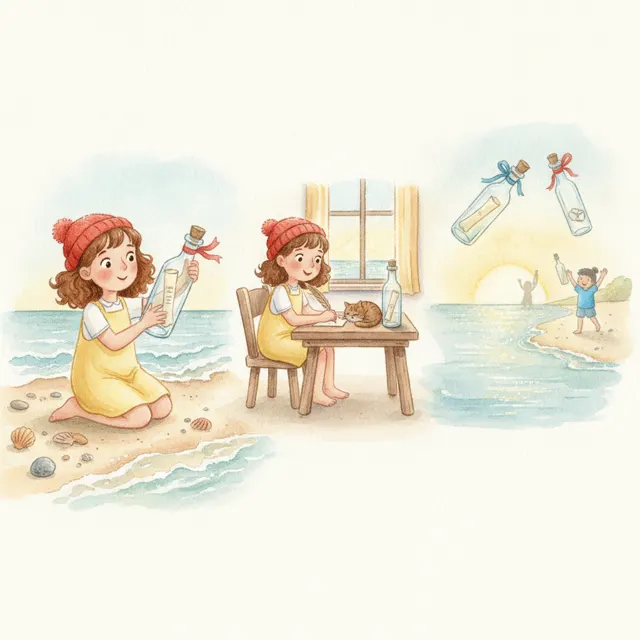
Lena and the Message in a Bottle

Ages 3-84 minuteshope
Lena and the Message in a Bottle story for kids illustration

Lena finds a bottle washed up on the beach. Inside is a note from a far-off child asking for a friend. Lena writes back, sends her own bottle, and makes a friend across the sea.

Moral: A small message can travel far and bring a friend.

Lena lived on a small island. One morning, she was walking on the beach when she saw something shiny in the sand. It was a glass bottle with an old, soft cork in the top. "What is this?" said Lena. She pulled out the cork. Inside was a rolled-up piece of paper, small and dry. She unrolled it and read the words. "Hello. My name is Pia. I live on an island far away. I want a friend. If you find this, please write back to me." Lena's heart beat fast. "Someone out there wants a friend," she said. "And her bottle found me." Lena ran home for paper and a pencil. She wrote her own note. "Hello, Pia. My name is Lena. I want a friend too. I am happy your bottle found me." She rolled up her note, put it in the bottle, and pushed in the cork. Then she threw the bottle as far as she could into the sea. "Go find Pia," she whispered. "Bring her my hello." The bottle bobbed on the waves and floated away. Lena watched until it was a tiny speck on the blue water, hoping it would find the right shore. Weeks later, a bottle washed up on Lena's beach. Inside was a note from Pia. "I got your message! We are friends now." Lena smiled. The sea had carried her words across the water and brought a friend back. Some messages travel far, and every one of them is a little hope.

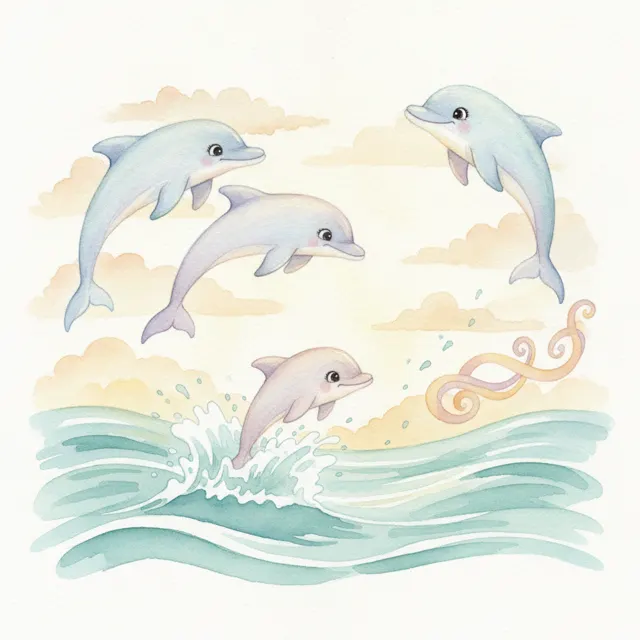
The Baby Dolphin Learns to Leap

Ages 3-84 minutespersistence
The Baby Dolphin Learns to Leap story for kids illustration

A baby dolphin watches the older dolphins leap high over the waves. She tries and tries but falls back with a splash. With practice, she learns that trying again and again makes you strong.

Moral: Trying again and again makes you strong.

In the blue water near the island lived a pod of dolphins. They loved to leap high over the waves and dive down with a big splash. A baby dolphin named Dina watched them. She was small, with a round little face. "I want to leap like that!" she said. She tried to jump over a wave. She flopped and fell back with a splash. Water sprayed over her head. She tried again. Splash. And again. Splash. "I will never do it," said Dina, sad. Her mother swam close. "The big dolphins did not leap on their first try either," she said. "They practiced every single day." "Really?" asked Dina. "Really," said her mother. "Watch me, then try again." Dina watched her mother leap, high and smooth, arcing over the water. Then Dina tried again. This time she got a little higher. She tried again, and a little higher still. Day after day, Dina practiced. She kicked her tail hard and pushed up with all her strength. Little by little, she learned how to fly. Her flippers grew strong, and her tail grew sure. One sunny morning, Dina swam fast, jumped hard, and flew high over a wave. She arched in the air and dove down with a perfect splash. "I did it!" Dina cheered. "I leaped!" The whole pod clapped their fins and clicked with joy. "You did not give up," they said. "That is why you are strong." Dina grinned. "Trying again and again," she said, "turns a splash into a leap."

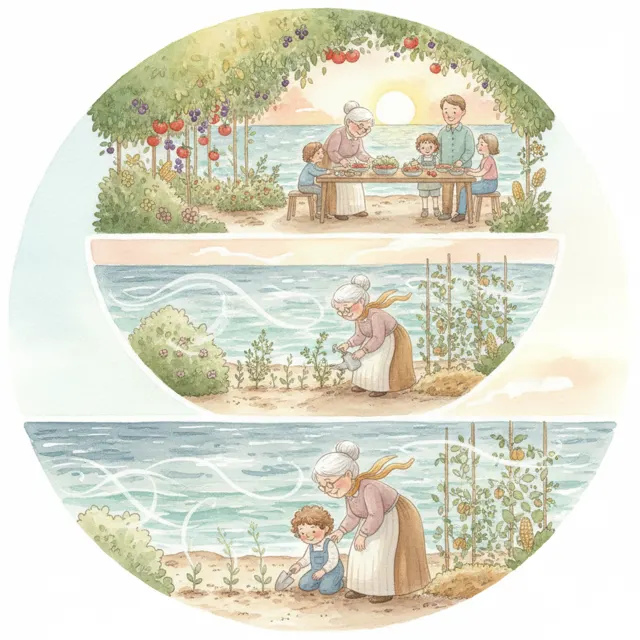
Grandmother's Garden by the Sea

Ages 3-84 minutesfamily
Grandmother's Garden by the Sea story for kids illustration

A grandmother plants a garden by the sea, but the salty wind is hard on the plants. Her grandchild helps her tend it with care. Slowly, the garden grows green and feeds the whole family.

Moral: Patience and care help good things grow.

On the edge of the island, where the sand met the soil, Grandmother planted a little garden. She grew sweet potatoes and leafy greens in neat rows that ran all the way to the low sea wall. "The salty wind is too strong," said her grandchild, Malu. "Will anything grow here?" "We must be patient," said Grandmother. "And we must care for the garden every day." So every morning, Malu helped Grandmother. They watered the little plants with fresh water, carrying it in a heavy bucket from the well. They built a low wall of stones to block the salty wind. They pulled the weeds with gentle hands. The sun was hot, and the work was slow. Some days, Malu felt tired. "Is the garden growing?" he asked. "Look closely," said Grandmother. "The leaves are a little greener today." Malu looked. She was right. Tiny green shoots were pushing up through the dark soil. Day by day, the garden grew. The sweet potatoes spread their broad leaves. The greens stood tall and bright. One evening, the family sat down to a meal made from the garden. Grandmother had cooked sweet potatoes and fresh greens from the very rows they had tended. "This food is from our garden," said Malu, proud. "It grew because we were patient," said Grandmother. "And because we cared for it every day." Malu smiled as he ate. The food tasted better than anything, because he had helped it grow. And the garden by the sea grew greener every year, until the family could share its food with the neighbors.

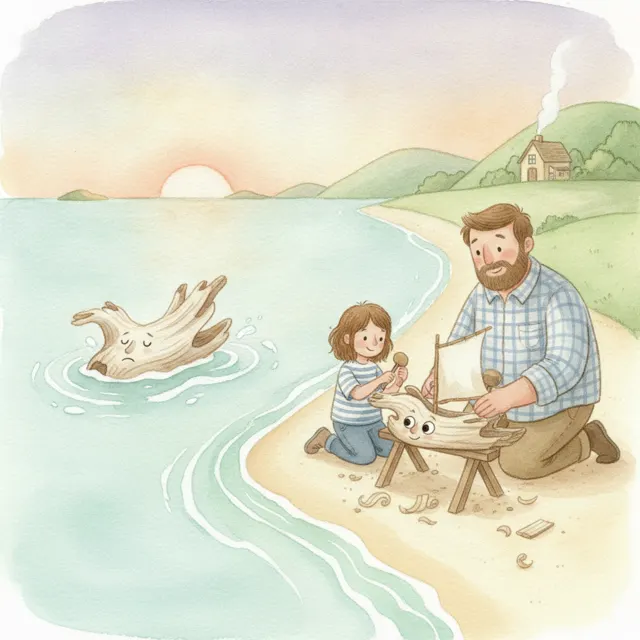
The Driftwood That Became a Boat

Ages 3-84 minutespurpose
The Driftwood That Became a Boat story for kids illustration

A piece of driftwood floats alone on the sea, thinking it is useless. A girl finds it on the beach and, with her father, shapes it into a little boat. The wood finds its purpose.

Moral: Nothing is useless if someone sees the good in it.

A piece of driftwood floated on the sea for a long time. It bobbed past islands and ships, and sometimes fish nibbled at its edges. "I am just old wood," it thought. "I am good for nothing." One day, the waves pushed the driftwood onto a beach. It lay there in the sun, gray and worn and forgotten. A girl named Suri found it. "Look at this wood, Papa," she said. "It is smooth and strong." Papa turned it over in his hands. "This wood has traveled far across the sea," he said. "We can make something good from it." Papa and Suri carried the driftwood home. They cut it and shaped it and sanded it smooth, and Suri watched every step. They fitted the pieces together with care and tied them tight. Slowly, the old wood became a little boat. "A boat!" said Suri. "You made me a boat from driftwood!" "We made it together," said Papa. "Now let us see if it floats." They carried the little boat to the water and set it down. It floated, light and true. Suri climbed in and paddled around the bay, laughing, and the little boat rode the waves like a brave sailor. "I was just old wood," the driftwood thought, happy at last. "But now I am a boat that carries a child." The little boat sailed every day, out into the blue water and back. And it learned that nothing is useless if someone sees the good in it.

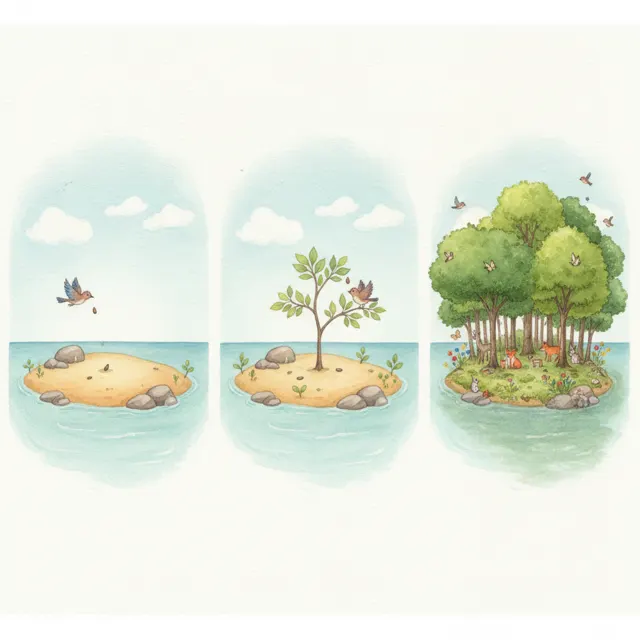
The Little Island Grows a Forest

Ages 3-84 minutesgrowth
The Little Island Grows a Forest story for kids illustration

A bare little island has only sand and rocks. A bird drops a seed, and a small tree grows. Year by year, more seeds come, and the little island slowly becomes a green forest full of life.

Moral: Big things begin with one small seed.

Far out in the sea sat a little island. It had only sand and rocks. No trees grew there, and no animals lived on it. It was bare and quiet, with only the waves and the wind making any sound. One day, a bird flew over, carrying a seed in its beak. The seed dropped onto the warm sand. The rain came and softened the seed. The sun warmed it day after day. And a small green shoot pushed up through the sand. "I am the first tree on this island," said the little shoot. "I will grow tall and strong." The years passed. The little tree grew taller. Its roots held the sand in place. Its leaves caught the rain. Birds stopped to rest on its branches. They dropped more seeds as they ate. Each seed grew into a new tree. The trees grew close together. They made shade and cool air. Slowly, the island turned green. More animals came. Crabs dug in the sand. Birds built nests in the branches. Lizards basked on the warm rocks. The little island was full of life, humming with the sound of wings and claws. A passing ship sailed near. "Look," said a sailor. "A green forest in the middle of the sea. It must have taken a long time to grow." The first tree swayed in the breeze, proud. It had started small, just one seed on the sand. But with time and rain and sun, it had grown a whole forest. "Big things," the tree thought, "begin with one small seed."

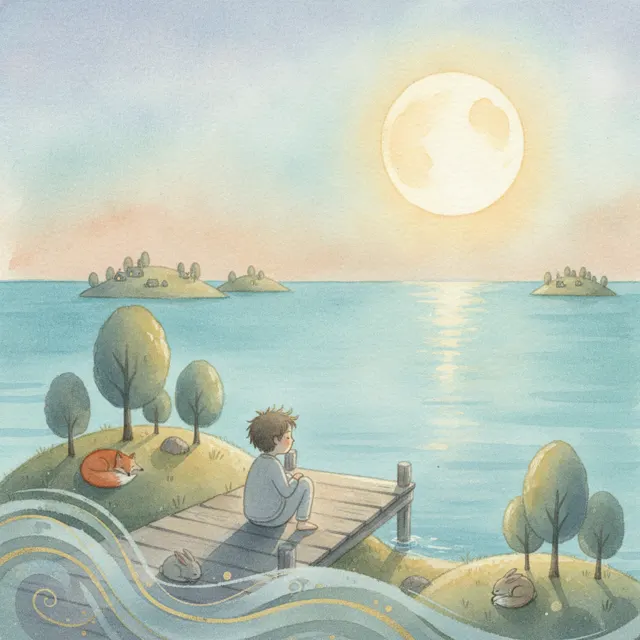
The Moon Over the Quiet Island

Ages 3-84 minutescalm
The Moon Over the Quiet Island story for kids illustration

After a busy day of play, the island grows quiet at night. A child watches the moon rise over the sea and learns that rest is a quiet gift. The island and the child settle into sleep.

Moral: Rest is a quiet gift that makes us ready for a new day.

The island was busy all day. Children ran on the beach, building sandcastles and splashing in the waves. Boats sailed in and out of the bay, and fishermen pulled in their nets full of fish. Birds called, and waves splashed against the rocks. But when the sun went down, the island grew quiet. The boats came home. The children went inside. The birds tucked their heads under their wings, and even the crabs settled into their sandy holes. A child named Aro sat on the sand, watching the sky. The stars came out, one by one. Then the moon rose over the sea, big and bright and silver, and it looked close enough to touch. "Why is the island so quiet at night?" Aro asked his mother. "Because even the island needs to rest," said his mother. "The day is for playing. The night is for sleeping." Aro listened. The waves made a soft sound, whoosh, whoosh. A gentle wind rustled the palm leaves, and the air smelled sweet with the night flowers. The moon made a silver path on the water, all the way to the shore. "The night is not really silent," said Aro. "It is a quiet kind of music." His mother smiled. "Rest is a gift we give ourselves," she said. "It makes us ready for a new day." Aro yawned. He felt calm and sleepy. He took his mother's hand, and they walked home in the moonlight. The island settled into its quiet sleep, and so did Aro.

Frequently Asked Questions

Turn Your Child Into the Hero of Their Own Story

Upload their photo and watch as AI creates a beautiful, personalized storybook with illustrations that look just like them. From $5.99/month.

✨ Make Your Child the Hero

Plans from $5.99/month