Spring Stories for Kids

Joyful tales of spring awakening, baby animals, blooming flowers, and the magic of new beginnings

โœจ Make Your Child the Hero

Spring is the season of possibility, when the world shakes off winter and everything begins again. These spring stories for kids capture the wonder of that first warm day, the excitement of watching flowers push through soil, the delight of baby animals taking their first wobbly steps. Each story explores the themes of new beginnings, patience, and the quiet magic of nature renewing itself. At CreateStory.ai, you can generate your own personalized spring stories where your child joins a baby bird learning to fly or helps a garden wake up from winter sleep. These tales help children connect to the seasonal world around them and find hope in every fresh beginning.

Why do kids love spring stories so much?

Spring is full of new things. Birds come back, flowers open, and the world turns green. Kids see this change right outside their window. A story about spring feels close to their own day. They know what a puddle and a butterfly are.

There is also something special about the season. Every spring, about 3.5 billion birds fly back into the United States from points south (Cornell Lab of Ornithology). That is a lot of birds coming home, and kids love hearing about it.

What do spring stories teach young children about change?

Spring stories teach gentle lessons. A seed waits, a kite lets go, and a snowman melts. Through these small tales, kids learn that change and growth are a normal part of life. The stories make big ideas feel small and safe.

The lessons feel warm and easy to hold. After reading, ask your child what changed in the story. How did it make the characters feel? A short chat turns a story into a lesson they keep. Do this often and the habit sticks.

Sample Stories

Read these stories, then create a personalized version where your child is the hero

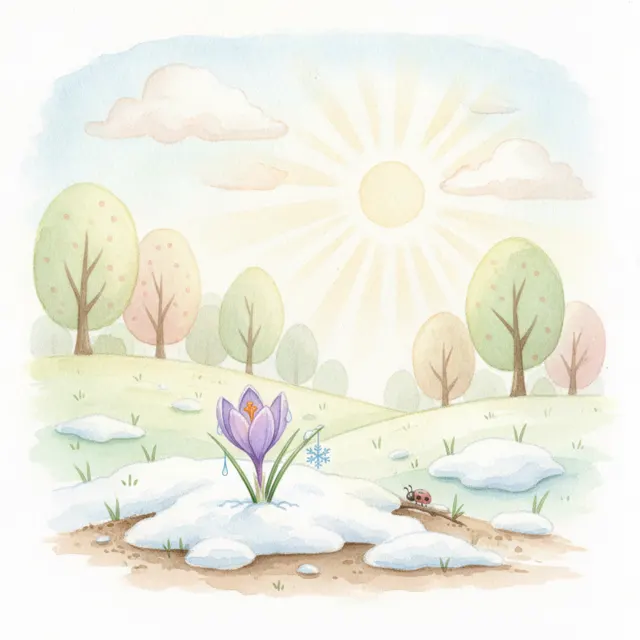
The First Flower

Ages 4-83 minspring, courage, new beginnings
The First Flower story for kids illustration

A tiny crocus pushes through the last snow of winter and discovers that being first isn't always easy, but it's always brave.

Moral: Having the courage to go first, even in the cold, can inspire everything that follows.

Under three inches of February snow, Cora the crocus was getting restless. All winter she'd been a bulb, small and hard and patient, tucked in the cold dark earth. Around her, she could feel the other flowers waiting too, the daffodils and tulips and snowdrops, all curled up and quiet. But Cora was done waiting. "It's still cold," the wise old daffodil warned from nearby. "The frost could come back." "The snow is melting," Cora said. "I can feel the difference." "It could freeze again tonight," said the tulip. "It could," Cora agreed. "But I'm going anyway." She pushed. The soil was heavy and cold and dark. She pushed again. A tiny crack of light appeared above her, gray and pale and wonderful. She pushed a third time and broke through the snow into February air. It was cold. Actually very cold. She shivered from her purple petals to her roots. But above her, a robin was singing in the bare tree. Below her, the snow was melting slowly into mud. And somewhere, in a way she couldn't quite explain, she could feel the earth getting warmer by the day. By the time she fully opened, three weeks later, she had company. Snowdrops to her left. Daffodils just behind her. The tulips still working their way up. "You started all of this," the robin told her one morning. "I just went first," Cora said. "That's what starting means," said the robin. Sometimes the most important thing is just being willing to go first.
Pip's First Rain

Ages 3-73 minnew experiences, spring rain, baby animals
Pip's First Rain story for kids illustration

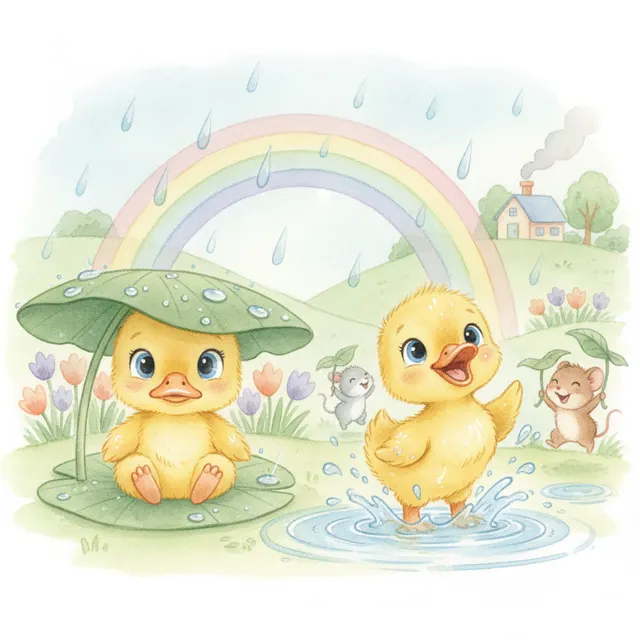
A baby duckling named Pip has never seen rain before and is convinced it's something terrible, until he discovers it's actually wonderful.

Moral: Sometimes the things that seem scary are exactly what you were made to love.

Pip the duckling had hatched in the last week of winter, under the barn overhang where it was dry and sheltered. He'd grown up in warm, still air, surrounded by hay and the familiar smell of the farm. He'd heard about rain. His mother talked about rain the way she talked about all her favorite things: with her eyes going soft and a little smile in her bill. "You'll love it," she always said. "You're a duck." But the first spring rain came on a Thursday, and Pip was not prepared. The sound started on the barn roof, a low drumming that got louder and louder. Then the sky outside the barn door went gray, and the air turned cool and sharp and electric. Then the first drops fell. Pip hid behind his mother's wing. "It's attacking," he said. "It's raining," said his mother. "Same thing." His mother walked out into the rain without him, because she knew he'd follow eventually. He didn't follow immediately. He watched from the barn door. The rain made patterns in the puddles. It made the grass sparkle. It made the whole world smell completely different, clean and green and alive. One small drop landed on his bill. He stepped forward. One foot in the rain. Then both feet. Then all of him, out in the open, letting the spring rain fall on his head and back and wings, and discovering that his feathers beaded the water right off them, and that he wasn't wet at all, just wonderfully cool and alive. "Oh," he said. His mother watched from nearby, smiling. "I know," she said. The things we fear the most sometimes turn out to be exactly what we were made for.

Maya and the Mud Garden

Ages 4-84 mincreativity, gardening, spring
Maya and the Mud Garden story for kids illustration

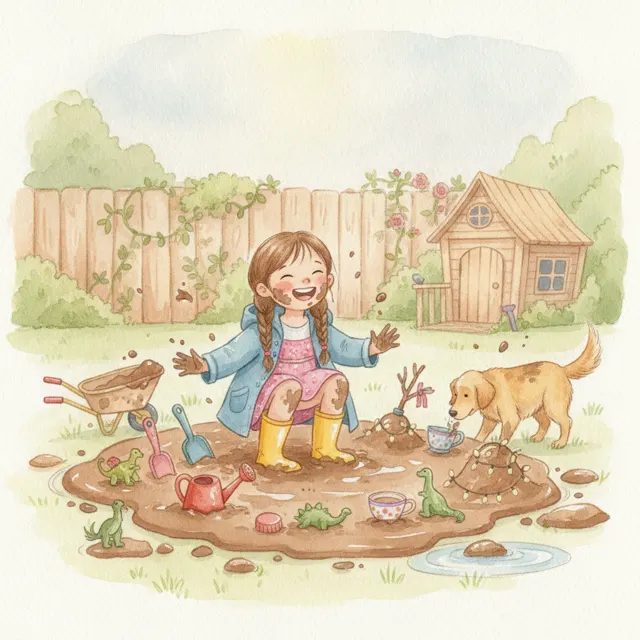
After a spring rain turns the backyard into a mud pit, six-year-old Maya decides to make it into the best garden anyone has ever seen.

Moral: A creative mind can find possibility in a mud puddle.

The rain had been coming down for two days, and by Thursday morning, the backyard was mostly mud. "Ugh," said Maya's older brother, looking out the window. "Oh," said Maya, in a completely different tone of voice. She put on her wellies, her old raincoat, and her garden gloves. She marched outside. "What are you doing?" her brother called. "Making a mud garden," said Maya. This did not immediately make sense to anyone except Maya. She started by patting the mud into shapes. A path. Two raised beds made of mud bricks (which kept falling over but she kept building them back). A muddy pond in the corner where water had collected. Then she found things. A fat earthworm, which she relocated to one of the beds where he'd have good soil. Three roly-polies under a rock. Some seeds from the shed that she pressed into the soft earth. "Those won't grow," her brother said from the back step. "They might," said Maya. Her mom came out with a cup of tea for herself and hot chocolate for Maya. She stood looking at the mud garden for a long time. "I like the path," she said finally. "It needs stones," said Maya. They spent the next hour finding stones together to line the path. Then they planted two more packets of seeds. Then they sat on the back step drinking their hot drinks and looking at the mud garden, which was mostly mud but was also, somehow, full of potential. Six weeks later, the seeds came up. Sunflowers and nasturtiums, a little lopsided, cheerful as anything. "Those won't grow," Maya told her brother when they bloomed. He couldn't argue with that. Spring is proof that even the muddiest start can bloom into something beautiful.

The Rainbow at the End of the Street

Ages 5-94 minwonder, nature, spring storms
The Rainbow at the End of the Street story for kids illustration

After a big spring storm, a boy races to find the end of a rainbow and learns something unexpected about where rainbows actually live.

Moral: Sometimes the magic we chase is already right where we are.

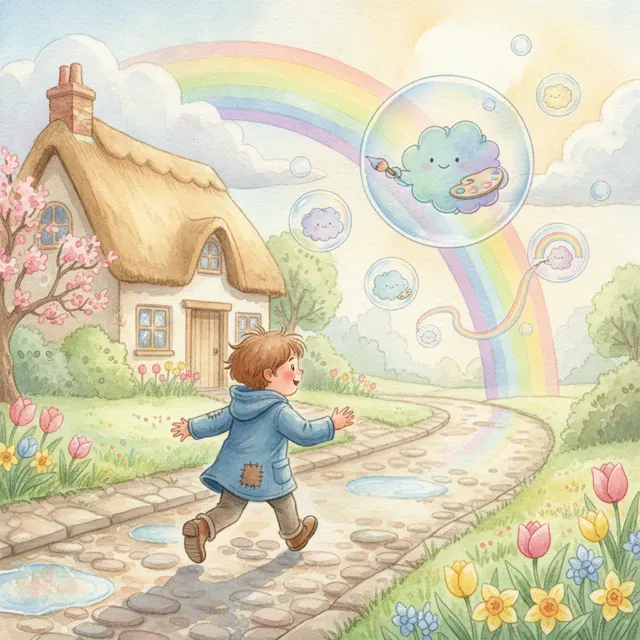
The storm had been fierce, all thunder and hammering rain and the kind of wind that made the windows rattle. Seven-year-old Noah had watched it from his bedroom window, his nose pressed against the glass. Then it stopped. And there, curving up from behind the park and arching over the whole neighborhood, was the biggest, clearest rainbow Noah had ever seen. Red, orange, yellow, green, blue, violet, so bright it looked painted. "I'm going to find the end," Noah announced. His dad raised an eyebrow but said "okay" in the tone of someone who knew what was about to happen. Noah ran down the street toward the park. The rainbow seemed just past the park gates. He ran through the gates. The rainbow seemed to be at the other end of the park. He ran to the other end. The rainbow seemed to be just past the fence, over the church. He ran until he was out of breath at the church wall. The rainbow was now arching over his own street. He walked back slowly, hands on his knees. His dad was waiting on the front step. "It kept moving," Noah reported, in case his dad hadn't realized this was the rainbow's fault. "They do that," said his dad. "The end of a rainbow is always the same distance away from you. You can never actually reach it." Noah thought about this. "So there's no pot of gold?" "Well," said his dad. "You got a good run through the park in fresh spring air after a storm. The neighborhood looks clean and bright. And look." He pointed. The rainbow was still there, reflected perfectly in the puddle on their front path. "It came to us," said Noah. "It always does," said his dad. Sometimes the thing you're chasing is already right where you're standing.

What the Robin Knows

Ages 6-104 minhope, patience, spring renewal
What the Robin Knows story for kids illustration

A girl recovering from a long winter illness watches a robin build a nest outside her window and finds hope in the bird's patient, persistent work.

Moral: Watching nature's quiet persistence can teach us that healing happens one small piece at a time.

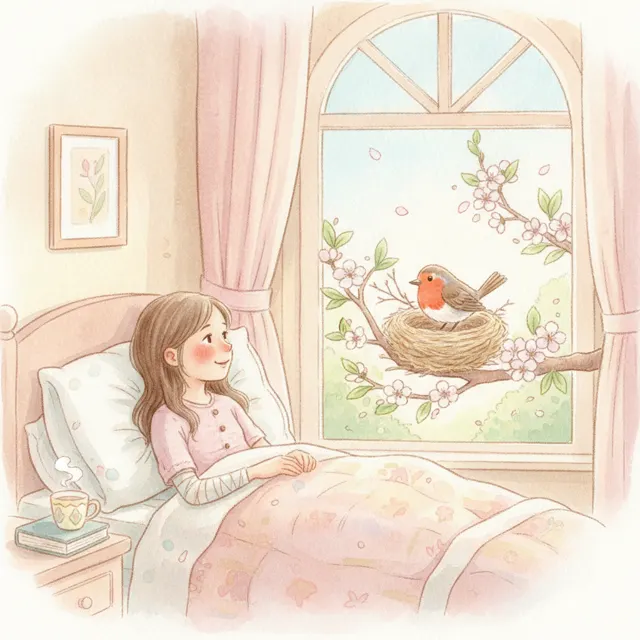
Emma had been sick for most of February and all of March. Not terribly sick, but sick enough to miss school, miss the park, miss the birthday party she'd been looking forward to since October. By April, she was mostly better but tired in a way that the doctor said would take time to fix. She spent a lot of time at the window. One morning, a robin appeared on the sill. Ordinary looking: red breast, brown wings, serious black eyes. He looked at her through the glass for a moment, then flew away. He came back the next morning with a piece of dry grass. Emma watched. He came back again. And again. Always with something: a twig, a strip of bark, a piece of wool from somewhere. He tucked each piece into the same spot in the climbing rose on the wall below her window, patiently, methodically. She started marking it in her sketchbook. A drawing each morning of how the nest was coming along. By the end of the week, the nest existed. Not much yet, but it was clearly a nest. By the following Tuesday, it was finished. By the Wednesday after that, three pale blue eggs sat inside it. Emma brought her sketchbook to show the doctor. "He built a whole nest in twelve days," she said. "While I was watching." The doctor flipped through the sketches. "How are you feeling today, compared to two weeks ago?" Emma thought about it. "Better." "About as much progress as that nest," the doctor said. Emma looked at the drawings. The nest had seemed impossible at the start. Then it had happened anyway, one piece at a time. She thought she understood what the robin knew. Recovery, like building, happens slowly and then all at once.

The Puddle That Would Not Stay

Ages 3-84 minuteschange
The Puddle That Would Not Stay story for kids illustration

A big spring puddle dries up in the warm sun, and Sam feels sad. Then green shoots and bright flowers grow in its place. Sam learns that when one fun thing ends, a new one begins.

Moral: Things change, and new fun always comes along.

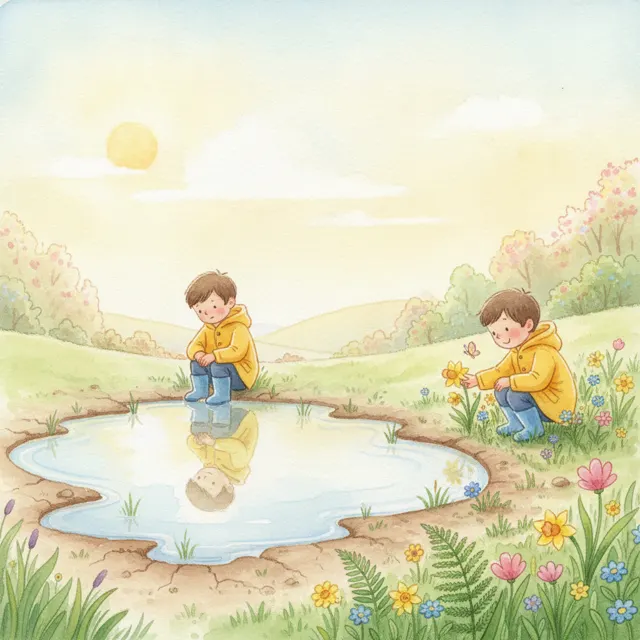
After the spring rain, a big puddle sat in the yard. Sam loved that puddle. He jumped in it every day. Splash! The water flew up high. "I love this puddle," Sam said. "I hope it stays forever." But spring days grew warm. The sun shone down. Day by day, the puddle got smaller and smaller. "My puddle is shrinking!" Sam said. He felt sad. Mom came to look. "The sun is drinking it up," she said. "That is what happens in spring." "But I want my puddle to stay," Sam said. "Watch and see," Mom said. "Spring always brings something new." The puddle got smaller each day. Soon it was just a wet spot. Then it was gone. Sam sat where the puddle used to be. "Now what will I do?" he asked. The next morning, Sam went back to the same spot. Green shoots were poking up from the soft ground. Little yellow flowers opened in the sun. "Look, Mom!" Sam said. "Flowers grew where my puddle was!" "That is spring for you," Mom said. "One thing ends, and another begins." Sam smelled the flowers. They were sweet. "I miss my puddle," he said. "But these flowers are nice too." Then two butterflies flew by and landed on the flowers. Sam laughed. A little green frog hopped past. "Maybe I did not lose my puddle," Sam said. "Maybe it turned into something new." Every day, Sam watched the flowers grow. New things kept coming. A ladybug. A worm. Each one made him smile. "Change is not so bad," Sam said. "When one fun thing ends, a new one starts."

Bella's Bulb Wakes Up

Ages 3-83 minutespatience
Bella's Bulb Wakes Up story for kids illustration

Bella plants a bulb and waits for it to grow. Day after day, nothing shows above the dirt. Bella learns to be patient, and at last a yellow flower opens in the sun.

Moral: Good things come to those who wait.

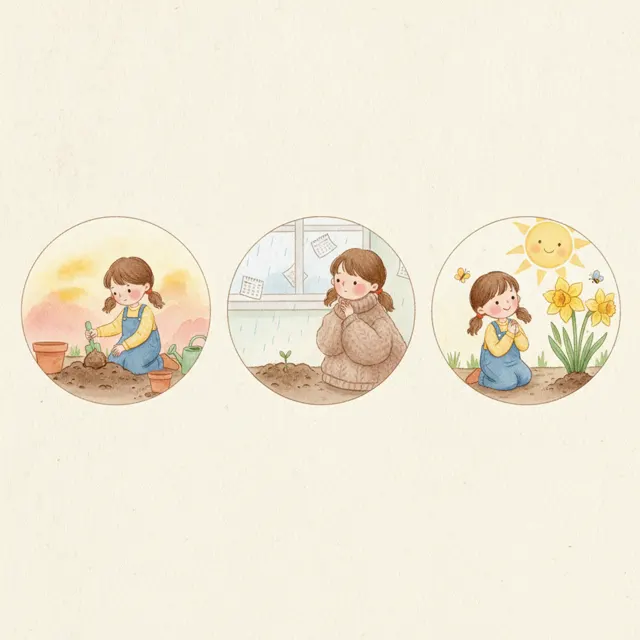
Bella got a small brown bulb in a paper bag. The bag said, "Plant me and wait." Bella dug a little hole in the yard. She set the bulb in the soft dirt. She covered it up and gave it water. "Now grow!" Bella said. She waited one day. Nothing. She waited two days. Still nothing. "Why won't it grow?" Bella asked. "It is sleeping," Dad said. "Bulbs need time." Bella did not like waiting. "I want a flower now," she said. "Good things come to those who wait," Dad said. Bella waited a whole week. She looked at the dirt every single morning. Still nothing grew. "It is broken," Bella said. "My bulb will never grow." "It is not broken," Dad said. "It is busy under the dirt. It is growing roots. Roots come first. Then the flower comes." "But I cannot see the roots," Bella said. "You do not have to see them," Dad said. "They are working anyway, deep in the ground." So Bella kept waiting. She watered the spot. She sang soft songs to the dirt. She did not give up. Weeks went by. One spring morning, Bella looked outside. A small green point was poking up from the dirt! "Dad, come quick!" she said. "It is growing!" Every day the green point grew taller. Then a stem grew. Then a little bud. Then one sunny day, the bud opened. It was a yellow flower. It looked like a tiny sun. "It was worth the wait," Bella said. She smiled at her flower. "See?" Dad said. "Good things come to those who wait." Bella nodded. "I waited a long, long time," she said. "And look what came."

The Kite and the Breeze

Ages 3-84 minutescourage
The Kite and the Breeze story for kids illustration

Leo gets a new kite but is scared to let it go. With Dad beside him, he lets go and the kite flies high. Leo learns that sometimes you have to let go to fly.

Moral: Sometimes you have to let go to fly.

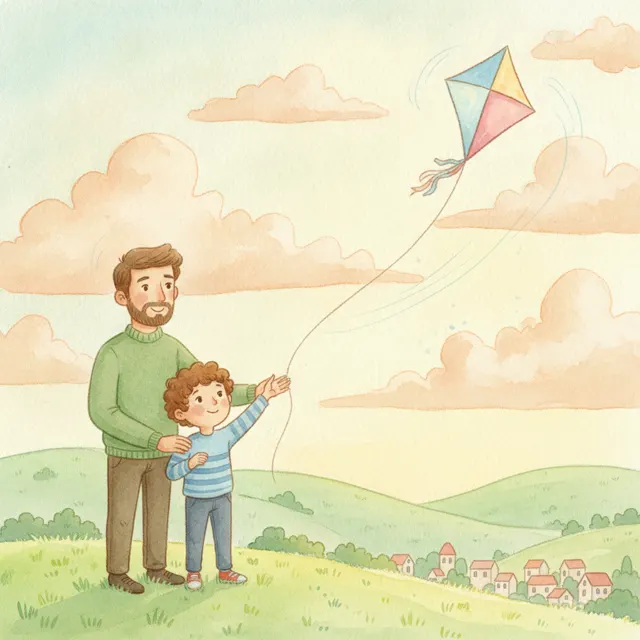
Leo got a new kite for his birthday. It was red with a long blue tail. "Let's go fly it!" Leo said. Dad and Leo walked to the park. The wind was blowing. Leo held the kite up high over his head. "Let go!" Dad said. But Leo held on tight. "What if it flies away?" he asked. "That is what kites do," Dad said. "They ride the wind." "What if I cannot get it back?" Leo asked. "You hold the string," Dad said. "The kite can fly high, but you are still in charge." Leo looked at his kite. It fluttered in his hand. It wanted to go up. But Leo felt scared. "I will go with you," Dad said. "We will let go together. Ready?" Leo took a deep breath. "Okay," he said. "One, two, three." They let go together. The kite went up, up, up. The wind lifted it high into the blue sky. "It is flying!" Leo said. His eyes were wide and bright. "It is!" Dad said. "And you are holding the string." The kite danced in the wind. It went left and right. It looped and dipped. Leo laughed out loud. "I was scared to let go," Leo said. "But look at it now!" "The kite had to leave your hand to fly," Dad said. "Sometimes you have to let go to find the fun." The kite flew for a long, long time. Leo held the string and watched it soar. When it was time to go home, he pulled the string in. The kite came down, safe in his arms. "You were brave today," Dad said. "I was," Leo said. "And it was worth it." The next time, Leo let go right away. He was not scared at all. The kite jumped into the sky, happy and free.

Seven Spots and a Pair of Wings

Ages 3-85 minutesgrowth
Seven Spots and a Pair of Wings story for kids illustration

Dot is a caterpillar who wishes she could fly. She makes a soft bed and rests for a long time. When she wakes, she has wings. Dot learns that change can make you new and strong.

Moral: Change can turn you into something new and strong.

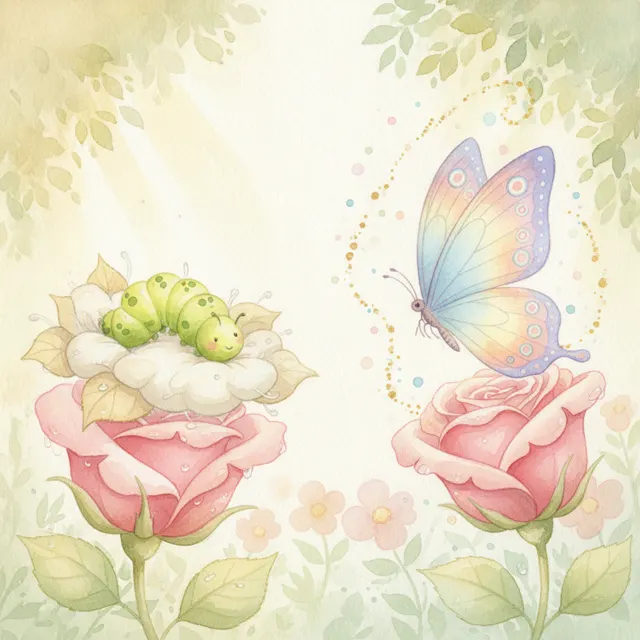
Dot was a small caterpillar. She had seven round spots on her back. All day she crawled on green leaves and ate them. "I wish I could fly," Dot said to a passing bird. "Caterpillars do not fly," the bird said. "They crawl." Dot felt sad. She crawled to the top of a tall plant. She looked up at the sky. "I want to see the world from up high," she said. One day, Dot felt very sleepy. She spun a little bed around her own body. It was soft and warm. She closed her eyes. "I am going to rest now," Dot said. "Maybe when I wake up, I will be different." Dot slept for a long, long time. Days passed. The little bed hung on a branch, still and quiet. Then one spring morning, the bed began to crack. Dot pushed her way out. But she did not look the same at all. She had wings! Bright orange wings with spots. She was a butterfly now. "I have wings!" Dot said. "I can fly!" She flapped them once. Then twice. Then she lifted off the branch and rose into the sky. She flew over the whole garden. She saw the flowers from up high. She saw the pond and the tall trees. Everything looked new and bright. The bird saw her flying. "You were a caterpillar," the bird said. "Now you are a butterfly." "I changed," Dot said. "Change made me new and strong." Dot flew all day long. She visited every flower in the garden. She was no longer a small crawler. She was a flyer, light and free. And she loved her new wings.

The Bird Who Lost Its Song

Ages 3-83 minutespersistence
The Bird Who Lost Its Song story for kids illustration

Robin wakes one spring morning and finds he cannot sing. With help from a friend, he tries a little every day. Robin learns that if you keep trying, your song comes back.

Moral: Keep trying and your song will come back.

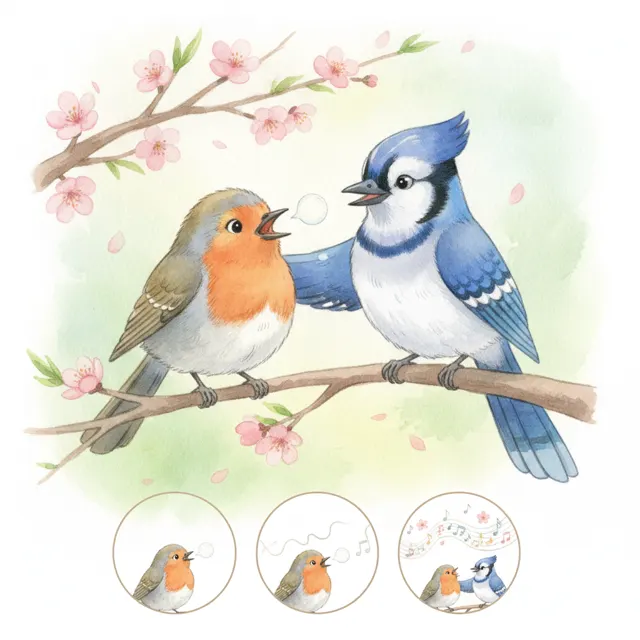
Robin woke up one spring morning. The sun was warm. He opened his beak to sing. But no sound came out. "Tweet?" Robin tried. Nothing. He tried again. "Tweet tweet?" Still nothing. "Oh no," Robin said. "I have lost my song." Robin felt very sad. All the other birds were singing. The sky was full of happy sounds. But Robin sat on his branch, quiet and still. "What is wrong?" asked his friend, a little sparrow. "I cannot sing," Robin said. "My song is gone." "Maybe you just need to rest," the sparrow said. "Try again tomorrow." The next day, Robin tried again. He opened his beak. A tiny sound came out. "T-t-t..." It was very small. "That is a start," the sparrow said. "Do not give up now." So Robin practiced every day. He tried a little in the morning and a little at noon. Some days only a small peep came out. Other days, a short, soft note. "It is hard," Robin said. "My old song is still gone." "Keep trying," the sparrow said. "Your song is in there. It is just hiding." Robin kept going. He did not stop. He practiced when the sun came up. He practiced when the rain fell. He tried and tried. Then one sunny day, Robin opened his beak and sang. The full song came out, clear and sweet. It was not the old song. It was a brand new song. And it was beautiful. "I did it!" Robin said. "My song came back!" "You kept trying," the sparrow said. "That is why it came back." Robin sang all day long. The whole garden was full of his music. And Robin was happy again.

Rain Boots for Everyone

Ages 3-83 minutessharing
Rain Boots for Everyone story for kids illustration

It rains all day and the children want to play. Mia shares her boots so everyone can splash in the puddles. The children learn that sharing makes a rainy day brighter.

Moral: Sharing makes a rainy day brighter.

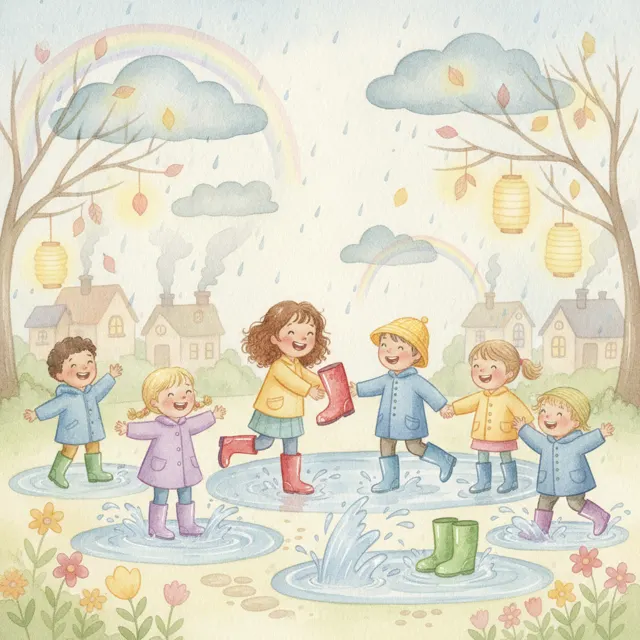
Spring rain fell all day long. The children looked out the window. They wanted to go out and play. "Can we go outside?" asked Mia. "Only with rain boots on," Mom said. "The ground is wet and muddy." Mia had red boots. Her little brother Ben had no boots at all. He looked sad. "I want to splash too," Ben said. Mia looked at her boots. Then she looked at Ben. "You can wear mine," she said. "But then what will you wear?" Ben asked. "I can use big shoes," Mia said. "I will be fine." Ben put on the red boots. They were a little too big. But he could splash! Splash! Splash! The water flew up high. "This is so much fun!" Ben said. Mia smiled and watched. But soon she felt sad. She wanted to splash too. "Come on," said their friend Tom. He had green boots. "We can share." Tom gave Mia one green boot. He kept one for himself. Mia wore one green boot and one big shoe. It looked a little silly. But it worked. "Now you can splash too," Tom said. So Mia and Tom each had one boot. They hopped and splashed together. Ben ran around in his red boots. They all laughed and laughed. The rain kept falling. The puddles grew bigger and bigger. The children splashed and played for a long, long time. "Sharing my boots made the day better," Mia said. "Now everyone gets to play." That night, Mia's mom saw all the wet socks. She just smiled. "Wet socks are a good sign," she said. "They mean you shared and played together."

The Bee Who Could Not Buzz

Ages 3-84 minutesperseverance
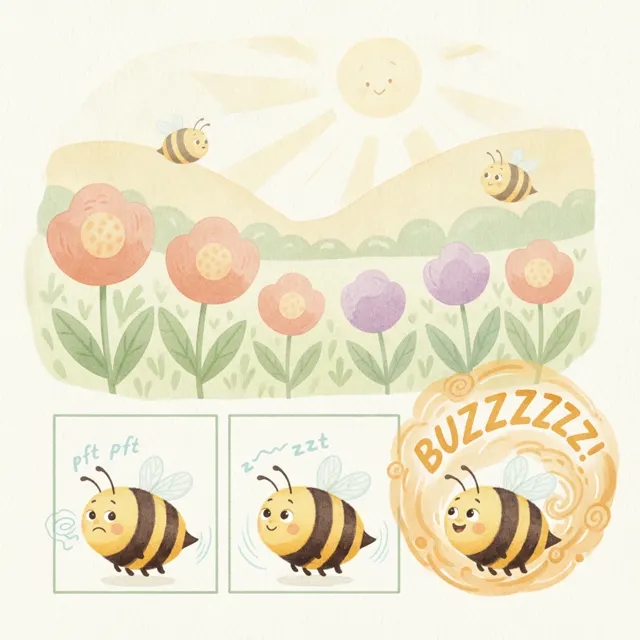
The Bee Who Could Not Buzz story for kids illustration

Buzzy is a bee who cannot buzz like the others. He practices a little every day. One day his buzz comes out strong, and Buzzy learns that practice turns a small try into a strong skill.

Moral: Practice turns a small try into a strong skill.

Buzzy was a little bee. All the other bees could buzz very loud. But Buzzy could not buzz at all. When he tried, only a soft, quiet sound came out. "Bzz," he tried. It was so soft. The other bees did not even hear him. "You have to try harder," said the queen bee. "I am trying," Buzzy said. "It is just not working." "Then practice," the queen said. "Practice turns a small try into a strong skill." So Buzzy practiced every day. He buzzed in the morning. He buzzed at night. He buzzed by the flowers. Still, his buzz stayed weak. "I will never buzz like the others," Buzzy said. He felt like giving up. Then one day, Buzzy saw a big flower that was about to fall over. A bee was trying to lift it. The bee's buzz was loud, but he could not do it all alone. "Let me help you," Buzzy said. He buzzed as hard as he could. Buzzy's buzz came out strong! It was a big, clear BZZZZ! The other bee looked up in surprise. "You can buzz!" the bee said. "I can!" Buzzy said. He had not even noticed. His buzz had grown strong from all his practice. Together, the two bees lifted the flower. They carried it to a safe, soft spot. "Your buzz is strong now," the queen bee said. "All your practice paid off." Buzzy smiled. "I almost gave up," he said. "But I kept trying." "That is the secret," the queen said. "Small tries, done many times, become strong skills." From that day on, Buzzy buzzed loud and clear. And he never forgot how he got there.

A Garden for Grandma

Ages 3-85 minuteskindness
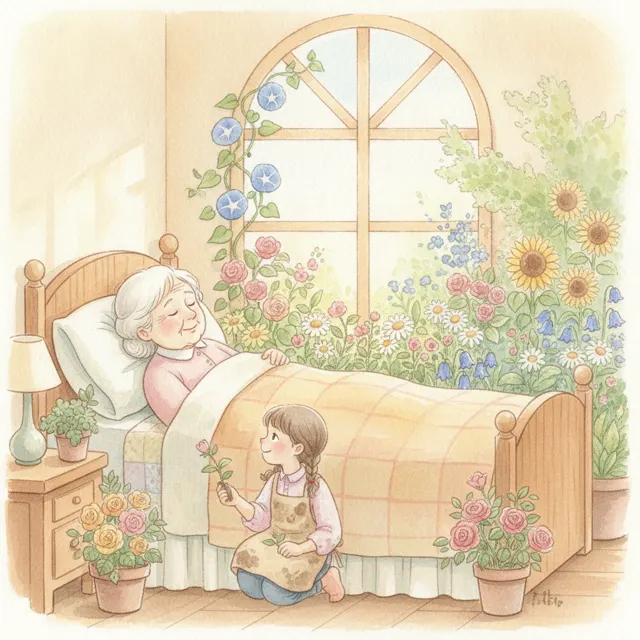
A Garden for Grandma story for kids illustration

Grandma is sick and cannot go outside. Lily grows a garden just for her. When the flowers bloom, Lily learns that growing something for someone you love is the best work.

Moral: Growing something for someone you love is the best work.

Grandma could not leave her bed. She was sick and very tired. Lily wanted to help her feel better. "What can I do for Grandma?" Lily asked her mom. "Maybe something that makes her smile," Mom said. Lily thought for a while. Grandma loved flowers more than anything. "I will grow a garden for her," Lily said. Lily got a packet of seeds and a little patch of dirt. She dug small holes. She planted the seeds one by one. She gave them water. "Grow for Grandma," Lily said to the seeds. Every day, Lily checked the dirt. She pulled the little weeds. She gave the plants water. She talked to them in a soft voice. "Grandma is going to love you," she said to the little sprouts. The sprouts grew tall. Green leaves came out. Then little buds. Then the buds opened into flowers. Red, yellow, and pink. When the flowers were open, Lily picked some. She put them in a cup of water. She carried them up to Grandma's room. "These are for you, Grandma," Lily said. "I grew them all by myself." Grandma smiled. It was a big, warm smile. "You grew these for me?" she asked. "Yes," Lily said. "Because I love you." Grandma's eyes got a little wet. "These are the most beautiful flowers in the world," she said. "You grew them with love." Lily put the flowers by Grandma's bed. Grandma looked at them all day long. Every time she looked, she smiled. Lily kept the garden growing. All spring, she brought fresh flowers to Grandma. And Grandma got a little better every day. Soon she could sit outside and see the whole garden. "You did the best work of all," Grandma said. "You grew something for someone you love."

Worm's Big Day

Ages 3-83 minuteshelping
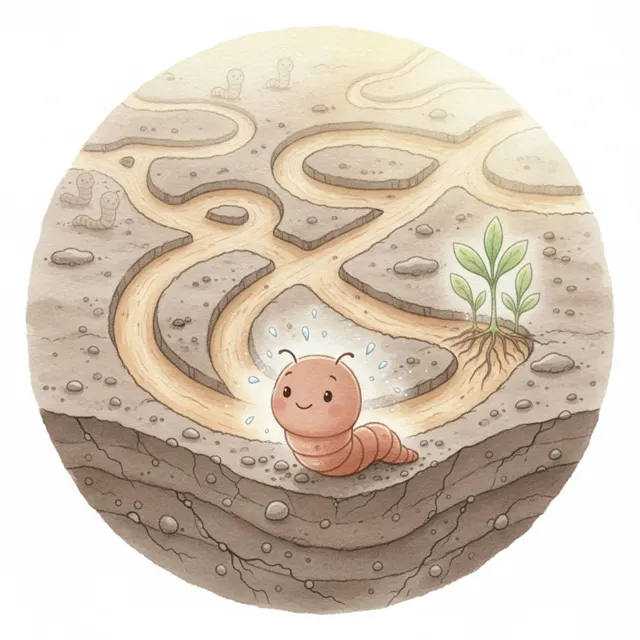
Worm's Big Day story for kids illustration

Worm is small and has no hands or feet. But when the soil is too hard, he digs tunnels to help. Worm learns that even the smallest helper makes a big difference.

Moral: Even the smallest helper makes a big difference.

Worm was very small. He lived deep in the dirt. He had no hands and no feet. But he had a big, kind heart. "What can a small worm do?" Worm asked himself. One day, the garden was in trouble. The soil was hard and dry. The flowers were drooping. The plants could not drink any water. "The soil is too hard," said a sad flower. "Water cannot reach my roots." "I can help," Worm said. But the flower did not hear him. Worm was just too small. Worm got to work anyway. He dug little tunnels in the soil. He went down and up, down and up. His tunnels made the soil soft and loose. Worm dug and dug. He made many, many tunnels. The soil grew airy and light. Soon, the other worms saw what he was doing. "We will help too," they said. They all dug together, side by side. The soil became soft and rich. When the rain came, the water sank down into the little tunnels. It reached the roots at last. The flowers stood up tall and bright. "Thank you, little worm," said the flower. "Your tunnels saved me." "I am small," Worm said. "But I made a big difference." "Small helpers do big things," the flower said. "You just have to start." Worm smiled. He felt very proud. All day he dug and helped the whole garden. The flowers were happy. The soil was soft. And Worm learned that even the smallest helper can change everything.

The Last Snowman

Ages 3-84 minutesletting go
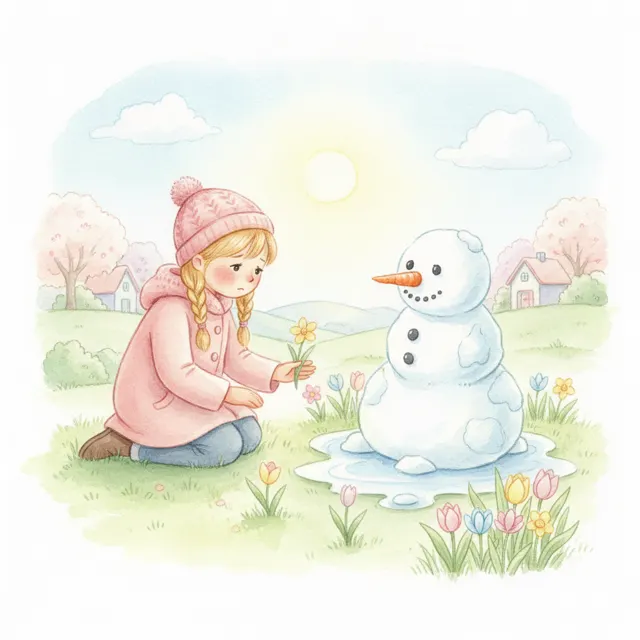
The Last Snowman story for kids illustration

The last snowman begins to melt in the warm spring sun. Emma is sad to see him go, but flowers grow where he stood. Emma learns that some good things end so new good things can begin.

Moral: Some good things end so new good things can begin.

Winter was almost over. In the yard stood the very last snowman. His name was Frosty. He had a carrot nose and a long red scarf. But the days were getting warm. The sun shone brighter each morning. Frosty began to melt, little by little. "Oh no," said Emma. "Frosty is melting." Emma had built Frosty with her dad. She loved him very much. She did not want him to go away. "Can we put him in the freezer?" Emma asked. Dad smiled softly. "Snowmen are for winter," he said. "Spring is on its way." "But I will miss him so much," Emma said. "It is okay to feel sad," Dad said. "Some good things end so new good things can begin." Emma watched Frosty shrink. Day by day, he got smaller. His carrot nose fell to the ground. His scarf lay on the wet grass. Then one day, Frosty was gone. Only a little puddle and a carrot were left. Emma felt sad. She sat on the step and looked at the empty spot. But then she saw something green. Little shoots were pushing up where Frosty had stood. The water from the snowman had soaked into the ground. "Look, Dad!" Emma said. "Flowers are growing right there!" "Frosty gave his water to the garden," Dad said. "He helped the flowers grow." Emma smiled a little. "So Frosty is still here," she said. "He became something new." She picked up the carrot and planted the little shoots with care. All spring, the flowers grew tall and bright. And every time Emma saw them, she thought of her friend Frosty.

Ducklings in a Row

Ages 3-83 minuteslistening
Ducklings in a Row story for kids illustration

Mama Duck takes her five ducklings to the pond. Little Puck wanders off after a shiny thing and gets lost. Mama finds him, and Puck learns that staying close to your grown-ups keeps you safe.

Moral: Staying close to your grown-ups keeps you safe.

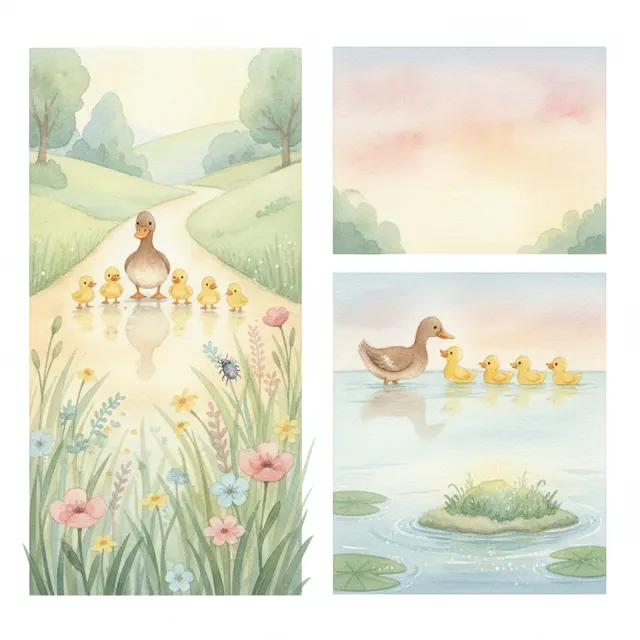
Mama Duck had five little ducklings. Their names were Pip, Pop, Pim, Pam, and little Puck. Every day, she took them to the pond. "Stay close to me," Mama Duck said. "The world is very big. Stay in a row right behind me." The ducklings followed in a neat line. Pip, Pop, Pim, Pam, and Puck. They waddled all the way to the pond. But little Puck liked to wander. He saw a bug and ran after it. He saw a leaf and chased it. He never stayed in the line. "Puck, come back!" Mama Duck called. "I am right here," Puck said. But he was far, far from the line. One day, Puck saw a shiny thing in the grass. He ran to look. It was a silver bottle cap. He played with it and forgot everything else. "Puck!" Mama Duck called. But Puck did not hear her. He was too far away. Then Puck looked up. He was all alone. He could not see Mama Duck or his brothers and sisters anywhere. "Where is everyone?" Puck said. He felt very scared. "Mama! Mama!" Mama Duck heard him. She hurried over fast. "Puck, are you okay?" she asked. "I got lost," Puck said. "I did not stay in the row." "That is why I tell you to stay close," Mama Duck said. "Staying close to your grown-ups keeps you safe." Puck nodded. "I will listen now," he said. "I promise." From that day on, Puck stayed right behind Mama Duck. He followed the line all the way to the pond and all the way home. And he was never, ever lost again.

The Seed Library

Ages 3-84 minutesgenerosity
The Seed Library story for kids illustration

Zoe finds a box full of seeds at the seed library. She takes a seed and grows sunflowers. Then she shares her new seeds. Zoe learns that when you share seeds, kindness grows everywhere.

Moral: When you share seeds, kindness grows everywhere.

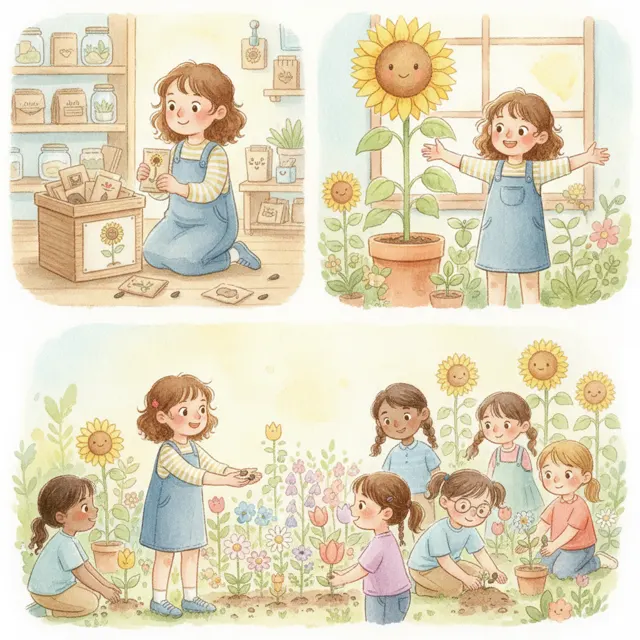
At the end of the street, there was a little wooden box. It was called the Seed Library. Anyone could take a seed from it. Anyone could leave a seed in it. "Nana, what is this?" asked Zoe. "It is a seed library," Nana said. "People share seeds here." Zoe opened the box. Inside were little paper bags. Each bag had seeds in it. The bags had words written on them, like "Tomato" and "Marigold." "Take one," Nana said. "And leave one in return." Zoe took a packet of sunflower seeds. "I will plant these," she said. "But I do not have any seeds to leave yet." "You will soon," Nana said. "When your sunflowers grow, they will make new seeds." Zoe planted the sunflower seeds in her yard. She watered them and waited. The sunflowers grew tall and bright, right up to the sky. At the end of the summer, the flowers made seeds. Lots and lots of seeds. Zoe put them into little bags. She wrote "Sunflower" on each one. She went back to the seed library. She put her bags inside the box. "Now I can share too," she said. Soon, other people took Zoe's seeds. They grew sunflowers in their own yards. Then they shared their new seeds too. The seed library grew fuller and fuller. Flowers bloomed all up and down the street. "Look what started from one little seed," Zoe said. "When you share seeds, kindness grows everywhere," Nana said. "One seed becomes many. And many seeds become a whole street of flowers."

Sunbeam's Morning Walk

Ages 3-83 minutesjoy
Sunbeam's Morning Walk story for kids illustration

Sunbeam is a small ray of light that walks through the garden each morning. She wakes the flowers one by one. Sunbeam learns that a small light can wake a whole garden.

Moral: A small light can wake a whole garden.

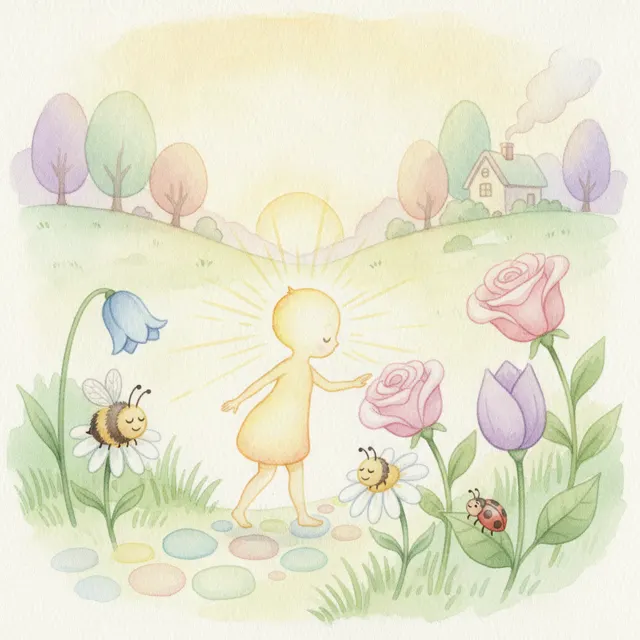
Sunbeam was a little ray of light. Every morning, she woke up very early. She slid over the hill and down into the quiet garden. "Good morning, garden!" Sunbeam said. "Time to wake up!" First, she touched the tulips. The tulips opened their sleepy heads. "Thank you, Sunbeam," they said. Next, she touched the daisies. The daisies opened wide. "Hello, Sunbeam!" they said. Then she touched the sleepy old cat. The cat stretched and purred. "Warm," the cat said. Sunbeam kept walking through the garden. She touched the dew on the grass, and the dew sparkled. She touched the little pond, and the pond shone bright. But some flowers were still asleep in a shady corner. They did not get any light at all. "Come over here," Sunbeam called. But she was just one small light. She could not reach the shady corner. Sunbeam tried anyway. She stretched as far as she could. A tiny bit of light reached the shade. One little flower opened its eyes. Then that flower turned toward the light. It began to glow. And its glow helped the flower next to it open. And that flower helped the next one. Soon, the whole shady corner was awake and blooming. One small light had started it all. "You woke us up," said the flowers. "One small light can wake a whole garden." Sunbeam smiled. "I am just one little ray," she said. "But I am so happy I could help." All day long, the garden was bright and warm. And it all began with one small morning walk.

The Bluebell and the Bee

Ages 3-85 minutesfriendship
The Bluebell and the Bee story for kids illustration

A lonely bluebell grows by the garden gate. A tired bee lands on her for a rest. The two become friends and help each other. The bluebell learns that friends help each other grow.

Moral: Friends help each other grow.

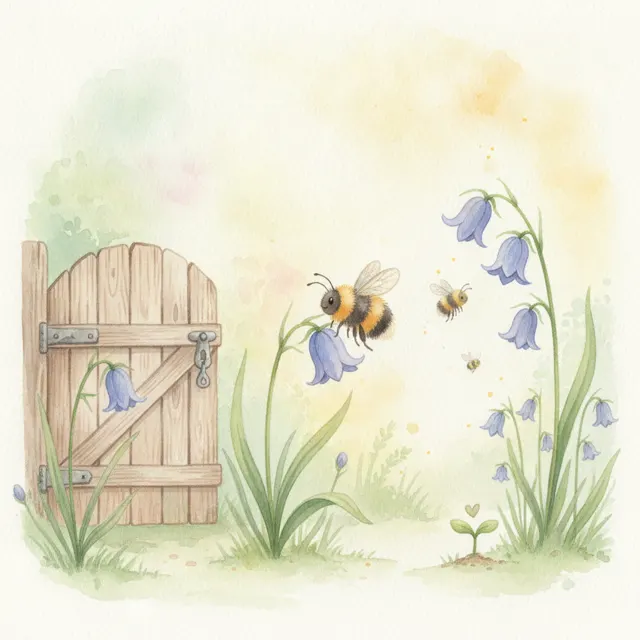
A bluebell grew by the garden gate. She had a pretty blue flower. But she was all alone. No one ever came to visit her. "I wish I had a friend," the bluebell said with a sigh. One day, a bee flew by. She was tired and very hungry. "May I rest on you for a while?" the bee asked. "Yes, of course," the bluebell said. "Stay as long as you like." The bee landed on the bluebell's flower. She drank a little sweet juice. "This is just what I needed," the bee said. "Thank you." "I am happy to help," the bluebell said. "I was lonely. It is so nice to have a visitor." "Then I will visit you every day," the bee said. The next day, the bee came back. She even brought a friend, another bee. They drank sweet juice and buzzed around the bluebell. The bluebell felt happy. She was not lonely anymore. But the bluebell had a problem. Her roots needed rich soil, and the soil by the gate was thin. She began to feel weak. "What is wrong?" the bee asked one day. "My roots need food," the bluebell said. "The soil here is too thin." "I can help with that," the bee said. She flew all around the garden. She visited many flowers. Each flower gave her a little bit of pollen. The bee dropped the pollen on the soil by the bluebell. The soil grew richer. The bluebell grew stronger. Her flower opened wider and brighter than before. "You helped me grow," the bluebell said. "And you gave me sweet juice when I was hungry," the bee said. "Friends help each other grow." From that day on, the bee and the bluebell were best friends. They helped each other every single day.

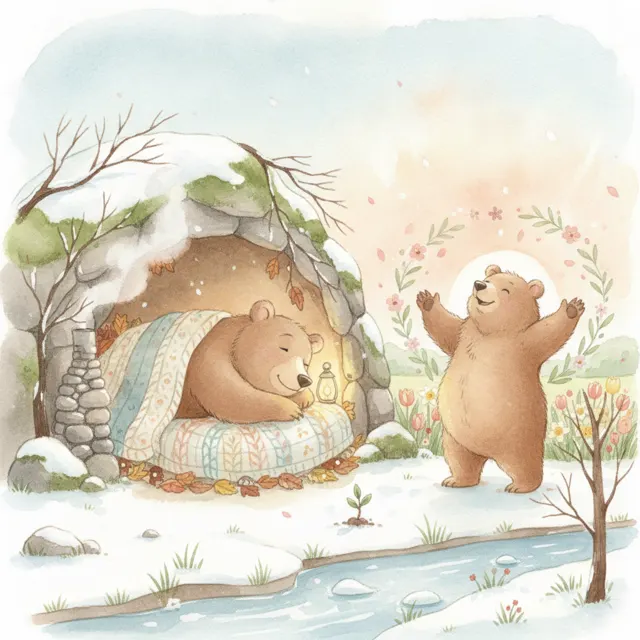
The Very Long Nap

Ages 3-84 minutesrest
The Very Long Nap story for kids illustration

Bear sleeps all winter in a cozy cave. When he wakes in spring, he feels new and strong. Bear learns that rest helps you grow strong for what comes next.

Moral: Rest helps you grow strong for what comes next.

Bear took a very, very long nap. It was not a short nap. It was the longest nap of the whole year. He slept all winter long. Before his nap, Bear had played very hard. He had eaten sweet berries. He had climbed tall trees. He had run all through the woods. Then he felt so sleepy. "Time to rest," Bear said with a big yawn. "I will sleep until spring." Bear found a cozy, warm cave. He curled up in a soft ball. He closed his eyes. And he slept. He slept through the cold wind. He slept through the deep snow. He slept for a long, long time. His body rested. His body grew strong and full. Then one day, the sun came back. The snow began to melt. The air grew warm and soft. Bear opened one eye. "Spring?" Bear said. He yawned a big, slow yawn. Bear stretched his legs. They felt strong and new. He stood up slowly. He felt full of energy. He walked out of the cave. The woods were green again. Birds were singing. The little stream was running fast and clear. "I feel great," Bear said. "My long nap made me strong." Bear went to the stream. He caught a big fish. It was the best fish he had ever eaten. He felt ready for anything. "Rest helps you grow strong for what comes next," Bear said to a little squirrel. "I like to play and never rest," the squirrel said. "But then you get too tired to play," Bear said. "A good rest gives you energy for new fun." The squirrel thought about it. "Maybe I will try a little nap," the squirrel said. Bear smiled. "A good rest is the start of every good day," he said. Then he went off to play in the spring woods, strong and happy.

Frequently Asked Questions

Turn Your Child Into the Hero of Their Own Story

Upload their photo and watch as AI creates a beautiful, personalized storybook with illustrations that look just like them. From $5.99/month.

โœจ Make Your Child the Hero

Plans from $5.99/month