Honesty Stories for Kids

Watch your child step into a story where a small mistake turns into a big lesson about telling the truth.

✨ Make Your Child the Hero

Honesty stories are a gentle way to teach your child the value of telling the truth. Kids learn best through characters they love, not lectures. When a story shows a friend admitting a mistake or returning something that was not theirs, the lesson sticks without a single finger being pointed. These simple tales turn everyday moments, a broken toy, a lost coin, a spilled glass of juice, into chances to be brave and honest. With CreateStory.ai, you can make the lesson personal. Upload a photo and your child becomes the hero of their own honesty story, learning to tell the truth through adventures made just for them.

Why do young children sometimes tell small lies?

Young children are still learning how truth works. When they do something wrong, they may feel scared. They tell a small lie to stay out of trouble. This is a normal step in growing up. Parents can stay calm and kind.

Researchers at McGill University found that almost all children at age two peek at a hidden toy, and about one third of them then lie about it. This comes from PBS KIDS for Parents. A small lie does not mean a bad child. It means your child is learning.

How can I help my child tell the truth?

Praise honesty when you see it. If your child tells the truth, say thank you before you fix the problem. Stay calm so your child is not scared to speak. A warm voice makes it easier to tell the truth.

Read stories about honesty together. Then talk about how the person in the story felt. Ask your child what they would do. This helps your child think about truth before a problem comes up. Keep the talk short and simple.

Sample Stories

Read these stories, then create a personalized version where your child is the hero

The Broken Blue Cup

Ages 3-83 minhonesty
The Broken Blue Cup story for kids illustration

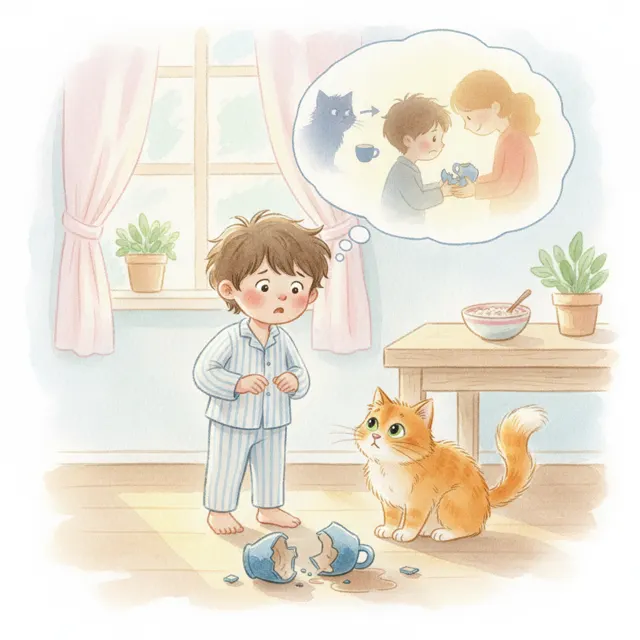
Little Leo accidentally breaks his mama's favorite blue cup and faces a choice. Should he blame the family cat or tell the truth? A warm story about how admitting a mistake can turn a broken cup into a moment of courage and love.

Moral: Telling the truth after a mistake takes courage, and it makes our hearts feel light.

Leo carried his cup of milk to the table, both hands wrapped around it the way Mama had shown him. The cup was blue with a little fish painted on the side, and it was Mama's favorite cup. She drank her tea from it every morning. Leo set the cup down carefully, but his elbow nudged the edge. The cup tipped, rolled, and fell to the floor with a loud crack. Blue pieces scattered across the tiles like tiny pieces of sky. Leo froze. His heart thumped hard. From the kitchen, Mama called out, 'Leo? What was that sound?' For a long moment, Leo thought about blaming the cat. Snowball did knock things over sometimes. But he looked at the broken cup and felt a tight little knot in his tummy. He walked into the kitchen. 'Mama,' he said, his voice small and quiet. 'I broke your blue cup. It was an accident, but it was me.' Mama knelt down and put a warm hand on his shoulder. 'Thank you for telling me the truth, Leo. That took real courage.' 'You are not mad at me?' Leo asked, looking up. 'I am a little sad about the cup,' Mama said. 'But I am so proud of you for being honest. Now, let's clean it up together.' They swept the pieces into a small box. Mama hugged him tight and whispered, 'A cup can be replaced. But a boy who tells the truth is a treasure I would never trade.' That night, Leo lay in bed and smiled. His tummy felt light and calm. The knot was gone. He had told the truth, and it felt so much better than hiding ever could.
Maya and the Lost Coin

Ages 3-84 minhonesty
Maya and the Lost Coin story for kids illustration

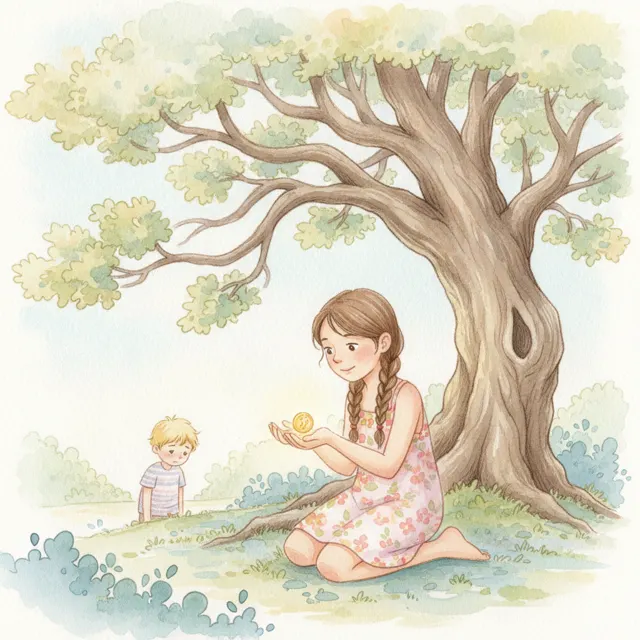
Maya finds a shiny lost coin under the oak tree, but it belongs to her friend Tom and means the world to him. Will she keep it or return it? A gentle tale about the warm feeling that honesty brings.

Moral: Returning what belongs to someone else brings a happiness that is better than any treat.

Maya was playing under the big oak tree when something glinted in the grass. She bent down and picked it up. It was a shiny silver coin with a star on one side. It felt cool and smooth in her palm. 'Wow,' she whispered. 'I could buy a whole bag of candy with this.' Just then, her friend Tom came running over. His eyes were red, and his chin wobbled. 'Maya, have you seen my lucky coin? It fell out of my pocket. My grandpa gave it to me before he moved away.' Maya's fingers closed around the coin in her hand. A whole bag of candy, she thought. Tom would never know she had found it. But then she looked at Tom's sad, worried face. She thought about how much she would miss her own special things if she lost them, and how her heart would hurt. Slowly, she opened her hand. 'Is this the one?' she asked. Tom's face lit up like a sunrise. 'My lucky coin! You found it! Thank you, Maya!' Maya smiled, and something warm spread through her chest. 'I am glad it is back with you,' she said. 'You are the best friend ever,' Tom said. 'Come on, let's go play on the swings.' As they ran off together, Maya realized the warm feeling in her chest was better than any candy. Telling the truth and helping her friend felt like a gift she had given to herself. That evening, Tom's grandpa sent Maya a tiny star sticker for her honesty. She stuck it on her notebook and smiled every time she saw it. The coin went home where it belonged, and Maya's heart felt full and proud.

The Picture on the Wall

Ages 3-85 minhonesty
The Picture on the Wall story for kids illustration

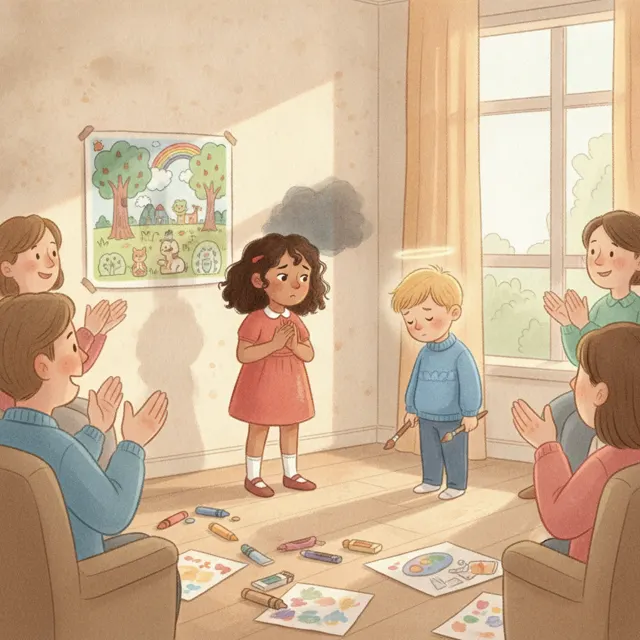
When Priya claims credit for a drawing her shy friend Ben made, the praise feels heavy. She must decide whether to keep the spotlight or tell the truth. A story about how honesty makes us feel clean inside.

Moral: Honesty is worth more than praise we did not earn.

In art class, Miss Rose held up a beautiful drawing of a rainbow arching over a little red farm. 'Who made this wonderful picture?' she asked, her eyes bright. 'I would like to hang it on our wall for everyone to enjoy.' No one raised a hand. Priya stared at the drawing. She had not made it. Her friend Ben had drawn it quietly during free time, but Ben was shy and never spoke up. 'I made it,' Priya said, before she could stop herself. The whole class clapped. Miss Rose pinned the picture to the wall and wrote Priya's name under it in neat letters. Priya smiled, but the smile felt heavy on her face. All day, the picture seemed to watch her. At lunch, Ben sat by himself, not saying a word. Priya's sandwich tasted like cardboard, and she could not finish it. After school, when the room was empty, Priya walked up to Miss Rose. Her hands were shaking a little. 'Miss Rose,' she said. 'The picture is not mine. Ben drew it. I am very sorry.' Miss Rose looked at her kindly. 'That was a hard thing to say. Thank you for telling me the truth, Priya.' She called Ben over and told him his drawing was one of the best in the class. Ben's face turned pink with happiness. Then Miss Rose wrote Ben's name under the picture. She turned to Priya and smiled. 'Honesty makes a beautiful picture too,' she said softly. Priya walked home that afternoon feeling light. Her name was no longer under the drawing, but her heart felt clean. That, she decided, was worth far more than any praise.

The Cookie Jar Secret

Ages 3-83 minhonesty
The Cookie Jar Secret story for kids illustration

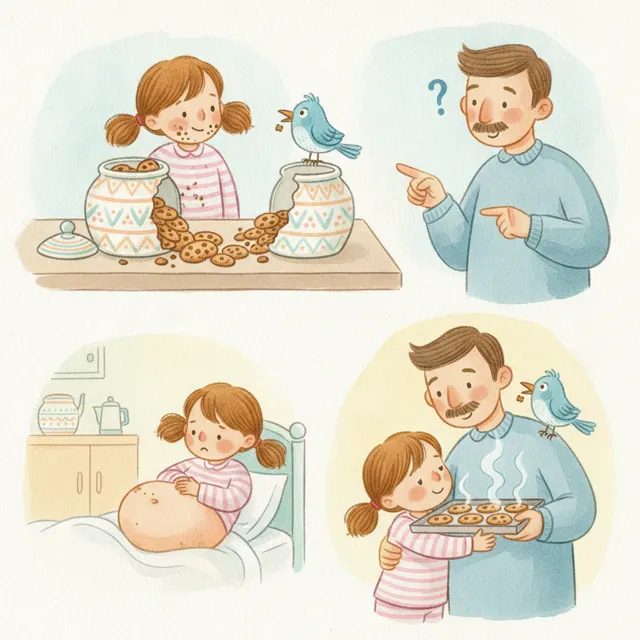
Nina sneaks too many cookies and blames a clever bird when Papa notices. Her tummy hurts until she confesses. A sweet story about how telling the truth feels better than hiding, and how honesty can lead to fresh cookies.

Moral: Admitting what we did wrong feels better than hiding it, and it can even lead to something sweet.

Nina loved the smell of fresh cookies more than almost anything. One afternoon, while Papa was outside in the garden, she spotted the cookie jar on the high shelf. The lid was not on, and the cookies inside looked like little golden moons. 'I will just have one,' she whispered to herself. But one became two, and two became three. Before she knew it, the jar was nearly half empty. Crumbs dotted her chin. When Papa came inside, he wiped his hands and looked at the jar. Then he looked at Nina. 'That is strange,' he said slowly. 'I thought we had more cookies than that.' Nina felt her cheeks turn hot. 'Maybe a bird ate them,' she mumbled, looking at the floor. 'A bird that opens jars?' Papa smiled a little. 'That would be a very clever bird.' Nina looked down at her shoes. Her tummy hurt. 'Papa,' she said quietly. 'I ate the cookies. A lot of them. I am sorry I said it was a bird.' Papa knelt down so he could look her in the eye. 'Thank you for telling me the truth,' he said. 'It is never easy to admit something like that.' 'Are you angry?' Nina asked. 'No,' Papa said. 'But next time, please ask me first. And because you told the truth, I will make a fresh batch, and we can share them together.' They baked cookies side by side, flour dusting both their noses. Nina stirred the bowl while Papa told funny stories. When the cookies came out warm and golden, Papa handed her the very first one. 'For my honest girl,' he said. Nina took a bite and smiled. It tasted sweeter than all the cookies she had sneaked, because this one she had earned by telling the truth.

The Goal That Wasn't

Ages 3-84 minhonesty
The Goal That Wasn't story for kids illustration

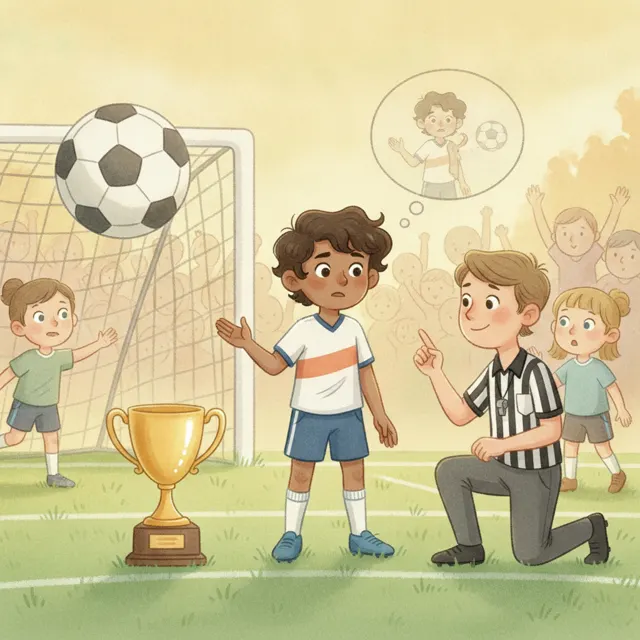
Aarav scores the winning goal, but he knows the ball touched his hand. With a trophy in reach, he chooses to tell the truth. A brave story about how being honest matters more than winning.

Moral: Being honest matters more than winning, because a clear heart is the greatest prize.

Aarav loved soccer more than anything in the world. On Saturday, his team played the biggest game of the season, and the score was tied with one minute left. The ball rolled to Aarav's feet. He kicked it hard, and it flew past the goalie and into the net. The referee blew the whistle. The crowd cheered. 'Goal! We won!' his teammates shouted, lifting Aarav onto their shoulders. Somebody pressed the shiny trophy into his hands. But Aarav's heart sank. He had seen it clearly. The ball had brushed his hand just before he kicked it. It was not a fair goal. That night, Aarav could not sleep. The trophy sat on his desk, but it felt heavy in his chest. He stared at the ceiling and thought about what was right. The next morning, he found Coach Dan by the field. 'Coach,' he said, his voice shaking. 'I touched the ball with my hand before I scored. The goal should not have counted.' Coach Dan put his arm around Aarav's shoulders. 'That was the bravest thing you could have done,' he said. 'A real winner is honest.' Coach Dan called the other team and explained everything. The next weekend, the two teams played the final minute again. This time, the other team scored and won. Aarav's team was sad, but Aarav's heart felt light and free. After the game, Coach Dan gave Aarav a small special medal. 'This is for honesty,' he said. 'It is worth more than any trophy.' Aarav wore the medal home and even to bed that night. Losing the game was hard, but telling the truth made him feel like a champion on the inside.

Sam and the Missing Paintbrush

Ages 3-82 min readtelling truth
Sam and the Missing Paintbrush story for kids illustration

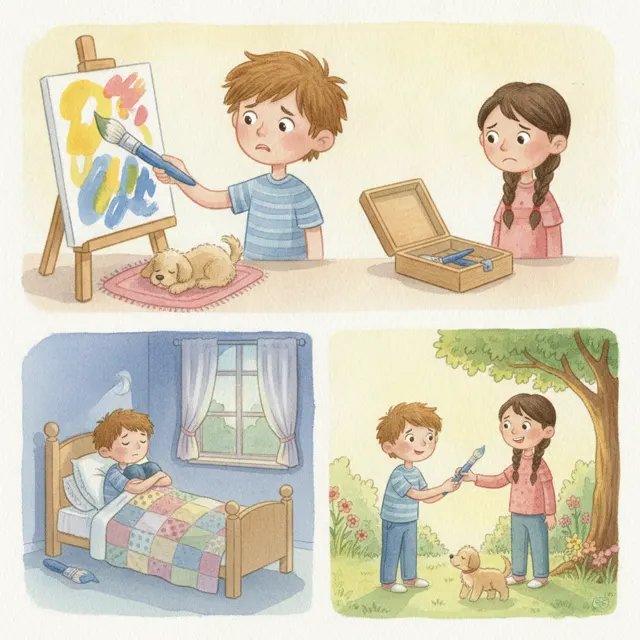
Sam borrows his friend Nina's new paintbrush without asking. He paints a picture and hides the brush. At night he feels bad and cannot sleep. He tells the truth the next day and feels much better.

Moral: Telling the truth feels better than hiding what you did.

Sam saw Nina's new paintbrush on the table. It was red with a soft handle. Nina was not in the room. Sam wanted to use it so much. He did not ask. He picked it up and painted a big red flower. Mama called him in for lunch. He put the brush in his pocket. At lunch, Nina came over to play. She looked all around. "Where is my new paintbrush?" she asked. "I put it right here on the table." Sam looked down at his plate. His face felt hot. "I did not see it," he said. But that was not true. The brush was in his pocket the whole time. That night Sam could not sleep. He hid the brush under his pillow. It did not feel soft now. It felt heavy and hard. In the morning, Sam went to Nina's house. He held the brush out in his hand. "I am sorry, Nina," he said. "I took your brush. I used it without asking. Then I said I did not see it. That was a lie." Nina looked at the brush. Then she looked at Sam. "Thank you for telling me the truth," she said. "That must have been hard." "It was hard," said Sam. "But it feels better now. My chest was so heavy before." "You can use my brush sometimes," Nina said. "Just ask me first, okay?" Sam smiled a big smile. "I will ask," he said. "I promise." They painted red flowers together all morning. Sam's heart felt light and free. Telling the truth was hard, but it was worth it.

The Extra Cookies

Ages 3-82 min readowning mistakes
The Extra Cookies story for kids illustration

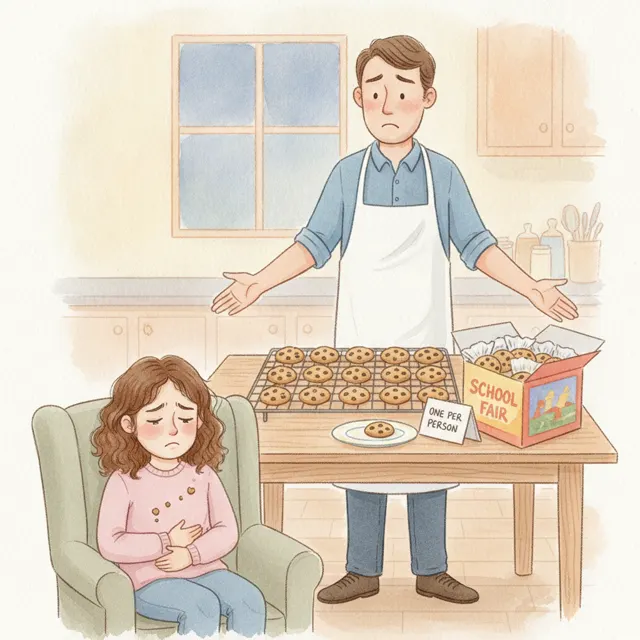
Tara's dad bakes cookies for the school fair. He says she may eat one. Tara eats three in secret. Her tummy hurts and she feels bad. She tells the truth and learns that lies hurt too.

Moral: One small lie can grow and make your tummy and heart hurt.

Tara's dad baked cookies for the school fair. The kitchen smelled so good. "You may have one cookie," Dad said. "Just one." Tara took one cookie and ate it fast. Then she looked at the warm plate. No one was watching. She took another cookie. Then one more. Three cookies were gone. She wiped her mouth and walked away. She did not tell Dad what she had done. She went to her room and sat on her bed. The cookies were good, but the secret was not. That night Tara's tummy hurt. "What is wrong?" Dad asked. "Nothing," said Tara. "I ate one cookie, just like you said." But she knew that was not true. She had eaten three. Her tummy hurt from the cookies and from the lie. Tara tossed in her bed. The secret felt like a rock inside her. She could not get it out. At last she got up and went to Dad's room. "Dad," she said, "I did not eat one cookie. I ate three." Dad sat up and turned on the light. "I am glad you told me," he said. "A lie can make your tummy feel bad too." "I know," said Tara. "My tummy hurt more from the lie than from the cookies." Dad gave her a big hug. "Tomorrow we will bake more cookies for the fair. You can help me. And next time, tell me the truth right away." "Okay," said Tara. "I will." That night she finally slept well. Her tummy and her heart both felt light.

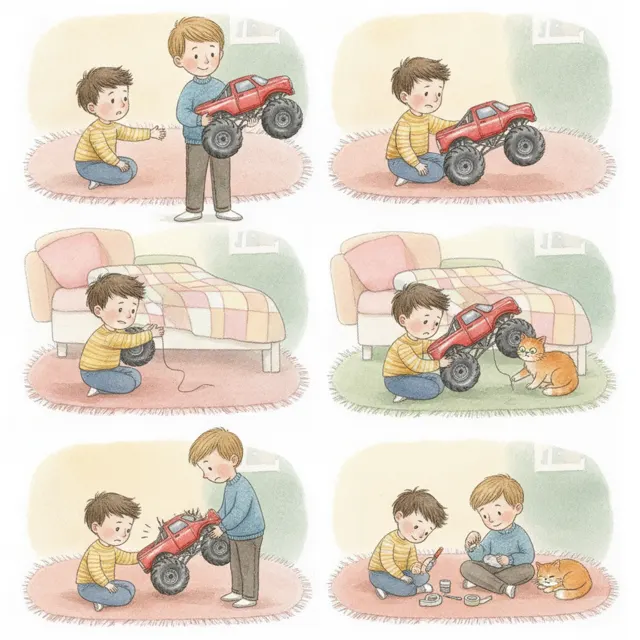
Leo's Broken Truck

Ages 3-82 min readhonesty
Leo's Broken Truck story for kids illustration

Leo's big brother has a new toy truck. Leo plays with it and breaks the wheel. He hides the truck and blames the cat. Then he tells the truth and they fix it together.

Moral: A broken toy can be fixed, but a lie only makes things worse.

Leo's big brother had a toy truck. It was green and shiny. "Do not touch my truck," his brother said. "It is special to me." One day Leo was alone in the room. He picked up the truck. He rolled it on the floor. Vroom, vroom. Then he dropped it. The wheel broke right off. Leo felt scared. He hid the truck in the closet. When his brother came home, he asked, "Where is my truck?" "I do not know," said Leo. "Maybe the cat took it." But there was no cat in the house. Leo felt sick. The lie sat in his tummy all day long. He could not play or eat. He even skipped his favorite snack. He just sat by the window and stared. At bedtime, Leo went to his brother. "I broke your truck," he said. "I dropped it on the floor. Then I hid it in the closet. I said the cat took it. That was a lie." His brother looked sad for a moment. "I am sad about my truck," he said. "But I am glad you told me the truth." "Can we fix it?" asked Leo. "I am really sorry." "Let us try," said his brother. They found some glue. They put the wheel back on. The truck was not perfect, but it rolled again. "Thank you for telling me the truth," his brother said. "Next time, tell me right away, okay?" "I will," said Leo. He learned that a broken truck can be fixed, but a lie only makes things worse.

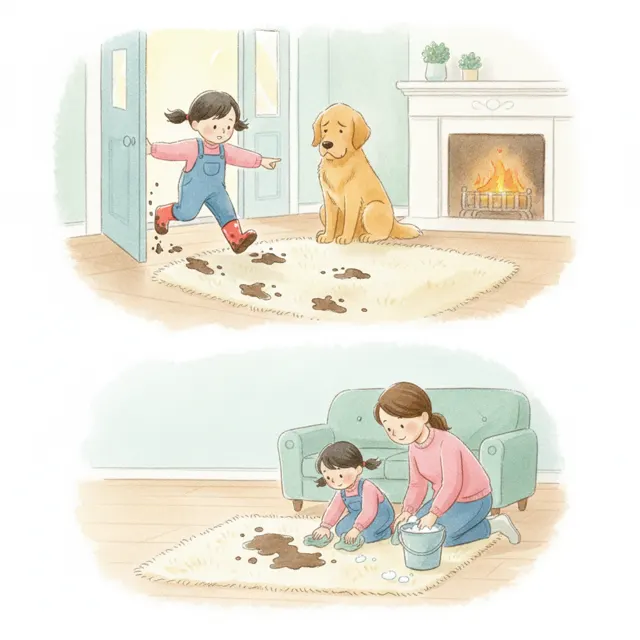
Muddy Shoes on the Rug

Ages 3-82 min readtelling truth
Muddy Shoes on the Rug story for kids illustration

Ria runs inside with muddy shoes and leaves marks on the clean rug. She blames the dog at first. Then she tells the truth and helps her mom clean the rug.

Moral: It is better to tell the truth than to blame someone else.

Ria loved to jump in puddles. One rainy day she ran home with muddy shoes. She forgot to wipe them. She walked right across the clean white rug. There were big brown marks everywhere. Ria looked at the rug and her heart dropped. She did not know what to do. Mama came into the room. "Who made these marks on the rug?" she asked. Ria's cheeks turned red. She looked at the dog asleep in the corner. "The dog did it," she said. "He came in all muddy." Mama looked at the dog. "He has been sleeping here all day," she said. "And his feet are clean." Ria looked down. Her own shoes were covered in mud. She felt a lump in her throat. "I made the marks," Ria said softly. "I ran in with muddy shoes. I forgot to wipe them. I said the dog did it. That was not true. I am sorry, Mama." Mama knelt down. "Thank you for telling me the truth," she said. "It takes a brave girl to say that." "I am still sorry," said Ria. "Can I help fix it?" "Yes," said Mama. "You can help me clean the rug." They got a bucket of warm water and a cloth. They scrubbed the marks together. The rug turned white again. "See?" said Mama. "When you tell the truth, we can fix things together." Ria smiled. "Next time I will wipe my shoes at the door," she said. "I promise." And from that day on, she always did.

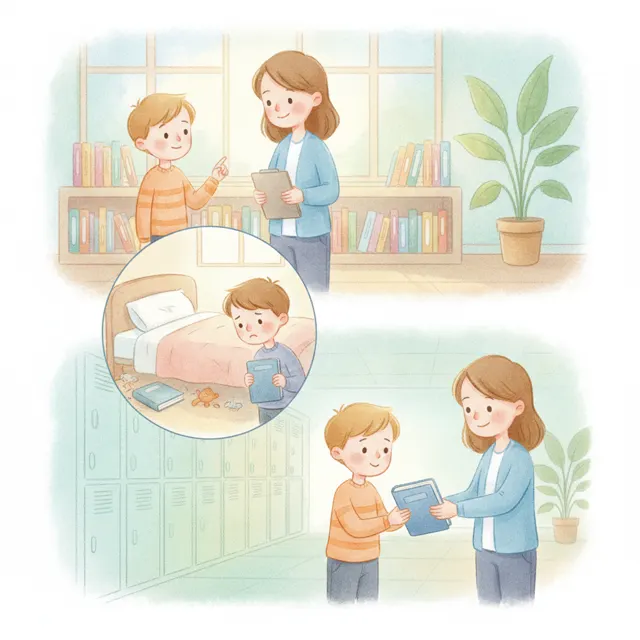
The Book I Forgot

Ages 3-82 min readhonesty
The Book I Forgot story for kids illustration

Jon tells his teacher he returned the library book. But the book is under his bed. He feels bad about the lie. He finds the book and tells the truth.

Moral: Telling the truth about a mistake is braver than hiding it.

Jon loved the book about space. He took it from the school library. When it was time to return it, he forgot. He left it under his bed at home. The next day his teacher asked, "Jon, did you return your library book?" Jon did not want to get in trouble. "Yes," he said. "I returned it." But that was not true. The book was still under his bed. All day Jon felt sick. He could not look at his teacher. He could not eat his lunch. He kept thinking about the book under his bed. At home, he pulled the book out. The cover was bent. He sat on the floor and felt bad. He had told a lie. He picked up the book and held it to his chest. The next morning, Jon walked up to his teacher. He held the book out. "I did not return the book," he said. "I told you I did, but that was a lie. It was under my bed. I am sorry." His teacher smiled kindly. "Thank you for telling me the truth, Jon," she said. "That was a brave thing to do." "Aren't you mad?" asked Jon. "I am not mad," she said. "I am proud of you for being honest. Everyone forgets things sometimes." "Can I return the book now?" asked Jon. "Yes," she said. "Let us go to the library together." They walked to the library. Jon put the book in the return box. He felt light again. He learned that telling the truth is always better than hiding a mistake.

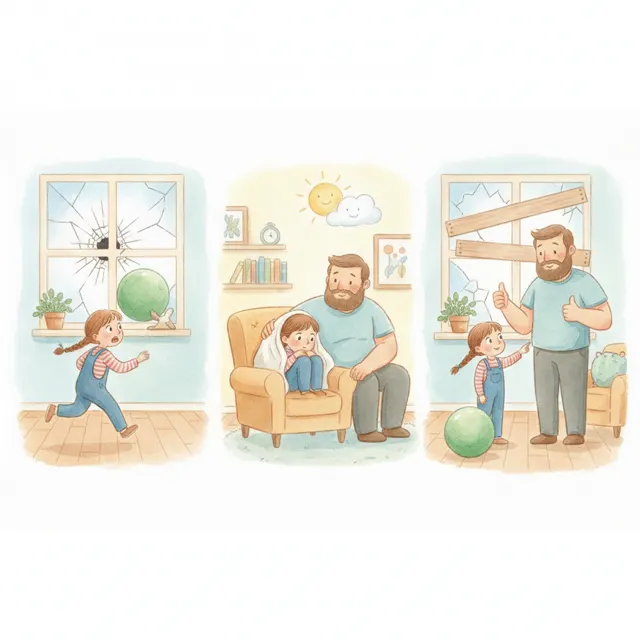
The Big Green Ball

Ages 3-82 min readowning mistakes
The Big Green Ball story for kids illustration

Mina's ball hits the window and it cracks. She runs away and says nothing. Later she tells her dad the truth. Her dad is proud of her for being honest.

Moral: Owning your mistake makes your family proud of you.

Mina was playing with her big green ball in the yard. She threw it high. It hit the kitchen window. Crack! A long line ran across the glass. Mina ran behind the house. She hid the ball under a bush. She did not tell anyone. Her heart was beating fast. At dinner, Dad said, "Something cracked the window today. Does anyone know what happened?" Mina looked at her plate. "I do not know," she said quietly. But her voice shook a little. That night she could not sleep. The crack in the window was all she could think about. She felt the lie growing inside her. It felt bigger and bigger, like a balloon. In the morning, she went to Dad. "I cracked the window," she said. "My ball hit it. I ran away and I did not tell you. I am sorry, Dad." Dad looked at her. "Thank you for telling me the truth," he said. "It is not easy to say you did something wrong." "Aren't you upset about the window?" asked Mina. "I wish it had not cracked," said Dad. "But I am more happy that you told me the truth. That is what matters most." "Can I help fix it?" asked Mina. "Yes," said Dad. "You can help me call the man who fixes windows. And we can put your ball away when you play near the house." "Okay," said Mina. "I will be more careful. And I will always tell you the truth." Dad hugged her. "That is my girl," he said. Mina hugged him back. She felt proud for telling the truth.

The Messy Spelling Test

Ages 3-82 min readhonesty
The Messy Spelling Test story for kids illustration

Ben copies his friend's answer on a spelling test. His teacher sees him and asks about it. Ben tells the truth and learns that doing his own work feels much better than copying.

Moral: Doing your own work feels better than copying someone else.

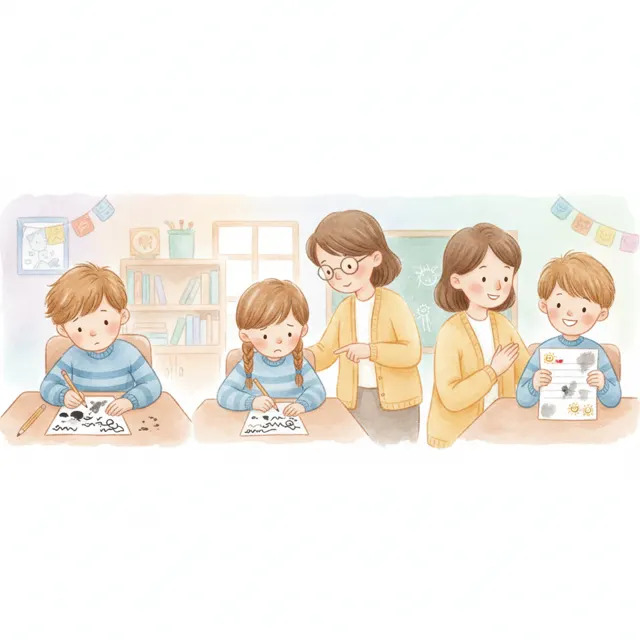
It was spelling test day. Ben looked at the words. One word was hard. He did not know how to spell it. He peeked at his friend's paper and copied the word. His teacher, Mrs. Ray, saw him. She walked over slowly. "Ben, did you copy that answer?" she asked. Ben's face turned red. "No," he said. "I knew the word myself." But his voice was small and shaky. He looked away fast. But he knew that was a lie. His paper had the same word, the same letters, all in a row. At recess, Ben could not play. The lie stayed in his chest. It sat there like a heavy stone. His friends called him to play tag, but he shook his head. He walked up to Mrs. Ray. "Mrs. Ray," he said, "I copied the word. I did not know how to spell it. I said I knew it, but that was not true." Mrs. Ray nodded. "Thank you for telling me the truth, Ben," she said. "Copying is not okay. But being honest is very good." "What happens now?" asked Ben. "You can try the word again on your own," she said. "Do your best. That is all I ask." Ben sat down and wrote the word. He did not know it all. But he tried hard. "How do you feel now?" asked Mrs. Ray. "I feel better," said Ben. "Even though I did not know the word." "Good," she said. "Your own work always feels better than someone else's work." Ben learned that honest work is the best work.

Juice on the Couch

Ages 3-82 min readtelling truth
Juice on the Couch story for kids illustration

Ana spills grape juice on her friend's white couch. She hides the wet spot with a pillow at first. Then she feels bad and tells the truth. She helps clean it up together.

Moral: Telling the truth and helping to clean up fixes things.

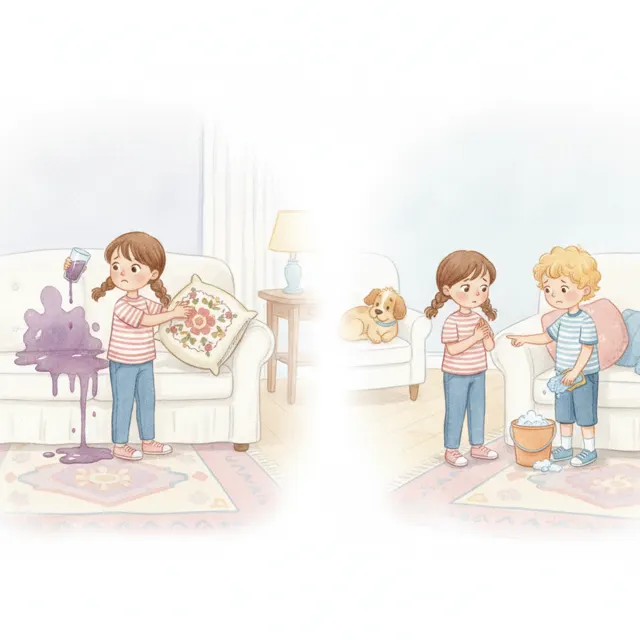
Ana was at her friend Lily's house. She had a cup of grape juice. She was laughing and talking. Then her hand slipped. The juice spilled all over the white couch. Ana froze. Her heart thumped. She put a pillow over the wet spot so no one would see. Then she ran to play. Later, Lily's mom called out, "There is a purple spot on the couch. Does anyone know what happened?" Ana looked at the floor. "Not me," she said. "Maybe it was there before." But she knew it was not. She had spilled it. And she had hidden it with a pillow. Ana felt worse and worse. The lie was heavy in her chest. At last she went to Lily's mom. "I spilled the juice," Ana said. "I put a pillow over it. I said it was not me. That was a lie. I am very sorry." Lily's mom smiled softly. "Thank you for telling me the truth, Ana," she said. "That was the right thing to do." "Can I help clean it?" asked Ana. "Yes, you can," said Lily's mom. "Let us get a wet cloth." Ana and Lily's mom scrubbed the couch together. The purple spot grew lighter and lighter. Soon it was almost gone. "How do you feel?" asked Lily's mom. "I feel better now," said Ana. "The lie felt worse than the spill." "You learned something good today," said Lily's mom. "The truth always helps us fix things." Ana nodded. "Next time I will tell you right away," she said.

The Dog and My Homework

Ages 3-82 min readhonesty
The Dog and My Homework story for kids illustration

Kai says the dog ate his homework. But he does not even have a dog at home. He tells his teacher the truth and does the work again the right way.

Moral: The truth is always better than a made up excuse.

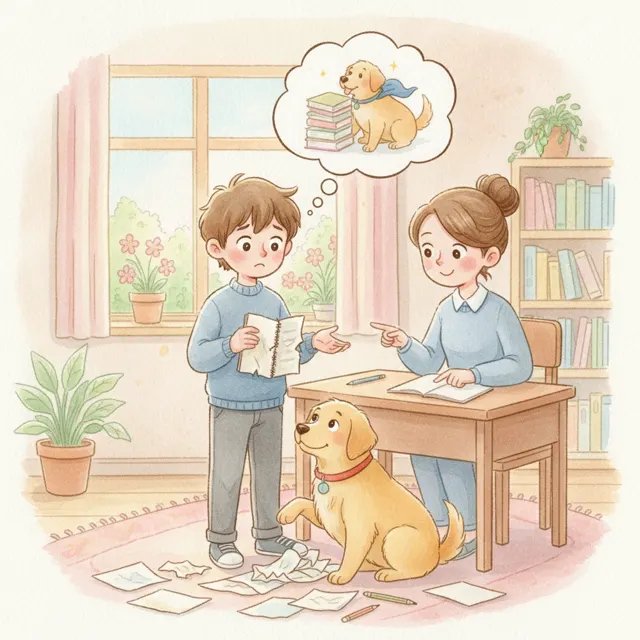
Kai did not do his homework. He played with his cars all night and forgot about it. The next morning his teacher asked, "Kai, where is your homework?" Kai's face felt hot. "The dog ate it," he said. The class laughed. His teacher looked at him. "Your dog ate your homework?" she asked. "Yes," said Kai. "He got it off the table and chewed it up." But Kai did not even have a dog at home. He had made the whole thing up. There was no dog. There never was a dog. All morning Kai felt sick. The lie sat in his chest like a stone. He could not focus on his work. At recess, he went to his teacher. "I need to tell you something," he said. "What is it, Kai?" she asked. "I do not have a dog," Kai said. "I made up the story. I did not do my homework. I played with my cars and forgot. I am sorry." His teacher smiled. "Thank you for telling me the truth," she said. "It is hard to admit that. I am proud of you." "You are not mad?" asked Kai. "I am not mad," she said. "But I do want you to do your homework. Can you do it tonight?" "Yes," said Kai. "I will do it first thing when I get home." That night, Kai did his homework before he played. It felt good to hand it in. His teacher smiled when she saw it. He learned that a true story is always better than a made up one.

The Race at Recess

Ages 3-82 min readhonesty
The Race at Recess story for kids illustration

Mia starts running before the count of three and wins the race. She tells her friends that she cheated. Then they run again the fair way and she feels happy.

Moral: Winning fairly feels better than winning by cheating.

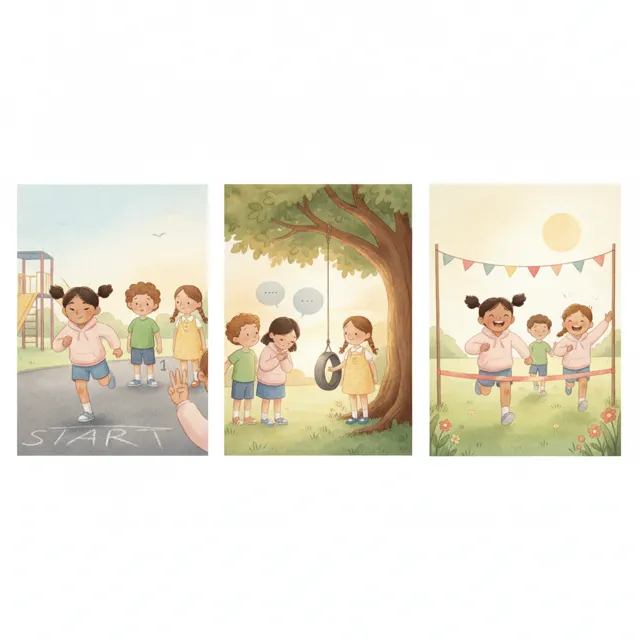
At recess, Mia and her friends lined up for a race. Sam was the fastest runner in the class. Mia wanted to beat him so much. "Ready, set, go!" said Sam. But Mia started running before he said "go." She got a head start. She reached the tree first. She threw her hands up in the air. But something did not feel right. "I won! I won!" Mia shouted. Her friends cheered. Sam looked confused. "You started early," he said. "No, I did not," said Mia. But she knew it was true. She had started before the word "go." Mia held her arms up, but she did not feel happy inside. The win did not feel real. It felt like a lie. She looked at Sam. Then she looked at her friends. "Wait," she said. "Sam is right. I started before he said go. I cheated. I did not really win." The group went quiet. Then Sam smiled. "Thank you for saying that," he said. "That was brave." "Do you want to race again?" asked Mia. "A fair race this time." "Yes!" said Sam. They lined up again. This time Mia waited for the word "go." They both ran as fast as they could. Sam reached the tree first. "You won," said Mia. "Good job, Sam." "Thanks," said Sam. "That was a fair race. And you told the truth. That makes you a winner too." Mia smiled a real smile. A fair loss felt better than a cheated win. From then on, she always waited for the word go.

The Flowers in the Park

Ages 3-82 min readowning mistakes
The Flowers in the Park story for kids illustration

Nora picks flowers from the park garden even though a sign says not to. A helper asks her about it. Nora tells the truth and says sorry for what she did.

Moral: Saying sorry and telling the truth is brave.

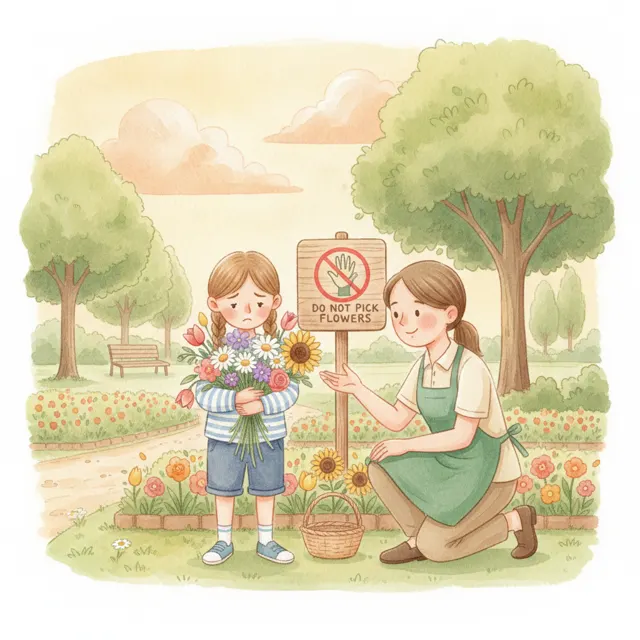
Nora went to the park with her grandma. She saw a garden full of pretty yellow flowers. A sign said "Do not pick the flowers." But Nora wanted one for her hair. She picked three flowers and hid them in her pocket. A park helper walked over. "Excuse me," she said. "Did you pick these flowers? I saw some missing." Nora shook her head. "Not me," she said. "The wind blew them down." Her voice was quiet. She could not look the helper in the eyes. The helper looked at the garden. "The flowers are cut clean at the stem," she said. "The wind does not do that." Nora's face turned pink. Her hand was over her pocket where the flowers were. Grandma looked at Nora gently. "Nora, is there something you want to say?" Nora took a deep breath. She pulled the flowers from her pocket. "I picked them," she said. "I wanted them for my hair. I said the wind did it. That was a lie. I am sorry." The helper smiled. "Thank you for telling me the truth," she said. "The flowers are for everyone to enjoy. That is why we do not pick them." "I understand now," said Nora. "I am sorry I took them." "Can we put them back?" asked Nora. "They will not grow back now," said the helper. "But you can help me water the garden instead." Nora helped water the flowers. She poured the water slowly and carefully. She learned that telling the truth and saying sorry is the brave thing to do.

The Candy in My Pocket

Ages 3-82 min readhonesty
The Candy in My Pocket story for kids illustration

At the store, Dev slips a red lollipop into his pocket without paying. His mom finds it later and asks him about it. He tells the truth and they go back to pay.

Moral: Paying for what you take is the honest thing to do.

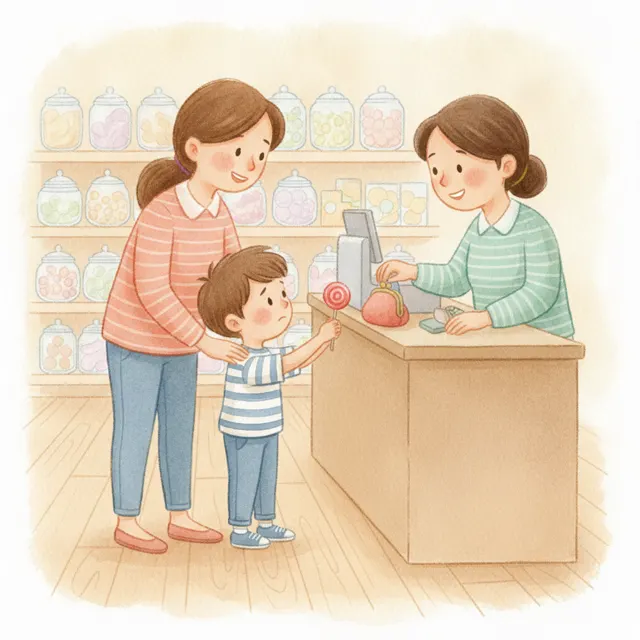
Dev went to the store with his mom. They walked past the candy shelf. Dev saw his favorite candy, a red lollipop. He wanted it so much. He looked around. No one was watching. He slipped the lollipop into his pocket. They paid for the bread and milk and went home. Dev did not say a word. But his pocket felt heavy. The lollipop felt like a secret he could not keep. At home, Dev sat on the couch. The lollipop poked his leg. His mom saw him squirm. "Dev, what is in your pocket?" she asked. "Nothing," said Dev. "Let me see," said Mom. Dev pulled out the lollipop. He looked down. "I took it from the store," he said. "I did not pay for it. I am sorry, Mom." Mom sat down next to him. "Thank you for telling me the truth," she said. "Taking things without paying is wrong. But telling me was the right thing to do." "What do we do now?" asked Dev. "We go back to the store," said Mom. "You give it back and say sorry. Or we pay for it." They walked back to the store. Dev went to the man at the counter. "I took this without paying," he said. "I am sorry. Can we pay for it now?" The man smiled. "Thank you for being honest," he said. "That takes courage." Dev paid with his own money. His heart felt light again. He learned that paying for what you take is the honest thing to do.

The Sand Castle Falls

Ages 3-82 min readtelling truth
The Sand Castle Falls story for kids illustration

Ravi knocks down his little sister's sand castle and says the waves did it. But the sea is far away. He tells the truth and helps build a new one.

Moral: Blaming others does not help, but telling the truth does.

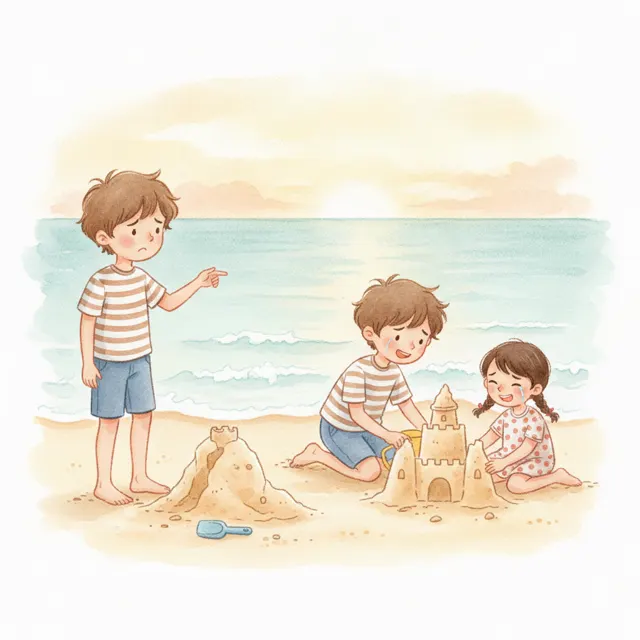
Ravi and his little sister Priya played at the beach. Priya built a big sand castle. She worked on it for a long time. It had tall towers and a deep moat. Ravi ran past her. His foot hit the castle. It fell down flat. Priya started to cry. "What happened to my castle?" she asked. Ravi felt bad. But he did not want to get in trouble. "The waves did it," he said. "A big wave came up and knocked it down." Priya looked at the sea. The water was far away, all the way down the beach. It could not reach the castle. "Ravi," said Mama, who had seen everything, "the waves did not do this. What really happened?" Ravi looked at the sand. Then he looked at Priya's sad face. "I did it," he said. "I ran past and my foot hit the castle. I said the waves did it. That was a lie. I am sorry, Priya." Priya wiped her tears. "You knocked down my castle," she said. "That made me sad. But thank you for telling me the truth." "Can I help you build a new one?" asked Ravi. "I will make it even better." "Okay," said Priya. They worked together in the sand. They built a castle with more towers and a bigger moat. It was the best castle they had ever made. "Thank you for helping," said Priya. "And thank you for telling the truth." Ravi smiled. He learned that blaming others does not help, but telling the truth does.

The Money on the Floor

Ages 3-82 min readhonesty
The Money on the Floor story for kids illustration

Uma finds money on the floor at the park and puts it in her pocket. Then she sees a boy looking for it. She gives the money back to him.

Moral: Giving back what is not yours feels good.

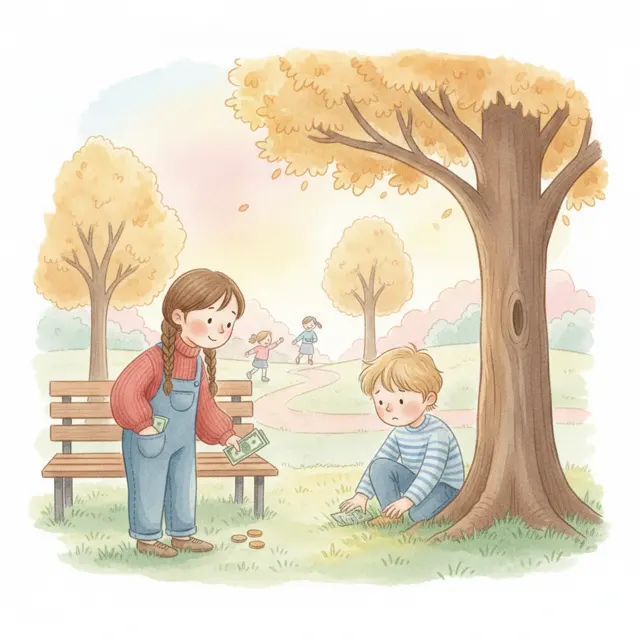
Uma was at the park on a sunny day. She walked near the swings. She saw something green on the ground. It was money, two coins and a folded paper note. Uma looked around. No one was watching. She picked up the money and put it in her pocket. She could buy a snack with it. She could buy a toy. The money felt warm in her hand. Then she saw a boy near the slide. He was looking down at the ground. He looked worried. He walked back and forth. "Where is my money?" he said. "I lost my money for the bus." Uma touched her pocket. Her heart sank. The money was his. She knew it was. She walked over to the boy. "Excuse me," she said. "What did your money look like?" "Two coins and one paper note," he said. "My mom gave it to me for the bus home." Uma pulled the money from her pocket. "I found this by the swings," she said. "Is it yours?" The boy's face lit up. "Yes!" he said. "That is my money. Thank you so much!" "I almost kept it," Uma said softly. "I am sorry I picked it up and did not look for you first." "You gave it back," said the boy. "That is what matters. You are honest." Uma smiled. "Here," she said, handing it over. "I am glad it is back with you." The boy thanked her again and ran to the bus. Uma felt warm inside. Giving back what was not hers felt better than any snack or toy.

Grandma's Special Plate

Ages 3-82 min readtelling truth
Grandma's Special Plate story for kids illustration

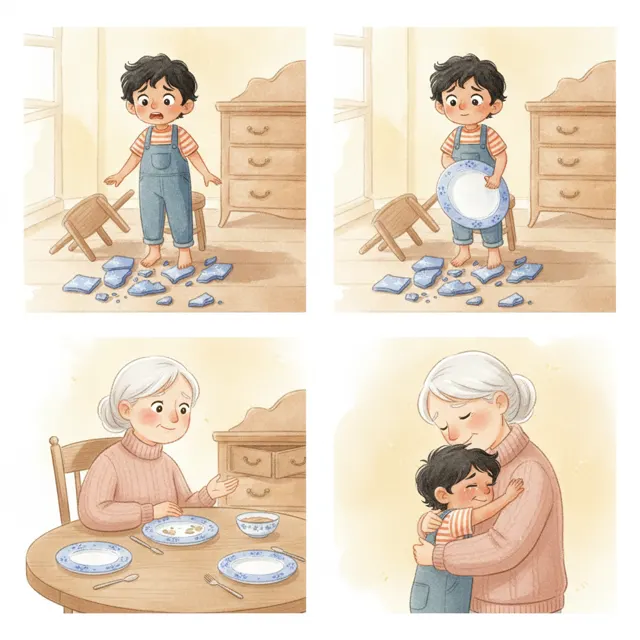
Neel drops grandma's special blue plate and it breaks into pieces. He hides them in a drawer. At dinner he tells the truth and grandma gives him a warm hug.

Moral: A hug comes faster when you tell the truth.

Neel loved his grandma's special plate. It was blue with little white birds on it. Grandma used it only for special dinners. One day Neel was helping set the table. He picked up the special plate to carry it. But his hands slipped. The plate fell and broke into three pieces. Neel froze. He scooped up the pieces and hid them in a drawer. His hands were shaking. At dinner, Grandma looked around. "Where is my special plate?" she asked. Neel looked at his food. "I do not know," he said. But his voice was small and quiet. Grandma looked at him kindly. "Neel, do you know something about the plate?" Neel's eyes filled with tears. "I broke it," he said. "I dropped it when I was helping. I hid the pieces in the drawer. I said I did not know. That was a lie. I am so sorry, Grandma." Grandma stood up and walked to him. She put her arms around him. "Thank you for telling me the truth," she said. "That plate was special. But you are more special to me than any plate." "You are not mad?" asked Neel. "I am a little sad about the plate," said Grandma. "But I am very proud of you for telling the truth." "Can we fix it?" asked Neel. "Let us try," said Grandma. They took out the pieces and put them together with glue. The plate had lines on it now, but Grandma still loved it. "Now it has a story," she said. "A story about a boy who told the truth." Neel hugged her back. He learned that a hug comes faster when you tell the truth.

Frequently Asked Questions

Turn Your Child Into the Hero of Their Own Story

Upload their photo and watch as AI creates a beautiful, personalized storybook with illustrations that look just like them. From $5.99/month.

✨ Make Your Child the Hero

Plans from $5.99/month