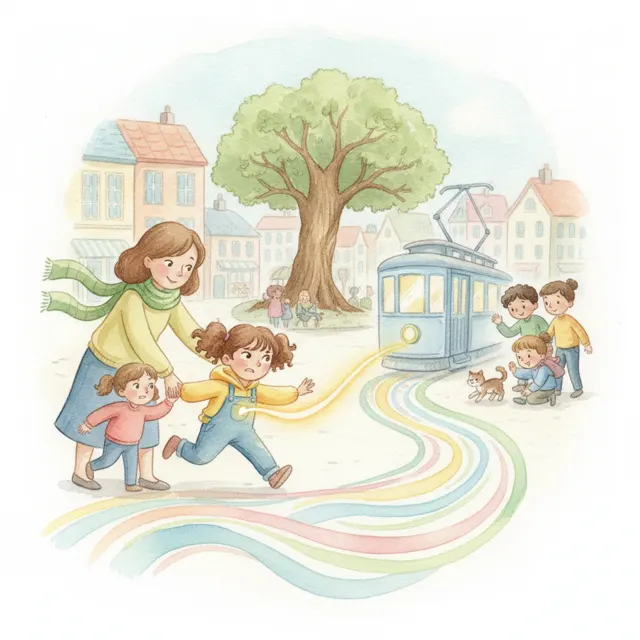
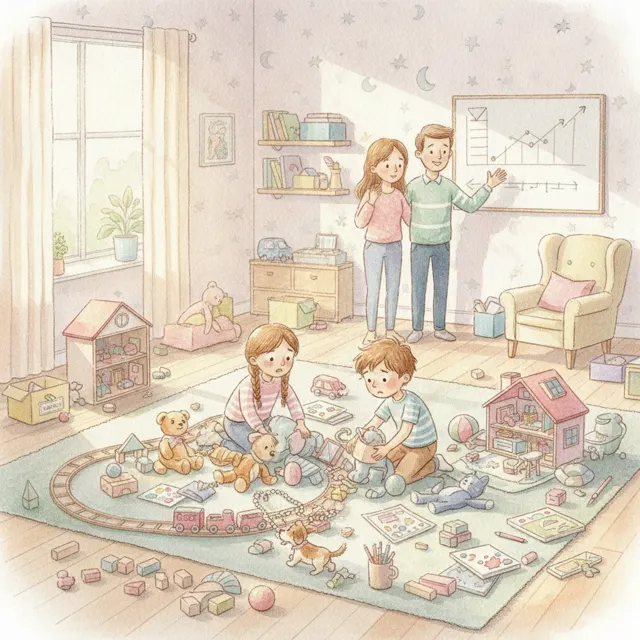
Respect Stories for Kids

Five kind stories that show kids how listening, using gentle words, and caring about others makes every room feel warmer and safer.

✨ Make Your Child the Hero

Respect is a big word for a simple idea: treating other people, animals, and places the way we want to be treated. These respect stories for kids turn that idea into everyday moments a child understands, like welcoming a new kid at lunch, using a quiet voice in the library, and holding a puppy with gentle hands. Each story shows respect through actions, not lectures, so the lesson sinks in naturally. They are calm and warm, perfect for winding down. With CreateStory.ai, your child becomes the respectful hero, seeing their own face in a story about kindness.

Why does learning respect matter for young children?

Respect is about more than manners. It helps children make friends, follow rules, and learn well. In a 2011 meta-analysis, Durlak and colleagues reviewed 213 school programs teaching social and emotional skills like respect and found an eleven percentile point gain in children's skills, behavior, and achievement.

How can parents model respect for their child?

Children copy what they see more than what they are told. Speak kindly to your child, listen when they talk, and show respect to other people in front of them.

When a child sees respect every day at home, it becomes their normal way of treating people.

Sample Stories

Read these stories, then create a personalized version where your child is the hero

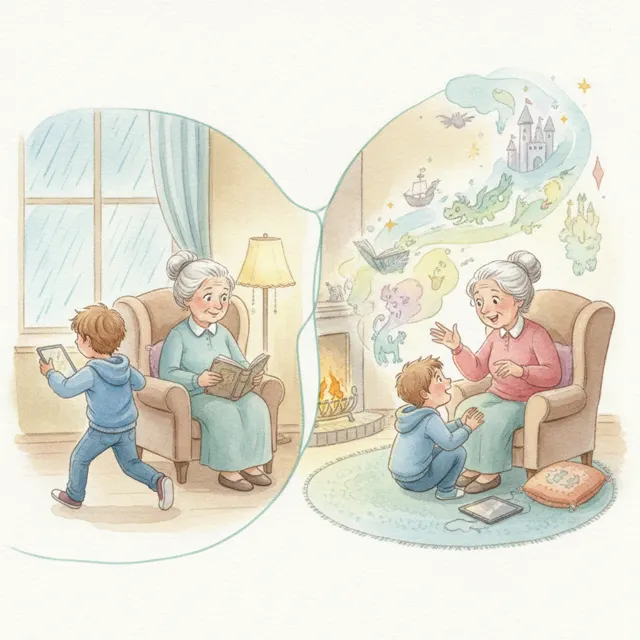
The Boy Who Listened to Grandma's Stories
Ages 3-84 minrespect
The Boy Who Listened to Grandma's Stories story for kids illustration

Noah always rushes past his grandma, too busy with his tablet. One rainy afternoon he stops and really listens to her old stories, and he discovers the best adventures were in her memory all along.

Moral: Stopping to really listen shows someone that their stories, and they, matter.

Noah was always in a hurry. He hurried through breakfast, hurried to school, and hurried past his grandma's chair in the afternoons, because his tablet was waiting in his room. "Grandma, do you want to hear about my game?" he would ask, and then he would talk about his game for ten minutes and run away before she could say a word back. One rainy afternoon the power went out, and the tablet went dark. Noah sat on the couch with nothing to do while Grandma knitted by the window. "Tell me about when you were little," Noah said, mostly because he was bored. Grandma's eyes lit up. "Did I ever tell you about the goat that chased me up the apple tree?" Noah sat up. "A goat?" And Grandma told him about the goat, and about swimming in the river, and about the time she rode a bicycle all the way to the next town. Noah listened with his whole self. He asked questions. He laughed so hard he nearly fell off the couch. When the lights came back on, Noah did not run for his tablet. He stayed and asked for one more story, and then one more after that. "I have lots more," Grandma said, smiling. "But only for a boy who knows how to listen." From then on, Noah saved time every single afternoon for Grandma, because he had learned that the best stories were right there, waiting for someone to listen. And Grandma's lap became Noah's favorite place in the whole house.
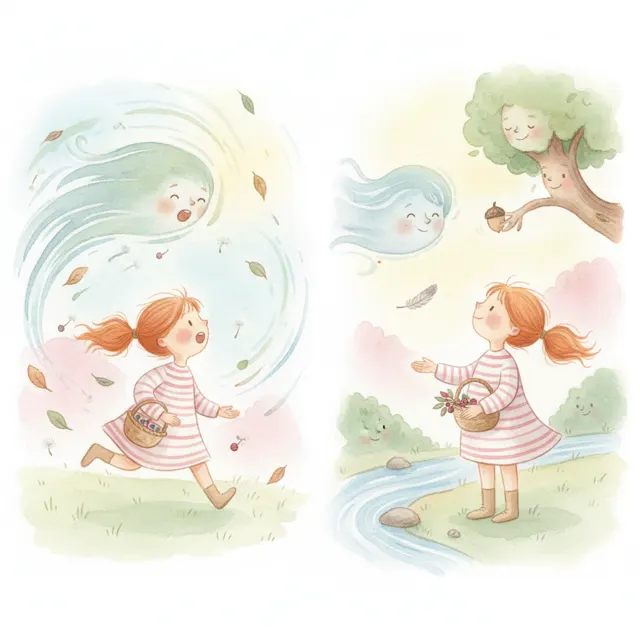
The Girl Who Said Please to the Wind

Ages 3-83 minrespect
The Girl Who Said Please to the Wind story for kids illustration

Lila is loud and always in a rush, and she forgets her manners. When she thanks the wind, the trees, and the river for the little things they give, she notices how much friendlier the world feels.

Moral: Saying please and thank you is how we show we notice the kindness around us.

Lila ran through the world like a little storm. She grabbed the last cookie without asking, slammed doors, and never once said please or thank you, because she was always too busy going fast. One day she was walking to the park when a strong wind came along and carried her kite up, up, up into the sky. "Hey!" Lila shouted. "Bring that back!" The wind only blew harder, and the kite climbed higher. Lila was about to shout again when she remembered something her teacher had said: manners are a way of showing you notice what others do for you. She took a breath. "Please, wind," she said softly. "Could you bring my kite down? And thank you for helping it fly so high." The wind did not answer, but a moment later it eased, and the kite drifted gently down into her hands, as if it had heard her. Lila blinked. She looked at the sky. "Thank you," she said, and she meant it. After that, Lila noticed all the little things around her. She thanked the tree for its shade and the baker for her bread and her mom for her dinner. And she found that the friendlier she was to the world, the friendlier the world was to her. Her mom noticed too. "You seem happier, Lila," she said one evening. "I am," Lila said. "Please and thank you are kind of like magic words." And she meant that too. And the wind seemed to blow a little softer whenever she walked by.

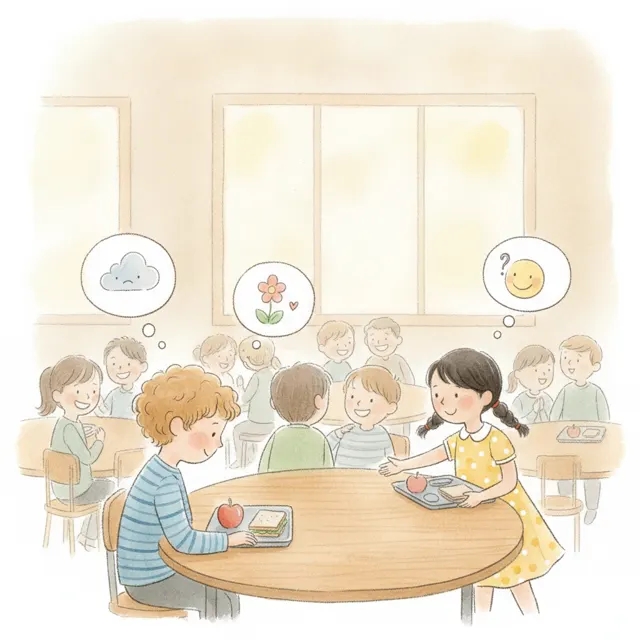
The New Kid at Lunch

Ages 3-84 minrespect
The New Kid at Lunch story for kids illustration

A new boy sits alone at the lunch table, and nobody says hello. Then Mia carries her tray over, asks his name, and learns that one small welcome can turn a stranger into a friend.

Moral: One small hello can turn a lonely stranger into a friend.

A new boy came to Maple Street School on a Tuesday, and his name was Arif. He had moved from very far away, and at lunch he sat by himself at the end of a long table, poking at his sandwich. Mia noticed him right away. She knew what it felt like to be new, because she had been the new kid last year, and for two whole weeks nobody had said hello to her either. "Come on, Mia," said her friend Zoe. "Let's sit with the others." But Mia picked up her tray and walked over to Arif's end of the table. "Hi," she said. "Is this seat taken?" Arif looked up, surprised. "No," he said quietly. "You can sit there." "I'm Mia. What's your name?" "Arif." "What's that you're eating?" Mia asked, pointing at his food. "It smells good." Arif smiled for the first time. "It's rice with my mom's special sauce. Do you want to try some?" Mia did, and it was delicious. They talked about soccer and cartoons and the big slide on the playground, and by the time the bell rang, Arif was laughing like he had been there all along. That afternoon Mia saw Arif playing with two other kids at recess. He waved at her, and she waved back, feeling warm all over. It had only taken one hello, she thought, to make one stranger feel less alone. From that day on, Arif always saved Mia a seat, and Mia always had a friend to wave at across the playground.

The Library Whisper

Ages 3-83 minrespect
The Library Whisper story for kids illustration

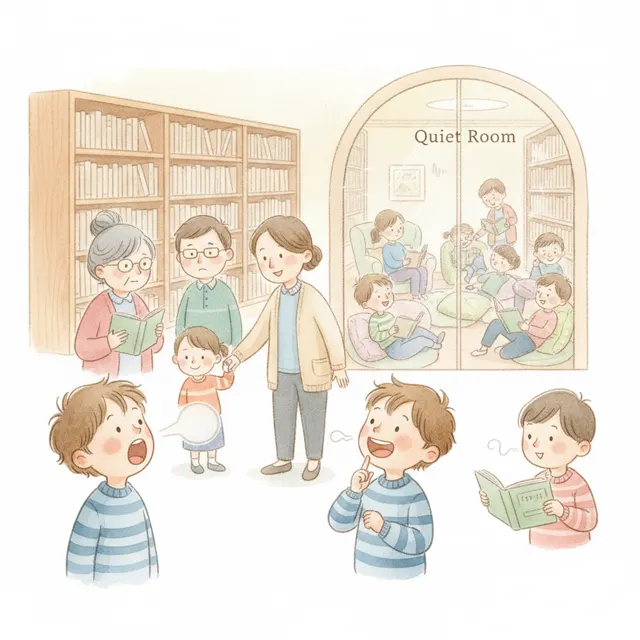
Theo loves the library but always forgets to use his inside voice. When the librarian shows him how a quiet room lets everyone enjoy their books, Theo becomes the best whisperer in town.

Moral: Sharing a quiet space is a way of caring about everyone in it.

Theo loved the library more than almost anywhere. He loved the long shelves and the soft carpet and the way a whole row of books smelled like paper and quiet adventures. But Theo had one problem. He talked too loud. He shouted "MOM, LOOK AT THIS DINOSAUR!" and "WOW, A TRUCK BOOK!" until everyone in the room turned to stare. "Shhh," his mom would whisper, but two minutes later Theo was loud again. One day Miss Rosa the librarian knelt down beside him. "Theo," she said softly, "a library is a place where lots of people share one big quiet. When we whisper, we leave enough quiet for everyone else to keep their own." Theo thought about that. "So if I'm loud, I take away their quiet?" "That's right," Miss Rosa said. "But if you whisper, you share it." Theo tried it. He practiced whispering all afternoon. "Mom, look at this dinosaur," he breathed, so softly it tickled. His mom smiled and gave him a thumbs up. When he got to the checkout desk, Miss Rosa held up her hand for a high five. "Best whisperer in the library," she whispered, and Theo beamed. After that, Theo was still excited about every book he found, but he shared his excitement in a whisper, and he liked that the library felt calm and cozy for everyone, including him. And the best part was that now other kids whispered too, and the whole library felt like one big cozy secret everyone was in on.

The Puppy Who Learned Gentle Hands

Ages 3-85 minrespect
The Puppy Who Learned Gentle Hands story for kids illustration

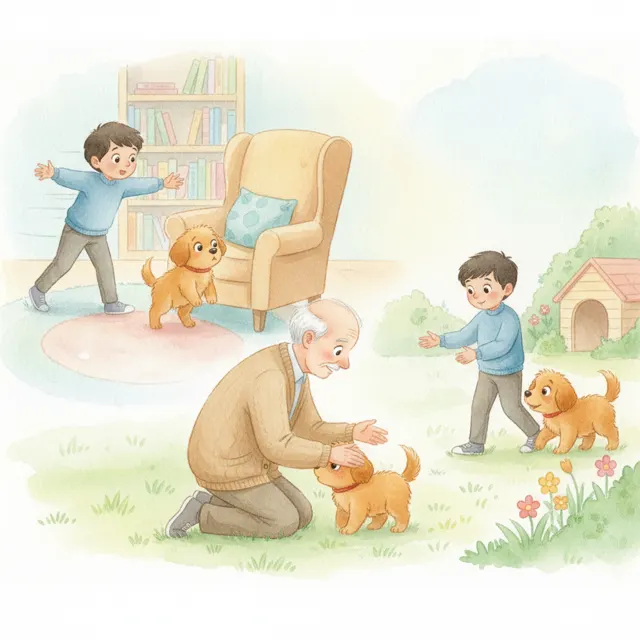
Ravi wants to hug the new puppy tight, but the puppy hides from his fast grabs. His grandpa shows him how slow, gentle hands earn a dog's trust, and soon the puppy follows him everywhere.

Moral: Gentle hands and a patient heart are how we earn trust, from animals and people.

Ravi's family got a puppy, a round little golden thing named Biscuit. Ravi loved Biscuit more than anything, and he wanted to show it by hugging him hard and chasing him around the house. But Biscuit would tuck his tail and hide under the couch whenever Ravi ran at him. "He's scared of me," Ravi said, sad and confused. "But I love him." Grandpa sat down on the floor next to Ravi. "Dogs don't understand hugs like we do," he said. "To Biscuit, a fast grab looks like a game of chase, or even a little scary. Watch this." Grandpa held out his hand slowly, palm up, and waited. Biscuit sniffed his fingers, then gave them a tiny lick. "See? Slow and gentle tells him he is safe," Grandpa said. Ravi tried it. He sat very still and held out his hand, and after a long moment, Biscuit crept out from under the couch and sniffed his fingers too. Then Biscuit climbed right into Ravi's lap and fell asleep. Ravi stayed as still as a statue, barely breathing, because he did not want to wake him. His heart felt so full it almost hurt. "I get it now," Ravi whispered. "Gentle hands make a dog trust you." "Gentle hands make everyone trust you," Grandpa said, smiling. After that, Biscuit followed Ravi everywhere, because he had learned that Ravi's hands were safe and kind. And every night, Biscuit slept at the foot of Ravi's bed, because he knew exactly whose hands were the gentlest in the whole house.

The Slide and the Line

Ages 3-83 mintaking turns
The Slide and the Line story for kids illustration

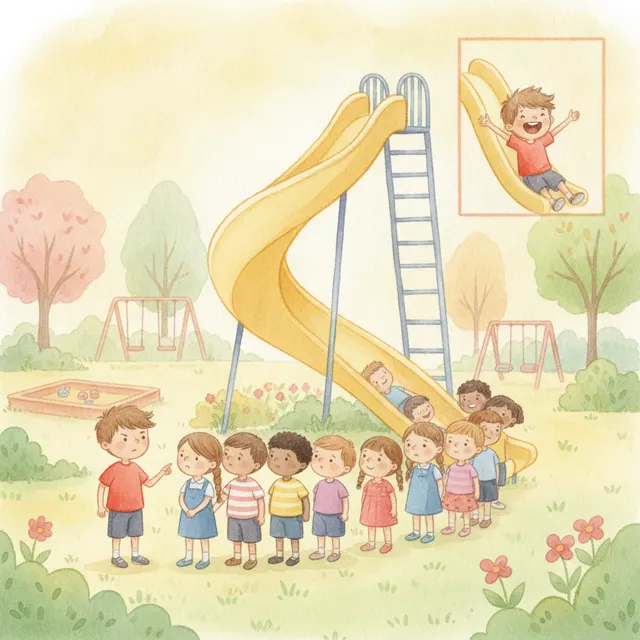
The big slide is the best in the park, and Micah wants to skip the line. But a patient girl teaches him that waiting his turn is fair. When his turn comes, the ride feels even better.

Moral: Waiting your turn keeps the fun fair for everyone.

The big slide was the best slide in the whole park. It was tall and twisty, and everyone wanted a turn. A long line of children waited at the bottom. "Can I go first?" asked Micah. "I am the fastest runner. I should not have to wait." "That is not how it works," said a girl in front of him. "We all wait our turn. That is the rule." Micah frowned. He did not like waiting. The line moved so slowly. He thought about running around the side and cutting in front. The girl turned around again. "You look like you want to push in," she said. "Please do not. We are all waiting too." Micah looked at the line. Every child in it was waiting patiently. None of them liked it either. But they were all being fair. "Okay," said Micah. "I will wait like everyone else." The line moved. One child went down, whoosh. Another went down, whee. Micah tapped his foot and watched. The waiting was hard, but it did not hurt. When his turn came, Micah climbed the steps. He sat at the top and looked down at the waiting children. They cheered for him. "Go, Micah!" they called. Micah slid down, whoosh! It was the best ride of his whole life. At the bottom, he ran to the back of the line to wait again. "Your turn now," he said to the next child. "It is more fun when everyone gets a ride." The girl who had spoken to him smiled. "You got it," she said. "That is what fair means."

Leo Learns to Listen

Ages 3-84 minlistening
Leo Learns to Listen story for kids illustration

Leo talks over his friend at show and tell, and nobody hears either of them. His teacher shows him how to listen with his eyes, ears, and quiet mouth. Leo learns that real listening is a gift.

Moral: Listening with your whole body shows you care.

At show and tell, Leo's friend Ana stood up with a small shell from the beach. She began to talk about the day she found it. Leo was so excited. He knew about shells too. "One time I found a shell that was huge!" he said, cutting in. "It was this big!" Ana stopped talking. Her face fell. She sat down without finishing her story. "Leo," said his teacher, Ms. Reed, gently. "Ana was still talking. When you speak over someone, they feel like their words do not matter." Leo felt his cheeks get hot. "I was just excited," he said. "I know," said Ms. Reed. "Let me show you a trick for listening. Watch with your eyes. Hear with your ears. Keep your mouth quiet until it is your turn." Leo tried it the next day. His friend Sam told a story about losing a tooth. Leo wanted to jump in and tell his own tooth story. But he remembered the trick. Eyes on Sam. Ears open. Mouth closed. Sam talked all the way to the end. Then Leo got his turn. "Your story was so funny," said Leo. "And now I can tell you mine." Sam smiled wide. "You are a good listener," he said. Leo glowed. Listening, he learned, was not just waiting to talk. It was a way of telling someone, "I care about what you say." That night, Leo practiced with his family. Eyes on Dad, ears open, mouth closed. When Dad finished his story, Leo said, That was great. Tell me another.

Ask Before You Hug

Ages 3-84 minpersonal space
Ask Before You Hug story for kids illustration

Nadia loves hugs and gives them to everyone. When her friend winces and pulls away, Nadia learns that bodies belong to each person. Asking first is a simple way to show respect.

Moral: Asking first shows respect for another person's body.

Nadia was a hugger. She hugged her mom in the morning. She hugged her friends at school. She hugged everyone she liked, because hugs made her happy. One day she ran up and gave her friend Jay a big squeeze. Jay went stiff and pulled away. "Please ask first," said Jay quietly. Nadia blinked. "But I was just being friendly." "I like you," said Jay. "But I do not always want a hug. Sometimes I need my own space." Nadia felt confused and a little hurt. At home, she told her mother what happened. "Jay is right," said Mama. "Everyone's body is their own. Some people love hugs. Some people do not. Asking first shows you respect their choice." "But what if they say no?" asked Nadia. "Then you can wave or high five instead," said Mama. "A friend's no is just as important as their yes." The next day, Nadia saw Jay on the playground. She stopped a little way away. "Hi, Jay," she said. "Can I have a hug?" Jay smiled. "Not right now. But I would love a high five." Nadia gave a big high five. Then they went to play, both of them comfortable and happy. Asking first, Nadia learned, did not make the friendship smaller. It made it safer and better for both of them. At bedtime, Nadia stood by her mother. Mama, can I have a hug? she asked. Yes, you can, said Mama, and hugged her tight. Nadia smiled. Asking first made the yes feel even warmer, like a gift she had asked for nicely.

The Borrowed Red Truck

Ages 3-84 mincaring
The Borrowed Red Truck story for kids illustration

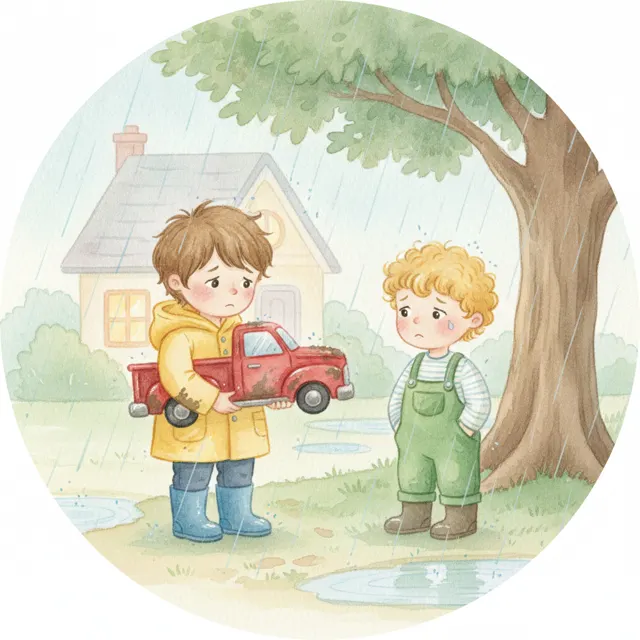
Danny borrows his friend's favorite red truck and leaves it out in the rain. When he returns it muddy and scratched, he learns that caring for a borrowed thing is how you care for a friend.

Moral: Returning a toy the way you found it is respect.

Danny's friend Kofi had a red truck that he loved more than anything. One day Kofi let Danny borrow it. "Please take good care of it," said Kofi. "It was my grandpa's." "I will," said Danny. Danny played with the red truck all afternoon. He raced it down the sidewalk and through the dirt. When it started to rain, he left it on the porch and ran inside. He forgot all about it. The next day, Danny found the truck. It was muddy and wet, and it had a small scratch on one side. His heart sank. He had promised to take good care of it, and he had not. He washed the truck with warm soapy water and dried it with a soft cloth. The scratch would not come out. He wrapped the truck in a little cloth and carried it to Kofi's house. "Kofi," said Danny, "I am sorry. I left it in the rain. There is a scratch now." Kofi looked at the truck. Then he looked at Danny's worried face. "You told me the truth, and you cleaned it up," said Kofi. "That matters more than a scratch." "Really?" asked Danny. "Really," said Kofi. "Next time, remember to bring it in. But thank you for telling me." Danny let out a big breath. He had learned something important. A borrowed thing is a piece of trust. You care for it the way you would care for your friend. After that, Danny always brought borrowed things back clean and on time. The red truck stayed on Kofi's shelf, safe and loved, and the two boys stayed best friends.

Quiet for the Baby

Ages 3-84 minquiet
Quiet for the Baby story for kids illustration

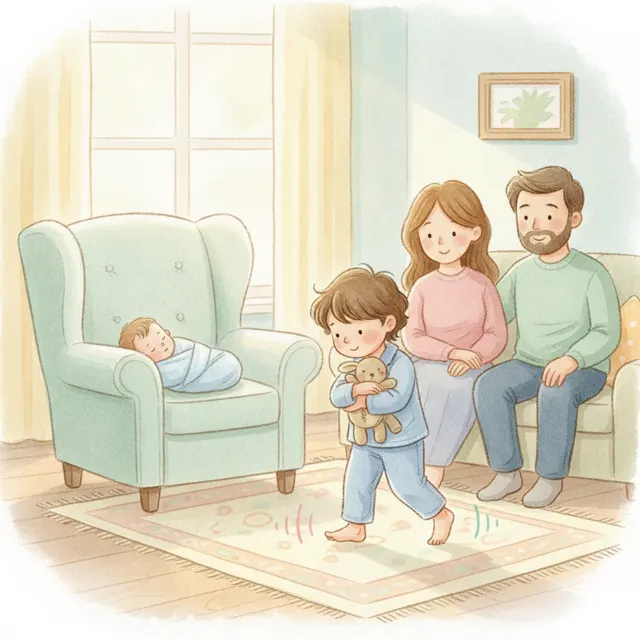
Ali loves to stomp and shout, but the new baby needs to sleep. He learns that being quiet when someone rests is a kind kind of loud. His soft steps become a gift to the whole family.

Moral: Being quiet when others rest is a kind kind of respect.

Ali was a loud boy. He stomped up the stairs. He shouted when he played. He slammed doors without meaning to. It was just how he was. Then a new baby came to live in the house. The baby slept a lot, and the baby needed quiet. "The baby is sleeping," Mama would whisper. "Soft feet, Ali." Ali tried to remember. But he would forget and stomp down the hall. The baby would wake up crying, and Mama would look so tired. "I am too loud," Ali said sadly. "The baby will never sleep because of me." "It is hard to be quiet," said Mama. "But being quiet when someone needs rest is a kind thing. It is how you show respect for the baby, and for me too." Ali thought about that. He wanted to help. He practiced walking on his tiptoes. He closed doors slowly. He used his quiet voice inside. One afternoon, the baby fell asleep in Mama's arms. Ali tiptoed past so softly that not a single floorboard creaked. He even whispered to the cat to be quiet too. Mama smiled at him over the baby's head. "You did it," she whispered. "You gave the baby a gift." Ali glowed with pride. Being quiet was not about being small. It was about caring for someone else, so softly they could rest. That night, the baby slept all the way through. Ali tiptoed past the door and smiled. His soft feet had helped, and the whole house felt calmer because of it.

A Friend Who Signs

Ages 3-84 mindifferences
A Friend Who Signs story for kids illustration

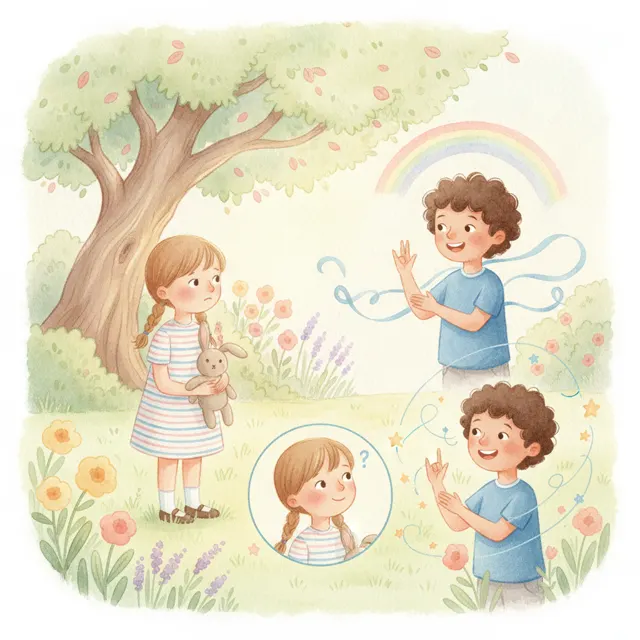
Nora meets a new boy who talks with his hands. At first she does not understand, and she feels shy. Then she learns a few signs, and she discovers that every way of talking is worth respecting.

Moral: Different ways of talking are all worth respecting.

A new boy joined Nora's class. His name was Theo, and he talked with his hands. He was deaf. When he wanted to say something, he signed, and a helper spoke the words out loud. At first, Nora felt shy. She did not know how to talk to Theo. So she just watched him from across the room. One day at lunch, Theo dropped his spoon. Nora picked it up and handed it to him. Theo made a sign and smiled. "He is saying thank you," said the helper. Nora wanted to say something back, but she did not know how. So she smiled and gave a little wave. Theo waved back. That week, the class learned a few signs together. Nora practiced at home. She learned how to say hello, thank you, and friend. The next day, Nora walked up to Theo and signed, "Hello, friend." Theo's face lit up like the sun. He signed back, fast and happy. The helper laughed. "He says you learn fast." Nora grinned. She still did not know many signs. But she knew the most important one. She knew how to say friend. "Talking with hands is just talking," Nora told her mother that night. "Different, but the same. I want to learn more." Theo and Nora became good friends. And Nora learned that every way of talking deserves respect. By the end of the month, Nora could sign whole sentences. Theo taught her the sign for best friend, and she used it every single day. Different hands, same friendship.

Hands Up, Please

Ages 3-83 minclassroom manners
Hands Up, Please story for kids illustration

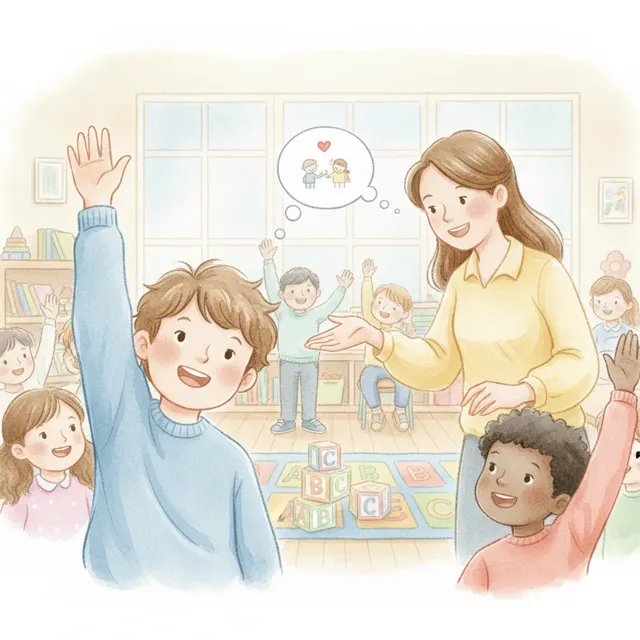
Sam always shouts out answers in class. His teacher reminds him to raise his hand and wait. When he finally waits his turn, he learns that patience in class is a way of respecting everyone.

Moral: Waiting to be called on shows respect for the teacher.

Sam loved to answer questions. The second his teacher, Mr. Okafor, asked something, Sam would shout out the answer. "Seven!" he yelled. "I know it! It is seven!" "Sam," said Mr. Okafor kindly, "please raise your hand and wait to be called on. When you shout, other children do not get a chance to think." Sam slumped in his chair. Waiting felt so slow. But he tried. The next question came. Sam's hand shot up. He squeezed his lips together so he would not shout. His arm wiggled in the air. He waited and waited. "Yes, Sam?" said Mr. Okafor. "Twelve!" said Sam. "That is right," said Mr. Okafor. "And do you know what else? When you waited, Rosa got to raise her hand too. Everyone got a turn to think." Sam looked around. The other children were all raising their hands now, calm and patient. It felt fair. At the end of the school day, Mr. Okafor knelt by Sam's desk. "You did a hard thing today," he said. "Waiting is not easy when you are excited. But raising your hand shows respect for the whole class." Sam beamed. "I will keep practicing," he said. Waiting his turn, Sam learned, was not about being quiet and small. It was about making room for everyone's voice. The next day, Sam raised his hand and waited every single time. It was still hard when he knew the answer, but it got easier each hour. The whole class felt calmer, and Rosa even thanked him for letting her think.

The Tease That Stopped

Ages 3-84 minkind words
The Tease That Stopped story for kids illustration

Ravi's friends tease a boy about his big ears, and Ravi laughs along. But when he sees the hurt on the boy's face, he finds the courage to stop the tease and use kind words instead.

Moral: Kind words show more strength than teasing.

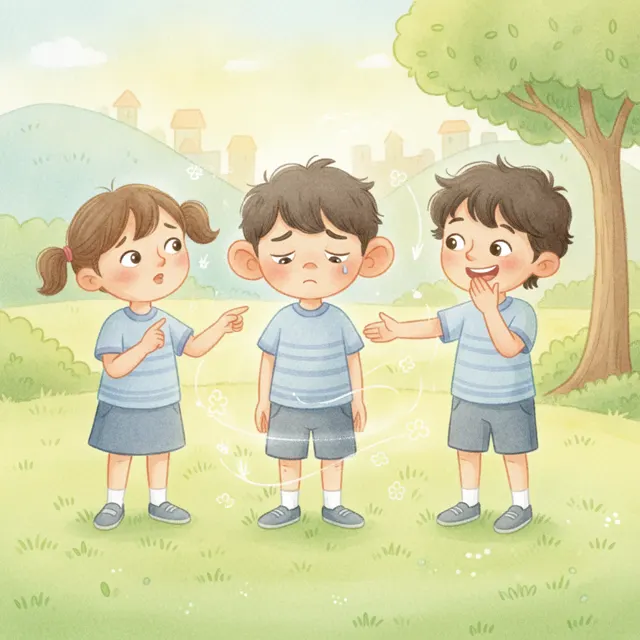
At recess, Ravi's friends gathered around a boy named Eli. Eli had big ears that stuck out a little. "Look at those ears!" one boy laughed. "You could fly away with those!" The other boys laughed. Ravi laughed too, even though a small part of him felt wrong about it. Eli's smile faded. His ears turned red. He walked away slowly, his head down. Ravi watched him go. The laugh dried up in his throat. It did not feel funny anymore. It felt mean. "Hey," said Ravi to his friends. "That was not nice. Eli's ears are just his ears. He cannot help them." The boys went quiet. "We were just joking," said one. "Joking is only funny if everyone laughs," said Ravi. "Eli did not laugh." Ravi walked over to Eli, who was sitting alone on a bench. "Eli," said Ravi, "I am sorry I laughed. It was not kind." Eli looked up, surprised. "Thanks," he said quietly. "That means a lot." Ravi sat down next to him. "Do you want to play catch?" he asked. Eli smiled a little. "Yeah," he said. "I would like that." Ravi learned that day that kind words are stronger than teasing. And it only takes one brave voice to stop a hurt before it grows. From that day on, Ravi spoke up whenever he saw someone being left out. His friends stopped teasing too, one by one. Eli smiled more and more at recess. One kind voice, Ravi learned, can change a whole playground when it is brave enough to speak.

Room on the Bench

Ages 3-84 minincluding others
Room on the Bench story for kids illustration

There is one empty spot on the lunch bench, and Nia spreads out her things to keep it. When a new girl has nowhere to sit, Nia makes room. She learns that making space is a warm kind of respect.

Moral: Making room for someone is a warm kind of respect.

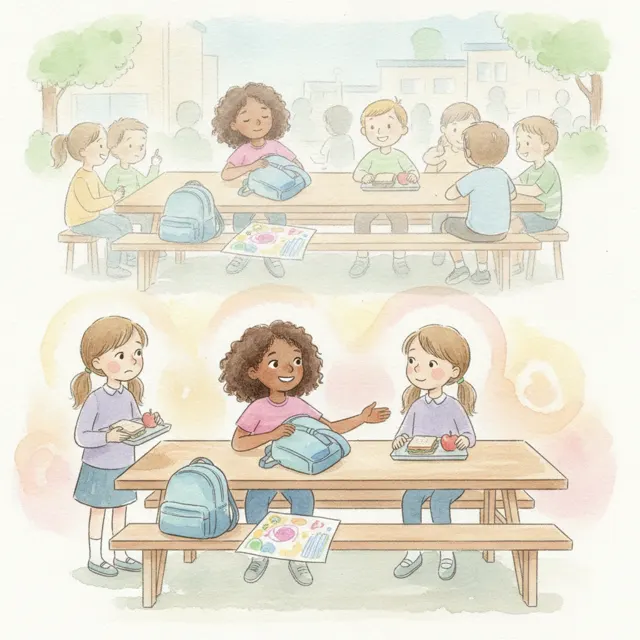
The lunch bench was full. Nia sat in the middle with her bag on one side and her lunchbox on the other. There was just enough room for her. A new girl named Mara walked into the lunchroom. She held her tray and looked around. Every seat seemed taken. Her face fell. Nia saw her standing there. She could have kept her things spread out. But something in Mara's face made her move. "Hey," called Nia. "You can sit here." She pulled her bag and lunchbox close, making a spot on the bench. Mara's eyes lit up. She sat down carefully. "Thank you," said Mara. "I did not know where to go." "It is hard being new," said Nia. "What is your name?" "Mara," she said. "We just moved here." "I am Nia. Do you like stickers? I have extra." They traded stickers and talked all through lunch. Mara told Nia about her old school far away. Nia told Mara about the best swing on the playground. When the bell rang, Mara said, "You made my first day so much better." Nia smiled. "I am glad you sat with me." Walking to class, Nia thought about the bench. One small scoot over had made room for a whole new friend. Making space, she learned, was not giving something up. It was inviting someone in. The next day, Nia saved a seat for Mara before lunch even started. She waved her over with a big smile. Making room once, she learned, was how a friendship began.

Ask Before You Take

Ages 3-84 minasking first
Ask Before You Take story for kids illustration

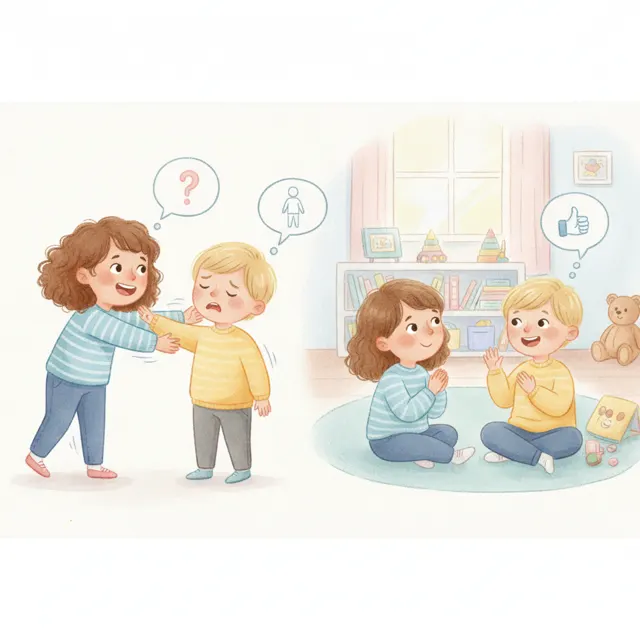
Pia borrows her sister's markers without asking and ruins one. When her sister gets upset, Pia learns that asking first respects what belongs to others, and a sorry comes with fixing what you broke.

Moral: Asking before you borrow respects what belongs to others.

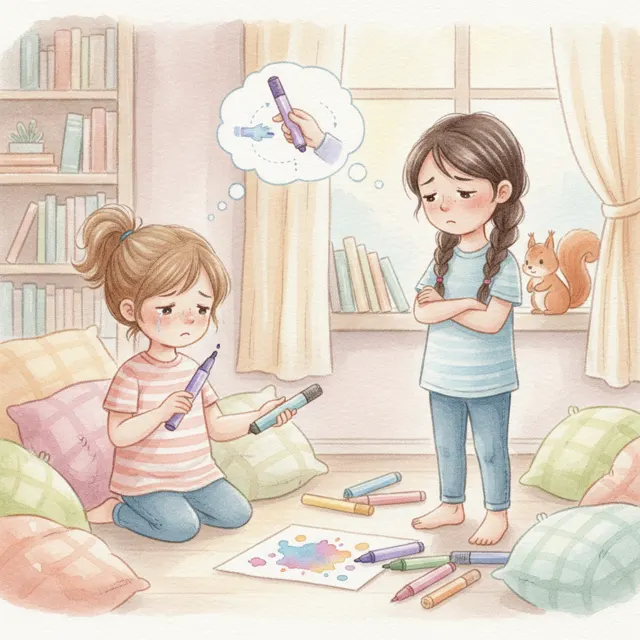
Pia loved her sister Lina's markers. They were bright and new, in a neat little box. One day, Pia wanted to draw, so she took the markers without asking. She drew and drew. She pressed too hard, and the tip of the blue marker bent and broke. Pia froze. She hid the marker in the box and closed it. Maybe nobody would notice. That evening, Lina opened her box. "My blue marker is broken!" she said. "Pia, did you use my markers?" Pia looked down. "I did," she said. "I am sorry. I did not ask." "I would have said yes if you had asked," said Lina. "But now my marker is broken, and you tried to hide it." Pia felt awful. She had taken something without asking, and she had made it worse by hiding the truth. "What can I do to fix it?" asked Pia. Lina thought. "You can give me the blue marker from your set. And next time, ask first." Pia ran and got her own blue marker. She handed it to Lina. "Here. And I promise I will always ask before I borrow your things." Lina took the marker and smiled a little. "Thank you for fixing it," she said. From then on, Pia always asked. Asking first, she learned, is how you show that what belongs to someone else matters to you. Lina was right, Pia thought. Asking was easy, and it kept trust whole. From then on, the two sisters shared everything, but always with one little word first. Please.

The Crossing Rule

Ages 3-84 minsafety
The Crossing Rule story for kids illustration

Zoe thinks the crossing rule is silly and wants to run ahead. When she sees why the rule exists, she understands that rules are a way of caring for each other, not a way of being bossy.

Moral: Safety rules are a way of caring for one another.

Zoe and her dad walked to school every morning. At the busy corner, Dad always said the same thing. "Hold my hand. Stop at the curb. Look left, then right, then left again." Zoe sighed. "The rule is so slow. I can cross by myself. I am big now." "The rule keeps you safe," said Dad. "Cars are fast, and drivers cannot always see a small person." Zoe did not believe him. She thought the rule was just for babies. One morning, they waited at the corner. A big truck turned fast and splashed through a puddle. It was loud and close. "Whoa," said Zoe, stepping back. "That was scary." "That is why we wait and look," said Dad. "The rule is not to be bossy. It is to keep you from getting hurt." Zoe looked at the crossing. Now she understood. The rule was not silly. It was like a shield. From then on, Zoe held her dad's hand at the corner. She stopped at the curb. She looked left, right, and left again, all by herself. "Good job, Zoe," said Dad. "You are being safe." Zoe smiled. "I like the rule now," she said. "It keeps me safe, so I do not have to be scared." Rules, she learned, are a way of caring for each other. And caring is a kind of respect. Now Zoe was the one who reminded Dad. Hold my hand, she would say at the corner. Stop at the curb. Look both ways. She was proud to know the rule that kept them safe.

Grandpa's Quiet Corner

Ages 3-84 minrespecting elders
Grandpa's Quiet Corner story for kids illustration

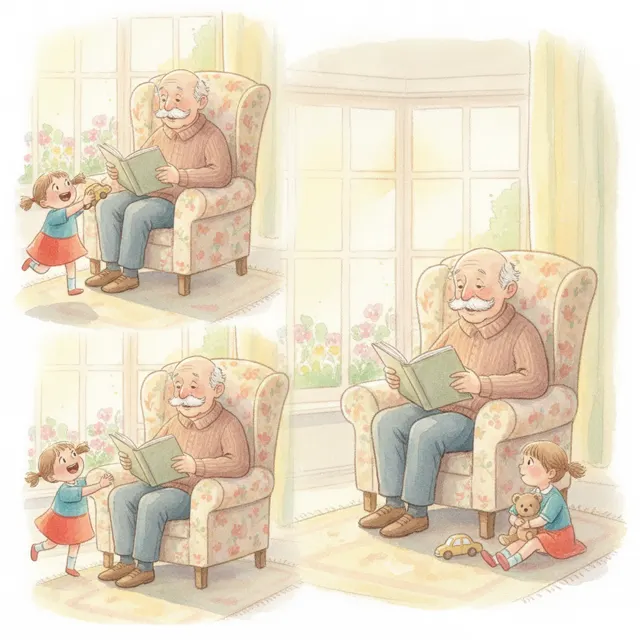
Grandpa has a special chair by the window where he reads. Mia keeps interrupting him until she notices how much his quiet time matters. She learns to respect the things that make someone happy.

Moral: Respecting a loved one's quiet time is a way to care.

Grandpa had a favorite chair by the window. Every afternoon, he sat there with a cup of tea and a big book. It was his quiet corner. Mia wanted to play. She would run in and say, "Grandpa! Look at my drawing! Grandpa, come play blocks!" Grandpa would smile and put down his book. He never got cross. But one day, Mia noticed that his book stayed on the same page all week. "Mama," said Mia, "why does Grandpa sit by the window so much?" "Grandpa worked hard for many years," said Mama. "Now his quiet time with his book is his treat. It fills him back up." Mia thought about that. Grandpa always gave her his time. Maybe she could give him a little of his own. The next afternoon, Grandpa sat down with his tea. Mia tiptoed in and sat on the floor beside him with her own book. She did not ask him to play. She just sat quietly and read. Grandpa looked down at her and smiled. "This is nice," he whispered. "Reading together." Mia smiled back. She had not taken his quiet time. She had joined it, and somehow that made it even better. From that day on, they had quiet time together every afternoon. Mia learned that respecting the things that make someone happy is one of the best ways to love them. Now quiet time was their time. Grandpa read his book, and Mia read hers, side by side. Sometimes Grandpa would share a funny line, and they would laugh softly together.

The Bird on the Fence

Ages 3-84 mingentleness
The Bird on the Fence story for kids illustration

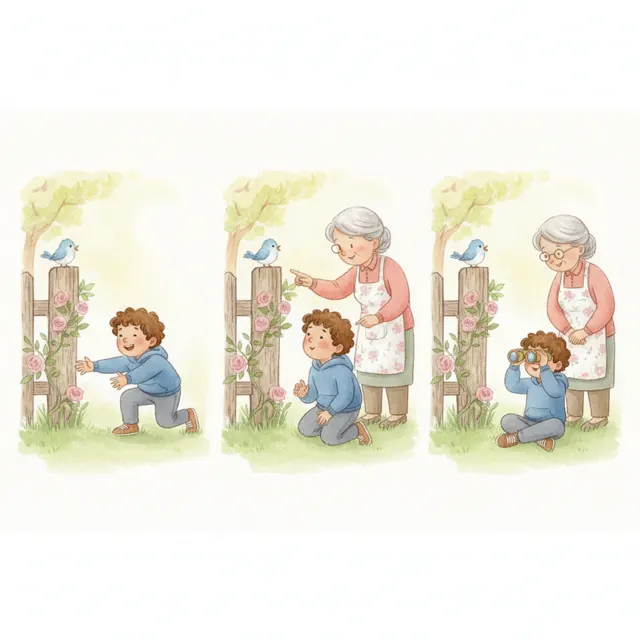
A little bird lands on the fence, and Omar wants to catch it. His neighbor teaches him to watch from a distance instead. Omar learns that being gentle with animals shows respect for living things.

Moral: Being gentle with animals shows respect for living things.

A little brown bird landed on the fence in Omar's yard. It tilted its head and chirped. Omar wanted to catch it. "I am going to grab it!" he said, creeping closer. "Wait," said his neighbor, Mrs. Bell. "The bird is not a toy. It is a living thing, and it is afraid of you." Omar stopped. "But I just want to hold it." "A bird is delicate," said Mrs. Bell. "If you chase it, you scare it. If you grab it, you can hurt it. But if you stay still and watch, you might see something wonderful." Omar did not think a bird could be wonderful. But he sat down on the grass and stayed very still. The bird hopped along the fence. It pecked at a seed. It fluffed its feathers and sang a few notes. Omar watched without moving. "It trusts me now," he whispered. "You gave it space," said Mrs. Bell. "That is how you show respect for a wild thing." Omar stayed still for a long time. The bird came closer and closer. Then it flew away, light as a leaf. "Was that better than catching it?" asked Mrs. Bell. Omar nodded. "Much better," he said. "I let it be itself." That day, Omar learned that animals deserve gentleness. Watching them in peace is a kind of respect too. Omar started leaving seeds on the fence each morning. Soon the bird came back every day, and it brought a friend. Watching them, still and quiet, became Omar's favorite part of the day.

When Farah Felt Sad

Ages 3-84 minfeelings
When Farah Felt Sad story for kids illustration

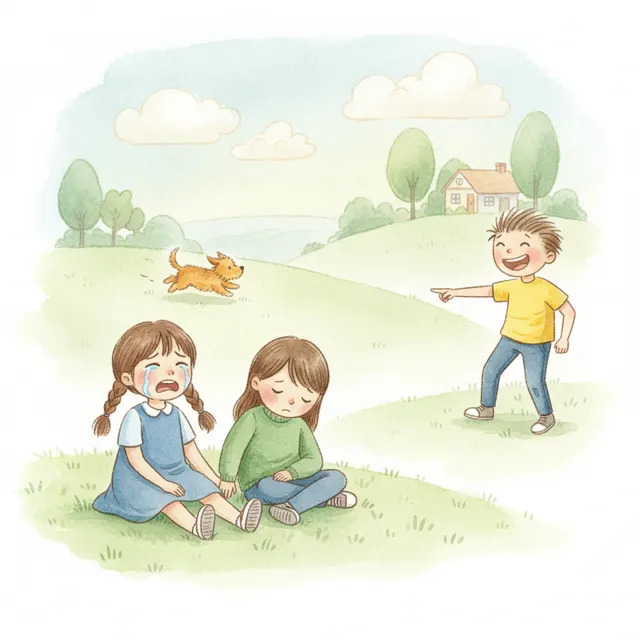
Farah's dog runs away, and she feels sad. One friend laughs at her tears, but another sits quietly beside her. Farah learns that respecting a friend's feelings means staying close, not making fun.

Moral: Respecting a friend's sad feelings helps them feel safe.

Farah's dog, Biscuit, ran out the gate and got lost. All day, Farah's family looked for him. That night, he was still not home. At school, Farah sat at her desk with red eyes. She felt a lump in her throat. "Look at Farah," whispered one boy. "She is crying over a dog. That is so silly." A few children giggled. Farah's face burned. She put her head down on her desk. Then her friend Mina came over. Mina did not laugh. She sat down quietly beside Farah. "I heard about Biscuit," said Mina softly. "I am so sorry. Do you want to talk about him?" Farah nodded, tears spilling. "He is the best dog. I am scared he is cold and alone." Mina listened. She did not say it was silly. She did not rush Farah to feel better. She just stayed. "Can I help you look for him after school?" asked Mina. Farah looked up. "You would do that?" "Of course," said Mina. "He is your friend. That matters." Farah felt the lump in her throat soften. Someone saw her sadness and stayed beside it. That afternoon, they found Biscuit in a neighbor's yard, muddy and happy. Farah hugged him tight. And she hugged Mina too, for the kindness of staying close. From that day on, Farah knew just what to do when a friend felt sad. She would sit close and listen, the way Mina had done. She would not laugh or rush them. She would just stay. That, she learned, is what friends do with feelings.

The Shared Playroom

Ages 3-84 minshared spaces
The Shared Playroom story for kids illustration

Every toy in the playroom ends up on the floor, and nobody can find anything. When the family works out a cleanup plan, Liv learns that tidying a shared space respects everyone who plays there.

Moral: Cleaning up a shared space respects everyone who uses it.

The playroom was a huge mess. Blocks, cars, dolls, and crayons covered the floor. Nobody could find anything. "Where is my red car?" cried Max. "I cannot find my crayon box!" said Liv. Mama stood at the door. "This room belongs to everyone," she said. "When we leave it messy, we make it hard for the next person to play." Liv looked at the floor. It was true. She had left her toys out, and so had Max. Now nobody was happy. "Let us make a plan," said Mama. "Each person picks up the toys they used. Then we put each thing back in its home." Liv and Max got to work. Liv gathered the crayons and put them in the box. Max lined up the cars on the shelf. Mama swept the blocks into the bin. In twenty minutes, the room was clean. The rug showed again. The shelves were tidy. "Look!" said Max. "Now I can find my red car!" "And my crayons are all together," said Liv. "A clean room is a kind room," said Mama. "When you tidy up, you show respect for everyone who shares it." From then on, Liv and Max put their toys away when they were done. It took a minute, but it made the room ready for the next person. Liv learned that a shared space is a shared promise. Cleaning up is how you keep it. The playroom stayed clean all week, and playtime felt better because of it. Max found his red car in one second. Liv found her crayons right away. Everyone was happier, all because they put things back.

Frequently Asked Questions

Turn Your Child Into the Hero of Their Own Story

Upload their photo and watch as AI creates a beautiful, personalized storybook with illustrations that look just like them. From $5.99/month.

✨ Make Your Child the Hero

Plans from $5.99/month