Stories for 7 Year Olds

Mysterious quests and clever heroes for curious seven-year-old minds

โœจ Make Your Child the Hero

Seven-year-olds are natural detectives. They want to know why things happen, who did what, and what the twist is. They're ready for more complex plots, layered characters, and stories that challenge them to think. At CreateStory.ai, we design seven-year-old stories with real narrative tension and satisfying revelations. Whether it's a mystery in the school library, a quest into an enchanted forest, or a character who has to choose between what's easy and what's right, these six stories will keep your seven-year-old hooked from the opening line. Great for independent readers, bedtime chapters, or creative writing inspiration.

Why do short stories help seven year olds learn?

Short stories match how a seven year old's mind works. The words are easy to read, and the plots are simple to follow. A child can finish a whole story in a few minutes. That small win makes them want to read more and more.

Reading aloud builds a child's word bank fast. One study found that children who are read five books a day hear about 1.4 million more words by the time they reach kindergarten than children who are never read to at home (Logan et al., 2019).

How does reading together help a child's words grow?

When a grown up reads with a child, the child hears new words and learns how to say them. Talking about the story helps even more. A child who asks why a character feels sad is learning to think about feelings.

Reading together also makes children feel safe and close and calm. A quiet story at bedtime helps a busy day settle down and drift to sleep. Over time, that shared time turns into a love of books that can last a whole life.

Sample Stories

Read these stories, then create a personalized version where your child is the hero

The Missing Library Book
Ages 7-85 minmystery and logic
The Missing Library Book story for kids illustration

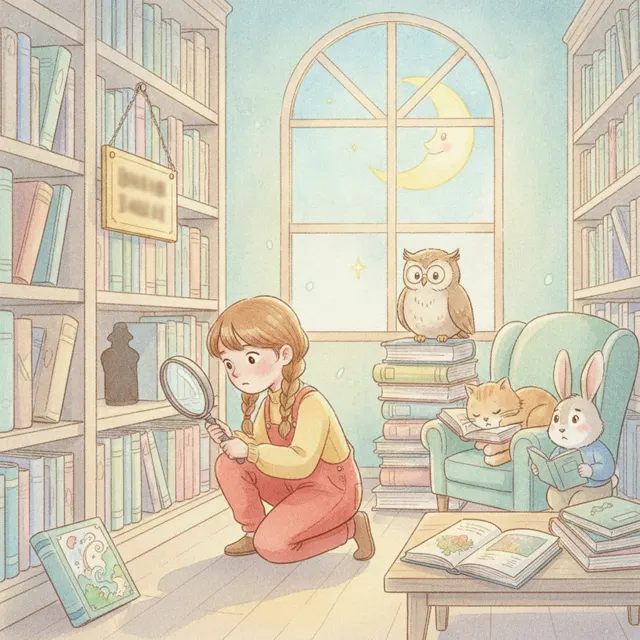
When the most popular library book goes missing, Nora decides to solve the mystery herself.

Moral: Good reasoning and empathy together can solve almost anything.

The school library's copy of "Dragon Island" had gone missing. Every kid wanted it. No one had returned it. Nora, age 7, decided to investigate. First, she checked the sign-out log. The last person to take it was... Ben. But Ben swore he'd returned it. "I put it in the drop box myself!" he said. Nora checked the drop box. Empty. But there was a scratch on the inside, like something had caught on the way down. She got a flashlight and shone it inside. There, wedged at the back, was Dragon Island. The hinge was broken. Books dropped in were catching on a jagged piece of metal. Nora told the librarian. The box was fixed. The book was recovered. Ben was cleared. "How did you know to look there?" asked the librarian. "Ben seemed too nervous to be lying," said Nora. "Liars are either too calm or too loud. Ben was just... sad." The librarian smiled. "You'd make an excellent detective." Nora already knew that.
The Forest of Forgotten Things

Ages 7-85 minself-belief and magic
The Forest of Forgotten Things story for kids illustration

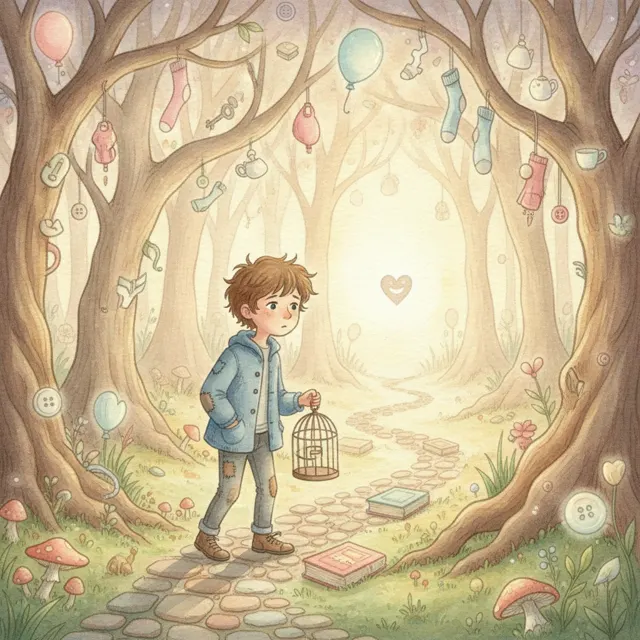
Sam enters a magical forest to find what he lost, but discovers something much more important is missing.

Moral: Your confidence was never in the things you carried. It was always in you.

Sam entered the Forest of Forgotten Things looking for his lucky stone. He'd had it since he was four. Small. Gray. Warm in his hand. The forest was quiet and silver. Trees grew in spirals. Leaves fell up instead of down. He walked until he found a clearing where lost things rested in glass jars. Mittens. A birthday card. A toy car. A photo. An old woman sat among them. "What are you looking for?" she asked. "My lucky stone." "Is that all?" Sam thought. Since losing the stone, he'd felt nervous and unsure. Like the luck had really gone. "I think... I lost my confidence too," he said. The woman handed him a jar. Inside was the gray stone. "Take it back. But remember: it was never the stone. You were always the lucky one." Sam held the stone. He didn't feel different. But somehow he understood. He walked out of the forest. The leaves fell normally now. He did too.

The Shadow That Walked Backwards

Ages 7-85 minmindfulness and mystery
The Shadow That Walked Backwards story for kids illustration

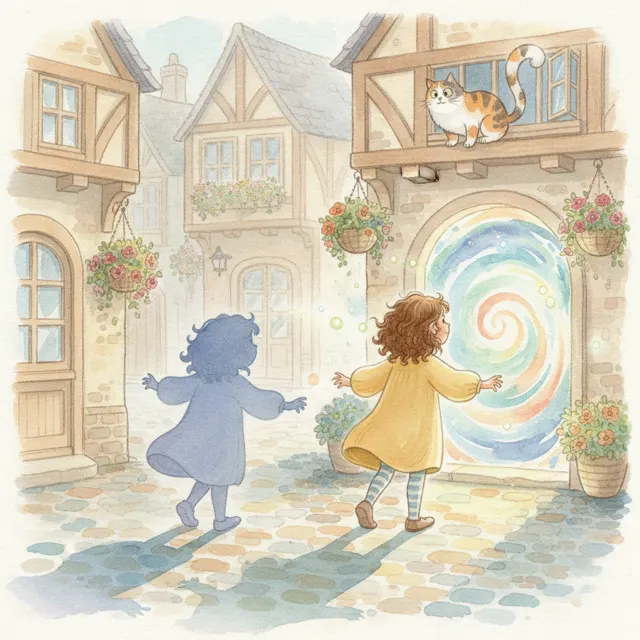
When Zoe notices her shadow is doing things she isn't, she follows it into a strange and wonderful mystery.

Moral: Pay attention to the world around you. The most magical things are often hiding in plain sight.

Zoe noticed something strange after school on Tuesday. Her shadow walked backwards. Not sometimes. Always. While she went forward, her shadow stepped back. She stopped. The shadow kept moving. Zoe followed it. Down the street. Around the corner. Through the park gate. The shadow stopped at the old oak tree in the middle of the park, the one that was supposed to be hollow but everyone thought was sealed shut. The shadow pressed its hand against the trunk. A door opened. Inside: a tiny glowing room with a desk, a single lamp, and a book with Zoe's name on it. She opened it. Her own handwriting, dated a week from now. "Things I wish I'd noticed sooner." The list had one item: "That everything important is right in front of you." Zoe closed the book. She stepped out. The door sealed behind her. Her shadow walked forward again. Like normal. She looked around the park she'd walked through a hundred times. For the first time, she really saw it.

Knights of the Kitchen Table

Ages 7-85 minsiblings and compromise
Knights of the Kitchen Table story for kids illustration

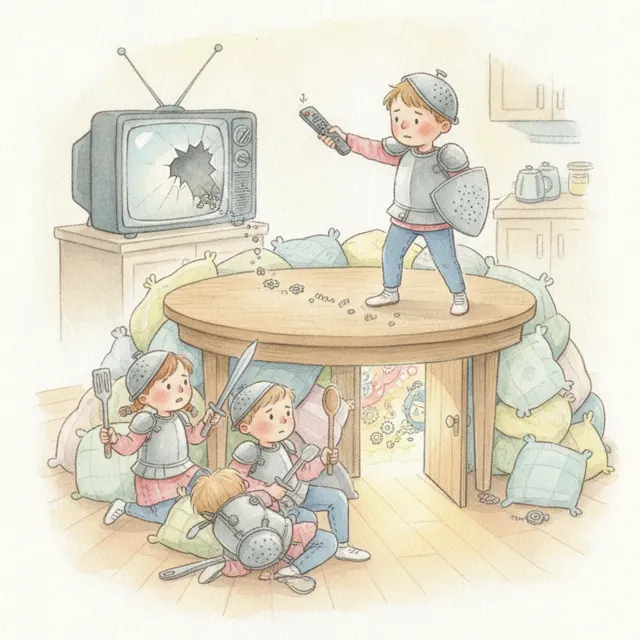
Three siblings declare war over the TV remote, but end up on a real quest to fix things when they go too far.

Moral: The best solutions come from listening to everyone, even the quiet one.

The war started over the TV remote. Ollie wanted cartoons. Priya wanted nature documentaries. Kiran wanted nothing, because he was trying to read and they were both too loud. The remote disappeared. All three accused each other. Mom said if they couldn't sort it out, no TV for a week. They declared a truce to find it. Ollie checked down the sofa. Nothing. Priya checked the kitchen drawers. Nothing. Kiran, without looking up from his book, said, "Dad put it in the fruit bowl yesterday." They found it under an apple. They stood in the living room with the remote between them. "I'll watch cartoons Monday, Wednesday, Friday," said Ollie. "Nature docs Tuesday, Thursday," said Priya. "And both of you use headphones on Saturday so I can read in peace," said Kiran. They shook on it. "Good quest," said Ollie. "Terrible quest," said Priya. "But good outcome." Kiran went back to his book. He was smiling, just a little.

The Inventor's Daughter

Ages 7-85 mincreativity and observation
The Inventor's Daughter story for kids illustration

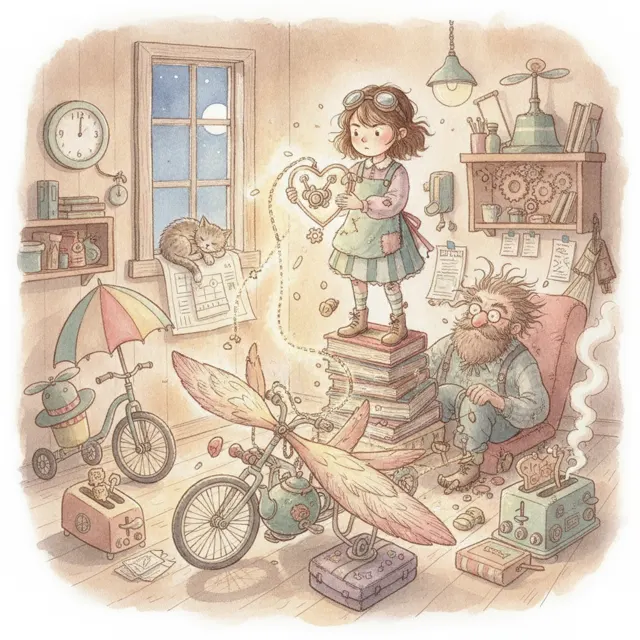
Mira's dad invents wild gadgets that never work, but Mira figures out how to fix the one that matters most.

Moral: Watching carefully is the beginning of every great idea.

Mira's dad was an inventor. His gadgets never quite worked. The self-walking umbrella walked into walls. The alarm clock alarm never went off. The shoe-tier tied both shoes together. But Dad kept inventing. Every Saturday morning. Coffee in one hand, wrench in the other. Mira watched. She started taking notes. Why did the umbrella veer right? The motor was offset. She adjusted it. It walked straight. She told Dad. He stared at her. Then he hugged her too tight. "You're better at this than I am," he said. "I just watch you," she said. "Watching carefully is the most important skill in the world." That year, they fixed every broken gadget. The shoe-tier worked. The alarm clocked alarmed. The umbrella walked perfectly down the hallway. Mira's dad entered their best invention in the town fair: a cloud-seeder that turned fog into rain. They didn't win first place. But they got "Most Creative." Mira put the ribbon on her wall. First of many, she decided.

The Night the Stars Went Out

Ages 7-85 mingratitude and wonder
The Night the Stars Went Out story for kids illustration

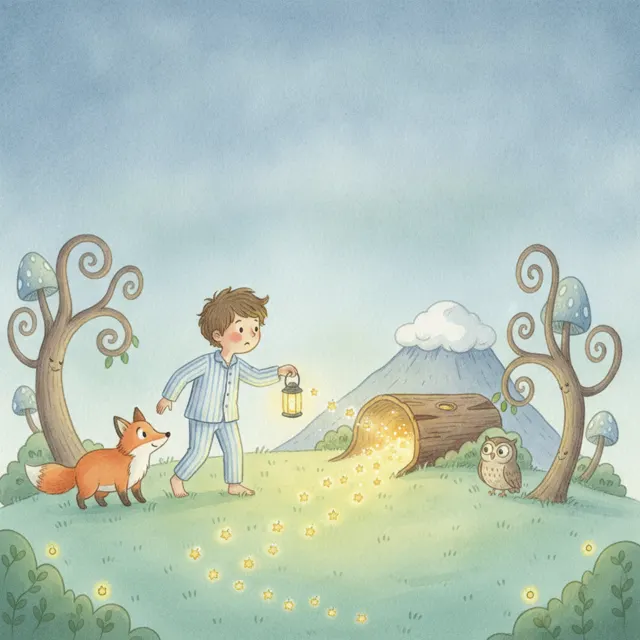
When all the stars disappear from the sky, seven-year-old Eli goes to find where they went and saves the night.

Moral: Don't wait until something's gone to appreciate it.

One night, Eli looked up and saw nothing. No stars. Just black. He put on his boots and his coat and went outside to look. His neighbor, old Mrs. Lemon, was already on her porch. "They're gone," she said. "Where?" asked Eli. "They've been going out one by one for weeks. Haven't you noticed?" Eli hadn't. He'd been too busy inside. He walked to the hilltop. There, he found a small jar with one blinking light inside. A firefly. Beside the jar was a note: "We got tired of being taken for granted. Signed, The Stars." Eli sat down. He thought about all the nights he'd walked past without looking up. He opened the jar. "I'm sorry," he said. "I'll look up more. I promise." The firefly flew out. Then another light appeared in the sky. Then another. Then a thousand. The stars were back. Eli lay on the grass and stared for a long time. He never forgot to look up again.

Milo and the Lost Kite

Ages 3-84 minutescourage
Milo and the Lost Kite story for kids illustration

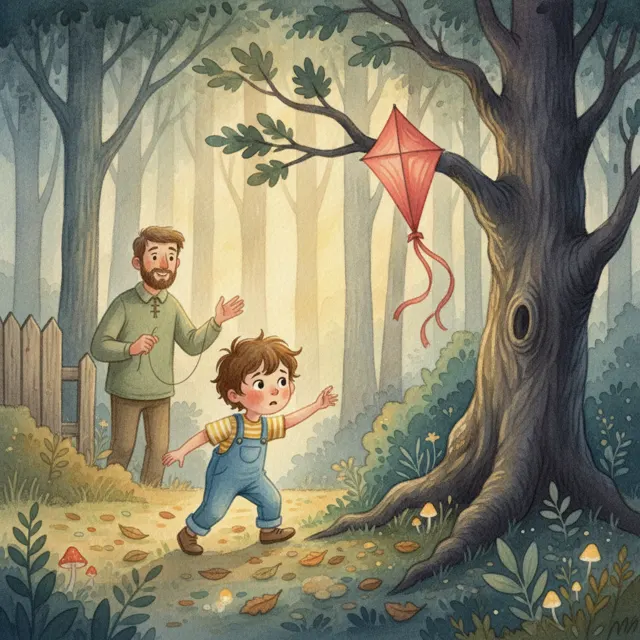
Milo's new red kite snaps its string and flies into the dark woods. He feels scared but wants his kite back. With his dad waiting nearby, Milo walks into the woods one step at a time and finds his kite.

Moral: Being brave means trying even when you feel scared.

Milo got a red kite for his birthday. It flew high and bright above the park. He loved to watch it dance and swoop in the wind. He flew it every day after school, even when the sky was gray and the park was quiet. One windy day the string snapped with a pop. The kite flew over the tall trees and into the dark woods. Milo stood at the edge and felt his heart beat fast. "Go get it, Milo," said his dad. "It is dark in there," Milo said. "What if I get lost?" "You are brave," his dad said. "And I will stand right here where you can see me." Milo took a deep breath. He stepped into the woods one foot at a time. The leaves crunched under his shoes. A squirrel dashed past and made him jump. He almost turned and ran back. "It is just a squirrel," Milo told himself. "I can do this." He walked on and soon saw a spot of red in a low bush. There was his kite, safe and dry, caught on a twig. Milo pulled it free and ran back to his dad. His legs felt shaky the whole way, but he did not stop running. "I found it!" he called. His voice was loud and proud. "I knew you would," his dad said with a smile. "You were scared, but you kept going. That is what brave means." That night Milo hung the kite by his bed. It was more than a toy now. It was a sign that he could be brave.

The Two Best Friends

Ages 3-84 minutesfriendship
The Two Best Friends story for kids illustration

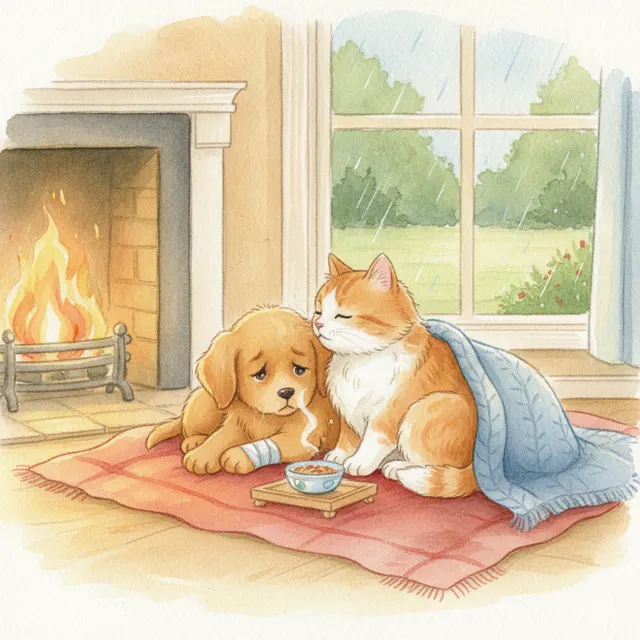
Pip the puppy and Max the cat are best friends. One rainy day Pip slips and hurts his paw. Max stays by his side, brings him dinner, and keeps him warm until Pip feels better again.

Moral: A true friend stays with you when things get hard.

Pip the puppy and Max the cat were best friends. They shared one warm bed and one bowl of water. Every morning they raced to the sunny spot by the window, and most days Pip got there first. One rainy day Pip slipped on the wet steps and hurt his paw. He lay on the rug and whined softly. "Does it hurt a lot?" asked Max. "Yes," said Pip. "I cannot run or jump, and I cannot reach my dinner." Max did not leave. He sat close and licked Pip's ear. "I will stay with you," he said. When dinner time came, Max pushed the food bowl across the floor with his nose. Pip ate every bite and wagged his tail a little. At night the room got cold. Max curled up tight against Pip and shared his warm fur. Pip stopped shivering and fell asleep. The next days were the same. Max brought the soft ball so they could roll it gently. He told Pip funny stories about the birds on the fence. Pip laughed even though his paw still hurt. He even chased a big fly away so it would not bother Pip while he rested. Max told the stories in a silly voice, and that made them even better. "You did not have to stay with me," Pip said one morning. "Yes I did," said Max. "That is what best friends do." After a week of rest, Pip's paw was all better. The two friends raced to the window again, side by side. Pip learned that a true friend stays when things get hard.

Nina Tells the Truth

Ages 3-84 minuteshonesty
Nina Tells the Truth story for kids illustration

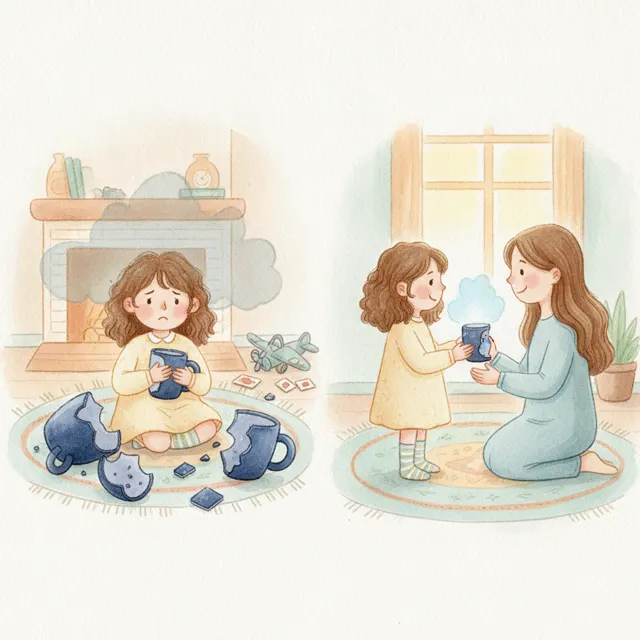
Nina breaks her mom's favorite blue mug while playing inside. She wants to hide the pieces, but hiding the truth feels heavy. She tells her mom what happened and learns that honesty keeps her heart light.

Moral: Telling the truth keeps your heart light.

Nina was playing catch inside the house. Her mom had said not to, but the ball was soft and the day was rainy. The rain tapped on the window all morning. The ball hit the shelf. Crash! Her mom's favorite blue mug fell and broke into little pieces. It had been a gift from her grandma, and Mom loved it best of all. The pieces lay on the floor like tiny blue shells. Nina's heart beat fast. She wanted to hide the pieces under the couch. "No one saw," she whispered. But hiding the truth felt heavy in her chest. Mom came into the room. "What was that loud sound?" she asked. Nina looked down at the floor. "I broke your blue mug," she said. "I was playing catch inside. I am sorry." Mom was quiet for a moment. Then she knelt down. "Thank you for telling the truth, Nina. That was very brave." "You are not mad at me?" Nina asked. "I am sad about the mug," Mom said. "But I am proud of you for being honest." They swept up the pieces together. Nina helped and did not complain. Then she put the soft ball on the shelf by the door. "Next time, play catch outside," Mom said with a small smile. "I will," Nina promised. "And I will always tell the truth." That night Nina felt light and free. Her chest did not feel heavy anymore. She learned that the truth can be hard to say, but it keeps your heart clean and light.

The Slow Little Seed

Ages 3-84 minutespatience
The Slow Little Seed story for kids illustration

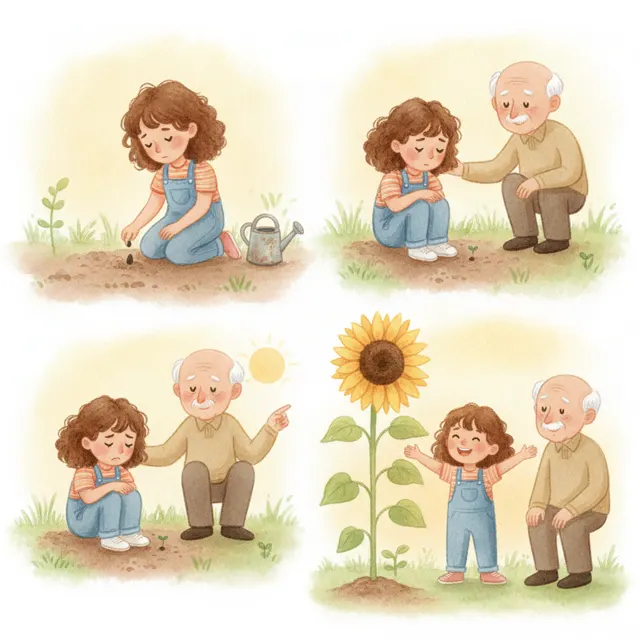
Maya plants a tiny sunflower seed and waits for it to grow. When nothing happens at first, she feels like giving up. Her grandpa teaches her to be patient, and one day a tall yellow flower opens.

Moral: Good things grow when you wait and take care of them.

Maya planted a tiny sunflower seed in a little pot. She put it on the windowsill and gave it water. Maya picked the best sunny spot she could find. "Grow, little seed, grow," she sang every morning. Day one passed. Nothing grew. Day two passed. Still nothing grew. "Why will it not grow?" Maya asked her grandpa. "A seed grows under the dirt first," Grandpa said. "You cannot see it, but it is working hard. Be patient." Maya waited and waited. She kept the dirt damp and moved the pot to follow the sun. She almost wanted to dig it up to check, but she did not. She even talked to the seed each night. She drew a little picture of the flower she hoped to see. Every single day she checked the pot for a sign of green. "Is it time yet?" she asked every day. "Soon," said Grandpa. "Good things take time to grow." One morning Maya saw a tiny green point pushing through the dirt. She clapped her hands. "It is growing!" she cheered. Each day the little plant got taller. It grew two leaves, then four, then six. Maya watched and watered and waited some more. Weeks later a big yellow flower opened in the sun. It was the tallest flower in the whole garden. The neighbors stopped to look at it. "You waited for it," Grandpa said. "And now look what grew." Maya smiled at the bright flower. She learned that good things grow when you wait and take care of them.

The Big Cardboard Castle

Ages 3-85 minutesteamwork
The Big Cardboard Castle story for kids illustration

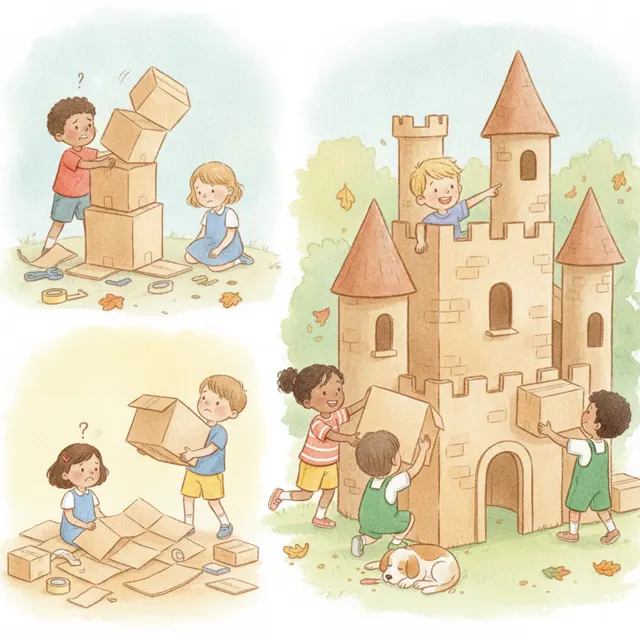
Four friends want to build a castle out of big cardboard boxes. At first they each try to build alone and nothing works. When they work together, they make a castle big enough for everyone.

Moral: We can build more when we work together.

Leo found four big cardboard boxes by the garage. The boxes were big enough to crawl inside. "Let us build a castle!" he called to his friends. Mia, Sam, and Ruby came running. Each of them wanted to build the castle in their own way. No one wanted to listen to the others. "I want a tall tower," said Mia. "I want a wide gate," said Sam. "I want a secret room," said Ruby. Everyone grabbed a box and started to build alone. But nothing worked. The towers fell over. The gate would not stand up. The secret room had no walls. The tape kept sticking to their fingers instead of the boxes. "This is too hard," Leo said with a sigh. "Maybe we should stop." Mia had an idea. "What if we build it together? One person can hold the box while another person tapes it." So they tried again, as a team. Sam held the box steady. Leo taped the corners. Mia stacked the towers. Ruby cut a door in the side. They passed the tape and the scissors back and forth. Soon the castle stood tall and strong, and it did not wobble at all. It had a tower, a wide gate, and a secret room just for Ruby. "It worked!" they all cheered. "We could not do it alone," said Leo. "But together we made the best castle ever." The four friends climbed inside and had a feast of apple slices. They learned that we can build more when we work together.

Why Does the Cat Stare?

Ages 3-84 minutescuriosity
Why Does the Cat Stare? story for kids illustration

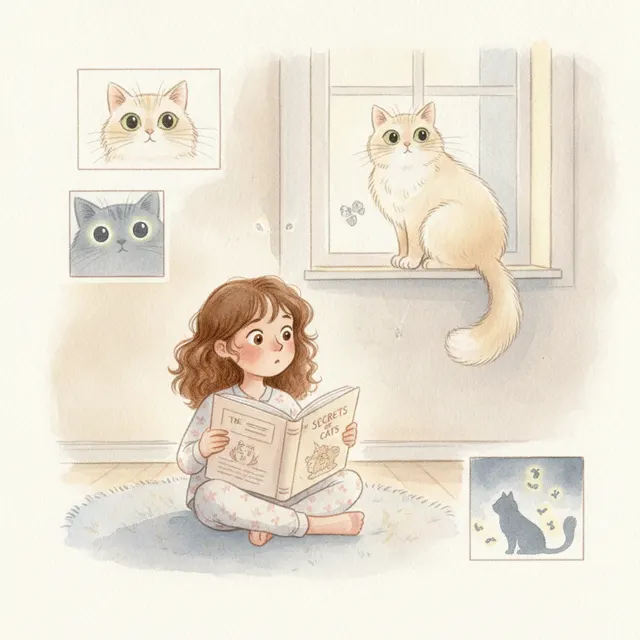
Juno wonders why her cat always stares at the wall. Instead of guessing, she asks questions and reads a book about cats. She learns about whiskers, night eyes, and why cats watch things we cannot see.

Moral: Asking questions helps you learn new things.

Juno's cat, Pepper, sat very still and stared at the wall. He did this every day at the same time. Juno watched him and wondered and wondered. "Why does Pepper stare at the wall?" Juno asked her dad. "I am not sure," Dad said. "What do you think?" "Maybe he sees a ghost," Juno said. "Or maybe the wall is very interesting. Juno was full of questions, and she liked to know the real answers." Dad laughed. "Let us find out for real. We can ask questions and look in a book." They went to the library and found a book all about cats. The book had pictures of cat ears and cat eyes on every page. Juno read it carefully. "Cats can hear tiny sounds we cannot hear," she said. "Maybe Pepper hears a mouse inside the wall." She read more. "Cats can see in dim light. And their whiskers feel tiny changes in the air." That night Juno watched Pepper closely. She saw his ears twitch. She saw his whiskers move. His whiskers were like little fingers feeling the air. "He is not looking at the wall," Juno said. "He is listening to something inside it." Dad nodded. "You found the answer by asking questions and looking it up." Juno smiled and gave Pepper a soft pat. "I learned so much about you today," she said. Pepper purred and rubbed against her leg. From then on, Juno asked questions about everything. She learned that asking why is the first step to knowing.

Sam Shares His Snack

Ages 3-85 minuteskindness
Sam Shares His Snack story for kids illustration

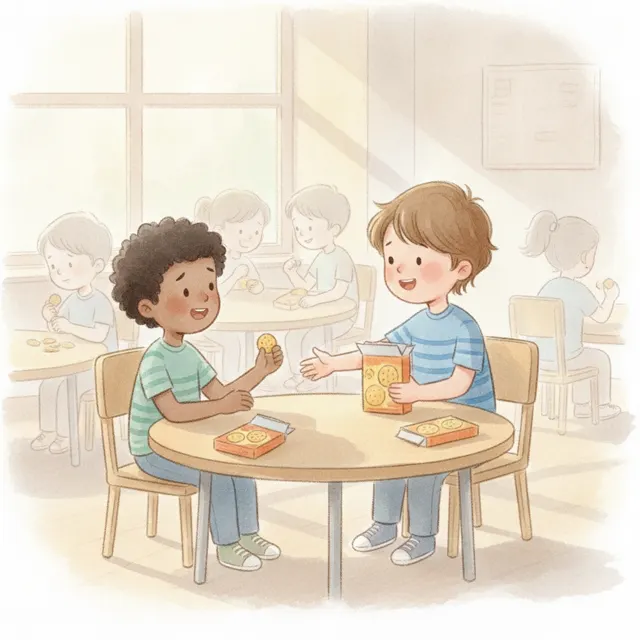
Sam brings his favorite crackers to school. When he sees a new boy with no lunch, he shares his snack without being asked. His small kind act makes the new boy smile and gives Sam a new friend.

Moral: A small kind act can make the whole day better for someone.

Sam's mom packed his favorite crackers in a blue bag. They were salty and shaped like little stars. He could not wait to eat them at lunch. He had been waiting all day for snack time. At lunch, Sam saw a new boy sitting alone at the far table. The boy had no lunch box and no snack. He just looked at the floor. The new boy looked a little lost and a lot sad. Sam looked at his crackers. He looked at the boy. Then he walked over. "Hi, I am Sam," he said. "Would you like some crackers? I have lots." The boy looked up. "Really?" he asked. "Really," Sam said. He opened the bag and poured half the star crackers onto a napkin. The boy smiled for the first time. "My name is Eli. My dad forgot my lunch today." "That is okay," Sam said. "We can share." The two boys sat together and ate the crackers. Sam told Eli about his dog. Eli told Sam about his old town and how much he missed it. At the end of lunch, Eli said, "Thank you, Sam. You are the nicest person I have met here." Sam walked home with a warm feeling in his chest. His snack tasted even better because he shared it. That afternoon Sam's mom asked how lunch was. "Great," Sam said. "I made a new friend with my crackers." Sam learned that a small kind act can make the whole day better for someone else.

The Class Pet Promise

Ages 3-85 minutesresponsibility
The Class Pet Promise story for kids illustration

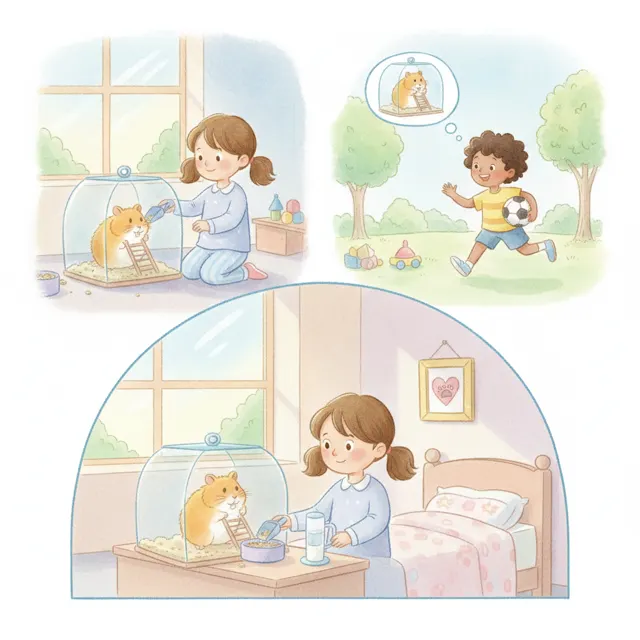
Tara promises to feed the class hamster, Nibbles, over the weekend. She almost forgets because a friend invites her to play. She remembers her promise and learns that caring for a pet is a real job.

Moral: Taking care of another living thing is a promise you keep.

On Friday, Mrs. Lee gave Tara the class hamster, Nibbles, to take home for the weekend. "Feed him every morning and night," Mrs. Lee said. "And check his water." "I promise I will," Tara said. She carried the little cage home very carefully. On Saturday morning, Tara fed Nibbles and gave him fresh water. She even talked to him while he nibbled his seeds. That afternoon, her friend Ana knocked on the door. "Come ride bikes with me!" Ana called. Tara ran outside and forgot all about Nibbles. She rode bikes until dinner time. Then she watched a show and went to sleep. The next morning, Tara woke up and gasped. "Nibbles! I forgot to feed him last night!" She ran to the cage. Nibbles was hungry and his water was nearly empty. His little eyes looked up at her. "I am so sorry, Nibbles," Tara said. She filled his bowl right away and gave him clean water. Tara told her mom what happened. "I made a promise and I broke it," she said. "I feel bad." "You fixed it as soon as you remembered," Mom said. "That is good. But a promise to care for an animal is a big job. You have to remember even when you are busy." Tara nodded. She made a little chart and taped it by her bed. Morning and night, she checked off feeding Nibbles. When Monday came, Nibbles was fat and happy. "You took great care of him," said Mrs. Lee. Tara smiled. She learned that taking care of another living thing is a promise you keep.

Ruby and the New Girl

Ages 3-85 minutesempathy
Ruby and the New Girl story for kids illustration

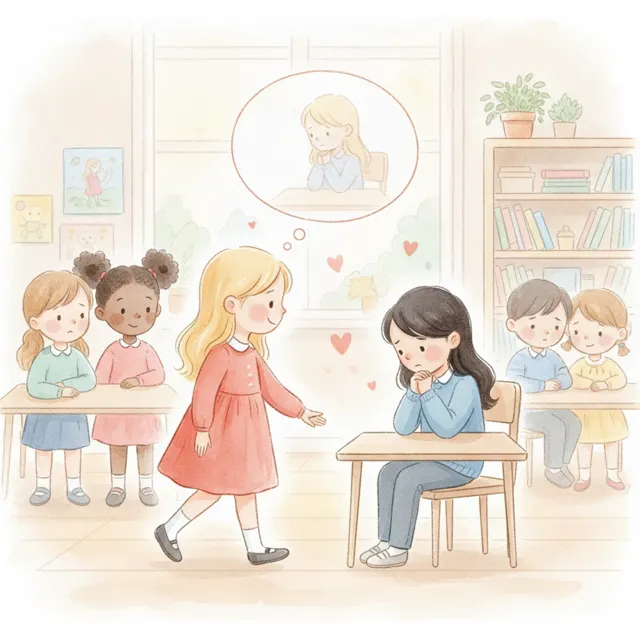
A new girl named Lina joins Ruby's class and no one talks to her. Ruby remembers how it felt to be new. She walks over and says hello, and she learns that thinking about others' feelings helps us be kind.

Moral: Think about how others feel before you act.

A new girl named Lina joined Ruby's class on Monday. She sat at the back and did not talk to anyone. At recess, she stood by the fence all alone. Some kids pointed and giggled, which made it worse. "She is so quiet," one boy said. "She never says a word." Ruby watched Lina. She remembered the year before, when Ruby was the new girl. No one had talked to her for a whole week. It felt lonely and cold. It felt like the longest week of her life. Ruby knew just how Lina felt. So she walked over to the fence. "Hi," Ruby said. "My name is Ruby. Do you want to play on the swings?" Lina looked up, surprised. "You want to play with me?" "Yes," Ruby said. "Being new is hard. I was new last year, and I remember how it felt." Lina smiled a little. "I was scared no one would talk to me." "Well, now someone is talking to you," Ruby said. "Come on." They played on the swings and ate their snacks together. Lina told Ruby about her old school and her little dog named Biscuit. Ruby told Lina about her favorite books. By Friday, Lina had two new friends and a smile that would not go away. "Thank you for talking to me that first day," Lina said. "You knew how I felt." "I just remembered being new too," Ruby said. Ruby learned that thinking about how others feel helps us know how to be kind.

The Squeaky Wagon Wheel

Ages 3-85 minutesproblem solving
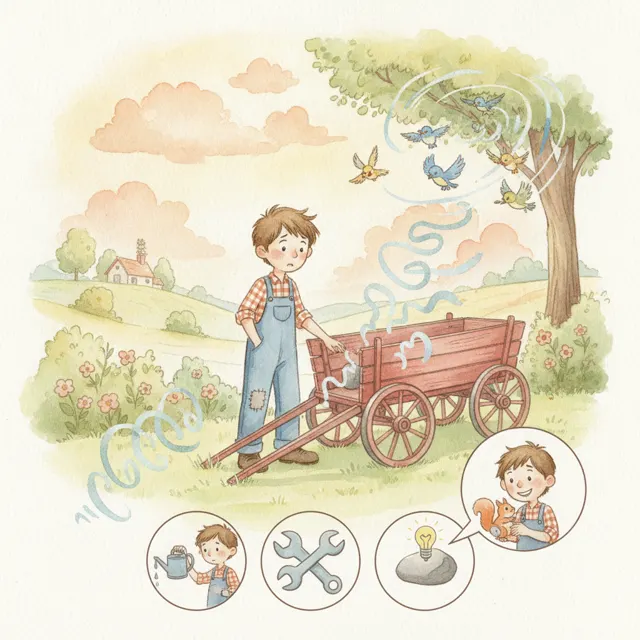
The Squeaky Wagon Wheel story for kids illustration

Theo's wagon wheel squeaks so loud it scares the birds. He tries oil, a wrench, and a rock before thinking of a clever fix. He learns that solving a problem means trying new ideas and not giving up.

Moral: Keep trying new ideas and you will solve the problem.

Theo's red wagon had a squeaky wheel. Every time he pulled it, the wheel went squeak, squeak, squeak. It was so loud that the birds flew away. The whole neighborhood could hear it. "I have to fix this," Theo said. He tried pouring water on the wheel. Squeak, squeak, squeak. That did not work. He tried a little cooking oil from the kitchen. Squeak, squeak, squeak. That made the floor slippery, and it still did not work. His hands got slippery, and the oil made a little puddle. "Maybe the wheel is loose," Theo said. He found a wrench and tried to tighten the bolt. But the bolt was already tight. He tried putting a flat rock under the wagon. The wheel just rolled over it and squeaked even louder. Theo sat down and felt stuck. "Nothing works," he said with a frown. Then he looked at the wheel very closely. He saw a tiny crack in the rubber. "The crack is making the noise!" he said. He went to the garage and found a small piece of strong tape. He wrapped it around the crack, nice and smooth. Then he pulled the wagon. No squeak. He pulled it again, faster. Still no squeak. He gave it one more gentle pull to be sure. The birds came back. "You tried many ideas and did not give up," his dad said. "That is how you solve a problem." Theo smiled and pulled his quiet wagon all around the yard. He learned that solving a problem means trying new ideas until one works.

Leo Reads Aloud

Ages 3-84 minutesself confidence
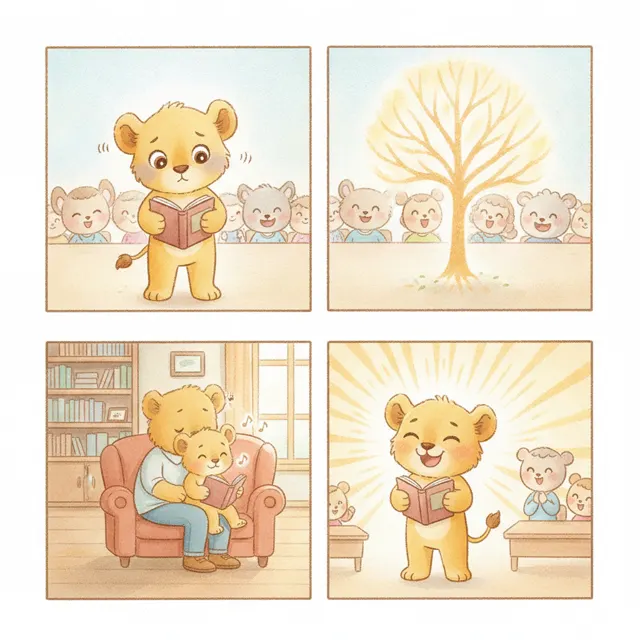
Leo Reads Aloud story for kids illustration

Leo is scared to read aloud in class because his voice shakes. With practice at home and a brave first try, he learns that his voice grows stronger each time he uses it.

Moral: Believe in yourself and your voice will grow strong.

Leo loved stories, but he was scared to read aloud in class. When it was his turn, his voice shook and his hands got sweaty. His tummy felt full of butterflies on reading day. "I will mess up," he told his mom. "Everyone will laugh." "Let us practice at home first," Mom said. "Read to me and to your teddy bear." So Leo practiced every night. He read to his mom. He read to his teddy bear. He even read to his dog, Biscuit, who wagged his tail and listened. Biscuit rested his head on Leo's knee and looked up at him. Each time, Leo's voice shook a little less. Each time, he read a little louder and a little smoother. On Friday, the teacher called his name. "Leo, would you like to read?" Leo's heart beat fast. But he remembered his practice. He stood up and opened the book. "The little fox ran through the snow," he read. His voice was soft but clear. The words came out clear and strong. He kept going, page after page. He read slowly and did not rush. When he finished, the class clapped. His teacher smiled. "That was wonderful, Leo." Leo sat down with a big smile. "I did it," he whispered to himself. "I really did it." At home, he read the whole story again to Biscuit, only this time with a loud, proud voice. Leo learned that his voice grows stronger every time he uses it. Believing in himself was the first step.

The Broken Cookie Jar

Ages 3-84 minutesfairness
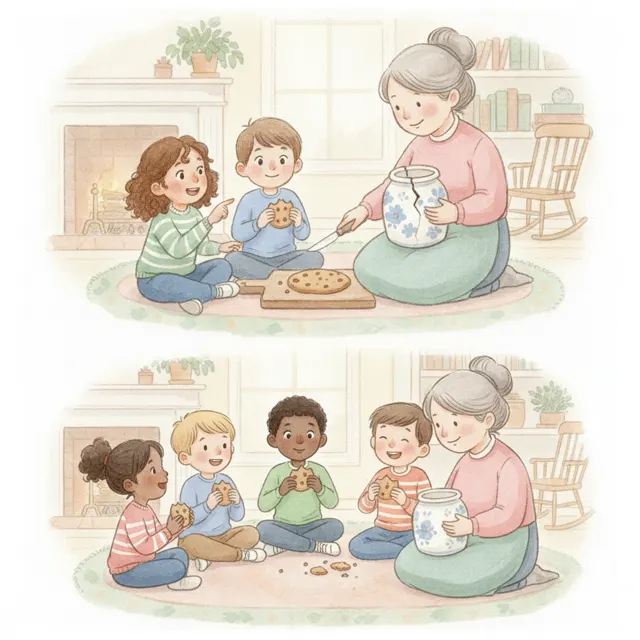
The Broken Cookie Jar story for kids illustration

Grandma brings out one big cookie jar for five cousins, and Maya wants the biggest cookie. Grandma shows them how to split it fairly so everyone gets a turn and a share, and everyone leaves happy.

Moral: Fair means everyone gets a turn and a share.

Grandma set a big cookie jar on the table. Five cousins stared at it. The kitchen smelled sweet like cookies and milk. The cookies were round and brown with white chips. Maya reached in first. "I want the biggest one!" she said. "Me too!" said Ben. "No, me!" said Zoe. Soon everyone was grabbing and pulling. Everyone wanted the best one for themselves. The jar wobbled and nearly fell over. Nobody got hurt, but it was close. "Stop!" said Grandma in her calm voice. "This is not fair, and nobody is happy. Let us do this a better way." She tipped the cookies onto a plate. "Count with me. One, two, three, four, five. Five cookies and five children. That is one for each of you." "But some are bigger than others," Maya said. "True," said Grandma. "So we will take turns picking. The first child picks one cookie. Then the next child picks. We go around and around until the plate is empty." The cousins took turns. Maya picked the biggest cookie on her turn, and nobody grabbed it away. Ben picked next, then Zoe, then the others. In the end, everyone had one cookie, and the plate was empty. "This tastes better than grabbing," Maya said. "Because I did not have to fight for it." "Fair means everyone gets a turn and a share," said Grandma. "That way we all end up happy." The cousins nodded and ate their cookies in peace. Maya learned that fair is the best way to share.

Thank You, Mr. Mailman

Ages 3-84 minutesgratitude
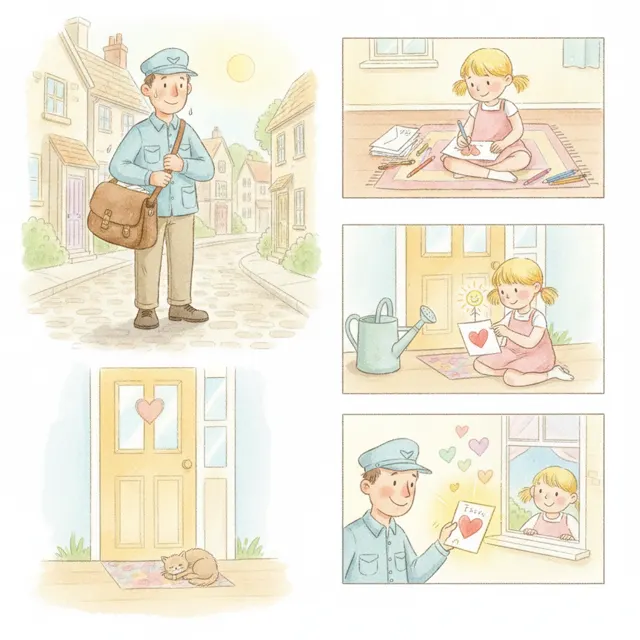
Thank You, Mr. Mailman story for kids illustration

Every day Mr. Ali the mailman brings letters to Tessa's street in the hot sun. Tessa writes him a thank you card and leaves it by the door. She learns that saying thank you makes people feel seen and loved.

Moral: Saying thank you makes others feel seen and loved.

Every day Mr. Ali the mailman walked down Tessa's street. He carried a heavy bag in the hot sun and the cold rain. He never missed a single house. He waved at everyone, even the sleepy dogs on the porches. Tessa watched him from the window. "He works so hard," she said to her mom. "Does anyone ever say thank you?" "I am not sure," Mom said. "Maybe not." Tessa thought about it all day. That night, she made a card. She drew a picture of Mr. Ali with his big mail bag. Inside she wrote, "Thank you for bringing our letters every day. You are the best." It was the first card she had ever made by herself. She put the card by the front door where Mr. Ali would see it. The next day, Mr. Ali stopped at the door. He picked up the card and read it. A big smile spread across his face. Tessa ran outside. "Did you like it?" she asked. "This is the best card I have ever gotten," Mr. Ali said. His eyes looked shiny. "No one has ever thanked me before." "Well, thank you," Tessa said. "You bring us letters in the hot sun and you never stop." Mr. Ali laughed a happy laugh. "You made my whole week, Tessa." From that day on, Mr. Ali waved at Tessa every single morning, and Tessa waved back with a big smile. Tessa learned that saying thank you is a small thing that makes people feel seen and loved.

The Toy Swap Day

Ages 3-84 minutessharing
The Toy Swap Day story for kids illustration

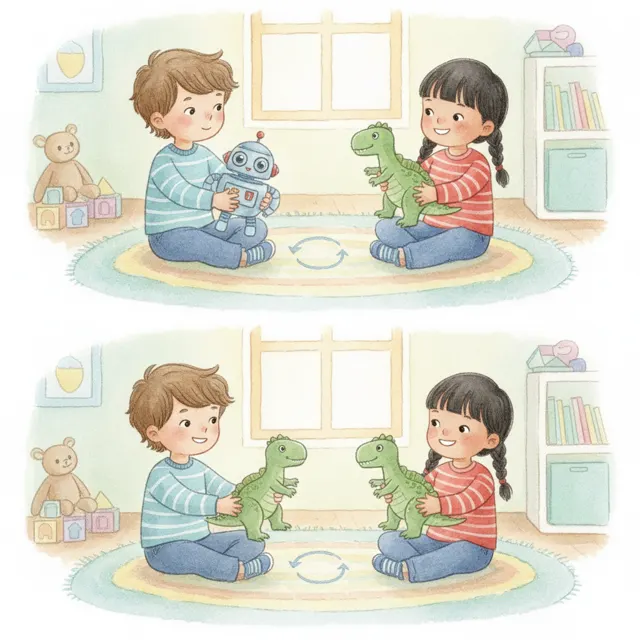
Kai has a robot and his friend Jae has a dinosaur. They both want to play with the other toy but do not want to give up their own. They agree to swap for the day and both end up happy.

Moral: Sharing turns one toy into two happy faces.

Kai had a shiny robot that beeped and walked. His friend Jae had a big green dinosaur with a long tail. They played with them every single day. "I want to play with your dinosaur," Kai said. "I want to play with your robot," Jae said. But neither boy wanted to give up his own toy. They sat on the floor, hugging their toys tight. Their faces looked worried. "You can play with my robot if I can play with your dinosaur," Kai said. "But then you will have my dinosaur and I will have your robot," Jae said. "What if you do not give it back?" "We can swap for the day," Kai said. "Just for today. Then we give them back before dinner. They set a timer so neither of them would forget." Jae thought for a moment. "Okay," he said. "A toy swap. Just for today." They traded toys. Kai made the dinosaur stomp and roar. Jae made the robot beep and spin. They laughed and played all afternoon. The dinosaur and the robot became fast friends too. When the sky turned orange, they traded back. Both toys were safe and happy. "That was fun," Jae said. "Now we both played with two toys instead of one." "Sharing turned one toy into two happy faces," Kai said. They agreed to do a toy swap every Saturday. From then on, each week was twice as fun. Kai learned that sharing does not mean losing. It means everyone gets to have more fun together.

Frequently Asked Questions

Turn Your Child Into the Hero of Their Own Story

Upload their photo and watch as AI creates a beautiful, personalized storybook with illustrations that look just like them. From $5.99/month.

โœจ Make Your Child the Hero

Plans from $5.99/month