Stories for 8 Year Olds

Deeper, richer stories for readers who are ready to feel something real

โœจ Make Your Child the Hero

Eight-year-olds are at a fascinating crossroads. They're old enough to understand nuance, feel empathy for complex characters, and wrestle with stories that don't have a simple answer. But they're still kids, still delighted by magic, adventure, and humor. The best stories for this age honor both sides. At CreateStory.ai, we craft eight-year-old stories with genuine emotional depth, real character arcs, and themes that stick long after the book is closed. Loyalty, identity, growing up, making hard choices, these six stories meet your eight-year-old where they are and take them somewhere worth going.

Why do eight year olds need stories that feel real?

At eight, kids start to see the world in more detail. They notice how friends treat each other and how choices have results. Stories with honest feelings give them a safe place to think about big ideas like fairness and trust.

Reading well at this age matters for school. One in six children who cannot read well by the end of third grade do not finish high school on time, four times the rate of strong readers (Annie E. Casey Foundation). Good stories help build that skill.

How do stories help an eight year old handle feelings?

A story lets a child feel big emotions from a safe seat. They watch a character lose a race or tell a hard truth, and they learn how it feels without living it. That practice makes real feelings easier to handle.

After you read, ask what your child would do in the character's shoes. Talking about the story builds empathy and problem solving. One good talk after a story can stick with a child for a long time.

Sample Stories

Read these stories, then create a personalized version where your child is the hero

The Boy Who Kept Every Secret
Ages 8-95 minhonesty and loyalty
The Boy Who Kept Every Secret story for kids illustration

When Marco is trusted with too many secrets at once, he has to figure out which ones are his to keep.

Moral: Some secrets protect people. Others protect us from doing the right thing. Know the difference.

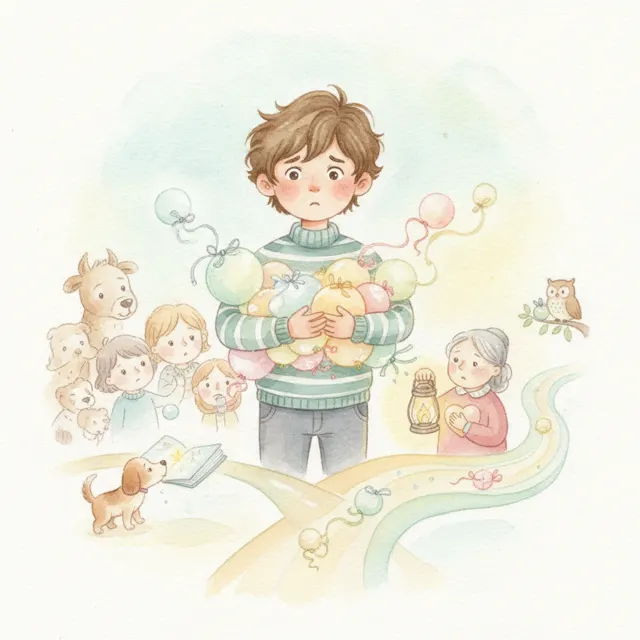
Marco was the best secret-keeper in Year 3. Jade told him she liked Oliver. Secret kept. Ben told him he'd broken the classroom window by accident. Secret kept. Sadie told him she was scared of dogs but pretended not to be. Secret kept. Then the secrets started to collide. Oliver asked Marco if anyone liked him. Marco said nothing. Oliver looked hurt. Ben's window secret got blamed on another kid who wasn't even there that day. And Sadie started avoiding the dog at the school reading program, which made the teacher think Sadie didn't like reading. Marco sat with all his secrets. They'd started out light. Now they felt heavy. He talked to his mom that night. She listened. Then she said, "Some secrets protect feelings. Some secrets protect people. And some secrets have become unfair to someone who doesn't know they're part of one." The next day, Marco helped Ben find the courage to come forward about the window. He didn't reveal Jade or Sadie's secrets but he gently nudged them both toward honesty. Things got complicated for a while. But they got better. Marco learned the difference between keeping a secret and carrying a secret. Only one of those feels like trust.
The Girl Who Ate Words

Ages 8-95 minlanguage and kindness
The Girl Who Ate Words story for kids illustration

Lily discovers she can literally taste words, and the experience changes how she chooses what to say.

Moral: The words we choose shape who we are and how others feel around us.

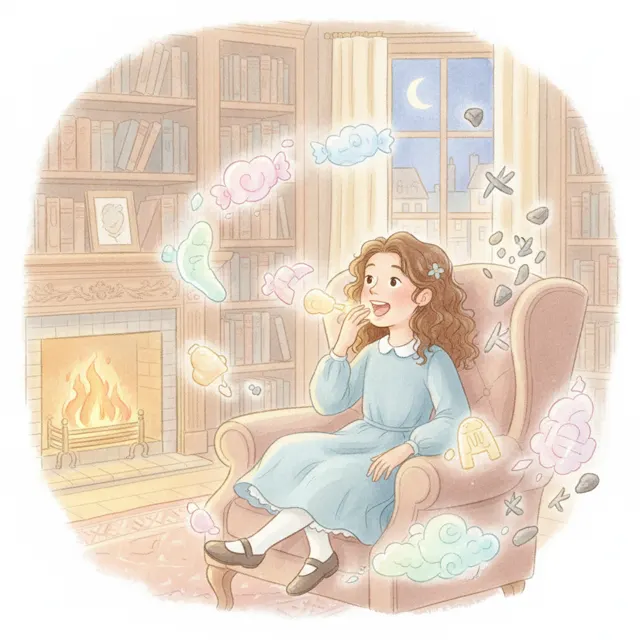
One morning, Lily woke up and said "good morning" to her mom. It tasted like warm toast. She frowned. She said it again. Warm toast. At school she called her friend "silly" as a joke. Bitter. Like black coffee. She told Tom his drawing was amazing. Sweet. Like mango sorbet. She said "it doesn't matter" when she actually meant it did matter. Sour. Like a lemon rind. By lunch, Lily had figured it out. Kind words tasted sweet. Honest words tasted clean. Hollow words tasted off. She walked around school tasting everything she said for a week. Some words she stopped saying altogether. "Whatever." Stale bread. "You wouldn't understand." Chalk. She said more things she meant. Told people when she appreciated them. Said sorry when she meant it. Fresh water, every time. One day she woke up and the ability was gone. Just regular words. But she kept tasting them anyway. In her mind. Some habits are worth keeping.

The Champion Who Quit

Ages 8-95 minidentity and choice
The Champion Who Quit story for kids illustration

When chess prodigy Maya decides to quit, her grandfather helps her understand the difference between quitting and choosing.

Moral: Quitting for the right reasons takes more courage than staying for the wrong ones.

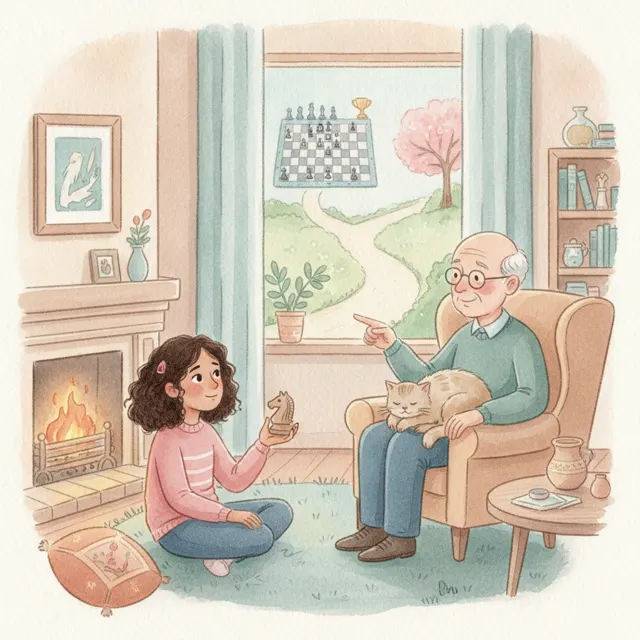
Maya was the best chess player in the district. She'd won every tournament since she was six. She also hated it. Not chess itself. The pressure. The expectation. The way everyone said, "Oh, you're the chess girl," like that was all she was. She told her mom she wanted to quit. Her mom said talk to Grandpa. Grandpa had been a musician. He'd quit too, years ago. "Were you good?" Maya asked. "Very good," he said. "Do you regret it?" He thought for a long time. "I regret that I let fear make the decision. I was scared of never being good enough, so I quit before I could fail. That was a coward's quit." "What's a brave quit?" asked Maya. "Knowing something isn't right for you anymore. Not because it's hard. But because you've genuinely grown past it or it doesn't serve you." Maya sat with that. She tried to figure out which kind of quitting hers was. She played one more tournament. She lost in the semifinals. She didn't care. She signed up for a photography class the next week. When she won first prize at the school photo contest, she called Grandpa. "Was it a brave quit?" he asked. "The bravest," she said.

When Aiden Didn't Laugh

Ages 8-95 mincourage and standing up
When Aiden Didn't Laugh story for kids illustration

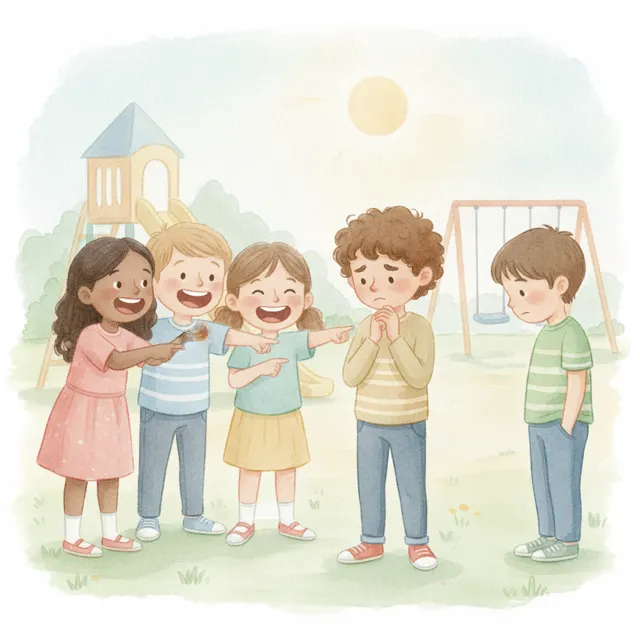
When his whole friend group laughs at someone being teased, Aiden has to decide: blend in or speak up.

Moral: Not laughing is sometimes the bravest thing you can do.

Everyone laughed when Jake dropped his lunch tray. Mac started it. He did a fake fall and pointed. Then Priya laughed. Then Leo. Then everyone at the table. Aiden almost laughed too. It was almost funny. For a second. But he looked at Jake's face. Red. Trying not to cry. Picking up his food alone. Aiden didn't laugh. Nobody noticed. The moment passed. But at the end of lunch, Aiden walked over to where Jake was sitting alone. "That was bad," Aiden said. "The laughing. I'm sorry I didn't say something sooner." Jake shrugged. "It's fine." "It's not, though." Jake looked at him. "No. It's not." They sat in silence for a minute. "I'm Aiden." "Jake." At the next table, Mac glanced over. "Aiden, what are you doing?" Aiden picked up his lunch. "Eating with my friend." Mac looked confused. Aiden looked certain. It was the first time he'd felt certain about something all year.

The Last Letter

Ages 8-95 minkindness and connection
The Last Letter story for kids illustration

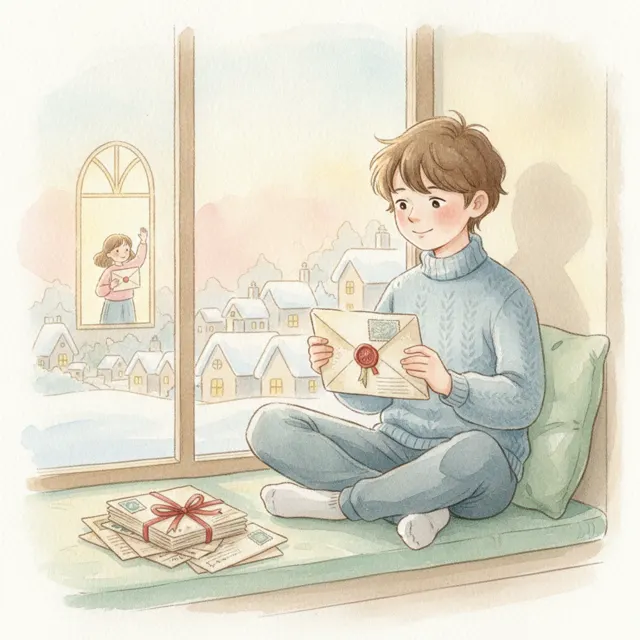
After his pen pal stops writing, Sam discovers the heartfelt reason and sends a letter that matters more than he knows.

Moral: Say the kind thing. Send the letter. You never know who needs it.

Sam and his pen pal Ethan had been writing for two years. Then the letters stopped. Sam wrote three more. No replies. He felt embarrassed. Had he said something wrong? Did Ethan just get bored? He almost gave up. But he wrote one more letter. Not about himself. Just about what he appreciated about their letters. The things Ethan had taught him: about his city, about his family, about making the best cup of tea (apparently it mattered a lot in England). Six weeks later, a letter arrived. It wasn't from Ethan. It was from Ethan's mom. Ethan had been sick. He'd had a long hospital stay. Sam's last letter had arrived on a hard day, and Ethan had read it out loud to the nurses. Ethan was better now. He was going to write when he could. Sam sat for a long time holding that letter. He'd almost not sent it. He thought about all the kind things people never say because they think it's too late, or too much, or too embarrassing. He got his pen out. He wrote Ethan a long reply. And he promised himself he'd always send the letter.

Rosa and the Rain Forest

Ages 8-95 minenvironment and agency
Rosa and the Rain Forest story for kids illustration

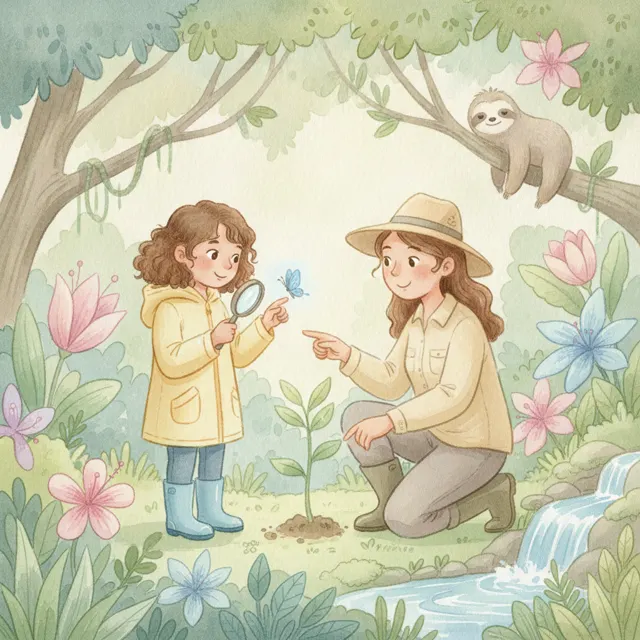
Rosa visits the Amazon with her botanist mom and realizes that protecting something can start with one eight-year-old.

Moral: One person's attention, given carefully, can change what gets protected.

Rosa had expected the Amazon to be like the documentaries. Green and shimmering. It was greener than that. And louder. And wetter. She followed her mom through the undergrowth, tagging plants, noting soil samples. "What's that?" Rosa pointed to a tree with silvery bark. "Endangered," said Mom. "There are maybe fifty of those left in this region." Fifty. Rosa thought about fifty things. Fifty wasn't a lot. She photographed every one they found. Six, that day. Back at the research station, she uploaded the photos. Her mom's team mapped the coordinates. "You've added six data points to the protection map," said Dr. Alvarez from the team. "Does that help?" Rosa asked. "It means those trees are now on a list governments use to decide protected zones." Rosa looked at the photos on the screen. Six silver trees. Her pictures. "Can I do more?" she asked. Dr. Alvarez smiled. "You already did." Rosa went out the next morning before breakfast. She found four more trees. She thought: if one kid can protect ten trees with a camera, what can a hundred kids do? She started writing it down.

The Promise of the Clean Desk

Ages 3-84 minutesresponsibility
The Promise of the Clean Desk story for kids illustration

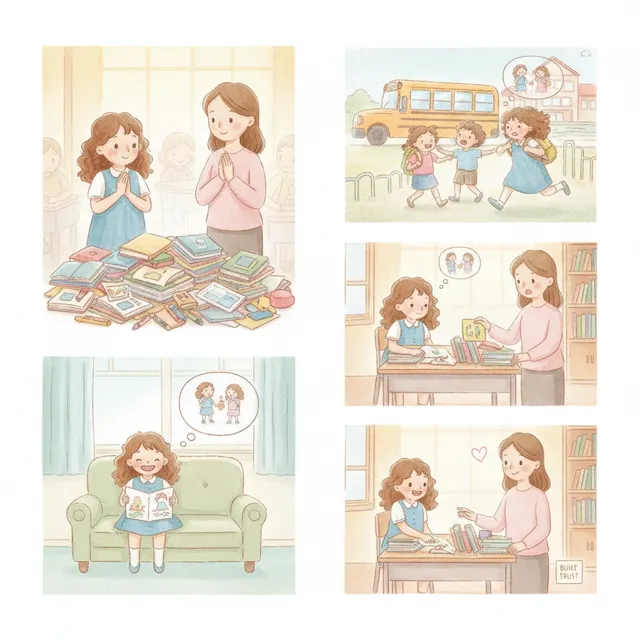
Emma promises her teacher twice that she will clean her messy desk, and twice she forgets. On Friday she remembers just as the bus leaves. She runs back and keeps her word, learning a kept promise builds trust.

Moral: Keeping a small promise builds big trust.

Emma was eight. Her desk at school was a big mess. Papers stuck out of it. Crayons rolled off it. Her teacher, Mrs. Lee, had asked her three times to clean it. On Friday, Mrs. Lee bent down by Emma's desk. "Emma, can you clean this before you go home? You promised me twice already." Emma looked at the mess and felt a little bad. "I will do it today. I promise." The day went fast. Emma drew, and read, and played at recess. When the bell rang, she grabbed her bag and ran for the bus. Then she stopped. She remembered her promise. She ran back to the classroom. The room was empty. Her desk still looked like a paper storm. Emma sighed. It would be a lot of work. But she had promised. She started with the papers. Old art went in one pile. Math sheets went in the folder. She threw the torn scraps in the bin. Crayons went back in the box, red with red, blue with blue. It took a while, but she did not stop. Mrs. Lee came back to get her coat. "Emma? What are you still doing here?" "Cleaning my desk," Emma said. "I promised, and I missed the bus because I remembered." Mrs. Lee smiled wide. "You kept your word, Emma. That means a lot. Let me walk you to the front door and call your mom." The next Monday, Emma's desk was the neatest in the room. Mrs. Lee put a small green star on it. "For keeping a promise," she said. Emma looked at the star and smiled. It was not the star that made her happy. It was the warm feeling of doing what she said she would do. From that day on, her desk stayed clean. A promise kept feels good.

Silver Ribbon, Happy Heart

Ages 3-84 minutessportsmanship
Silver Ribbon, Happy Heart story for kids illustration

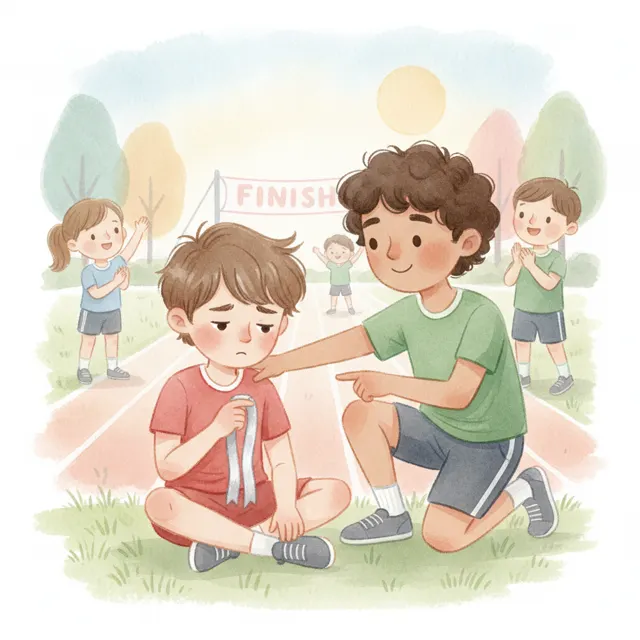
Jonah trains hard for the school race but comes in second. At first he feels sad about the silver ribbon. Then his friend Mateo helps him see that running his best is worth being proud of.

Moral: You can come second and still be proud of yourself.

Jonah ran every day for the school race. He dreamed of the gold ribbon. He pictured it pinned on his shirt, bright and shiny. On race day, Jonah lined up with the other kids. His heart pounded. The whistle blew, and he ran as fast as his legs could go. He ran and ran, but one boy, Mateo, was just a little faster. Mateo crossed the line first. Jonah came in second. Jonah's shoulders dropped. He watched Mateo get the gold ribbon. A teacher handed Jonah a silver ribbon. He took it and looked down at the ground. Mateo walked over. "You were so fast, Jonah. You almost caught me." "Almost does not win," Jonah said quietly. "Sure it does not," Mateo said. "But second is still really good. Do you know how many kids did not come second? A lot. You should be proud." Jonah looked at his silver ribbon. It was not gold, but it was still shiny. He thought about all the mornings he had run and run. He had worked hard, and he had done his best. He held the ribbon up. "You are right," he said. "I ran my fastest. That is what counts." He walked over to Mateo and shook his hand. "Good race. You earned that gold." "Thanks, Jonah. See you next year?" "You bet," Jonah said. "Next year I will be even faster. But today, second is pretty great." Jonah pinned the silver ribbon to his shirt and smiled. He had not won the gold. But he had won something just as good. He had run his best and been a good friend. That felt like a prize all its own.

The Answer I Almost Copied

Ages 3-83 minuteshonesty
The Answer I Almost Copied story for kids illustration

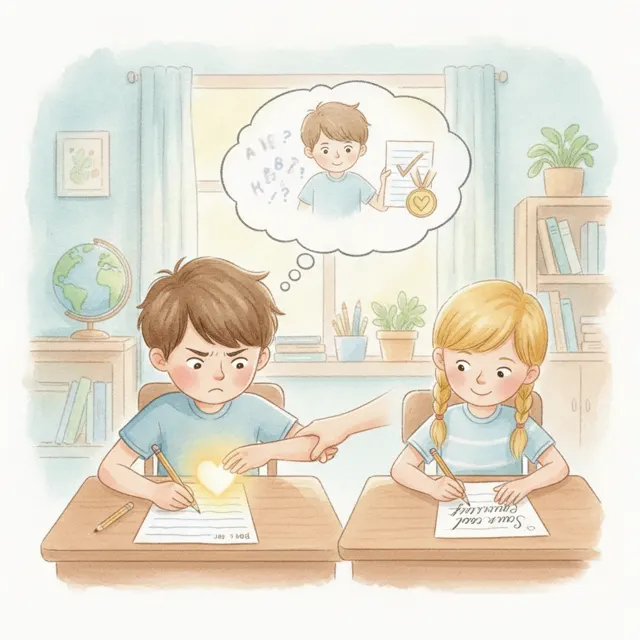
Ben struggles with a spelling test and almost copies his friend's answers. He stops himself and does his own work instead. Even with a few words wrong, Ben learns honesty beats a perfect score.

Moral: Telling the truth about a mistake helps you learn.

Ben was eight. He was good at math, but not at spelling. On Friday there was a big spelling test. Ben studied, but the words were hard. During the test, the class sat in rows. Ben looked at the first word. He knew it. He wrote it down. The second word was hard. The third was harder still. Then Ben saw it. The paper next to him belonged to Priya. She was the best speller in the class. Her paper was turned just a little. Ben could see her answers if he leaned. He wanted to look so badly. His hand started to move his paper closer. Then Ben stopped. His mom's voice came into his head. "Do your own work, Ben. Your best is enough." Ben looked back at his own paper. He did not lean over. He did not peek. He wrote what he knew and left the rest blank. He felt a little sick, but he did his best. When the tests came back, Ben got a few words wrong. He felt his face get hot. He wanted to hide his paper. His teacher, Mr. Roy, came by his desk. "Ben, I saw you look at Priya's paper today. But then you looked away. What happened?" "I almost copied," Ben said quietly. "But I did not. My best was not enough today." Mr. Roy nodded. "Your best today is a place to grow from, Ben. And telling the truth about it is harder than any spelling word. I am proud of you." Ben sat up a little taller. He would study more next time. But he would never have to feel bad about cheating. His honest answers were his own. And that felt better than a perfect score.

The New Kid at Table Three

Ages 3-83 minuteskindness
The New Kid at Table Three story for kids illustration

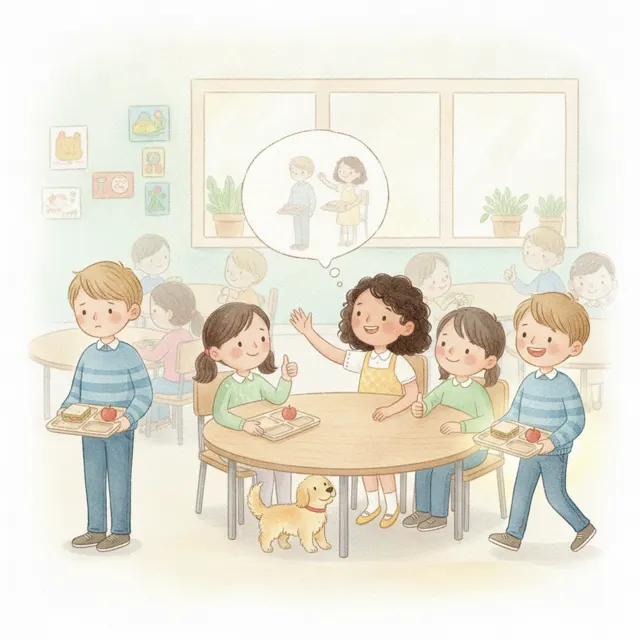
A new boy named Sam stands alone with his lunch tray. Aya remembers her own lonely first day and waves him over to her table. One small welcome turns Sam's whole day around.

Moral: A small act of welcome can change someone's whole day.

On Monday, a new boy came to Aya's class. His name was Sam, and he did not know anyone. At lunch, Sam stood by the door holding his tray. He looked around the lunchroom with wide eyes. Aya watched him from table three. There was one empty seat at her table, right next to her. For a moment she did not say anything. Her friends were already talking and laughing. Then Aya thought about her first day at this school. She had stood by the door too, holding her tray, not sure where to sit. It had felt lonely. "Hey," Aya called, and she waved. "There is a seat here. Come sit with us." Sam walked over slowly and sat down. "Thanks," he said quietly. "What is your name?" Aya asked. "Sam. We just moved here." "I am Aya. This is Lina and Marcus." Aya pointed to her friends. "What do you like to do?" Sam shrugged. "I like to draw. And I am good at chess." "No way," Marcus said. "I like chess too. Do you want to play after lunch?" Sam's face lit up. "Really? Yes!" At recess, Sam and Marcus played chess. Aya and Lina watched and cheered. By the end of the day, Sam was laughing with everyone at table three. As they lined up to go home, Sam turned to Aya. "Thanks for calling me over. I was so nervous." "It was nothing," Aya said. "Everyone needs a seat on their first day." Aya walked home feeling warm inside. One small wave and one open seat had turned a lonely day into a good one. It had not cost her anything. And it had meant everything to Sam.

The Blank Page

Ages 3-84 minutesperseverance
The Blank Page story for kids illustration

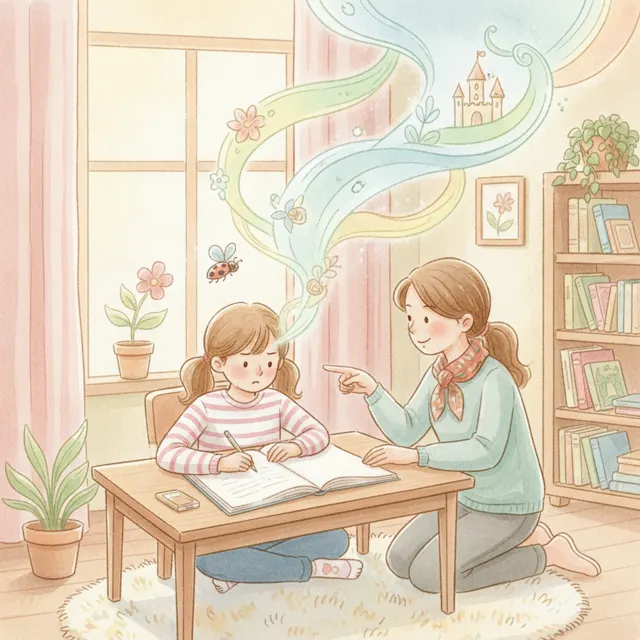
Maya must write a story but her page stays empty. Her mom tells her to start with one small idea. Maya writes about a ladybug on her window, and the words begin to flow.

Moral: When your first try is blank, start with one small idea.

Maya's teacher gave the class a writing job. "Write a story," Mrs. Chen said. "Any story you like. It is due Friday." Maya sat at her desk with a blank page in front of her. She stared at it. The page stared back. Nothing came. She wrote one word, then crossed it out. She wrote two words, then tore the page. By Thursday night, her waste basket was full of paper balls. "I cannot do it," Maya told her mom. "My head is empty. Everyone else has a story but me." Her mom sat down next to her. "A story does not start all at once. It starts with one small idea. What is one thing that happened to you this week?" Maya thought. "I found a ladybug on my window. It was red with black spots." "That is a story," Mom said. "What did the ladybug do?" "It walked up the glass and then it flew away. I named it Dot." "Then write that down," Mom said. "Just that. One sentence. Then write the next thing." Maya picked up her pencil. She wrote, "I found a ladybug on my window." Then she wrote, "It was red with black spots." Then she wrote more. The words came easier once she started. By bedtime, Maya had a whole page. Her story was about Dot the ladybug, who went on a tiny trip across the window and saw a big world. On Friday, Mrs. Chen read Maya's story to the whole class. Everyone clapped. "How did you think of that?" a boy asked. Maya smiled. "I started with one small idea. The rest just followed.

The Thank You Card

Ages 3-83 minutesgratitude
The Thank You Card story for kids illustration

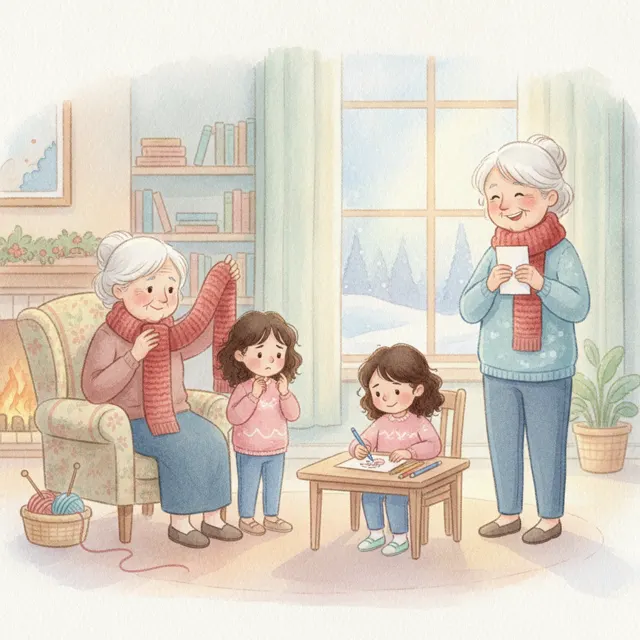
Nina's grandma knits her a soft red scarf, but Nina forgets to say thank you. When she finally writes a card, it makes Grandma smile all day. Nina learns gratitude is a little gift that comes back.

Moral: Saying thank you for small things makes the day brighter.

Nina's grandma sent her a small package. Inside was a hand-knitted scarf, soft and red, with a card that said, "For my Nina. Love, Grandma." Nina loved the scarf. She wore it to school every day that week. But she did not write back. The days went by, and the card sat on her desk, unanswered. "Mama, do I have to write a thank you card?" Nina asked. "It takes so long." "You do not have to," her mom said. "But think about how it felt when you opened that box. Grandma spent hours making that scarf just for you." Nina thought about it. She remembered the soft wool and the card with her name on it. It had made her whole week feel warm. That night, Nina sat at her desk. She wrote, "Dear Grandma, thank you for my red scarf. I wear it every day. It keeps me warm and it makes me think of you. Love, Nina." She drew a small heart at the bottom and put it in an envelope. A week later, a letter came back. "Dear Nina, your card made me smile all day. I put it on my fridge. Love, Grandma." Nina read it twice. Grandma had smiled all day because of a card that took Nina ten minutes to write. It felt good to give that smile back. "Thank you cards are like little gifts," Nina said to her mom. "They make the other person happy, and they make me happy too." From then on, Nina wrote thank you cards for every gift. It never took long. And it always, always felt good.

Frequently Asked Questions

Turn Your Child Into the Hero of Their Own Story

Upload their photo and watch as AI creates a beautiful, personalized storybook with illustrations that look just like them. From $5.99/month.

โœจ Make Your Child the Hero

Plans from $5.99/month